
Your most sophisticated growth factor serum might be functionally inert if it lacks the correct biological delivery system. Understanding the hierarchy of growth factors vs exosomes for skin rejuvenation is the only way to move past the frustration of investing in premium formulations that fail to penetrate. You deserve to know why some treatments trigger deep cellular repair while others simply sit on the surface.
This clinical guide clarifies the scientific distinction between these two regenerative agents so you can determine which advanced treatment will best transform your skin’s health and appearance. We’ll move beyond the marketing hype to explore how these microscopic messengers actually function within the dermis. You’re about to discover how to achieve a visible reduction in fine lines and pigmentation through superior molecular signalling.
We’ll examine the rise of high-purity vegan exosomes, which offer an ethical and highly effective alternative to traditional human-derived ingredients. You’ll learn how these technologies integrate with professional tools like the Mesopowerpen to optimise results for fine lines and stubborn pigmentation. From the latest regulatory shifts to the clinical efficacy of the MESO EXCOCELL VOLUME+ system, this is your definitive roadmap to the next generation of aesthetic excellence.
Key Takeaways
- Grasp the clinical shift from simple hydration to regenerative signalling. This transition is essential for those seeking visible, long-term improvements in skin architecture.
- Navigate the technical hierarchy of growth factors vs exosomes for skin rejuvenation to determine which molecular pathway best addresses your specific aesthetic goals.
- Uncover the intracellular advantage of exosomes. These sophisticated vesicles act as delivery vehicles that bypass the cell surface to deposit restorative cargo directly inside the cell.
- Identify the importance of ethical sourcing. High-purity vegan exosomes offer a safe, innovative solution that minimises inflammatory risks while maintaining rigorous clinical standards.
- Learn how to maximise results by pairing vegan exosome technology with precision tools like the Mesopowerpen. This combination ensures targeted delivery for superior outcomes in pigmentation and volume.
Navigating the New Frontier of Skin Rejuvenation in 2026
The shift is absolute. Australian aesthetic clinics have transitioned from simple, surface-level hydration toward the profound possibilities of regenerative medicine. In 2026, the local industry has moved beyond merely masking imperfections. Instead, practitioners are focusing on biological signalling to restore skin health at a foundational level. This evolution reflects a growing demand for treatments that work in harmony with the body’s natural processes rather than relying on aggressive, inflammatory interventions.
Determining the superior choice between growth factors vs exosomes for skin rejuvenation requires an understanding of how these molecules interact with our biological architecture. While traditional treatments relied on harsh exfoliation to force cellular turnover, the modern standard prioritises communication. We’re no longer just treating the symptoms of ageing; we’re rewriting the skin’s internal repair programme. This ensures that the results aren’t just cosmetic, but represent a genuine restoration of the skin’s structural integrity.
The Biological Messenger Revolution
Cells within the dermis don’t operate in isolation. They rely on a complex network of chemical signals to coordinate the repair of UV damage and environmental stress. Regenerative aesthetics is the use of biological signals to trigger natural repair. This approach represents a departure from the heavy chemical peels that dominated previous decades. By utilising bio-identical signalling, we can encourage the skin to produce collagen and elastin without the extensive downtime or risk of post-inflammatory hyperpigmentation. It’s a more refined, intelligent way to manage the ageing process.
Why Topical Skincare Isn’t Enough
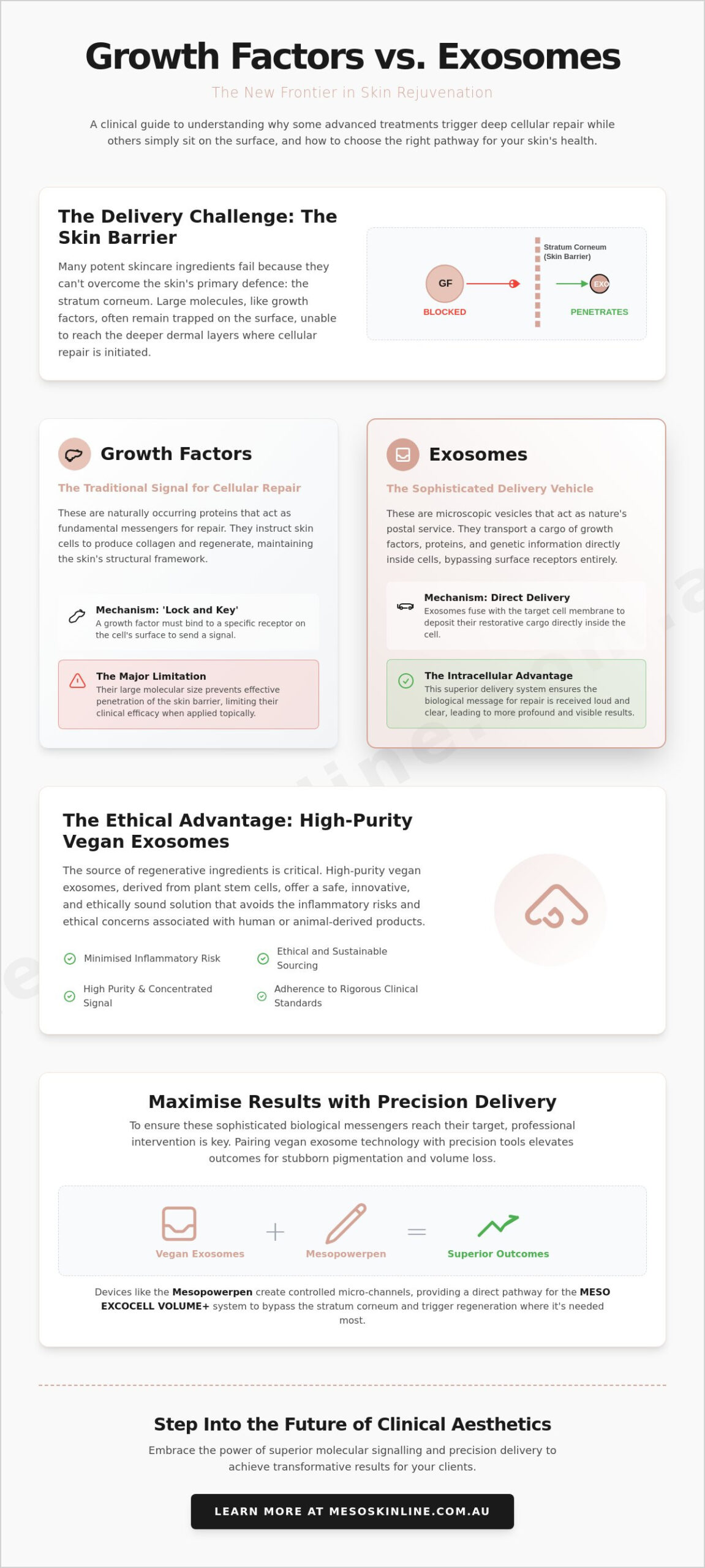
Many consumers feel a sense of frustration when high-end serums fail to deliver visible changes. This failure is often due to the molecular weight challenge. A Growth factor is a large protein molecule that often finds the stratum corneum, the skin’s outermost barrier, an impenetrable fortress. Without a sophisticated delivery system, these potent signals remain trapped on the surface, unable to reach the fibroblasts that require instruction to begin the repair process.
Professional intervention is required to bridge this gap. Modern clinical protocols now rely on advanced tools and high-purity formulations to ensure these messengers reach their intended target. Key factors in this 2026 standard include:
- Precision Delivery: Devices such as the Mesopowerpen create controlled micro-channels, allowing biological ingredients to bypass the stratum corneum effectively.
- Barrier Management: Recognising how the skin’s natural defences block external signals is essential for optimising rejuvenation outcomes.
- Concentrated Formulations: Utilising high-purity vegan exosomes ensures the skin receives a clear, undistorted message for repair without unnecessary additives.
The goal is no longer just application; it’s ensuring the skin actually receives and acts upon the signal. When the delivery system matches the sophistication of the ingredient, the results are both visible and transformative.
Growth Factors: The Traditional Signal for Cellular Repair
Growth factors are the primary architects of dermal health. They’re naturally occurring proteins that serve as the fundamental communication method for cellular repair and regeneration. When we examine growth factors vs exosomes for skin rejuvenation, we’re looking at a history of clinical success that began with understanding how our bodies heal wounds. These proteins are essential for maintaining the structural framework of the skin and ensuring it remains resilient against environmental stress.
The mechanism is elegantly simple. It operates on a ‘lock and key’ principle. A growth factor molecule must find a specific receptor on the surface of a skin cell to trigger a response. Once bound, it sends a signal to the cell’s nucleus, instructing it to divide, produce more collagen, or repair damaged tissue. A comprehensive review of the literature confirms that specific types like Transforming Growth Factor-beta (TGF-beta), Platelet-Derived Growth Factor (PDGF), and Fibroblast Growth Factor (FGF) are critical for reversing the visible signs of photo-ageing.
How Growth Factors Communicate with Skin Cells
Receptor activation is the catalyst for dermal transformation. When these proteins successfully engage with fibroblasts, they ignite a cascade of beneficial activities. This includes accelerated collagen synthesis, enhanced elastin production, and improved wound healing. It’s why these signals remain a staple in professional microneedling protocols. The controlled micro-trauma created by the needles provides a receptive environment where growth factors can effectively initiate the repair cycle. Practitioners often rely on these signals to ensure the skin’s response is both rapid and robust.
The Limitations of Growth Factor Stability
Despite their potency, growth factors are notoriously fragile. They’re highly sensitive to environmental factors such as temperature, light, and pH fluctuations. In many standard skincare products, these proteins often lose their bio-activity before they even touch the skin. This stability issue is a significant hurdle for at-home topical applications where storage conditions aren’t always controlled.
Size also presents a challenge. Growth factors are large molecules. Their molecular weight often prevents them from penetrating the stratum corneum effectively without clinical assistance. While they’re excellent at triggering surface-level receptors, they often lack the ‘intracellular access’ that newer technologies provide. For those seeking the most advanced outcomes, growth factors alone might not be enough to reach deeper rejuvenation goals. You might consider exploring the innovative regenerative range at Mesoskinline Australia to see how modern science has evolved beyond these traditional constraints.
Exosomes: The Sophisticated Delivery Vehicle Outperforming Growth Factors
The aesthetic landscape has moved beyond simple protein application. While growth factors provide the necessary instructions for repair, exosomes represent the high-tech delivery pods that ensure those instructions are received. These small extracellular vesicles (EVs) act as sophisticated transport systems, carrying a diverse cargo of regenerative signals through the skin’s complex architecture. In the debate of growth factors vs exosomes for skin rejuvenation, the distinction lies in this superior delivery capability.
Inside every exosome is a concentrated cocktail of biological intelligence. This includes not only growth factors but also lipids, proteins, and microRNA. This multi-faceted cargo allows a single exosome to address multiple skin concerns simultaneously, from inflammatory responses to structural degradation. Because they’re encapsulated in a lipid membrane, these signals are shielded from the harsh enzymes in the skin’s outer layers that often neutralise standard topical ingredients. This protection ensures that the potency remains intact until the moment of cellular engagement.
Mechanism of Action: The Intracellular Advantage
Exosomes bypass the traditional limitations of surface-level receptor binding. Through a process known as endocytosis, the exosome membrane fuses with the target cell, releasing its regenerative cargo directly into the cytoplasm. This direct delivery ensures that the “message” isn’t lost or diluted at the cell’s perimeter. Exosomes are not cells, but the ‘intelligence’ cells use to communicate. This distinction is vital for understanding why Vegan exosomes have become the preferred choice for practitioners seeking deep dermal restoration without the risks associated with human-derived materials.
Exosomes vs Growth Factors: A Comparative Analysis
The most striking difference is one of scale and efficiency. Growth factor proteins are relatively large and struggle to penetrate the stratum corneum. In contrast, exosomes are remarkably small, typically ranging from 30 to 200 nanometres in diameter. This minute size allows them to navigate the skin’s barriers with ease, reaching the deeper layers where true rejuvenation occurs. While a single growth factor protein provides one signal, one exosome can deliver hundreds of signalling molecules at once, creating a more robust and comprehensive repair response.
Clinical data supports this shift toward vesicle-based therapy. A recent systematic review of exosome efficacy involving 21 clinical studies highlights significant improvements in skin elasticity, wrinkle depth, and hydration levels. These outcomes often manifest faster than traditional methods, with shorter recovery times and more refined skin texture. For professionals using the Mesopowerpen, the addition of exosome technology transforms a standard treatment into a high-precision regenerative protocol, offering patients visible results that traditional growth factor serums simply cannot match.
Clinical Efficacy and Ethical Sourcing: The Vegan Exosome Distinction
The Australian aesthetic sector is increasingly standardising around ethical protocols that don’t compromise on clinical potency. While the technical comparison of growth factors vs exosomes for skin rejuvenation often focuses on molecular weight, the origin of these messengers is equally critical. Modern clinics are moving away from human-derived (MSC) or animal-sourced ingredients in favour of high-purity, vegan-synthesised exosomes that align with local cruelty-free values.
Safety remains a paramount concern for practitioners. Biological harvesting from human or animal sources introduces variables that can increase the risk of inflammatory responses or unwanted immunogenic reactions. By contrast, vegan exosomes are synthesised in controlled laboratory environments. This ensures a sterile, high-concentration product that provides predictable results without the impurities often found in first-generation biological extracts. It’s a more refined approach to regenerative medicine that prioritises patient safety alongside visible transformation.
We must also address the ‘Apple Stem Cell’ myth that persists in some corners of the industry. Unlike simple plant extracts or basic stem cell cultures, modern vegan exosomes are a sophisticated technological class. They are bio-engineered vesicles designed to replicate human signalling pathways with enhanced stability. They don’t just sit on the surface; they deliver a precise, restorative cargo that far exceeds the capabilities of traditional botanical ingredients.
Human-Derived vs Vegan-Synthesised Exosomes
Clinical risks associated with human-derived materials often stem from donor variability. Potency can fluctuate significantly based on the age and health of the source tissue, leading to inconsistent treatment outcomes. Vegan-synthesised exosomes eliminate this unpredictability. Through controlled synthesis, every batch maintains a standardised concentration of signalling molecules, providing a more reliable alternative in the growth factors vs exosomes for skin rejuvenation debate. This allows for a more bio-compatible interaction with human skin cells, ensuring the repair message is received clearly every time.
Identifying the Right Treatment for Specific Skin Concerns
Selecting the appropriate technology depends on the depth of the skin concern. While growth factors are excellent for general maintenance, exosomes are the preferred choice for transformative repair of pigmentation and advanced solar damage. Their ability to carry a complex cargo of microRNA makes them particularly effective for correcting structural thinning and stubborn age spots. For professionals seeking to integrate these high-standard solutions, sourcing reliable mesotherapy supplies Australia is the first step toward clinical excellence.
If you’re ready to transition your practice toward more ethical, high-performance protocols, you can explore the range of vegan exosomes available through Mesoskinline Australia.
Elevating Outcomes with Mesoskinline Australia’s Vegan Exosome Technology
The Australian aesthetic market demands a fusion of clinical rigor and ethical responsibility. Mesoskinline Australia has redefined this standard by providing high-concentration vegan exosomes that offer a superior alternative to traditional biological sources. When weighing the benefits of growth factors vs exosomes for skin rejuvenation, the decision often rests on the reliability of the results. Our laboratory-synthesised formulations ensure that every treatment delivers a consistent, potent cargo of regenerative signals without the variables associated with human-derived materials.
Future-proofing your practice requires an investment in technologies that deliver visible client satisfaction and high operational efficiency. By adopting 2026’s leading regenerative solutions, clinics can offer transformative repair for complex concerns like deep-set wrinkles and stubborn pigmentation. This approach doesn’t just improve skin health; it builds a reputation for innovation and safety in a competitive landscape. The Mesoskinline Australia system provides a complete framework for success, combining premium products with a focus on commercial viability.
Precision Delivery via the Mesopowerpen
Absorption remains the primary challenge in any regenerative protocol. The micro-channels created by the Mesopowerpen facilitate deeper exosome absorption, ensuring these microscopic vesicles reach the dermal layers where they can initiate repair. Practitioners can easily customise treatment depth for different facial zones, providing targeted care for varying skin thicknesses. Because vegan exosomes possess inherent anti-inflammatory properties, patients benefit from a visible reduction in downtime, allowing them to return to their daily routines faster than traditional methods allow.
Integrating Exosomes into the Modern Australian Aesthetic Clinic
Clinical excellence is built on a foundation of specialised knowledge and precise protocols. Mesoskinline Australia supports its partners with the training necessary to master these advanced regenerative techniques. Educating clients on the unique value of premium, vegan-sourced rejuvenation is essential for building trust and ensuring they understand the science behind their transformation. It’s about providing a sensory experience of luxury skincare backed by international clinical standards.
Elevate your treatment menu with the next generation of biological signalling. Explore the Mesoskinline Australia Vegan Exosome range for your clinic and discover how precision technology can redefine your patient outcomes.
Mastering the Future of Regenerative Aesthetics
The transition toward biological signalling has redefined the Australian aesthetic landscape. While growth factors provided the initial blueprint for repair, the intracellular precision of exosomes now sets the standard for deep dermal restoration. By prioritising high-purity vegan formulations, you eliminate the clinical variables of human-derived materials while ensuring consistent, high-concentration results for every patient. This evolution ensures that your treatments are as ethical as they are effective.
Grasping the technical hierarchy of growth factors vs exosomes for skin rejuvenation is essential for any practitioner aiming to deliver visible, long-term transformations. Mesoskinline offers exclusive APAC distribution rights for formulations that meet stringent European clinical standards, specifically tailored for our local environment. Our commitment to innovation ensures your clinic remains at the forefront of regenerative medicine through superior molecular intelligence.
It’s time to refine your treatment menu with the most advanced signalling technology available. Elevate your clinic’s results with Mesoskinline’s advanced Vegan Exosomes and join a community of experts dedicated to clinical excellence. Your journey toward a more sophisticated aesthetic practice begins with the right biological partner.
Frequently Asked Questions
Which is better for anti-ageing: growth factors or exosomes?
Exosomes are generally considered the more advanced choice for anti-ageing because they function as superior delivery vehicles. While growth factors provide the necessary signals for repair, exosomes ensure these signals bypass the cell surface to reach the intracellular environment. This direct delivery often results in more profound improvements in skin architecture and resilience compared to traditional growth factor applications.
Are exosomes safe for all skin types, including sensitive skin?
High-purity vegan exosomes are remarkably safe for all skin types, including those with sensitive or reactive complexions. Their inherent anti-inflammatory properties often help to soothe the skin while simultaneously promoting deep cellular repair. Because vegan options are synthesised in a controlled laboratory, they lack the biological impurities or donor variables that can sometimes trigger a response in human-derived products.
Can I use exosome serums at home or are they professional-only?
Professional-grade exosome treatments are designed for clinical use to ensure maximum penetration and safety. While some topical serums exist for home maintenance, the most transformative results occur when exosomes are paired with professional tools like the Mesopowerpen. This clinical approach creates precise micro-channels that allow the regenerative cargo to reach the deeper dermal layers that home application simply cannot access.
How many exosome treatments are needed to see visible results?
Most clients observe a visible improvement in skin texture and tone after a series of three to five treatments. The exact number of sessions depends on the severity of the skin concern, such as deep-set pigmentation or significant volume loss. These treatments are typically spaced several weeks apart to allow the skin’s natural collagen and elastin production cycles to respond to the regenerative signals.
What is the difference between human-derived and vegan exosomes?
The distinction lies in the source, consistency, and ethical profile of the signalling molecules. Human-derived exosomes are harvested from biological donors, which can lead to fluctuations in potency and potential ethical concerns. Vegan exosomes are lab-synthesised to meet rigorous clinical standards, ensuring a high-purity product with consistent regenerative power and no risk of biological contamination or inflammatory reactions.
Do exosome treatments require significant downtime for recovery?
Exosome treatments involve minimal downtime, often allowing clients to return to their normal activities within 24 to 48 hours. Because these vesicles possess natural anti-inflammatory effects, they can actually accelerate the healing process compared to traditional aesthetic procedures. Most individuals experience only mild redness or slight swelling immediately following the session, which typically subsides very quickly.
Can exosomes be used to treat hair loss as well as skin rejuvenation?
Yes, exosome technology is a highly effective solution for hair loss control and scalp revitalisation. The same signalling pathways that repair the skin can also be used to stimulate dormant hair follicles and improve the thickness of existing hair. This makes it a versatile regenerative tool for practitioners looking to address both facial ageing and thinning hair within their clinic.
Is exosome therapy more expensive than traditional microneedling?
Exosome therapy generally commands a higher price point than basic microneedling due to the sophisticated nature of the technology and the superior clinical outcomes. When comparing growth factors vs exosomes for skin rejuvenation, the investment reflects the increased potency and the speed at which visible results are achieved. Most clinics find that the enhanced client satisfaction and visible transformations justify the premium nature of the treatment.
What Others Are Reading:



Stay in the Glow
Get skincare tips and early access to new products.
