
Is the convenience of a home-use roller worth the risk of micro-tearing and irreversible dermal scarring? While the allure of DIY skincare is strong, the distinction between a retail tool and professional microneedling technology is a matter of clinical safety and biological efficacy. You likely understand that true skin transformation requires more than a superficial approach, yet with a 2023 industry report indicating a rise in skin complications from improper at-home devices across Australia, the need for clinical clarity has never been more urgent.
This article clarifies the sophisticated science behind precision collagen induction, detailing how controlled transdermal micro-channels trigger a natural healing cascade without the trauma of invasive surgery. You’ll discover how the synergy of state-of-the-art Danish engineering and biocompatible serums elevates a standard treatment into a high-end clinical procedure. We’ll explore the specific technological benchmarks that ensure safety and the precise role of biotechnology in achieving a flawless, rejuvenated complexion.
Key Takeaways
- Understand the biological cascade of Collagen Induction Therapy and how it orchestrates the synthesis of Type III collagen and elastin for structural skin thickening.
- Discover why professional vertical-entry technology surpasses traditional rollers by ensuring precision depth control and minimizing unnecessary epidermal trauma.
- Learn how professional microneedling acts as a high-performance delivery vehicle, increasing the transdermal absorption of bioactive mesotherapy ingredients by up to 80%.
- Explore the essential protocols of a professional treatment journey, from clinical consultations to meticulous aftercare, ensuring optimal results and safety.
- Gain insights into the integration of exosomes and advanced serums to elevate non-invasive rejuvenation into a bespoke clinical experience.
What is Microneedling? Understanding Collagen Induction Therapy (CIT)
Microneedling is a sophisticated, minimally invasive procedure that utilizes fine, sterilized needles to create thousands of controlled micro-channels in the skin surface. This process triggers the body’s natural wound-healing response without causing significant damage to the epidermal barrier. The fundamental mechanism behind this transformation is Collagen Induction Therapy (CIT), a biological cascade that stimulates the production of Type I and Type III collagen. By inducing these microscopic traumas, practitioners initiate a cellular regeneration process that thickens the dermis and improves structural integrity.
Distinguishing between superficial aesthetic treatments and deep clinical remodeling is vital for Australian practitioners. While entry-level needling might only reach 0.25mm to enhance product absorption, professional clinical protocols penetrate deeper into the reticular dermis. This depth facilitates genuine structural change, offering a viable alternative to traditional surgical rejuvenation. Modern clinics across Australia are increasingly adopting these non-invasive methods to meet the demand for high-efficacy results with reduced risk profiles.
The Evolution of Skin Needling
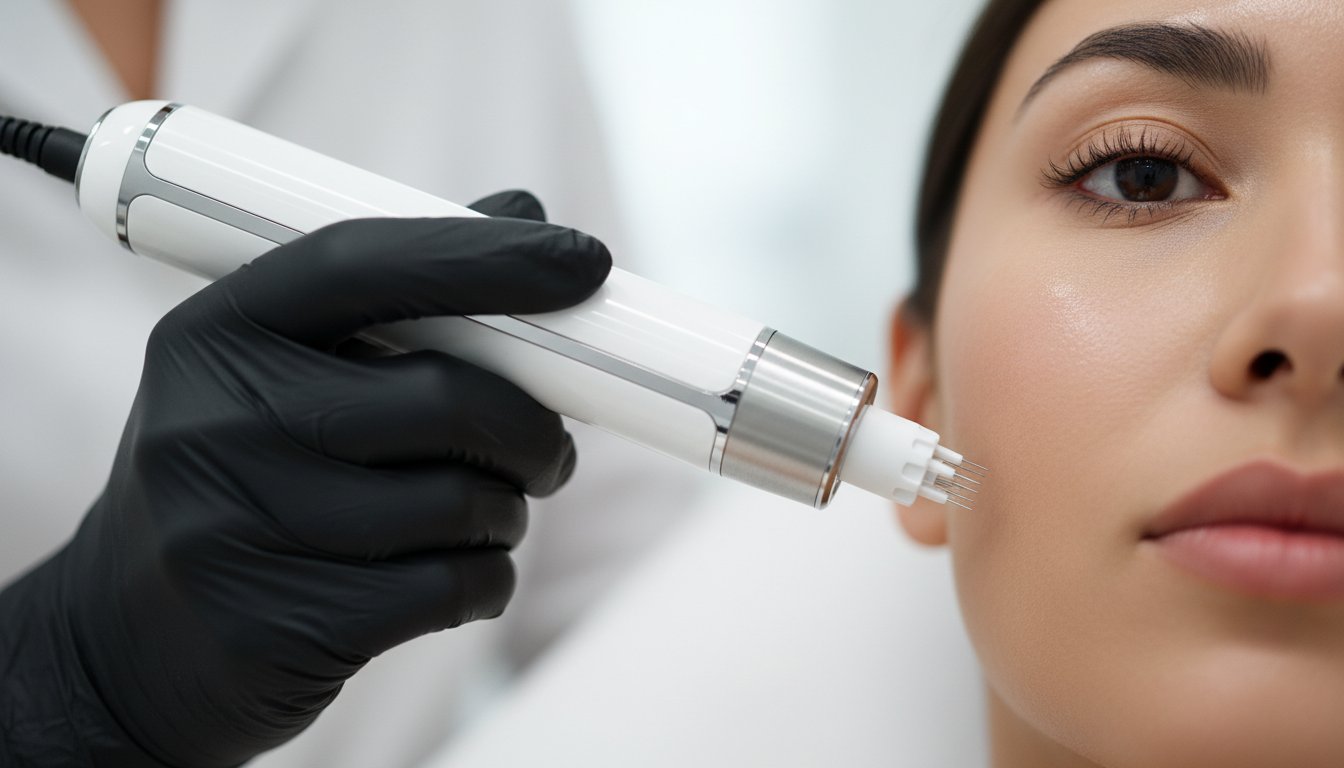
The journey of this technology began with rudimentary derma rollers in the late 1990s, which often caused unnecessary epidermal tearing due to the arcing motion of the needles. Today, automated pen technologies have revolutionized the field. These devices utilize high-speed vertical insertion, which minimizes lateral trauma and significantly improves patient comfort. Modern needle gauges have become incredibly refined, often measuring as thin as 33G. This precision is a hallmark of European safety standards, particularly Danish design, ensuring that every puncture is clean, vertical, and biocompatible.
Why Microneedling is a Non-Invasive Powerhouse
The primary advantage of the procedure lies in its ability to preserve the epidermis while aggressively stimulating the underlying dermis. Unlike ablative laser resurfacing, which removes the skin’s protective outer layer and requires extensive downtime, this therapy keeps the skin barrier largely intact. It’s an approach that generates no heat, making it an exceptionally safe option for all skin types on the Fitzpatrick scale. In the Australian climate, where post-inflammatory hyperpigmentation (PIH) is a constant concern for many patients, the low-heat profile of this treatment offers a 40% reduction in recovery time compared to traditional heat-based modalities.
- Preserves epidermal integrity to reduce infection risks.
- Triggers autologous collagen production for long-term skin health.
- Suitable for delicate areas like the periorbital and perioral regions.
- Complies with rigorous European medical device certifications.
The Biological Mechanism: How Microneedling Triggers Cellular Regeneration
Professional microneedling operates on the principle of controlled wound healing, a sophisticated biological process that bypasses the skin’s surface barrier without causing permanent damage. When the sterile needles penetrate the dermis, they create thousands of microscopic channels, immediately triggering a biochemical cascade. This mechanical stimulus prompts the release of essential growth factors, such as Platelet-Derived Growth Factor (PDGF) and Transforming Growth Factor-alpha and beta. A comprehensive review of microneedling highlights how these signals activate fibroblasts, the primary cells responsible for the structural integrity of the extracellular matrix.
The regenerative response begins with the synthesis of Type III collagen, often referred to as “youth collagen” due to its prevalence in neonatal skin. Over a period of several weeks to months, the skin undergoes a sophisticated transition where this flexible Type III collagen is systematically replaced by Type I collagen. This maturation is vital for long-term structural integrity; Type I collagen provides the tensile strength and resilience that defines healthy, rejuvenated skin. Simultaneously, the procedure enhances cellular communication, allowing for a more efficient exchange of nutrients and waste products across the cell membranes.
The Three Phases of Wound Healing
Within seconds of the initial needle penetration, the body initiates an immune response. Platelets are activated to form a haemostatic plug, releasing cytokines that recruit white blood cells to the area. This phase typically lasts 24 to 48 hours in a professional clinical setting, clearing debris and preparing the site for new tissue growth.
From day two to approximately three weeks post-treatment, the proliferation phase dominates. Keratinocytes migrate across the micro-channels to close the gaps, while fibroblasts produce a new framework of collagen and elastin. Angiogenesis also occurs, creating new micro-capillaries to improve oxygenation and nutrient delivery to the healing tissue.
The final stage, remodeling, can continue for up to 12 months. This is the maturation phase where the newly formed collagen matrix is tightened and organised. The result is a smoother, firmer skin surface that reflects the high-end European quality standards expected in modern Australian clinics.
Addressing Targeted Concerns: Scars to Pigmentation
For patients presenting with acne scarring, the mechanical action of the needles is transformative. It physically breaks down the dense, fibrous bands of old scar tissue that pull the skin downward. By disrupting these tethered bundles, microneedling allows the skin to rebuild a level, uniform surface. When addressing hyperpigmentation, the procedure regulates melanocyte activity. By improving the health of the basement membrane, it prevents the erratic “dumping” of pigment into the dermis, resulting in a more balanced and luminous complexion. For patients who also struggle with active breakouts, understanding the clinical science behind an effective acne spot treatment can help bridge the gap between blemish resolution and long-term skin regeneration.
By 2026 standards, micro-channels facilitate the normalization of skin function by restoring the bio-electrical potential of the cell membrane and optimising the transdermal delivery of biocompatible serums. Practitioners can further elevate their clinical outcomes by integrating specialised mesotherapy solutions designed to work in synergy with the body’s natural regenerative cycle.
Precision Technology: Why the Choice of Device Dictates Results
In the competitive Australian aesthetic market, the distinction between a standard treatment and a superior clinical outcome often resides in the hardware itself. While the biological premise of microneedling remains consistent, the delivery mechanism determines whether the skin experiences controlled induction or unnecessary trauma. Professional clinics now prioritise motorised systems that offer exact control over the inflammatory response, moving away from the unpredictable nature of manual tools.
The technical superiority of a professional pen lies in its ability to maintain motor stability under resistance. When a device lacks a high-torque motor, the needles may hesitate or “drag” through the tissue, causing epidermal tearing rather than clean punctures. This precision is what separates medical-grade equipment from consumer-level alternatives. It ensures that the skin’s barrier is respected while the underlying dermis is effectively stimulated.
MESOpowerpen vs. Traditional Derma Rollers
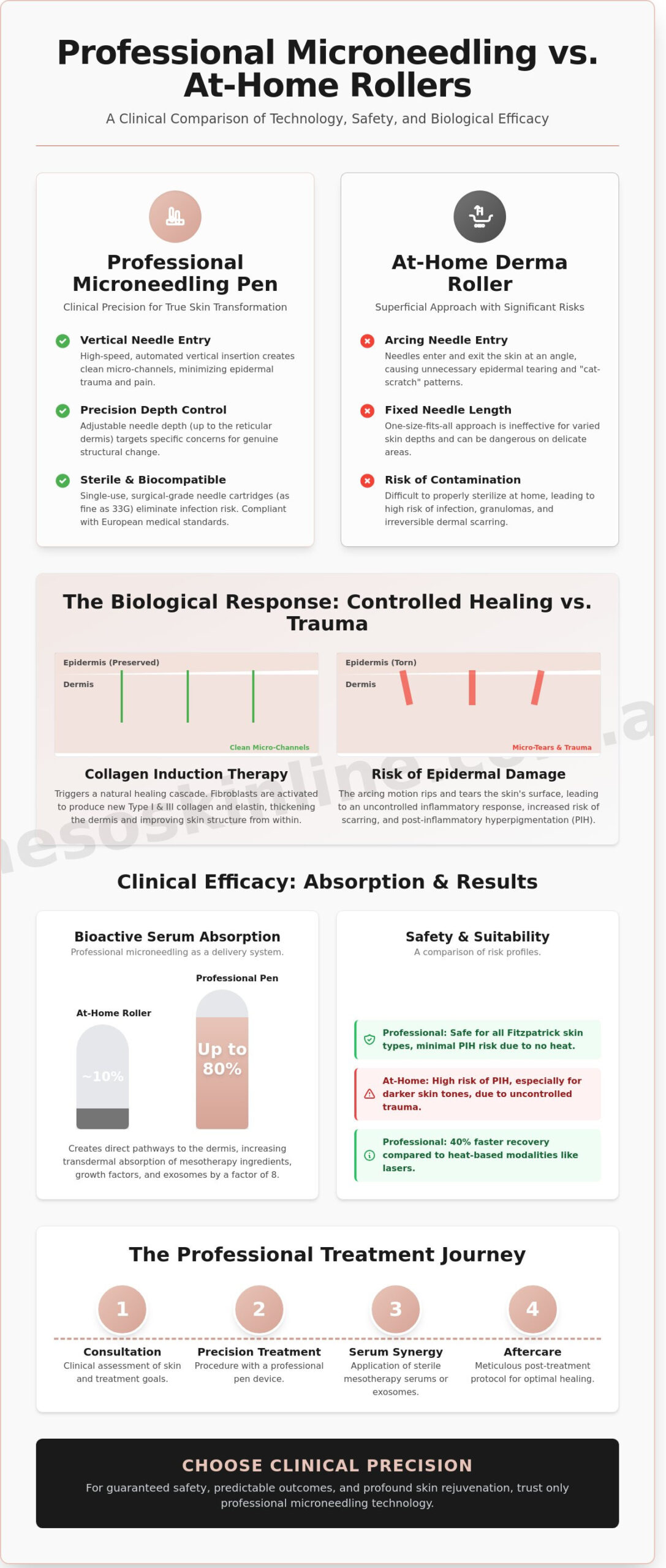
Traditional derma rollers utilize a rotational movement that forces needles to enter and exit the skin at an angle. This “arch” effect often leads to “track-mark” scarring or jagged epidermal tearing because the needle enters at one angle and leaves at another. Modern professional pens, however, utilize high-frequency vertical oscillation. This ensures every micro-channel is a clean, perpendicular entry. A Comprehensive Review of Microneedling in Dermatology confirms that the precision of these mechanical devices is fundamental to minimizing downtime and maximizing the wound-healing response.
- Vertical Entry: Eliminates the “slicing” effect of rolling needles, preserving the integrity of the epidermis.
- Disposable Cartridges: Removes the risk of cross-contamination, a non-negotiable standard in Australian infection control protocols.
- Ergonomic Design: Reduces practitioner hand fatigue during back-to-back clinical bookings, ensuring consistent pressure across all treatment zones.
Danish Expertise and European Quality Standards
Sourcing equipment from regulated European markets provides a level of biocompatibility that unregulated devices can’t match. The MESOpowerpen represents Danish precision engineering, adhering to strict CE certification standards. These regulations ensure the metals used in the needle tips don’t leach nickel or other irritants into the dermis during the microneedling process. High-quality motors prevent the needle “judder” that causes micro-bruising.
Adjustable needle depth is another critical factor for the modern clinician. You can’t treat the forehead at the same depth as the cheeks without risking periosteal contact or insufficient penetration. The MESOpowerpen allows for instant adjustments between 0.25mm and 2.5mm, ensuring the transdermal delivery of actives is optimized for the specific histology of the target area. This technical reliability allows Australian clinicians to offer repeatable results, ensuring every patient receives the same high standard of cellular regeneration regardless of the treatment session. For clinics currently using established systems, a detailed Dermapen 4 vs. MESOpower Pen professional comparison reveals how Danish engineering can lower consumable overhead while delivering superior versatility across face, hair, and body treatments.
Beyond the Needle: The Synergy of Mesotherapy and Exosomes
While the mechanical action of microneedling triggers the body’s natural wound-healing response, its true clinical power lies in its role as a sophisticated transdermal delivery vehicle. By creating thousands of controlled micro-channels, the procedure bypasses the skin’s natural defenses to facilitate an 80% increase in the absorption of bioactive ingredients. This level of penetration is unattainable through standard topical application, where the majority of active molecules remain trapped on the surface. For Australian practitioners, the transition from simple needling to advanced mesotherapy requires a move away from standard skincare toward sterile, clinically graded serums. Using non-sterile products during a treatment that breaches the skin barrier introduces unnecessary risks; only biocompatible, medical-grade formulas ensure both patient safety and the superior aesthetic outcomes expected of a premium clinic.
Transdermal Delivery Systems
The stratum corneum serves as a formidable barrier, often preventing large-molecule actives from reaching the viable dermis where they’re most effective. Professional mesotherapy cocktails are engineered to navigate this barrier, utilizing high concentrations of PDRN (Polydeoxyribonucleotide) for deep cellular repair and Boto Xtreme for targeted smoothing of expression lines. These formulations rely on exceptional biocompatibility, ensuring that the substances integrate seamlessly with human tissue without triggering adverse inflammatory responses. By selecting specific actives, clinicians can pivot from a general rejuvenation treatment to a highly targeted intervention for photo-ageing or loss of elasticity. This methodical approach allows for a bespoke treatment plan that addresses the specific biological needs of the patient’s skin.
The Rise of Biotechnology in Skin Needling
Modern aesthetic medicine is shifting toward high-end biotechnology, specifically the use of vegan exosomes to orchestrate cellular regeneration. These plant-derived vesicles act as potent signaling molecules, accelerating the repair process and enhancing the skin’s structural integrity through improved intercellular communication. This technology isn’t limited to traditional facial rejuvenation; specialized serums now allow clinics to offer effective solutions for hair loss control and non-invasive lip volume enhancement. By incorporating Danish expertise and European manufacturing standards, clinics can ensure they’re providing the most ethical and potent regenerative treatments available. The future of microneedling isn’t found in the depth of the needle alone; it’s found in the biological potency of the substances delivered to the underlying tissue.
Elevate your clinic’s treatment outcomes by integrating professional mesotherapy serums and Danish-engineered technology into your practice.
The Professional Treatment Journey: Preparation and Aftercare
The path to transformative skin health begins long before the first needle makes contact with the dermis. A comprehensive professional consultation serves as the essential diagnostic phase where clinicians evaluate skin integrity and identify contraindications. This initial assessment ensures the microneedling procedure aligns with the patient’s biological profile, establishing a scientific baseline for the cellular regeneration to follow. Success depends on a disciplined approach to both priming the tissue and protecting the newly created micro-channels during the healing phase.
Preparing the Skin for Optimal Results
Achieving a flawless outcome requires the skin to be in a calm, non-reactive state. Patients must suspend the use of active retinoids, AHAs, and BHAs for at least five days prior to their appointment to prevent over-sensitisation. Within the clinic, the focus shifts to creating a sterile environment. Practitioners utilise clinical-grade disinfection, often employing chlorhexidine solutions, to mitigate the risk of cross-contamination and ensure patient safety. It’s vital that patients understand the immediate visual transition. Mild erythema, or a controlled pinkness resembling a light sunburn, is a standard physiological response that typically subsides within 24 to 48 hours as the initial inflammatory phase of Collagen Induction Therapy (CIT) begins.
Post-Procedure Protocols for Long-Term Health
The 24-hour period following a microneedling session represents a golden window for transdermal delivery. During this time, the micro-channels remain receptive to biocompatible nutrients. Clinicians should mandate the use of non-comedogenic, sterile hydration to support the skin’s barrier function without causing irritation. Because the Australian sun presents a high UV risk, absolute sun protection is a non-negotiable requirement. Patients must apply broad-spectrum SPF 50+ daily to prevent post-inflammatory hyperpigmentation, which is a significant risk when healing tissue is exposed to harsh UV radiation.
Integrating specialised repair serums, such as those developed through Danish expertise, accelerates the healing process and enhances the CIT response. These formulations soothe the epidermis while providing the essential building blocks for new collagen. Results are inherently cumulative rather than instantaneous. Most AU clinics recommend a structured series of 3 to 6 sessions spaced at 4 to 6-week intervals. This specific rhythm allows the skin to complete its natural renewal cycle, ensuring the structural improvements are both profound and enduring. By adhering to these professional protocols, practitioners can deliver the premium, high-end results that define the Mesoskinline Australia standard of excellence.
Mastering the Future of Clinical Skin Transformation
The evolution of transdermal therapy has moved beyond simple skin stimulation into a realm of exact biological intervention. It’s about precision. By harnessing the body’s innate wound-healing response through controlled microneedling, practitioners trigger a cascade of cellular regeneration that results in measurable increases in Type I collagen. Achieving these elite results requires more than technique; it demands the integration of Danish-engineered technology and biocompatible mesotherapy cocktails that meet rigorous European manufacturing standards. These clinical protocols ensure every treatment session provides a predictable, high-performance outcome for the patient’s long-term skin health.
For Australian practitioners, the path to mastery involves a commitment to both state-of-the-art hardware and specialized clinical education. Mesoskinline Australia provides the infrastructure for this professional elevation, combining patented device technology with evidence-based serums. You can discover the MESOpowerpen and advanced mesotherapy solutions from Mesoskinline Australia to integrate these sophisticated European standards into your practice. Embracing this level of scientific rigor transforms a standard service into a premium clinical experience that sets a new benchmark for aesthetic excellence across the country. Your journey toward superior skin transformation begins with a foundation of clinical excellence.
Frequently Asked Questions
Is microneedling painful and what should I expect during the procedure?
Professional microneedling is generally well-tolerated and is often described as a mild prickling sensation rather than a painful experience. In Australian clinical settings, a topical anaesthetic is typically applied 30 minutes before the session to ensure complete patient comfort. You’ll feel the systematic movement of the device across the skin, which creates controlled micro-trauma to stimulate natural healing without the discomfort associated with more aggressive surgical procedures.
How many microneedling sessions are required to see visible results for scarring?
Visible improvement in atrophic or surgical scarring typically requires 4 to 6 professional sessions spaced 4 to 6 weeks apart. Clinical observations indicate that a 70% reduction in scar texture is often achieved after a full course as the skin undergoes sequential collagen remodeling. This structured approach allows the dermis to regenerate effectively, with the most significant aesthetic refinements appearing 3 to 6 months after the final treatment.
What is the typical downtime after a professional microneedling treatment?
The typical downtime following a professional treatment is 24 to 48 hours, during which the skin may appear slightly flushed. This erythema is similar to a mild sunburn and usually subsides within the first two days as the skin’s barrier begins its repair process. Most patients find they can return to their social and professional obligations within 72 hours, enjoying a much faster recovery than that of traditional invasive resurfacing methods.
Can microneedling be performed on all skin tones and types safely?
Microneedling is safe for all Fitzpatrick skin types, from Type I to Type VI, because it doesn’t use thermal energy that can trigger post-inflammatory hyperpigmentation. This mechanical method preserves the epidermis while targeting the deeper dermal layers to encourage rejuvenation. It’s a particularly reliable solution for the diverse Australian population, offering a high safety profile for those with darker skin tones who might be at risk with certain laser therapies.
How does professional microneedling differ from at-home derma rolling?
Professional treatments utilize medical-grade devices that reach depths of up to 2.5mm, while at-home rollers are limited to a superficial 0.25mm. Clinical protocols, rooted in Danish expertise, ensure vertical needle entry to prevent the epidermal tearing often caused by the curved path of manual rollers. Furthermore, professional sessions provide access to sterile, biocompatible serums that enhance the transdermal delivery of active ingredients during the cellular regeneration process.
What are the main contraindications for microneedling that I should be aware of?
The primary contraindications include active acne infections, eczema, or psoriasis in the treatment area, along with a history of keloid scarring. Patients who’ve used Isotretinoin within the last 6 months must delay their session to ensure the skin’s natural healing capacity isn’t compromised. A thorough consultation identifies these 12 key risk factors to ensure the procedure remains a safe, non-invasive experience that prioritizes long-term skin health. Clinicians managing patients with concurrent breakout concerns may also benefit from reviewing the clinical science behind professional acne spot treatment protocols to ensure a comprehensive and coordinated approach to skin recovery.
How soon can I apply makeup or return to my regular skincare routine?
You can typically apply mineral-based makeup 24 hours after your session, but you’ll need to wait 48 to 72 hours before using active ingredients like retinols or vitamin C. During the initial 24-hour window, the micro-channels remain open and vulnerable to irritation from complex cosmetic formulas. Following this brief period, resuming a gentle, hydrating routine supports the structural integrity of the skin as it responds to the collagen induction therapy.
Are the results of collagen induction therapy permanent?
The new collagen produced during the treatment is permanent, but the skin will continue to age naturally due to biological and environmental factors. Clinical data shows that the aesthetic benefits of a treatment course can be maintained for 12 to 24 months depending on your lifestyle and sun protection habits. Most practitioners recommend a single maintenance session every 6 to 12 months to sustain the flawless, rejuvenated appearance achieved during the initial series.
What Others Are Reading:


Stay in the Glow
Get skincare tips and early access to new products.
