
Best Microneedling Pen for Aestheticians: A Professional Guide to Clinical Excellence in 2026
What if the traditional pursuit of maximum needle depth is actually the primary barrier to your clinic’s long term success? Many Australian practitioners now find themselves caught between the 2023 AHPRA regulatory shifts and the reality that high consumable costs, often exceeding A$60 per treatment, are eroding professional margins. Identifying the best microneedling pen for aesthetician use in 2026 isn’t just about technical specifications; it’s about securing a TGA-aligned partner that prioritizes transdermal integrity over aggressive trauma. You understand that true skin transformation happens through controlled cellular regeneration rather than excessive downtime.
In this professional guide, you’ll discover the definitive criteria for selecting a device that harmonizes clinical efficacy with rigorous Australian compliance standards. We’ll examine how Danish expertise and non-invasive protocols can elevate your service offerings and secure a significant return on investment. This analysis provides a clear roadmap to achieving flawless results while maintaining the highest levels of safety and scientific credibility in your practice. By aligning with state of the art biotechnology, you can move beyond fleeting trends toward a mastery of skin health that respects both the biological process and your business’s bottom line.
Key Takeaways
- Master the transition to targeted epidermal modulation, where motor stability and precision oscillation replace outdated “deeper is better” myths for superior skin integrity.
- Secure your practice by understanding the non-negotiable TGA registration requirements and the 1mm depth threshold critical for Australian aesthetic practitioners.
- Evaluate state-of-the-art hardware specifications to identify the best microneedling pen for aesthetician professionals, ensuring optimal oscillation frequency and clinical precision.
- Optimise your clinic’s financial health by balancing hardware depreciation with consumable spend to achieve sustainable growth and versatile treatment outcomes in the Australian market.
- Explore the integration of the dual-function MESOpower Pen with sophisticated Danish serums and vegan exosomes to elevate your professional offerings to the pinnacle of non-invasive mesotherapy.
The Evolution of Microneedling: Why Precision Defines the 2026 Clinical Standard
The clinical landscape of skin rejuvenation has undergone a radical transformation since the early days of aggressive dermal rolling. In 2026, the industry has moved away from the “deeper is better” philosophy that dominated previous decades. Identifying the best microneedling pen for aesthetician professionals now requires a focus on epidermal modulation rather than deep tissue trauma. Modern clinicians understand that excessive depth often leads to chronic inflammation and compromised barrier function, which can hinder the very results they aim to achieve.
Danish expertise has been instrumental in this shift. By applying Scandinavian principles of precision engineering and biological respect, the focus has transitioned toward supporting the skin barrier. This approach utilizes high-frequency, controlled micro-perforations to stimulate cellular communication without the need for extensive wounding. Australian practitioners are increasingly adopting these high-efficacy protocols to meet a growing demand for treatments that deliver visible results without the risks associated with traditional, invasive methods.
From Injury to Infusion: A Paradigm Shift
The historical definition of Collagen induction therapy focused primarily on mechanical injury to trigger a healing response. Today, the best microneedling pen for aesthetician use acts as a sophisticated transdermal delivery vehicle. Instead of relying on macro-trauma, modern devices create precise channels designed for the infusion of biocompatible serums. This method prioritizes “non-invasive” excellence, ensuring that the skin’s natural protective layers remain intact while active ingredients reach the targeted cellular levels.
The Aesthetician’s Role in the Modern Market
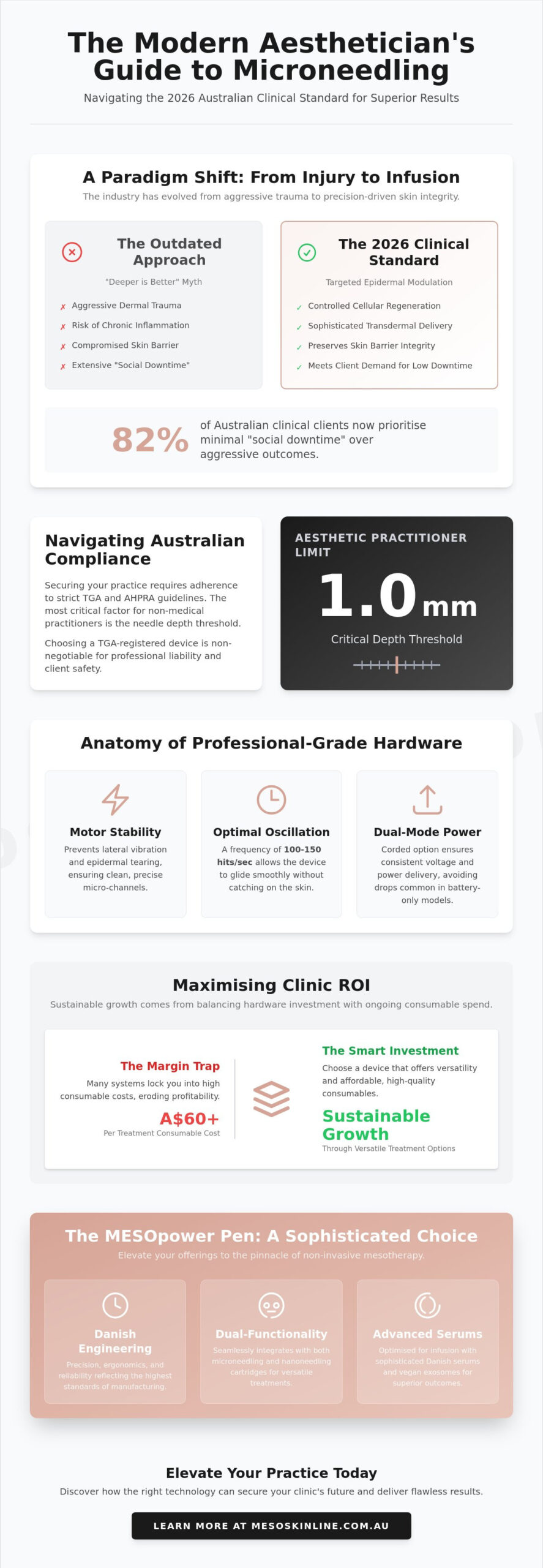
Current market data indicates that approximately 82% of Australian clinical clients now prioritise “social downtime” over immediate, aggressive outcomes. This shift positions the aesthetician as a sophisticated innovator who must balance safety with efficacy. By moving toward biocompatible treatment paths, practitioners can offer rejuvenation that aligns with the body’s natural regenerative cycles. This evolution requires tools that offer:
- Digital precision to control needle depth within 0.1mm increments.
- High-speed oscillation to prevent epidermal tearing.
- Compatibility with sterile, pharmaceutical-grade meso-cocktails.
- Ergonomic designs that reflect the high standards of Danish manufacturing.
Key Technical Specifications: Identifying Professional-Grade Hardware
Selecting the best microneedling pen for aesthetician use requires a deep understanding of motor dynamics. A stable motor isn’t just about power; it’s about the precision of the needle’s path. When a motor lacks stability, it creates lateral vibration. This vibration causes the needles to enter the skin at varying angles, leading to unnecessary trauma and epidermal tearing. Professional-grade hardware maintains a consistent oscillation frequency between 100 and 150 hits per second. This specific range allows the device to glide across the skin without catching, ensuring the creation of clean micro-channels.
Power delivery influences clinical outcomes significantly. While cordless models offer freedom of movement, they often suffer from voltage drops as the battery depletes. A dual-mode device that allows for corded use ensures the motor receives a steady current during a full day of back-to-back appointments in a busy Australian clinic. Ergonomics also play a vital role. A balanced, lightweight hand-piece reduces the strain on the practitioner’s wrist during a 45-minute full-face and neck treatment, allowing for steady pressure and flawless execution.
The Mechanics of Vertical Oscillation
Vertical oscillation is the cornerstone of modern transdermal delivery. Unlike traditional derma rollers that enter and exit the skin at an angle, professional pens create clean, perpendicular micro-channels. This precision prevents the “trenching” effect associated with rolling devices. Needle drag is the unintended lateral displacement of tissue caused by insufficient motor speed or poor needle alignment, resulting in jagged micro-incisions rather than clean vertical channels. High-quality motors ensure each puncture is a discrete event, promoting faster cellular regeneration and superior biocompatible absorption.
Cartridge Technology and Hygiene Standards
Cartridge integrity is the final frontier of patient safety. Every professional cartridge must feature an integrated anti-backflow membrane to prevent cross-contamination between the patient’s fluids and the hand-piece. Medical-grade stainless steel needles ensure the tips remain sharp throughout the session, reducing the risk of inflammation. Professionals typically utilize 12-pin configurations for targeted scarring or 36-pin arrays for general rejuvenation. Precise depth control, ideally in 0.1mm increments, allows the aesthetician to tailor the treatment to the specific dermal thickness of the forehead, cheeks, or periorbital area. You can explore these technical standards further through professional certification and equipment kits
Navigating the Australian Regulatory Landscape: AHPRA and TGA Compliance
Clinical excellence in Australia isn’t just about technique; it’s about adhering to the strict frameworks established by the Therapeutic Goods Administration (TGA) and AHPRA. When you’re selecting the best microneedling pen for aesthetician use, the regulatory status of the device determines your clinic’s legal safety and insurance eligibility. Operating a professional practice in 2026 requires a deep understanding of how these regulations protect both the practitioner and the patient.
The 1mm Rule: Protecting Your Practice
AHPRA guidelines distinguish between cosmetic and medical skin needling based on the depth of penetration. For non-medical practitioners, the standard depth threshold is 1.0mm. Operating beyond this depth increases the risk of reaching the reticular dermis, which transitions the procedure into a medical intervention requiring specific medical licensure. Achieving superior results within the 0.25mm to 1.0mm range is the hallmark of a skilled aesthetician. This window allows for effective induction of collagen and the efficient transdermal delivery of biocompatible serums without the inflammatory risks associated with deeper, medical-grade wounding. If you use a device capable of 2.5mm depths in an aesthetic setting, you risk voiding your professional indemnity insurance if a complication occurs, as the device may be classified as “medical-only” hardware.
TGA and ARTG: The Gold Standard for Safety
A Therapeutic Goods Administration (TGA) registration signifies that a device is legally included on the Australian Register of Therapeutic Goods (ARTG). This registration is non-negotiable for any legitimate clinic. Using a non-registered pen, even one purchased from a reputable international site, exposes your practice to significant liability. Insurance providers in Australia typically require all hardware to be TGA-approved to maintain coverage. You can verify a device’s status by checking its specific ARTG number on the government’s public database. Choosing the best microneedling pen for aesthetician professionals involves ensuring the manufacturer provides full transparency regarding their ARTG listing and European CE certification.
MesoSkinline’s commitment to Danish design principles ensures that every device meets rigorous European standards before arriving in the Australian market. This heritage of precision engineering provides a layer of reassurance for the sophisticated practitioner who values safety and innovation. European CE certification often aligns with TGA requirements, emphasizing biocompatibility and cellular regeneration. By choosing hardware that respects both local regulations and international quality benchmarks, you elevate your practice to a level of clinical excellence that patients trust. It’s a strategic alignment with quality that prioritizes long-term skin health over fleeting industry trends.
- Compliance: Always confirm the ARTG number before purchase.
- Insurance: Verify that your policy covers the specific needle depths you intend to use.
- Heritage: Danish design and European manufacturing serve as indicators of ethical production and high-end hardware performance.
Maximising Clinic ROI: Consumables, Versatility, and Outcomes
Selecting the best microneedling pen for aesthetician use involves a rigorous analysis of long-term operational costs versus initial capital outlay. While high-end European hardware requires an upfront investment, the true profitability of a clinic rests in the ratio between consumable spend and treatment efficacy. Sophisticated Danish engineering ensures that needle cartridges maintain structural integrity throughout a 45-minute session, preventing the micro-tearing associated with cheaper, vibrating alternatives. This precision reduces skin trauma and eliminates the need for extensive post-procedural downtime, allowing clients to return to their professional lives immediately.
The Business of Skin Transformation
Microneedling remains one of the most profitable modalities in the Australian aesthetic market because it bypasses the heavy maintenance fees of Class 4 lasers. A standard treatment session often yields a profit margin exceeding 70% after accounting for the needle head and biocompatible serums. To elevate the service from a standard procedure to a premium experience, clinicians are increasingly bundling microneedling with advanced formulations like Boto Xtreme. This non-invasive alternative to traditional injections targets expression lines through a sophisticated blend of peptides. By positioning these treatments as high-end cellular regeneration therapies, practitioners often see a return on their hardware investment within the first 25 sessions. Reliable local distribution in Australia ensures that replacement parts and sterile consumables arrive without the 14-day delays often seen with international shipping, maintaining a seamless clinic schedule.
Beyond the Face: Expanding Your Service Menu
Versatility is the hallmark of a high-performing clinic. The best microneedling pen for aesthetician professionals should offer the depth control necessary to transition from delicate lip volume enhancement to intensive scalp renewal. Hair loss remains a significant concern, with approximately 40% of Australian men and 25% of women experiencing thinning by age 40. Utilising specialised serums during microneedling can stimulate the hair follicle and improve the transdermal delivery of growth factors, creating a lucrative new revenue stream.
- Scalp Microneedling: Targets follicle miniaturisation and improves blood flow to the dermis.
- Lip Rejuvenation: Enhances natural hydration and vertical line correction without synthetic fillers.
- Body Protocols: Addresses striae and skin laxity on the décolletage and hands.
Ongoing manufacturer support and professional certification are vital for mastering these advanced protocols. Comprehensive training ensures that clinicians can confidently navigate complex skin concerns, such as pigmentation correction, while adhering to the highest safety standards. This commitment to education builds a foundation of trust, encouraging client retention through consistent, visible results that reflect the precision of Danish design.
The MESOpower Pen: A Sophisticated Choice for Australian Clinicians
Selecting the best microneedling pen for aesthetician professionals involves looking beyond simple needle oscillation. The MESOpower Pen represents a paradigm shift in clinical technology, functioning as a sophisticated dual-purpose system that bridges the gap between traditional microneedling and advanced mesotherapy. This Danish-engineered device allows for precise transdermal delivery of active ingredients; it ensures that every treatment is both a mechanical stimulation of collagen and a targeted biochemical intervention. By rooting their technology in Danish clinical expertise, the brand provides a level of reliability that’s essential for maintaining a high-end clinical reputation in the 2026 market.
Clinicians across Australia are increasingly adopting this technology because it integrates seamlessly with the Mesoskinline ecosystem. This includes a specialized range of targeted serums and ethically sourced vegan exosomes. These biocompatible formulas are designed to work in synergy with the pen’s delivery mechanism, facilitating deeper cellular regeneration without the downtime associated with more aggressive surgical alternatives. The focus remains on long-term skin health, moving away from fleeting trends toward evidence-based results.
Technical Superiority and Design
The MESOpower Pen features a refined ergonomic design that prioritizes practitioner comfort and patient safety. Its advanced motor ensures consistent needle depth and speed, which is critical when treating delicate areas. The pen demonstrates exceptional synergy when paired with the Eyelift or Lip Volume serums. These specific protocols allow aestheticians to address periorbital fine lines and lip hydration with clinical precision. The intuitive interface means dermal clinicians can focus on the artistry of the treatment rather than struggling with complex settings; it’s a tool built for the precision of a professional hand.
A Partnership for Excellence
Investing in this technology offers more than just a hardware upgrade; it provides access to a comprehensive professional dermal training program specifically tailored for AU/NZ practitioners. This educational support ensures that every clinician can master the nuances of non-invasive mesotherapy. With exclusive APAC distribution, Australian clinics benefit from local technical support and a steady supply of consumables. This infrastructure is vital for business continuity and growth in a competitive landscape.
Choosing this system signifies a commitment to clinical excellence. The MESOpower Pen stands out as the best microneedling pen for aesthetician use because it combines safety, innovation, and European quality. It’s a tool designed for those who value measurable results and scientific integrity. We invite you to elevate your practice and redefine your treatment standards by exploring the MESOpower Pen today.
Defining the Future of Your Clinical Practice
As 2026 nears, the distinction between standard treatments and clinical excellence depends on the precision of your hardware and the integrity of your protocols. Success in the Australian market requires a rigorous commitment to TGA compliance and a deep understanding of cellular regeneration. By integrating state-of-the-art technology with biocompatible solutions, practitioners can achieve the transdermal delivery results that modern patients demand. Selecting the best microneedling pen for aesthetician use isn’t just about the device; it’s about a partnership with a brand that values scientific credibility. The MESOpower Pen represents this intersection of Danish clinical expertise and innovative design. It’s engineered to work seamlessly with advanced vegan exosome serums, ensuring your clinic stays ahead of evolving industry standards while maintaining absolute safety. This sophisticated tool provides a sustainable ROI through versatile treatment protocols and high-quality consumables that drive visible results. You’ve the opportunity to redefine what’s possible for your clients’ skin health and elevate your professional reputation. We’re here to help you master the art of skin transformation.
Explore the MESOpower Pen and Elevate Your Clinic Standards
Frequently Asked Questions
Is a TGA-registered microneedling pen mandatory for my clinic insurance?
TGA registration is essential for valid clinical insurance coverage in Australia. Most major insurers, including those covering the 4,000 members of the Aesthetics Practitioners Advisory Network (APAN), require that all powered devices carry an ARTG listing. Operating a non-registered device exposes your practice to significant legal liability and financial risk. It’s a non-negotiable standard for maintaining professional integrity and ensuring patient safety within the Australian regulatory framework.
Can an aesthetician perform microneedling deeper than 1mm in Australia?
Aestheticians in most Australian states can perform treatments up to 1.5mm, provided they hold appropriate certification and professional indemnity insurance. While specific health guidelines vary between states like Queensland and New South Wales, the 1.5mm threshold is the current industry standard for non-medical skin therapists. Selecting the best microneedling pen for aesthetician professionals ensures you have the mechanical precision to adjust depths in 0.1mm increments for absolute safety.
What is the difference between a professional microneedling pen and a derma roller?
Professional pens utilize high-speed vertical oscillation to create precise micro-channels, whereas derma rollers often cause unnecessary epidermal tearing due to their rotational entry and exit angles. The 90-degree needle penetration of a pen minimizes downtime and reduces the risk of post-inflammatory hyperpigmentation. This state-of-the-art technology allows for controlled cellular regeneration without the traumatic “track-mark” scarring associated with manual 192-needle rollers used in less sophisticated settings.
How often should clients receive professional microneedling treatments?
Clients should typically receive professional treatments every 4 to 6 weeks to align with the natural 28-day skin cell turnover cycle. This interval allows the three stages of wound healing, inflammation, proliferation, and tissue remodelling, to conclude effectively. Clinical data from 2024 suggests that a series of 3 to 6 sessions yields the most significant improvements in dermal density and collagen type III synthesis for long-term skin health.
What serums are best to use with a professional microneedling pen?
Biocompatible, sterile serums containing low-molecular-weight hyaluronic acid, multi-peptides, and stabilized vitamins are essential for safe transdermal delivery. MesoSkinline emphasizes non-invasive mesotherapy solutions that are free from fragrances and harsh preservatives, which can cause granulomas when introduced into the deeper dermis. Using a high-quality serum ensures the best microneedling pen for aesthetician use delivers active ingredients directly to the target fibroblasts for optimal rejuvenation results.
How do I choose between a corded and a wireless microneedling device?
Choosing between corded and wireless models depends on your clinic’s patient volume and the need for uninterrupted motor torque. Corded devices deliver a steady 240V power supply, which prevents the RPM fluctuations that can occur as lithium-ion batteries deplete. Wireless models offer superior ergonomic freedom during complex facial mapping; however, high-performance Danish designs often prioritise hybrid functionality. This gives practitioners the reliability of a fixed connection with the elegance of a cordless handle.
What are the main contraindications for professional microneedling?
Primary contraindications include active acne (Grade III or IV), keloid scarring tendencies, scleroderma, and the current use of blood-thinning medications. It’s mandatory to observe a 6-month wait period after a patient finishes an Isotretinoin course to ensure the skin’s barrier function has fully recovered. Practitioners must conduct a thorough consultation to identify these risks, as performing treatments on compromised skin can lead to adverse events and prolonged healing times.
Can I use a microneedling pen for hair loss and scalp treatments?
Microneedling pens are highly effective for scalp rejuvenation when used with specific growth factor serums to stimulate dormant follicles. A 2013 study published in the International Journal of Trichology demonstrated that patients experienced significant hair density increases when combining microneedling with topical therapies. The adjustable needle depth of a professional pen allows for precise targeting of the bulge area of the hair follicle, located approximately 1.0mm to 1.5mm below the skin surface.


Stay in the Glow
Get skincare tips and early access to new products.
