
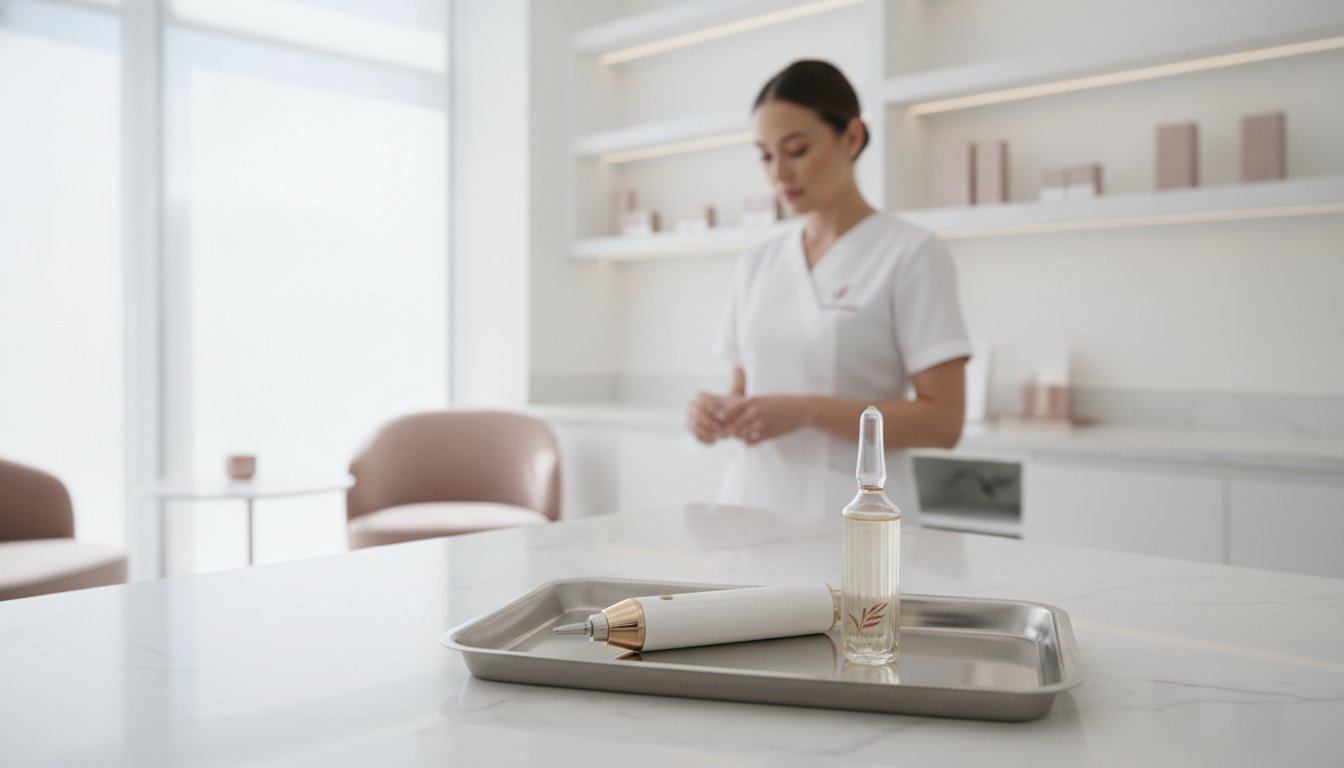
Combining Microneedling with Vegan Exosomes: The 2026 Clinical Guide for Australian Practitioners
The era of relying solely on mechanical skin trauma to trigger rejuvenation is officially over. Many Australian practitioners have noticed that even the most precise treatments eventually hit a plateau, leaving clients seeking a more sophisticated result than standard collagen induction can provide. By combining microneedling with vegan exosomes, you’re no longer just wounding the skin; you’re facilitating a high-level biological dialogue that instructs cells to repair and regenerate with unprecedented speed.
It’s a shift that addresses growing concerns regarding the ethics and safety of human or animal-derived products while meeting the 2026 demand for clean, biotech-driven aesthetics. You’ll learn how this strategic fusion of precision technology and plant-derived signals is redefining skin rejuvenation standards across the country. This clinical guide provides a comprehensive preview of the protocols required to deliver superior results in pigmentation and anti-ageing, ensuring your clinic offers a clearly differentiated, high-margin service that remains compliant with the latest TGA and AHPRA standards.
Key Takeaways
- Transition from traditional mechanical repair to a sophisticated ‘prime and deliver’ protocol that leverages biological communication for faster healing times.
- Learn why combining microneedling with vegan exosomes provides a safer, ethical, and more compliant alternative to human-derived solutions in the current Australian regulatory landscape.
- Optimise the absorption of high-performance exosomal serums by utilising the precision micro-channels created by the Mesopowerpen.
- Develop specialised treatment plans tailored for Australian sun-damaged skin profiles, focusing on high-impact results for pigmentation and anti-ageing.
- Position this innovative therapy as a premium clinic offering to justify higher price points and deliver a significant return on investment through superior outcomes.
Beyond Surface Repair: Why Combining Microneedling with Vegan Exosomes is a Game-Changer
The aesthetic industry has reached a pivotal turning point. For years, clinicians relied almost exclusively on the skin’s innate ability to repair itself after a controlled injury. This process, professionally known as Collagen induction therapy (CIT), remains a foundational element of skin health. However, relying purely on the body’s passive recovery often leads to a result plateau, especially when treating mature or highly compromised tissue. Combining microneedling with vegan exosomes transforms this mechanical process into a sophisticated “prime and deliver” protocol. It’s a strategic evolution for 2026. The needles prime the tissue by creating precise micro-channels, while the exosomes deliver the biological instructions required for rapid, superior repair.
Australia is currently witnessing a significant shift towards “Regenerative Aesthetics.” Practitioners are moving away from aggressive, trauma-heavy treatments that merely force a healing response. Instead, they’re embracing biotechnology that facilitates cellular communication. Traditional microneedling in isolation often struggles with complex concerns like deep-seated pigmentation or advanced photo-ageing. This is because the skin often lacks the necessary signals or “spare parts” to complete the regenerative cycle efficiently. By introducing exosomal technology, you’re shifting the treatment from a simple mechanical repair to an active biological dialogue.
The Evolution of Collagen Induction Therapy
Standard hyaluronic acid serums have long been the clinical ceiling for glide and hydration during needle-based treatments. While these formulations are excellent for moisture retention, they’re essentially passive. They don’t talk to the cells. Exosomes bridge the gap between basic aesthetics and high-end biotechnology. They act as sophisticated messengers that don’t just sit in the tissue; they actively instruct fibroblasts to increase the production of collagen and elastin. This transition from mechanical injury to biological rejuvenation is what defines a modern, results-driven practice.
What are Vegan Exosomes?
Understanding the molecular composition is vital for maintaining clinical authority with your clients. Vegan exosomes are extracellular vesicles derived from plant stem cells rather than human or animal-derived mesenchymal cells. These microscopic spheres carry a high-potency cargo of messenger RNA (mRNA), cytokines, and growth factors. They’re designed to facilitate intercellular communication, ensuring that the skin’s regenerative processes are targeted and efficient. Vegan exosomes represent the ethical frontier of cellular communication, providing a high-performance alternative that aligns with the Australian demand for clean, sustainable biotechnology.
The Science of Plant-Derived Purity: Why Vegan Exosomes Outperform Traditional Sources
The Australian aesthetic market is uniquely discerning. Clients here don’t just want results; they want to know the origin and ethical profile of the biotechnology used on their skin. While human-derived exosomes were once considered the standard, the clinical landscape in 2026 has shifted towards plant-derived alternatives. This transition isn’t merely about ethics; it’s about the superior purity and stability that vegan formulations offer. When combining microneedling with vegan exosomes, practitioners are delivering a product that is free from the DNA and viral contaminants sometimes associated with human donor-derived batches.
Stability is a critical factor for any high-end clinical serum. Vegan exosomes are engineered to maintain their potency at room temperature, ensuring that the concentration of messenger RNA and growth factors remains consistent from the first drop to the last. This reliability allows for a more predictable clinical outcome. It also reduces the risk of an adverse inflammatory response, a common concern when introducing foreign biological material into the skin. By choosing plant-derived vesicles, you’re opting for a highly biocompatible solution that mirrors the skin’s natural signalling pathways without the immunogenic baggage of animal or human sources.
Biocompatibility and Safety Profiles
Plant-derived vesicles offer a remarkably low risk of sensitivity or “rejection” because they lack the complex proteins that can trigger a human immune response. For Australian practitioners, the importance of sterile, lab-controlled manufacturing cannot be overstated. Mesoskinline products are engineered in Denmark under rigorous international standards, ensuring a level of purity that is difficult to achieve with less regulated human-derived sources. This “clean” profile is a significant safety advantage. It provides peace of mind for both the clinician and the patient, especially when treating sensitive or compromised skin types that are prone to reactivity.
Vegan vs. Animal-Derived: A Clinical Comparison
The diversity of growth factors found in plant stem cells often exceeds that of human mesenchymal cells, particularly regarding antioxidant and anti-inflammatory properties. This makes vegan options particularly effective for addressing the “Australian sun-damaged” skin profile. From a business perspective, the marketing advantage is clear. Australian consumers are increasingly part of a “conscious consumer” demographic that prioritises cruelty-free and ethical clinical solutions. Exploring the full range of vegan exosomes allows your clinic to align with these values while maintaining a high-performance service offering. Combining microneedling with vegan exosomes allows you to bridge the gap between medical precision and the growing demand for ethical, high-tier skincare.
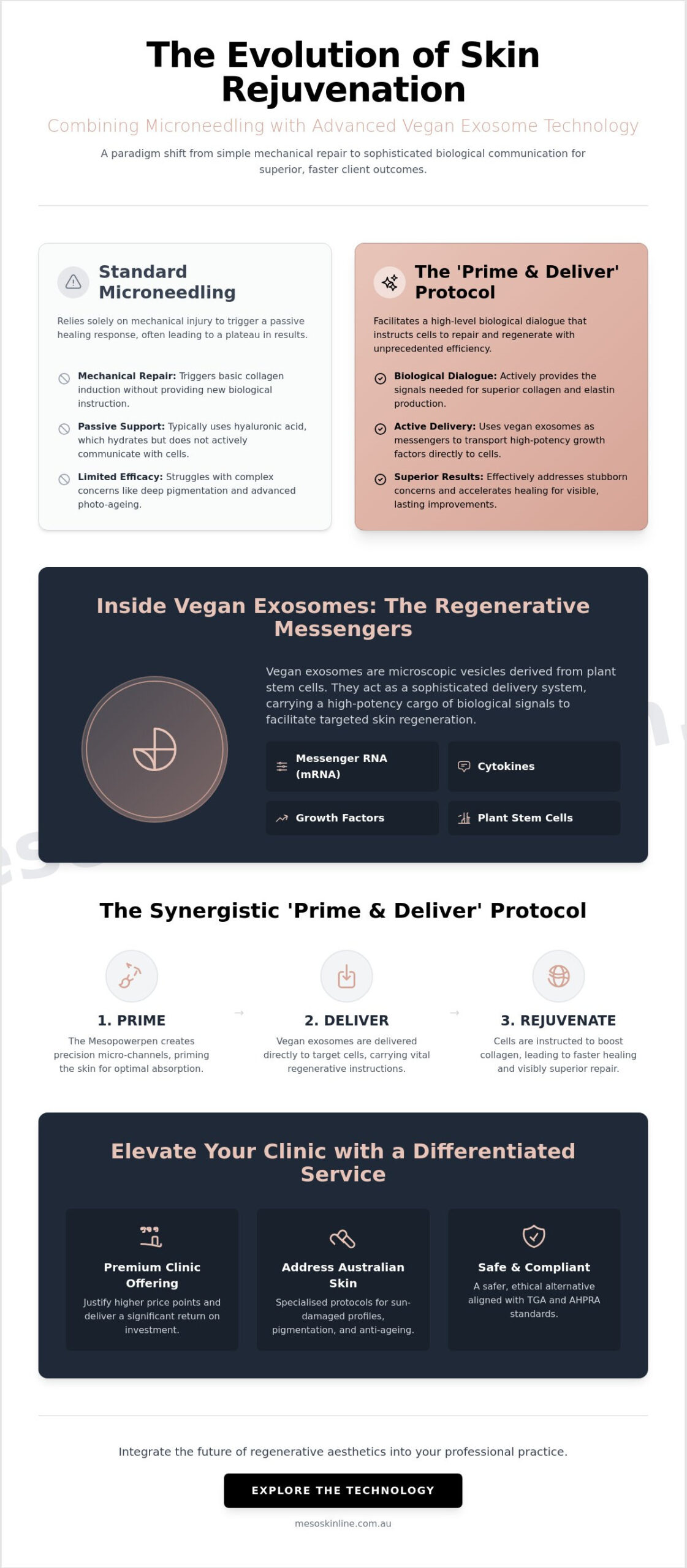
Strategic Synergy: How the Mesopowerpen Maximises Exosomal Delivery
The efficacy of any regenerative treatment is fundamentally limited by the precision of its delivery system. When combining microneedling with vegan exosomes, the device used is not merely a tool; it is the gatekeeper of the dermal layer. High-potency exosomal serums are a significant investment for any clinic. Using a sub-standard delivery method doesn’t just compromise the client’s result; it wastes expensive biological cargo. The Mesopowerpen is engineered to ensure that every microscopic vesicle reaches its intended destination within the skin’s architecture.
Device quality directly dictates the absorption rate of these advanced formulations. A device that lacks motor stability or uses inferior needles will cause unnecessary epidermal trauma, triggering a massive inflammatory response that can actually degrade the delicate exosomal messengers. By contrast, a high-end system provides the stability required to create clean, vertical channels. This precision is what allows for a sophisticated “prime and deliver” protocol that differentiates a premium clinic from its competitors.
Precision Engineering for Professional Results
The Mesopowerpen’s motor stability is a critical clinical advantage. It prevents the vibrating, side-to-side movement that leads to epidermal tearing and prolonged downtime. Vertical needling is essential because it ensures that exosomes are deposited directly into the targeted dermal layer rather than being wiped away on the surface. Because of this mechanical accuracy, the Mesopowerpen ensures 80% better absorption of active ingredients compared to traditional topical application. Adjustable needle depth is equally vital. It allows the practitioner to customise the delivery for different facial zones, such as the delicate periorbital area or the denser tissue of the cheeks, ensuring optimal exosome penetration across the entire treatment area.
Optimising the Delivery Window
Timing is everything in regenerative aesthetics. There is a “Golden Hour” immediately following the use of high-quality microneedling devices where the skin’s permeability is at its peak. During this window, the micro-channels are fully patent, allowing for maximum cellular uptake of the growth factors and cytokines contained within the vegan exosomes. For the best outcomes, practitioners should layer the serums during the needling process itself and immediately afterward. This ensures that the exosomal signals are locked into the tissue before the skin’s natural inflammatory cascade begins to close the entry points. Combining microneedling with vegan exosomes using this synergistic approach ensures that you aren’t just treating the surface; you’re fundamentally reprogramming the skin’s healing response from within.
Treatment Protocols and Visible Outcomes: Addressing Australian Skin Concerns
The Australian climate presents a unique set of dermatological challenges. With one of the highest UV indices globally, practitioners here frequently manage skin characterised by chronic photo-ageing, solar lentigines, and compromised barrier function. Combining microneedling with vegan exosomes offers a targeted solution that goes beyond traditional resurfacing. It addresses the underlying cellular damage caused by years of sun exposure. While standard treatments might trigger a prolonged inflammatory response in UV-stressed skin, exosomal signalling helps to modulate this inflammation, leading to a more controlled and efficient healing phase.
Downtime is a significant concern for the busy Australian professional. Traditional aggressive protocols often require several days of social withdrawal. However, the integration of plant-derived growth factors significantly accelerates re-epithelialisation. Most clients report a visible reduction in erythema within 24 hours, allowing them to return to their daily routines faster than with microneedling alone. Beyond the immediate recovery, the real transformation occurs at a structural level. You can expect to see the most profound results in skin density and elasticity between 3 to 6 months post-protocol, as the newly synthesised collagen matures and integrates into the dermal matrix.
Correcting Pigmentation and UV Damage
Exosomes play a vital role in down-regulating melanocyte activity, making them an essential component for treating melasma and post-inflammatory hyperpigmentation. By delivering specific microRNA that inhibits overactive pigment production, they provide a biological “brake” for the skin’s melanogenic pathways. Synergising this approach with specialized pigmentation solutions ensures a comprehensive repair strategy that addresses both existing surface discolouration and the cellular triggers beneath. This combination is rapidly becoming the preferred choice for Australian summer recovery programmes, as it calms the skin while actively reversing solar damage.
The Anti-Ageing Powerhouse: Fine Lines and Texture
The “plumping” effect achieved through exosomal therapy is fundamentally different from the temporary hydration provided by traditional mesotherapy. Exosomes stimulate the production of both Type I and Type III collagen, restoring the structural integrity that is often lost through environmental ageing. This leads to a visible refinement in skin texture and a reduction in the depth of fine lines. For clients concerned with dynamic expression lines, integrating Boto Xtreme into the protocol allows for a multi-layered approach to rejuvenation. You aren’t just filling lines; you’re reprogramming the tissue to behave like younger, healthier skin. To elevate your clinical outcomes and offer these advanced protocols, explore the full range of professional Mesoskinline systems today.
Elevating Your Clinic: Integrating Mesoskinline Vegan Exosomes into Professional Practice
Integrating new technology into a clinical setting requires more than just technical skill; it demands a strategic business approach. Combining microneedling with vegan exosomes is not merely an upgrade to your treatment menu. It represents a fundamental shift in how you position your clinic within the competitive Australian landscape. By moving away from basic mechanical procedures and embracing regenerative biotechnology, you’re targeting a high-value demographic that prioritises safety, ethics, and visible transformation. This transition allows you to move from being a service provider to a visionary expert in skin health.
The return on investment for exosome-based protocols is significant. While the initial cost of high-potency serums is higher than standard hyaluronic acid solutions, the superior outcomes justify a premium price point. Clients in 2026 are increasingly results-driven and time-poor. They’re willing to pay for the “Golden Hour” delivery of growth factors that ensures faster healing and better long-term collagen synthesis. This isn’t just about selling a procedure; it’s about offering a complete system for success that ensures long-term client loyalty and clinical differentiation.
Marketing the ‘Vegan Exosome’ Advantage
Differentiations are the key to growth. Many clinics still utilise generic or non-vegan sources, which can lead to regulatory hurdles or ethical pushback from clients. By highlighting the ‘Vegan’ and ‘Regenerative’ aspects of your service, you’re speaking directly to a conscious consumer base. Educate your clients on how combining microneedling with vegan exosomes creates a biological dialogue that instructs their skin to repair itself. Use before-and-after evidence to build trust in the technology. Showing the accelerated reduction in redness and the long-term plumping effect provides the social proof required to convert traditional microneedling clients to this premium offering.
Partnering for Success with Mesoskinline
Success in regenerative aesthetics depends on the quality of your supply chain and the depth of your clinical knowledge. Mastery of these advanced protocols is essential. Attending specialised facial courses is a vital step for practitioners who want to master the “prime and deliver” technique. Mesoskinline Australia provides a strategic partnership that combines Danish clinical heritage with efficient national distribution. This ensures your clinic has consistent access to the latest innovations, including specialised targeted serums like the Eyelift and Lip Volume ranges. To explore how this system can transform your practice and to enquire about professional wholesale opportunities, Contact Mesoskinline Australia today.
The Future of Regenerative Aesthetics in Australia
The shift toward regenerative aesthetics is no longer a distant trend; it’s the current standard for high-end Australian clinics. By combining microneedling with vegan exosomes, you’re moving beyond simple surface treatments to provide a sophisticated biological solution that meets the ethical and clinical demands of 2026. This protocol ensures your clients enjoy faster healing times and superior results in pigmentation and anti-ageing, all while maintaining a clean, plant-derived safety profile that resonates with the modern consumer.
Choosing the right partner is essential for maintaining this level of excellence. You gain access to a heritage of Danish clinical excellence and the security of exclusive APAC distribution rights. With comprehensive national support and professional training, your team can master these advanced protocols with absolute confidence. It’s about delivering a complete system for success that enhances both client satisfaction and clinic profitability. Secure your position as a market leader by adopting the most advanced biotech-driven solutions available today.
Upgrade your clinic with Mesoskinline’s Vegan Exosomes and Mesopowerpen today.
Embrace the next generation of skin science and ensure your practice remains at the forefront of the industry.
Frequently Asked Questions
What is the difference between vegan exosomes and human-derived exosomes?
Vegan exosomes are plant-derived vesicles that offer a cleaner safety profile than human-derived alternatives. Because they don’t contain human DNA or potential viral contaminants from donors, they’re the preferred choice for ethical Australian practices. This purity reduces the risk of immunogenic reactions, ensuring a predictable outcome when you’re combining microneedling with vegan exosomes for clinical rejuvenation.
How many sessions of microneedling with vegan exosomes are required for visible results?
Most practitioners advise a course of 3 to 6 treatments, spaced 4 to 6 weeks apart. Initial improvements in skin radiance often appear within days, but the true structural transformation takes longer. Significant changes in collagen density and skin firmness are typically most visible 3 to 6 months after the final session as the tissue matures and reorganises.
Is there any downtime associated with combining microneedling and exosomes?
Downtime is remarkably minimal. The growth factors in the exosomes accelerate the skin’s natural healing cascade, often resolving redness within 24 hours. Unlike traditional aggressive resurfacing, this protocol allows clients to resume their normal social activities quickly. It’s an efficient way of combining microneedling with vegan exosomes without the lengthy recovery periods associated with older technology.
Can vegan exosomes be used with any microneedling pen?
Optimal absorption requires a high-precision delivery system. While any pen creates channels, a device with superior motor stability like the Mesopowerpen prevents epidermal tearing. This precision ensures the exosomes reach the targeted dermal layers rather than sitting on the surface. High-quality hardware is essential to justify the investment in premium exosomal serums and ensure consistent clinical results.
Are vegan exosomes safe for all skin types, including sensitive skin?
Plant-derived vesicles are exceptionally safe for all skin types, including reactive or sensitive profiles. They lack the specific proteins that can trigger an immune response in human tissue, making them less likely to cause irritation than animal-derived products. This high level of biocompatibility allows you to treat clients with compromised barriers who might otherwise struggle with more aggressive anti-ageing protocols.
How do vegan exosomes specifically help with Australian sun damage?
Australian skin often suffers from chronic UV stress and irregular pigmentation. Vegan exosomes contain signals that help down-regulate melanocyte activity, making them highly effective for treating solar damage and melasma. They don’t just mask the damage; they provide the biological instructions needed to repair the skin’s architecture and improve its resilience against future environmental exposure.
Can I combine exosome therapy with other treatments like Radio Frequency?
Yes, exosome therapy is a powerful adjunct to Radio Frequency treatments. While RF uses thermal energy to stimulate the dermis, exosomes provide the necessary growth factors to optimise the subsequent healing phase. Using them together creates a synergistic effect that enhances the overall tightening and lifting outcome, providing a more comprehensive result than either technology could achieve in isolation.
What is the recommended aftercare following an exosome microneedling session?
Aftercare should be simple and protective to allow the biological signals to work effectively. Avoid sun exposure and active acids or retinols for the first 72 hours post-session. Use only sterile, recommended hydrators to keep the barrier intact while the micro-channels close. A physical SPF is non-negotiable to protect the vulnerable tissue from Australia’s intense UV rays during the initial recovery.
What Others Are Reading:


Stay in the Glow
Get skincare tips and early access to new products.
