
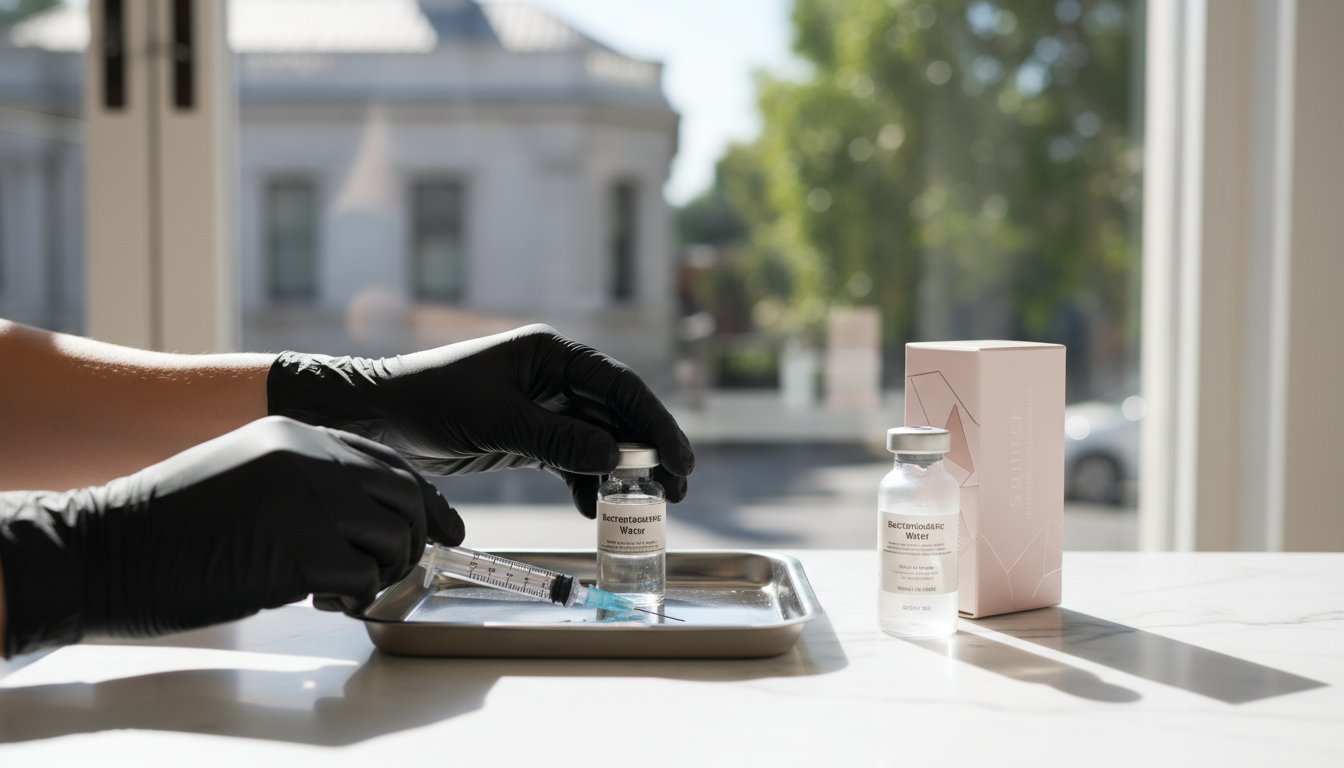
Could a subtle misunderstanding of the 28-day expiration rule be the silent variable affecting the safety of your clinical outcomes? In the high-stakes environment of non-invasive mesotherapy, the choice of diluent is never a minor detail. You likely recognize that bacteriostatic water serves as a vital component in the reconstitution of advanced serums, yet the transition from theory to precise clinical application requires a deep understanding of its bacteriostatic properties. This specialized knowledge is what separates a standard procedure from an elite, Danish-inspired aesthetic treatment.
Maintaining an aseptic environment is a commitment you make to every patient who walks through your doors. This guide provides the clinical clarity you need to master the chemistry of benzyl alcohol and implement protocols that align with Australian clinical standards. We’ll explore the essential differences between multi-dose and single-dose vials, providing a structured framework for ensuring your aesthetic procedures remain both flawless and compliant. By the end of this exploration, your practice will possess the definitive protocols necessary for managing high-end serums with absolute confidence.
Key Takeaways
- Gain a comprehensive understanding of how bacteriostatic water functions as a preservation agent, focusing on the critical “static” versus “cidal” distinction for multi-use vial safety.
- Navigate the clinical differences between sterile water, saline, and bacteriostatic solvents to ensure the chemical stability and biocompatibility of your dermal formulations.
- Implement rigorous aseptic protocols, including the essential 28-day shelf-life rule, to align your clinic with elite Australian safety standards and professional best practices.
- Identify the subtle indicators of solution contamination and learn to screen patients for benzyl alcohol sensitivities to maintain a flawless safety profile during advanced aesthetic procedures.
- Elevate your treatment outcomes by integrating high-tier consumables into MesoSkinline’s sophisticated protocols, ensuring maximum efficacy for non-invasive cellular rejuvenation.
What is Bacteriostatic Water? Defining Clinical Standards
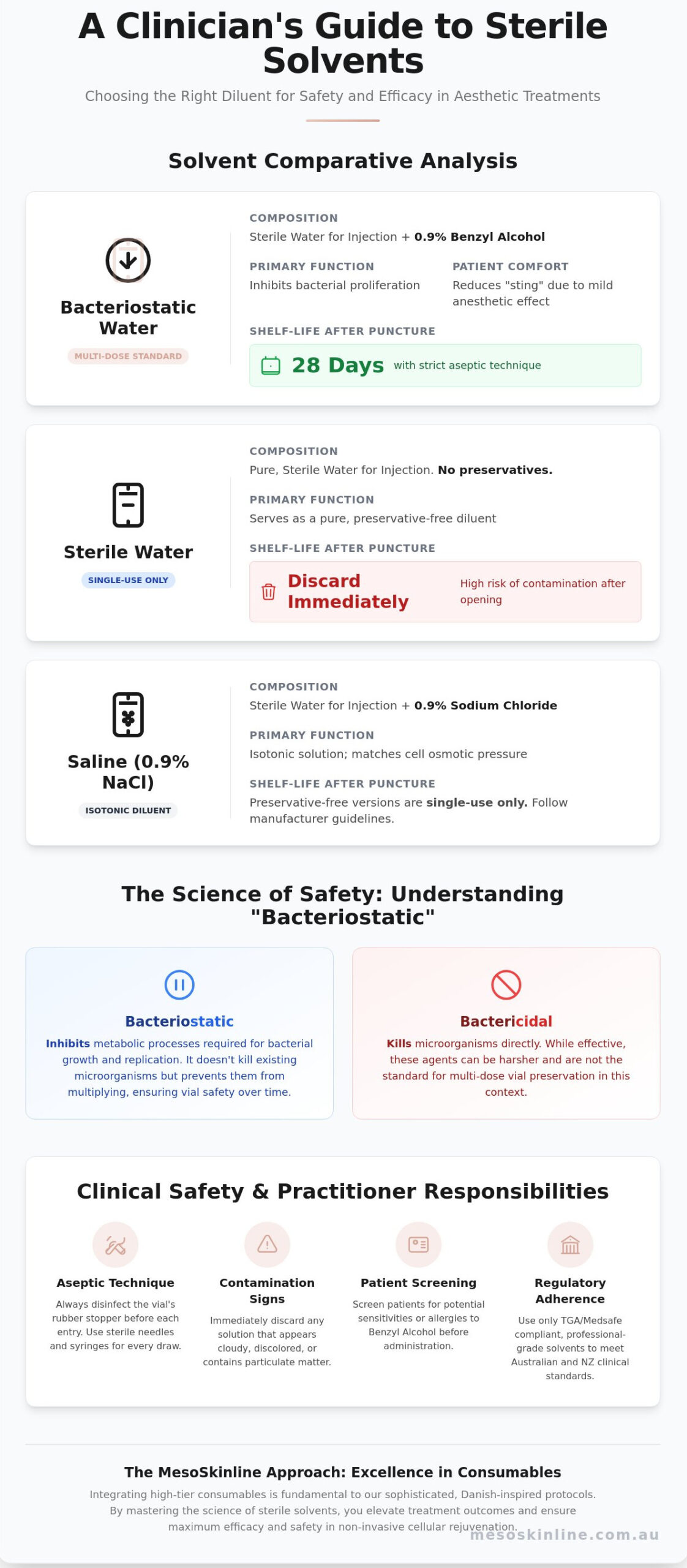
Bacteriostatic water serves as a specialized, sterile preparation designed for the precise reconstitution and dilution of medications. Its formulation consists of sterile water for injection integrated with 0.9% (9 mg/mL) benzyl alcohol. This specific concentration acts as a bacteriostatic preservative. While “biocidal” agents aim to destroy microorganisms immediately, a “bacteriostatic” agent focuses on inhibiting the metabolic processes required for bacterial replication. This distinction is vital in clinical environments. It ensures that once a vial is accessed, any introduced contaminants cannot proliferate during the 28-day shelf life typically associated with multi-dose containers.
In the Australian aesthetic sector, practitioners rely on this solvent to transform lyophilised powders into active, transdermal solutions. High-end European quality standards ensure that these diluents meet the rigorous purity levels required for advanced rejuvenation protocols. Using a professional-grade bacteriostatic water provides a foundation of safety for complex procedures, allowing for the controlled delivery of active ingredients without compromising the integrity of the serum or the health of the patient’s skin.
The Chemistry of Benzyl Alcohol
The selection of 0.9% benzyl alcohol isn’t arbitrary. This specific threshold provides the most effective antimicrobial protection while remaining biocompatible with human tissue. It serves a dual purpose by stabilizing the solution’s pH, which prevents the degradation of sensitive biotechnological compounds. Within the precision-driven world of Danish-inspired aesthetic treatments, maintaining this chemical equilibrium is necessary to guarantee the efficacy of cellular regeneration serums. It remains the global industry standard for multi-dose applications because it balances safety with long-term stability.
Regulatory Context in Australia and New Zealand
Clinical consumables in the Australasian market must adhere to strict oversight by the Therapeutic Goods Administration (TGA) and Medsafe. Professional-grade bacteriostatic water is categorized as a regulated medical accessory, requiring sterile packaging and absolute ingredient transparency. Practitioners must distinguish these clinical solvents from laboratory-grade versions. Lab-only solutions often lack the rigorous purification processes required for human use and don’t meet the safety benchmarks established for non-invasive mesotherapy. Using TGA-compliant solvents ensures that every treatment phase aligns with the highest safety protocols and European manufacturing ethics.
Bacteriostatic Water vs. Sterile Water vs. Saline: A Comparative Analysis
Selecting the appropriate solvent is a critical decision that influences both clinical efficacy and patient comfort. In Australian aesthetic clinics, practitioners primarily choose between three options: bacteriostatic water, sterile water, and 0.9% sodium chloride (saline). Each serves a distinct purpose within a professional treatment protocol. Bacteriostatic water is distinguished by the addition of 0.9% benzyl alcohol, a preservative that inhibits bacterial growth. This allows a single vial to be utilized for up to 28 days after the initial diaphragm puncture, provided strict aseptic techniques are maintained.
Sterile water for injection lacks this preservative. It’s strictly single-use. Once opened, any remaining liquid must be discarded immediately to prevent contamination. Saline, or 0.9% sodium chloride, is an isotonic solution. It’s often preferred for specific dilutions where maintaining the osmotic pressure of human cells is paramount, such as in certain dermal filler adjustments or large-volume hydration. For the precision required in non-invasive mesotherapy, the choice often hinges on the chemical stability of the active ingredients and the intended duration of the vial’s use.
When to Use Bacteriostatic Water
This solvent is the gold standard for reconstituting multi-dose vials of botulinum toxins or advanced lyophilized serums. The benzyl alcohol acts as a mild local anesthetic, which clinical observations suggest significantly reduces the “sting” associated with injections compared to preservative-free alternatives. It’s the optimal choice for:
- Reconstituting Botulinum Toxin Type A to maintain potency over multiple patient sessions within the 28-day window.
- Creating bespoke mesotherapy cocktails that require repeated withdrawals from a single source.
- Clinics focused on cost-efficiency, as one 30ml vial effectively replaces dozens of single-use ampoules, reducing medical waste.
Practitioners looking to refine their technique often benefit from specialised professional training to master these precise reconstitution ratios and ensure patient safety remains the priority.
When to Avoid Preservatives
While bacteriostatic water offers logistical advantages, certain scenarios necessitate preservative-free alternatives. Benzyl alcohol is contraindicated for neonatal use and should be avoided in large-volume administrations exceeding 30ml to prevent potential toxicity. You should prioritize sterile water or saline when:
- Treating patients with a documented hypersensitivity to benzyl alcohol.
- Performing procedures that involve specific respiratory applications or highly sensitive mucosal membranes.
- Adhering to strict single-dose protocols where the volume required is minimal and the risk of waste is negligible.
Choosing the correct medium ensures that the integrity of high-quality, Danish-engineered serums remains uncompromised, delivering the high-end results your clientele expects. This methodical approach to solvent selection reflects the clinical excellence that defines the modern aesthetic professional. Practitioners seeking to build a complete, high-performance treatment environment should explore a comprehensive guide to professional mesotherapy supplies Australia to ensure every component of their protocol meets the same rigorous standard as their solvent selection.
Clinical Protocols for Reconstitution and Dilution
Clinical excellence in Australian aesthetic medicine depends on the rigorous application of aseptic protocols. Before any needle enters the vial, practitioners must meticulously cleanse the rubber stopper with a 70% isopropyl alcohol swab. A firm, circular motion for 15 seconds ensures the surface is decontaminated. This step is a critical barrier against microbial ingress, protecting the sterile environment within. When withdrawing bacteriostatic water, maintaining pressure equilibrium is vital for accuracy. Injecting a volume of air equal to the desired liquid volume prevents the formation of a vacuum; this avoids uncontrolled fluid movement or the aerosolisation of the solution during the withdrawal process.
Storage requirements are equally strict to maintain the solution’s chemical stability. Vials must be kept in a controlled environment, typically between 20°C and 25°C, and shielded from direct ultraviolet light. Exposure to light or temperature fluctuations can lead to the premature degradation of the benzyl alcohol preservative, compromising the safety of the multi-dose container. Professional clinics often utilise dedicated medical refrigeration or climate-controlled cabinetry to ensure these parameters are met consistently.
The 28-Day Expiration Protocol
The integrity of a multi-dose vial hinges on the 28-day rule, which is a standard benchmark in Australian clinical environments. Once the stopper is breached, the benzyl alcohol preservative begins its countdown to potential degradation. Practitioners should use a waterproof label to record the date of the first puncture and the calculated expiration date. Any solution remaining after exactly 28 days requires immediate disposal in accordance with local clinical waste regulations. Regular audits of clinic stock ensure that no compromised vials remain in circulation, upholding the high-end European quality standards that define premium aesthetic practice.
Reconstituting Advanced Serums
Precision is paramount when mixing lyophilised exosomes or PDRN for targeted rejuvenation. To preserve the molecular integrity of these delicate active ingredients, the bacteriostatic water should be introduced slowly. Allowing the liquid to trickle down the side of the vial wall, rather than splashing directly onto the powder, prevents foaming and protects fragile bioactive structures. For a standard mesotherapy treatment, a specific 1:1 or 1:2 dilution ratio is often calculated to achieve optimal transdermal delivery. Instead of shaking the vial, practitioners should employ a slow, rhythmic swirling motion until the solution is completely clear. This methodical process reflects the Danish expertise inherent in professional non-invasive aesthetics, ensuring every cellular regeneration treatment delivers the promised results.
Safety Standards and Practitioner Responsibilities
Clinical excellence in the Australian aesthetic landscape requires more than just technical skill; it demands a rigorous commitment to pharmacological safety. Practitioners have a professional obligation to ensure that every element of a treatment, including the bacteriostatic water used for reconstitution, meets the highest purity standards. This responsibility begins with sourcing. In Australia, utilizing supplies that aren’t TGA-compliant isn’t just a risk to patient safety; it’s a significant legal liability under the Therapeutic Goods Act 1989. Every vial entering your clinic should be verified for its regulatory status to maintain the integrity of your practice.
Patient screening serves as your first line of defense. While benzyl alcohol is a highly effective preservative, a small percentage of the population exhibits hypersensitivity to this compound. A 2017 clinical review indicated that localized hypersensitivity can manifest as unexpected erythema or oedema, which a practitioner might mistakenly attribute to the active ingredient rather than the solvent. Incorporating a specific question regarding alcohol sensitivities into your pre-treatment consultation forms is a simple yet vital step in risk mitigation. Practitioners treating patients who also present with active blemishes or post-inflammatory hyperpigmentation should consider how a targeted acne spot treatment protocol using biocompatible transdermal science can complement their broader skin recovery approach.
Identifying Compromised Solutions
Visual inspection protocols must be performed before every single procedure. Hold the vial against a neutral, well-lit background to check for three critical red flags:
- Turbidity: Any cloudiness suggests bacterial growth or chemical instability.
- Particulate Matter: Tiny floating crystals or fibers indicate the solution’s physical integrity is lost.
- Discolouration: A yellowish or brownish tint often points to oxidation or thermal degradation.
Temperature stability is equally paramount. Bacteriostatic solutions are designed to remain stable at controlled room temperatures, typically between 20°C and 25°C. If a vial is accidentally stored in a high-heat environment, such as a window ledge or near a sterilizer, its antimicrobial efficacy is compromised. Similarly, if a vial is left uncapped, it’s considered contaminated. The 0.9% benzyl alcohol concentration is designed to inhibit growth from needle punctures, not to sterilize a solution exposed to open-air pathogens.
Risk Mitigation in Microneedling
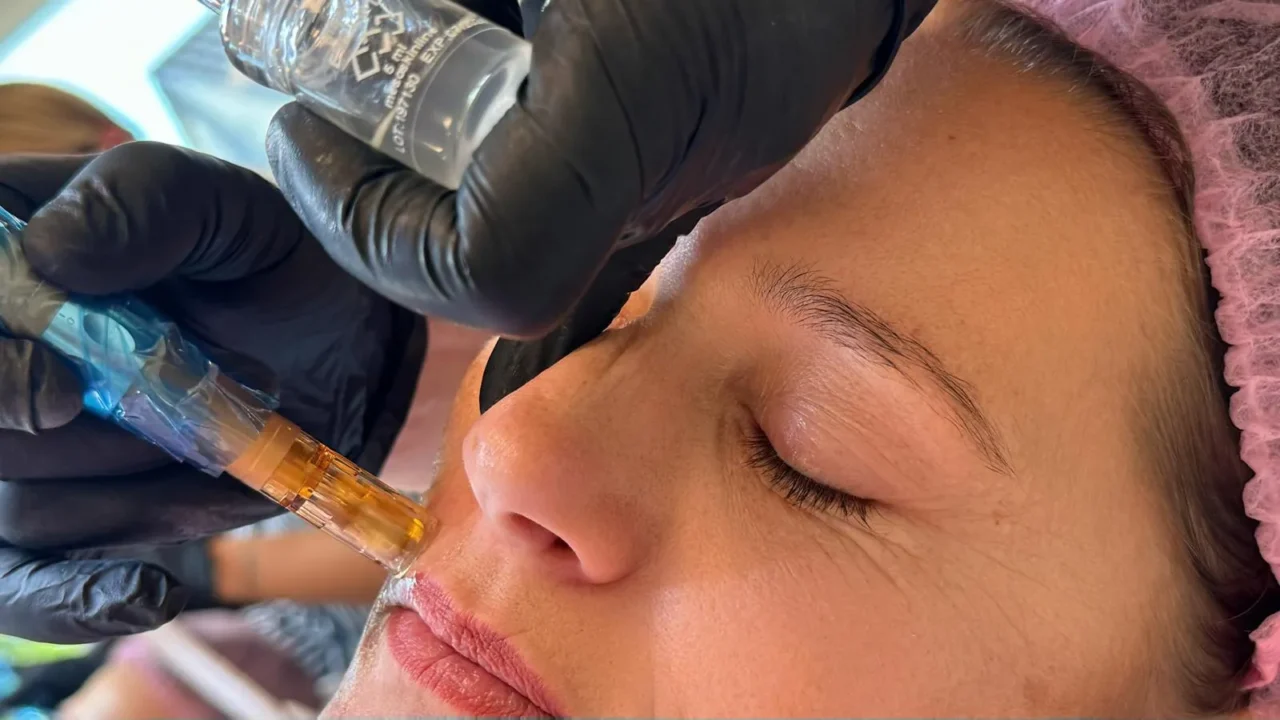
Precision in non-invasive mesotherapy relies on the purity of the delivery medium. When performing microneedling, the solvent must not interfere with the transdermal delivery of active ingredients. Impurities in the water can lead to “granulomatous” reactions if they’re pushed into the deeper dermal layers. This is why high-purity, medical-grade solvents are the only acceptable choice for professional clinics. Complementing your solvent selection with the right delivery tools — such as a blunt-tip cannula needle for high-risk facial zones — further reduces the likelihood of adverse vascular events during advanced aesthetic procedures.
Staff education remains the most effective tool against cross-contamination. In high-traffic environments, the risk of “double-dipping” or improper vial swabbing increases. Implementing a strict 28-day disposal rule for multi-dose vials, regardless of the remaining volume, ensures that the preservative’s capacity isn’t overextended. By aligning your clinic with these elite European standards, you protect both your patients and your professional reputation.
Elevate your clinical safety protocols by choosing TGA-compliant supplies and professional training from MesoSkinline Australia.
The MesoSkinline Approach: Excellence in Consumables
The success of a non-invasive mesotherapy treatment relies on a precise equilibrium between high-performance hardware and the chemical purity of the solutions used. At MesoSkinline, we recognize that the quality of your solvent directly dictates the clinical outcome of every procedure. Using premium bacteriostatic water ensures that the active ingredients within our specialized meso-cocktails maintain their molecular integrity during the delivery process. This focus on medical-grade consumables minimizes the potential for adverse reactions, creating a stable environment for optimal cellular regeneration.
Our Danish expertise brings a long-standing tradition of European safety standards to Australian clinicians. We provide a comprehensive ecosystem where medical-grade essentials are designed to work in tandem with state-of-the-art biotechnology. By sourcing consumables that meet these rigorous international benchmarks, practitioners in Australia can deliver results that are both predictable and safe. It’s this synergy between the hardware and the sterile medium that defines the MesoSkinline standard of excellence.
Synergy with the MESOpower Pen
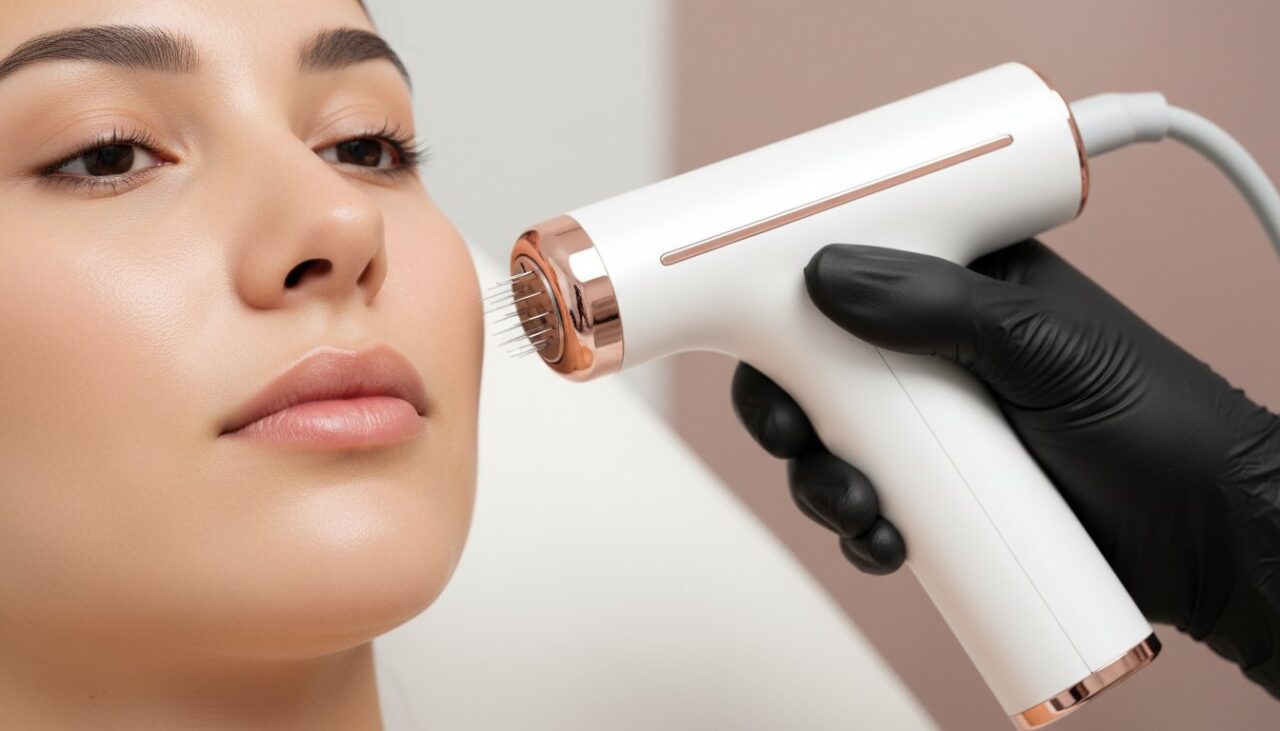
Flawless transdermal delivery is a matter of physics as much as biology. The MESOpower Pen is engineered for extreme precision; however, the viscosity of the serum determines how effectively those active ingredients are distributed. When you integrate bacteriostatic water into your protocols to adjust serum consistency, you ensure the solution moves through the micro-channels without resistance. This careful preparation prevents mechanical strain on the device and guarantees a more comfortable experience for the client. Meticulous clinical hygiene is the cornerstone of our methodology, ensuring that every session meets the highest safety profile possible.
Elevating Clinic Standards
Establishing your clinic as a leader in the competitive Australian market requires an unwavering commitment to both innovation and safety. Clients increasingly seek out practitioners who use transparent, high-quality sourcing for every part of their treatment. By choosing professional-grade consumables and hardware, you align your practice with a global reputation for aesthetic elegance. We believe that mastery comes through education, which is why we offer professional certification for our advanced dermal procedures. To further enhance your practice, you can refer to our Mesotherapy Cocktails Guide for comprehensive treatment planning. This systematic approach allows you to provide bespoke skin transformations that prioritize long-term health and visible rejuvenation.
Advancing Your Practice Through Clinical Precision
Mastering the technical nuances of reconstitution represents a fundamental commitment to patient safety and treatment efficacy. Utilizing bacteriostatic water allows practitioners to maintain vial integrity for up to 28 days according to established clinical guidelines, ensuring that every transdermal application remains sterile and potent. This focus on pharmaceutical-grade consumables is what separates a standard treatment from a premium aesthetic result. It’s about choosing biocompatible solutions that respect the skin’s natural physiology while delivering transformative rejuvenation.
As the exclusive APAC distributor for Danish MesoSkinline, we bring world-class European standards directly to Australian clinics. Our mission is to support your professional journey with state-of-the-art technology and rigorous certification. We don’t just supply products; we provide the scientific foundation required for flawless non-invasive procedures. By integrating these high-level protocols, you’re positioning your clinic at the forefront of the modern aesthetic landscape. Explore our range of professional mesotherapy supplies and the MESOpower Pen to begin your transition toward clinical excellence. We look forward to helping you achieve the next level of professional mastery.
Frequently Asked Questions
Is bacteriostatic water the same as sterile water for injection?
No, bacteriostatic water and sterile water for injection are distinct preparations with different clinical applications. Bacteriostatic water contains 0.9% benzyl alcohol as a preservative, which allows for multiple entries into the vial over a 28 day period. Sterile water for injection is a single-dose preparation without additives, meaning you must discard any remaining liquid immediately after the first use to ensure patient safety.
How long is bacteriostatic water stable once the vial is opened?
Once a vial is punctured, bacteriostatic water remains stable and safe for use for exactly 28 days. The benzyl alcohol preservative inhibits the growth of most potentially contaminating bacteria during this window. You should clearly label the vial with the date of first entry and discard the remaining solution once the 28 day limit expires, as the preservative’s efficacy can’t be guaranteed beyond this timeframe.
Can I use bacteriostatic water to reconstitute Boto Xtreme or Exosomes?
You can use bacteriostatic water to reconstitute Boto Xtreme to enhance patient comfort during the injection process. The benzyl alcohol acts as a mild local anaesthetic, which reduces the stinging sensation often associated with saline or sterile water. For exosomes, you must consult the specific manufacturer guidelines, as some advanced cellular preparations require specific biocompatible diluents to maintain the structural integrity of the extracellular vesicles.
Are there any contraindications for using bacteriostatic water in skin treatments?
The primary contraindication for using bacteriostatic water is a known hypersensitivity or allergy to benzyl alcohol. You should never use this preparation in neonatal patients because the preservative is associated with toxic “gasping syndrome” in infants under 28 days old. Always perform a thorough patient history to identify previous reactions to preservatives before proceeding with any transdermal or injectable aesthetic treatment.
Why is benzyl alcohol added to bacteriostatic water?
Benzyl alcohol is added to bacteriostatic water at a concentration of 0.9% to serve as a potent antimicrobial agent. This additive prevents the proliferation of bacteria that might be introduced during repeated needle insertions into a multi-dose vial. Beyond its preservative qualities, the alcohol provides a mild anaesthetic effect, which elevates the patient experience by making the delivery of aesthetic compounds significantly more comfortable. Practitioners who also incorporate a precision cannula needle into their delivery technique can further enhance patient comfort and reduce vascular risk during compound administration.
Can bacteriostatic water be used for intravenous (IV) therapy in a clinic?
You shouldn’t use bacteriostatic water for large-volume intravenous infusions or as a primary IV fluid. While it’s suitable for diluting small-volume medications, the cumulative toxicity of benzyl alcohol becomes a risk if you administer more than 30 ml per day to an adult. For standard IV hydration or high-dose vitamin therapy in an Australian clinic, sterile water for injection or 0.9% sodium chloride remains the clinical standard.
What should I do if the bacteriostatic water appears cloudy?
If the solution appears cloudy, discoloured, or contains visible particulates, you must discard the vial immediately. A clear, colourless appearance is the only acceptable visual standard for safe clinical use. Cloudiness often indicates microbial contamination or a chemical reaction that has compromised the solution’s integrity. Using compromised bacteriostatic water risks serious adverse events and undermines the professional standards of your aesthetic practice.
Is it legal to use bacteriostatic water in Australian aesthetic clinics?
It’s legal to use bacteriostatic water in Australian aesthetic clinics provided the product is listed on the Australian Register of Therapeutic Goods (ARTG). Practitioners must adhere to the Therapeutic Goods Act 1989 and relevant state poisons acts, which regulate the prescription and administration of scheduled substances. Ensuring your supply comes from a reputable Australian distributor guarantees that the preparation meets the rigorous safety standards required for professional clinical environments.
What Others Are Reading:

Stay in the Glow
Get skincare tips and early access to new products.
