

Managing Client Expectations for Cosmetic Procedures: A Practitioner’s Guide to Clinical Excellence
What if your technical precision isn’t the most important factor in your patient’s satisfaction? Even when you deliver a flawless result using advanced technology like the Mesopowerpen, a client might still leave feeling underwhelmed if their vision was shaped by filtered social media trends rather than biological reality. You likely feel the pressure to over-promise while trying to stay within the strict AHPRA guidelines that commenced on 2 September 2025. Successfully managing client expectations for cosmetic procedures is no longer just a soft skill; it’s a vital clinical protocol that protects your professional reputation and your clinic’s profitability.
We’ll show you how to transform the consultation process into a sophisticated framework for both ethical transparency and clinical excellence. You’ll learn to use scientific evidence and precise communication to bridge the gap between aspirational aesthetics and achievable outcomes. This guide provides a roadmap to mastering TGA-compliant messaging and leveraging innovative solutions, such as vegan exosomes, to ensure every patient leaves with a sense of informed confidence and a higher re-booking frequency.
Key Takeaways
- Align clinical possibilities with patient desires by countering unrealistic standards set by social media filters.
- Master the art of managing client expectations for cosmetic procedures. Implementing a structured consultation framework ensures you prioritise transparency over aggressive sales.
- Discover how precision technology like the Mesopowerpen ensures predictable clinical outcomes and minimises patient downtime through adjustable settings.
- Understand the “Healing Crisis” and how proactive post-procedure communication can turn potential concern into long-term patient loyalty.
- Recognise the commercial value of clinical integrity. A transparent “no” today builds a high-referral reputation and long-term clinic profitability.
The Psychology of Aesthetic Expectations in the Australian Market
The Australian aesthetic market has reached a critical juncture. Practitioners are no longer just technicians; they’re interpreters of biological reality in an era of digital distortion. At its core, expectation management is the precise alignment of clinical possibility with patient desire. It’s the bridge between what a device or serum can physically achieve and what the client envisions in the mirror. Success depends on your ability to decode the patient’s intent while adhering to rigorous clinical standards.
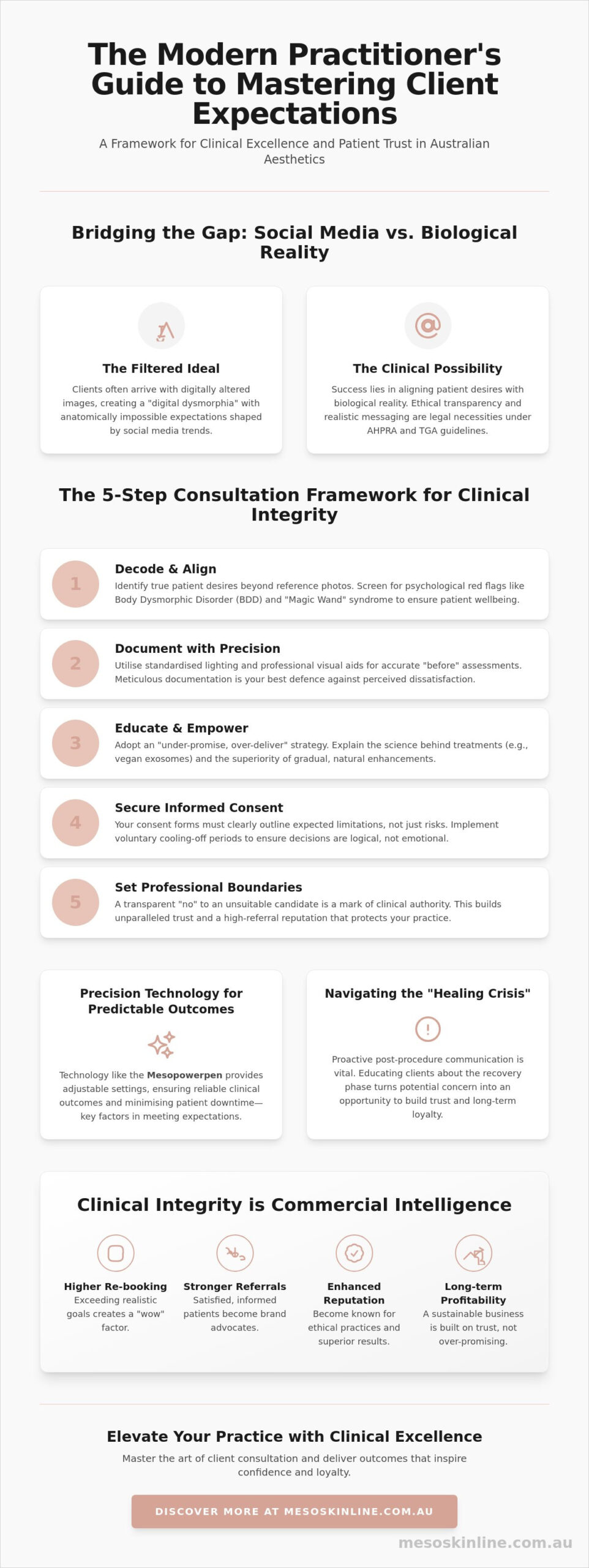
Social media filters have fundamentally altered the Australian “standard of beauty.” Clients often arrive with images that aren’t just enhanced; they’re anatomically impossible. This digital dysmorphia creates a significant challenge for the modern clinic. Transparency is your most potent tool for maintaining a long-term reputation. If you can’t deliver the filtered look, saying so is a mark of clinical authority. Successfully managing client expectations for cosmetic procedures ensures you remain compliant with the latest AHPRA and TGA advertising guidelines regarding claims. Realistic messaging isn’t just a courtesy to the patient; it’s a legal necessity.
The Rise of the “Natural” Aesthetic in 2026
We’ve seen a definitive shift away from the “over-filled” look that dominated previous years. Patients now prioritise regenerative treatments that enhance their natural architecture. This “slow beauty” movement values gradual, high-quality transformations over instant, aggressive changes. For instance, the application of vegan exosomes has become a staple for clinics focused on cellular health and skin quality. Educating clients on why a subtle enhancement in the lip or eye area looks superior to a dramatic alteration is essential. It’s about longevity. Using premium delivery systems ensures the result is sophisticated, not artificial.
Identifying “Red Flag” Psychological Drivers
Clinical excellence requires you to look beyond the skin. Identifying psychological factors in cosmetic procedures is a mandatory part of any initial consultation. You must be able to recognise indicators of Body Dysmorphic Disorder (BDD). These clients often exhibit “Magic Wand” syndrome, expecting a single session to erase decades of solar damage or structural aging.
Setting professional boundaries is vital. It protects your patient from unnecessary risk and protects your practice from the inevitable dissatisfaction that follows impossible goals. A practitioner who values clinical integrity will always prioritise a patient’s psychological wellbeing over a quick booking. This approach fosters trust. It ensures that when you do proceed, the client is emotionally prepared for the outcome. Integrity-led consultations are the foundation of a referral-based clinic.
Mastering the Clinical Consultation: A Framework for Practitioners
Precision in the treatment room begins at the consultation desk. In the Australian aesthetic landscape, the consultation serves as the foundation for both clinical excellence and long-term clinic profitability. Adopting an “under-promise, over-deliver” mantra isn’t about modesty. It’s a calculated business strategy. When you set conservative goals, you create the opportunity for a “wow” factor that drives re-booking rates and organic referrals. If a patient expects a 50% improvement and receives 70%, they become a brand advocate. If they expect perfection and receive 90%, they often leave disappointed.
Standardised lighting and professional-grade visual aids are essential for accurate “before” assessments. Without consistent parameters, a patient may fail to recognise their own progress, leading to perceived dissatisfaction despite technical success. Documenting these sessions meticulously is vital. Your written consent forms must go beyond simple risks; they should clearly outline the expected limitations of the procedure. This level of transparency is a core component of managing client expectations for cosmetic procedures. Additionally, while AHPRA guidelines introduced on 2 September 2025 mandate a seven-day cooling-off period for patients under 18, high-end clinics often implement similar voluntary pauses for all new clients. This ensures the decision is made with clinical logic rather than emotional impulse.
The 5-Step Consultation Protocol
A structured approach eliminates the ambiguity that leads to complaints. Practitioners should follow this repeatable framework to ensure every patient feels heard and educated:
- Step 1: Active Listening. Identify the patient’s primary concern and aesthetic goals without interruption to build immediate rapport.
- Step 2: Clinical Analysis. Use advanced diagnostic tools to assess skin health, elasticity, and underlying structural issues.
- Step 3: Biological Explanation. Explain the “why” behind the treatment, detailing how the technology will interact with their specific physiology.
- Step 4: Tiered Treatment Planning. Present a comprehensive journey rather than a single-session fix to manage long-term expectations.
- Step 5: Written Confirmation. Finalise the session with a summary of the agreed outcomes, costs, and recovery limitations.
Using Visual Evidence to Define “Realistic”
Biological responses aren’t uniform. Every patient sits somewhere on a “Bell Curve” of results, and it’s your duty to show them the full spectrum. When discussing microneedling, for example, show average results alongside your best cases. This honesty reinforces your status as a visionary expert rather than a salesperson. Consistent photography protocols, using the same angles and lighting, ensure that the evidence of transformation is undeniable. By providing this level of detail, you’re effectively managing client expectations for cosmetic procedures through scientific transparency. To elevate your clinic’s standards, you can explore our professional clinical training modules.
Leveraging Precision Technology to Guarantee Predictable Outcomes
Clinical excellence isn’t an accident. It’s the result of combining practitioner expertise with high-performance hardware. In a market where results are scrutinised, device precision acts as your primary safeguard against the “variable” outcome. When your equipment performs with mathematical accuracy, you reduce the margin of error significantly. This predictability is the cornerstone of managing client expectations for cosmetic procedures. If you can guarantee a specific depth of penetration or a controlled healing timeline, you eliminate the anxiety that often accompanies aesthetic treatments.
The Mesopowerpen exemplifies this fusion of science and luxury. Its ability to offer adjustable depth and speed is vital for managing patient downtime. By tailoring the treatment to the individual’s skin thickness and sensitivity, you ensure the inflammatory response is purposeful, not traumatic. This level of control allows you to provide a clear recovery roadmap during the consultation. Standardising your clinical supplies further ensures that every session delivers a consistent biological signal, removing the guesswork from the equation.
Hardware Reliability: The Practitioner’s Silent Partner
Consistent needle penetration leads to consistent healing. Cheap devices often suffer from “needle wobble” or inconsistent motor speeds, which causes unnecessary tissue trauma and patient distress. These micro-tears lead to unpredictable erythema and prolonged recovery times, undermining the trust you’ve built. Investing in premium technology is a commitment to patient safety. To truly master these tools, practitioners should engage in advanced facial courses. Specialist training ensures you understand the nuances of precision skin rejuvenation, allowing you to manage expectations through technical mastery rather than just verbal promises.
Biological Predictability with Vegan Exosomes and Serums
Hardware provides the delivery system, but the serum provides the solution. The synergy between precision tools and potent formulations is what meets; and exceeds; client goals. For patients seeking immediate results, Boto Xtreme provides visible gratification while long-term cellular repair occurs beneath the surface. This dual-action approach is particularly effective in managing client expectations for cosmetic procedures because it addresses the modern desire for “instant” results without sacrificing clinical integrity.
Similarly, the Eyelift serum plays a crucial role in managing expectations for non-surgical blepharoplasty. By providing a targeted, high-performance solution for the delicate periorbital area, you offer a credible alternative to invasive surgery. Client satisfaction is further solidified through the integration of high-performance home-care. When a patient continues their treatment at home with professional-grade pigmentation solutions or hair loss control products, they take ownership of their results. This partnership between clinic and home ensures the aesthetic transformation is both visible and enduring.
Navigating the Recovery Phase and Addressing Disappointment
The clinical journey doesn’t end when the patient leaves your chair. In fact, the most volatile period for patient satisfaction begins during the inflammatory phase of healing. Educating your clients on the “Healing Crisis” is a fundamental aspect of managing client expectations for cosmetic procedures. They must understand that erythema, localised swelling, and temporary dryness aren’t complications; they’re the physiological signals of a successful treatment. If a patient isn’t prepared for this downtime, their immediate reaction is often one of distress rather than anticipation.
Proactive communication is your best defence against post-procedure anxiety. A 24-hour follow-up call isn’t just a courtesy; it’s a strategic touchpoint that reinforces your clinical authority. This is particularly vital for navigating the “Day 3 Dip.” This is the specific window when the initial excitement has faded, the skin may look its most congested, and the patient begins to regret the procedure before the regenerative results have surfaced. By anticipating this dip and reaching out first, you transform a potential complaint into a moment of reassured trust. Should a genuine complication arise, maintain clinical composure. Offer transparent, evidence-based solutions immediately to demonstrate that their safety is your primary metric of success.
The Essential Aftercare Checklist
Clarity reduces user error. Providing a meticulous, written aftercare protocol ensures the patient doesn’t compromise their results through poor home-care choices. Your instructions should highlight the role of specialised post-treatment serums in accelerating re-epithelialisation and soothing the barrier. Be precise about the timeline. If you’re using high-end solutions for pigmentation or hair loss, tell them exactly when to expect the final result. Most biological transformations require multiple cellular cycles. Setting a “result date” on their calendar prevents them from searching for changes that haven’t had time to manifest yet.
Handling the “I See No Difference” Conversation
Aesthetic changes are often incremental. When a patient claims they see no difference, your most objective tool is the side-by-side photo comparison. Using standardised lighting, as discussed in our earlier sections, reveals the subtle shifts in texture and tone that the patient has become accustomed to in their daily mirror checks. It’s also the time to reinforce the cumulative nature of professional mesotherapy supplies. One session initiates the process, but the full architectural shift requires a series. Knowing when to stand by the clinical results versus when to offer a complimentary touch-up is a balance of business savvy and integrity. To ensure your clinic is equipped with the highest standard of recovery solutions, browse our range of professional aesthetic equipment and serums.
The Business Case for Honesty: Retention and Referrals
Integrity is the ultimate commercial currency in high-end aesthetics. A practitioner who has the confidence to say “no” to an unsuitable procedure is the one who secures the most loyal client base. This rejection isn’t a lost sale; it’s a deposit into the clinic’s reputation for clinical excellence. By managing client expectations for cosmetic procedures with radical honesty, you position your clinic as an expert-led centre of excellence rather than a transactional service provider. Clients value an expert who prioritises their long-term skin health over a quick booking.
Consider the financial impact of a negative review compared to a refused treatment. A single dissatisfied patient, often the result of unmet, unrealistic expectations, can cost a clinic thousands in lost potential revenue and damage to brand equity. Conversely, a patient who is told their desired result isn’t biologically achievable respects the practitioner’s authority. They’re more likely to return for alternative, evidence-based solutions; such as pigmentation solutions or hair loss control; that actually work for their unique physiology. Honesty builds a protective barrier around your professional reputation.
Lifetime Value (LTV) vs. Transactional Profit
Transitioning from a salesperson to a Clinical Advisor changes your clinic’s economic trajectory. Calculating the Lifetime Value (LTV) of a client reveals that long-term trust is far more profitable than a one-off transactional fee. Clients who believe in your professional judgement don’t just re-book; they refer their inner circle. This high-trust environment also significantly reduces staff burnout. Dealing with “difficult” clients who have been over-promised is a primary stressor for aesthetic teams. When managing client expectations for cosmetic procedures is part of your clinic’s DNA, the daily workflow becomes more predictable and rewarding.
Final Thoughts: The Future of Ethical Aesthetics
The 2026 landscape is defined by clinical transparency and scientific rigor. Patients are increasingly savvy, seeking out practitioners who prioritise biological reality over social media hype. Mesoskinline Australia is dedicated to supporting this shift by providing the precision tools and potent formulations required to deliver on your clinical promises. Whether you’re utilising the Mesopowerpen for regenerative results or integrating vegan exosomes into your protocols, our systems are designed for practitioners who value both efficacy and integrity. Master the art of the honest consultation, and you’ll find that profitability follows excellence naturally. Explore our range of clinical-grade aesthetic solutions and elevate your practice today.
Advancing Your Practice Through Clinical Integrity and Innovation
Professional success in 2026 requires a seamless blend of scientific transparency and technical mastery. You’ve seen how structured protocols and precision hardware, such as the Mesopowerpen, reduce the margin of error while fostering patient trust. Mastering the art of managing client expectations for cosmetic procedures is the definitive hallmark of a high-tier practitioner. It’s about leading with clinical logic to ensure every aesthetic journey is both safe and predictable.
As the exclusive APAC distributor of Danish clinical technology, we provide the specialised support and dermatologically tested, high-performance serums you need to deliver visible transformations. By prioritising honesty and biological reality, you don’t just achieve a result; you build a legacy of excellence. Elevate your clinic’s results with Mesoskinline Australia’s professional range. Your commitment to ethical aesthetics is the foundation of a thriving, referral-based business. We’re here to help you lead the way in Australian clinical excellence.
Frequently Asked Questions
How do I tell a client their expectations are unrealistic without offending them?
Address unrealistic goals by pivoting the conversation toward anatomical and biological reality. Use high-resolution imaging to explain the patient’s unique structural baseline, focusing on skin laxity or bone resorption. By framing the limitation as a matter of medical science rather than a personal critique, you maintain your clinical authority. This approach is a core element of managing client expectations for cosmetic procedures, as it replaces emotional desire with objective clinical logic.
What are the most common misconceptions clients have about non-surgical procedures?
The most prevalent myth is that non-invasive treatments can replicate surgical results instantly. Many clients believe a single session with the Mesopowerpen or a topical serum will erase decades of solar damage. You must educate them on cellular turnover cycles and the necessity of cumulative treatments. Clarify that while products like Boto Xtreme provide visible refinement, structural rejuvenation is a physiological process that requires patience and professional-grade maintenance.
Can I be held liable if a client is unhappy with a result I warned them about?
Liability often hinges on the quality of your informed consent and documentation. Under the AHPRA guidelines that came into effect on 2 September 2025, you must prove that the patient understood the risks and limitations of the procedure. If you’ve documented the “limitations” discussion and the patient signed a specific waiver acknowledging these warnings, your clinical position is significantly strengthened. Comprehensive records are your best defence against subjective dissatisfaction.
How do I manage expectations for treatments that require multiple sessions?
Utilise a tiered treatment plan that maps out the entire biological journey from the first consultation. Avoid selling single sessions; instead, present a package that aligns with the skin’s natural regenerative timeline. Explain that managing client expectations for cosmetic procedures involves understanding that cellular repair is an additive process. Providing a visual “milestone” chart helps the patient track incremental progress rather than expecting a total transformation after session one.
Is it ever okay to guarantee a specific result in a cosmetic procedure?
No, you should never guarantee a specific aesthetic outcome. TGA and AHPRA regulations strictly prohibit practitioners from making misleading claims or guarantees of success. Because biological responses vary between individuals, a guarantee is both ethically unsound and legally risky. Instead, focus on the high performance of your technology and the clinical evidence supporting your serums to build confidence without making prohibited promises.
What role does social media play in inflating client expectations in Australia?
Social media creates a “filtered reality” that often bypasses human anatomy. The ban on influencer testimonials for higher-risk procedures, which started in late 2025, was a direct response to this digital distortion. Clients often present filtered images as their goal, unaware of the editing involved. It’s your responsibility to deconstruct these digital standards and redirect the patient toward “natural” enhancements that create balance and proportion in real-life lighting.
How can I use “Before and After” photos ethically and effectively?
Ethical imagery requires standardised lighting, identical angles, and a total ban on digital retouching. The TGA has made cosmetic advertising a compliance priority for 2026 and 2027, specifically targeting misleading images. You must include a clear warning that results vary between patients. Using real, unedited photos from your own clinic builds more trust than using manufacturer “hero” shots, as it demonstrates your actual clinical capability.
What should I do if a client demands more filler or treatment than I recommend?
Prioritise your clinical integrity and refuse the treatment if it compromises the patient’s aesthetic balance or safety. Over-treating can lead to “filler fatigue” or structural distortion, which ultimately damages your reputation. Explain the risks of over-correction and offer a maintenance alternative, such as vegan exosomes or high-performance serums. A professional “no” protects the patient and reinforces your status as a visionary expert who values excellence over transactional profit.


Stay in the Glow
Get skincare tips and early access to new products.
