
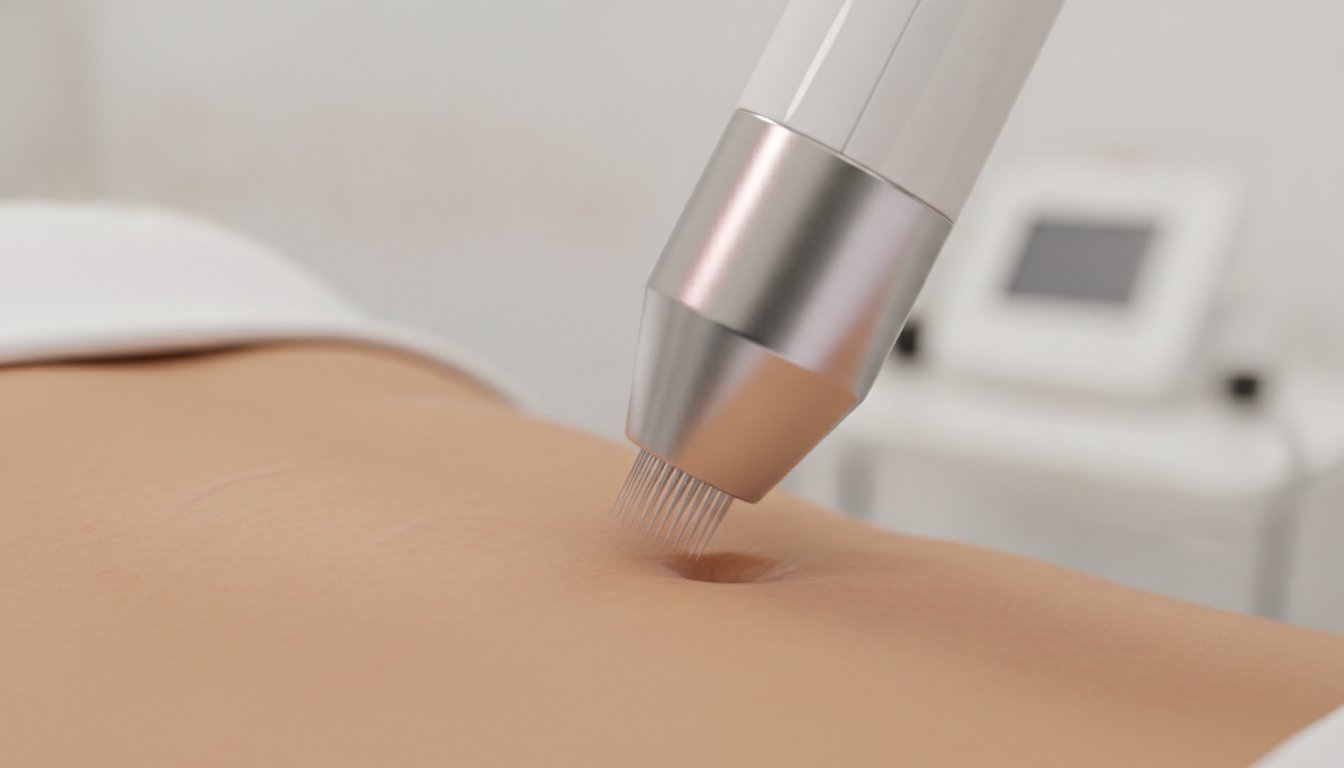
Applying facial microneedling protocols to the body is the primary reason for underwhelming clinical results in modern aesthetics. While the face requires a delicate touch, the structural integrity of body skin demands a more robust, calibrated approach to trigger genuine dermal remodelling. You’ve likely noticed that standard depths often fail to reach the stubborn scar tissue of stretch marks or the deep-seated laxity on the abdomen. This definitive microneedling depth guide for body treatments bridges that gap, offering a sophisticated framework for practitioners who refuse to settle for mediocre outcomes.
Mastering these precise needle depths ensures you deliver visible transformation without risking epidermal compromise. We’ll examine the critical variations between zones, from the 2.5mm requirements of the hips to the conservative 0.5mm needed for the inner arms. You’ll also learn how to integrate professional tools like the Mesopowerpen with advanced topicals, such as vegan exosomes, to accelerate recovery and enhance tissue quality. By aligning your practice with the latest 2026 clinical standards and TGA compliance principles, you’ll provide the high-tier, science-backed results your clients expect from a premium aesthetic service.
Key Takeaways
- Understand the critical anatomical differences between facial and body skin to ensure your treatments reach the deep dermal layers required for genuine remodelling.
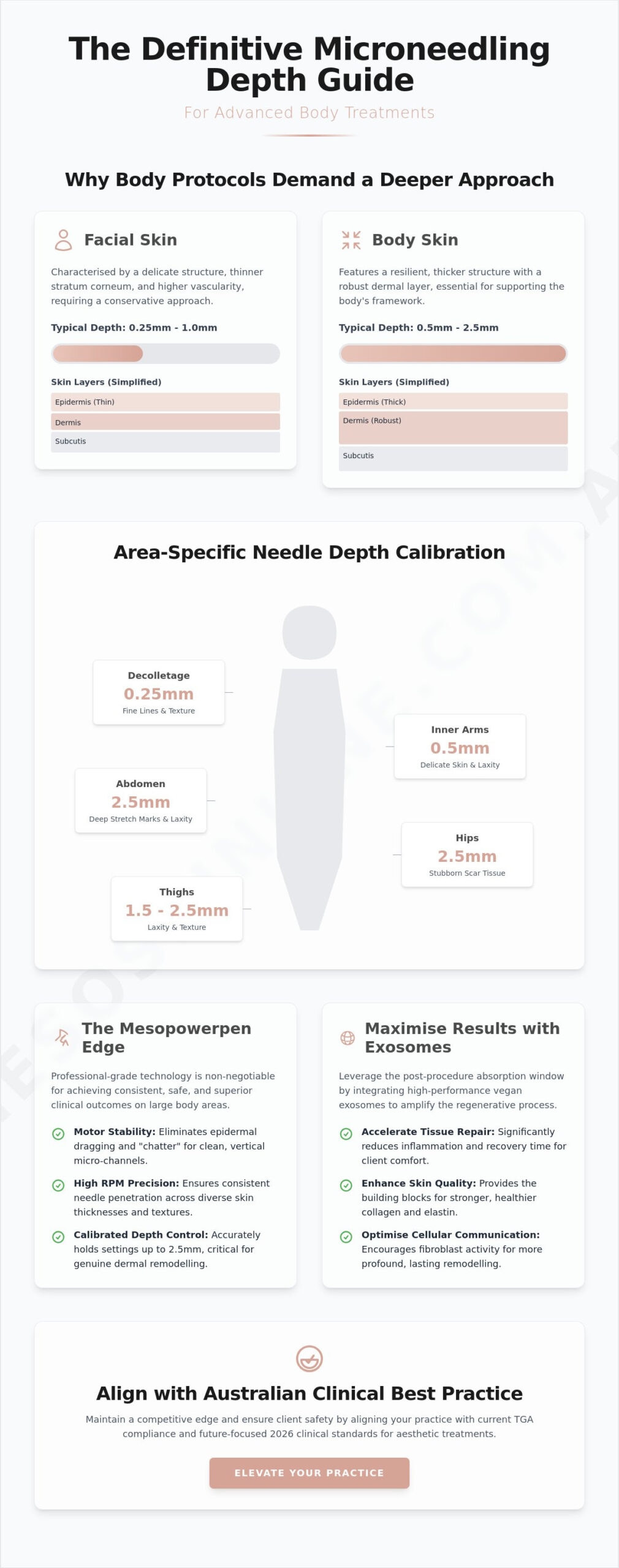
- Utilise this microneedling depth guide for body treatments to master precise calibrations, ranging from 0.25mm for the decolletage to 2.5mm for stubborn abdominal stretch marks.
- Maximise the post-procedure absorption window by integrating high-performance vegan exosomes to accelerate tissue repair and enhance overall skin quality.
- Leverage professional-grade technology like the Mesopowerpen to achieve consistent needle penetration and superior clinical outcomes across large treatment areas.
- Align your practice with 2026 Australian clinical standards and TGA compliance to ensure patient safety while maintaining a competitive edge in the luxury aesthetic market.
Understanding Microneedling Depth for Body Treatments
Precision in needle depth is the cornerstone of successful body rejuvenation. Unlike the delicate epidermis of the face, body skin possesses a significantly thicker stratum corneum and a more resilient dermal layer. This structural disparity means that settings effective for the forehead will barely penetrate the surface of the thighs or abdomen. To achieve a visible transformation, practitioners must calibrate their approach based on the specific clinical objective, whether that’s smoothing surface texture or repairing deep-seated scarring. Relying on a “one size fits all” depth often leads to inconsistent results, as it fails to reach the depth where collagen synthesis actually occurs. This microneedling depth guide for body treatments ensures that every puncture is a deliberate step toward structural repair.
The Science of Collagen Induction Therapy (CIT) on the Body
At its core, collagen induction therapy relies on the body’s innate ability to heal itself. When needles penetrate the skin, they create thousands of micro-channels that trigger three distinct phases of repair: inflammation, proliferation, and remodelling. The inflammatory phase begins immediately, followed by the proliferation of new tissue. The final remodelling phase can last for months as type III collagen is replaced by stronger type I collagen. In the thicker skin of the body, these channels must be deep enough to facilitate the migration of fibroblasts. These cells are responsible for the synthesis of new collagen and elastin fibres. Because the body’s dermal layer is more robust, treatments often require deeper settings to stimulate the same level of regenerative activity seen in facial protocols. Without this controlled trauma at the correct depth, the proliferative phase remains too superficial to affect structural changes like skin laxity or stretch marks.
Precision Engineering with the Mesopowerpen
Achieving these results requires more than just depth; it requires stability. The Mesopowerpen represents the pinnacle of professional microneedling technology, offering adjustable settings that allow for seamless transitions between different body zones. High RPMs and motor stability are critical. They ensure that needles enter and exit the skin vertically without causing lateral tearing. This precision creates “clean” micro-channels, which are essential for both safety and efficacy. Motor stability isn’t just about comfort; it’s about the integrity of the wound. A stable motor prevents the “chatter” that can lead to epidermal dragging, which is a common fear for those treating large surface areas. By maintaining a consistent depth, the Mesopowerpen allows for a uniform delivery of trauma, ensuring that the healing response is synchronised across the entire treatment zone. When using a microneedling depth guide for body treatments, having a device that can accurately hold a 2.5mm setting is the difference between a superficial treatment and a life-changing clinical outcome.
Anatomical Differences: Why Body Depth Differs from Facial Protocols
Treating the body as a mere extension of the face is a clinical oversight that leads to underwhelming outcomes. The anatomical architecture of body skin is fundamentally distinct, requiring a shift in both mindset and needle calibration. For instance, the stratum corneum on the back or thighs is considerably more resilient than the delicate epidermis of the cheeks. This increased resistance means that a 1.0mm setting, which might be aggressive for the face, often fails to even penetrate the protective barrier of the legs. To be truly effective, a microneedling depth guide for body treatments must respect these variations in dermal density and structural integrity.
Subcutaneous fat distribution and vascularity also dictate safe penetration limits. In areas like the abdomen or buttocks, the fat layer provides a safe cushion for deeper needle penetration, allowing for settings of up to 2.5mm to reach the reticular dermis. Conversely, zones with limited vascularity, such as the lower shins, require a more measured approach. Slower blood flow in these regions translates to extended healing times, making depth selection a delicate balance between triggering repair and avoiding prolonged downtime. This is why a microneedling depth guide for body treatments is indispensable for any practitioner aiming for consistent, high-tier results.
Epidermal vs. Dermal Thickness by Zone
Precision requires an understanding of regional resistance during the needling process. The decolletage is a high-risk zone that demands facial-level caution; its skin is thin and prone to hypertrophic scarring, necessitating depths that rarely exceed 1.0mm. In contrast, the abdomen’s robust nature allows it to tolerate much deeper penetration to tackle laxity and stretch marks. Practitioners must remain vigilant when treating the shins or ribs. The bouncing effect of the needle against bone is a clear signal to reduce depth and adjust technique to ensure both client comfort and epidermal safety.
Identifying Target Tissues for Different Concerns
Clinical success depends on accurately reaching the intended tissue layer. For skin brightening or refining surface texture, targeting the papillary dermis is usually sufficient. However, deep surgical scars and stretch marks reside within the reticular dermis, requiring deeper, more purposeful trauma to initiate remodelling. Reaching these layers requires a device that won’t stall when encountering dense tissue. Utilising a high-performance tool like the Mesopowerpen ensures that needle penetration remains consistent regardless of skin thickness. By stretching the skin taut during the procedure, you’ll prevent needle deflection and ensure that every micro-channel is vertical, reaching the exact depth needed for maximum collagen synthesis.
The Definitive Body Depth Guide: Area-by-Area Breakdown
Effective body rejuvenation requires a nuanced understanding of regional anatomy. Because the skin’s thickness varies dramatically across the torso and limbs, a static approach is clinically insufficient. This microneedling depth guide for body treatments provides the precise calibrations needed to navigate these diverse zones safely and effectively. By matching needle depth to the specific dermal density of each area, practitioners can ensure they are triggering a regenerative response without causing unnecessary trauma to the underlying structures.
The decolletage and neck represent the most delicate zones outside of the face. Here, the skin is thin and lacks a significant subcutaneous fat layer, making it prone to vertical lines and sun damage. A depth of 0.25mm to 1.0mm is ideal for these regions. Conversely, the abdomen is a primary target for treating stretch marks and post-pregnancy laxity. To reach the reticular dermis where these structural tears reside, settings of 1.5mm to 2.5mm are typically required. On the upper arms and thighs, where keratosis pilaris and cellulite are common concerns, a range of 1.0mm to 2.0mm allows for effective texture refinement and stimulation of the lymphatic system.
Extremities like the hands and feet demand a conservative touch. With high bone density and minimal padding, these areas are best treated at 0.25mm to 0.5mm to manage age spots and thinning skin. For the back and buttocks, which possess some of the thickest skin on the human body, deeper penetration is essential. When treating acne scarring or rough texture in these zones, settings between 1.5mm and 2.5mm ensure the needles penetrate the resilient stratum corneum to reach the target tissue.
Customising Depth for Specific Skin Concerns
Clinical objectives should always dictate the final depth setting. When correcting active pigmentation, a superficial approach (0.25mm to 0.5mm) is often most effective to avoid triggering post-inflammatory hyperpigmentation. Structural scarring, however, requires the “heavy lifting” of deeper settings to break down fibrotic tissue. For mature skin exhibiting significant elastosis, practitioners should start conservatively and titrate depth based on the skin’s immediate response. If a client has a compromised skin barrier or extreme sensitivity, reducing the depth by 0.25mm can maintain safety while still facilitating the absorption of serums.
The Visual Guide to Needle Depth Calibration
Visual cues are the most reliable markers for clinical success during a session. Pinpoint bleeding is the gold standard indicator that you’ve reached the dermal layer, particularly when treating scars or laxity. For more superficial concerns, uniform erythema (redness) serves as a guide that you’ve stimulated sufficient blood flow without overly aggressive trauma. The clinical endpoint of a body microneedling session is achieved when the treated area exhibits uniform, moderate erythema and controlled pinpoint bleeding without excessive swelling or epidermal tearing.
Beyond the Needle: Integrating Vegan Exosomes and Clinical Serums
The physical trauma of needling is merely the catalyst. True transformation occurs in the hours following the procedure, during the “open window” of heightened dermal permeability. While the mechanical action of the needles triggers the wound healing response, the topical applications provided during this window determine the quality and speed of the resulting tissue repair. This microneedling depth guide for body treatments is incomplete without a strategy for transdermal delivery. By reaching the precise dermal layers identified in earlier sections, you bypass the skin’s natural barrier to deliver bio-active compounds directly to the fibroblasts.
Body rejuvenation often requires a more aggressive biochemical intervention than facial treatments. The larger surface areas and thicker dermal structures of the torso and limbs demand high-potency formulations that can sustain regenerative activity over several weeks. Integrating advanced topicals ensures that the controlled trauma of the Mesopowerpen translates into visible structural improvements rather than simple epidermal irritation. It’s about working with the body’s biology to maximise every micro-channel created.
The Power of Vegan Exosomes in Body Protocols
Vegan exosomes represent a paradigm shift in regenerative aesthetics. These nano-vesicles act as sophisticated messengers, facilitating paracrine signalling between cells to trigger rapid regeneration and collagen synthesis. In Australia, these products are utilised topically to enhance the recovery phase of skin penetration treatments. When applied after deep needling for stubborn stretch marks, vegan exosomes significantly reduce downtime and improve the texture of fibrotic tissue. This ethical, plant-derived technology offers clinical excellence without the complexities of human-derived alternatives, providing a clean, biosynthetic blueprint for healthy skin growth.
Targeted Serums for Body Concerns
Specific body concerns require tailored chemical synergies. For the decolletage, where fine lines and “crinkle” textures are prevalent, combining needling with Boto Xtreme provides a targeted smoothing effect that mimics the results of more invasive procedures. Sun damage on the arms and chest is best addressed using professional pigmentation solutions. These formulations work to inhibit melanocyte overactivity while the needling process physically breaks up existing pigment clusters. To restore volume and elasticity in mature body skin, a foundation of hyaluronic acid and peptides is essential for maintaining hydration and structural support. Investing in a complete clinical system ensures your practice delivers the high-tier, science-backed results that modern aesthetic clients demand.
Professional Standards and Safety for Australian Practitioners
Adhering to rigorous clinical standards is the final, most critical component of advanced body protocols. While this microneedling depth guide for body treatments provides the technical blueprint for efficacy, those results are only sustainable within a framework of uncompromising safety. Body treatments involve significantly larger surface areas than facial procedures, which naturally increases the window for potential complications or environmental contamination. Practitioners must operate with a heightened sense of vigilance, ensuring every session aligns with the 2026-2027 TGA compliance principles and current AHPRA guidelines for non-surgical cosmetic procedures.
Client comfort is equally paramount, especially when navigating the deeper dermal layers required for stretch mark or scar revision. When working at depths of 1.5mm to 2.5mm, technique adjustments and appropriate anaesthetic protocols are essential to maintain a premium, reassuring experience. In the Australian climate, post-treatment care must focus heavily on barrier restoration and strict UV protection. The skin is uniquely vulnerable following controlled trauma. Ensuring a resilient recovery is what separates a standard service from a high-tier clinical outcome.
Infection Control and Cartridge Integrity
Sterility is the foundation of any professional skin penetration treatment. For body needling, only single-use, sterile cartridges are acceptable. The Mesopowerpen is engineered with specific internal mechanisms to prevent cross-contamination, ensuring that fluids cannot compromise the motor housing or the integrity of the device. Maintaining a sterile field across large treatment zones, such as the full back or abdomen, requires meticulous organisation. All practitioners should hold a current HLTINF005 certification to ensure their sanitisation and disposal standards meet the highest Australian professional benchmarks for clinical environments.
Elevating Your Practice with Professional Training
Mastery of the body’s complex anatomy requires a commitment to ongoing education. While foundational facial courses provide the essential theory of collagen induction, advanced workshops are necessary to refine the bespoke protocols required for body rejuvenation. Developing a systematic approach to depth calibration and serum synergy drives both client retention and business profitability. Before concluding any session, refer to this final safety checklist:
- Verify ARTG registration for all utilised mechanical devices.
- Ensure the client understands the mandatory cooling-off periods for relevant demographics.
- Confirm the skin barrier is adequately protected with professional-grade topicals before the client leaves the clinic.
- Document all depth settings and serum combinations for longitudinal result tracking and clinical accountability.
Following these standards ensures your practice remains at the intersection of medical science and luxury aesthetics, providing a complete system for success.
Advancing Your Clinical Outcomes with Precision Calibration
Mastering body rejuvenation requires moving beyond the limitations of facial protocols. Precision is the hallmark of success. By aligning your technique with this microneedling depth guide for body treatments, you’ve gained the framework to tackle complex concerns like abdominal laxity and deep-seated scarring with scientific precision. You now understand that the synergy between calibrated trauma and bio-active formulations, such as vegan exosomes, is what defines a truly transformative service. It’s about more than just depth; it’s about the deliberate application of science to skin.
As the exclusive Australian distributor of Danish-engineered Mesoskinline products, we provide the precision technology and high-potency serums necessary to elevate your practice. We’re specialised in vegan exosomes and clinical formulations that are trusted by leading Australian aesthetic clinics for their reliability and visible results. Our systems are designed for practitioners who refuse to settle for mediocre outcomes and demand a complete system for success. Discover the Mesopowerpen and our professional body serums today and start delivering the high-tier, science-backed results your clients expect. You’re now equipped to lead the way in modern body skin health.
Frequently Asked Questions
What is the maximum safe needle depth for body microneedling?
The maximum safe needle depth for professional body treatments is typically 2.5mm, particularly when using advanced technology like the Mesopowerpen. This depth is reserved for areas with significant dermal thickness and sufficient subcutaneous padding, such as the abdomen, buttocks, or outer thighs. Working at this limit allows practitioners to reach the reticular dermis to treat deep-seated concerns like stretch marks and structural scarring without compromising underlying tissues.
Can I use the same needle depth on the abdomen and the decolletage?
No, you shouldn’t use identical settings across these disparate anatomical zones. The abdomen features a robust dermal layer that often requires depths of 1.5mm to 2.5mm to effectively trigger a regenerative response. In contrast, the decolletage is characterised by thin skin and a lack of fatty tissue, necessitating a more measured approach between 0.25mm and 1.0mm to avoid the risk of hypertrophic scarring and ensure a safe clinical recovery.
How many sessions are typically required for body stretch marks?
Clinical outcomes for stretch marks generally require a series of 3 to 6 sessions to achieve visible structural remodelling. Because these marks represent deep dermal tearing, the body needs ample time to synthesise new type I collagen between treatments. Following a consistent microneedling depth guide for body treatments ensures each session builds upon the last, with final results often appearing three to six months after the initial procedure as the tissue matures.
Is body microneedling more painful than facial treatments?
Discomfort levels vary depending on the specific treatment zone and the needle depth utilised during the session. While the body has fewer nerve endings than the face, the deeper penetration required for body protocols can increase the sensation of pressure or vibration. Professional practitioners typically utilise high-quality topical anaesthetics and adjust the RPM settings on their device to ensure a sophisticated and comfortable experience that maintains the luxury feel of the treatment.
How long should a client wait between body needling sessions?
A minimum wait period of 4 to 6 weeks is essential to allow for the complete proliferation and remodelling phases of skin repair. Treating the area too frequently can interrupt the natural wound healing response and lead to chronic inflammation or barrier compromise. This interval ensures the skin has fully recovered and is ready for the next stage of collagen induction, particularly when using deeper needle settings for stubborn body concerns.
What are the contraindications for deep body microneedling?
Contraindications include active skin infections, a history of keloid scarring, and the use of anticoagulant medications. Practitioners must also avoid treating areas with active eczema, psoriasis, or solar keratosis to prevent exacerbating these conditions. It’s vital to screen for pregnancy and breastfeeding, as well as recent surgical procedures or radiation therapy in the target area, to maintain the highest standards of clinical safety and professional integrity.
Can microneedling help with loose skin after weight loss?
Microneedling is highly effective for improving mild to moderate skin laxity by stimulating the production of elastin and new collagen fibres. While it won’t replace surgical intervention for extreme cases of redundant skin, it significantly improves the tone and resilience of the dermis. Integrating high-performance vegan exosomes into these protocols further enhances the tightening effect, providing a non-invasive solution for clients seeking to refine their body contours and skin texture.
Do I need different needle cartridges for body treatments?
While some devices use universal cartridges, professional-grade systems often offer specialised tips to improve efficiency on larger surface areas. Using a cartridge with a higher pin count, such as 24 or 36 needles, allows for more uniform coverage of the thighs, back, or abdomen. It’s imperative that every cartridge is single-use and sterile to prevent cross-contamination and ensure the precision of the micro-channels created during the procedure.


Stay in the Glow
Get skincare tips and early access to new products.
