
With the global skin care device market projected to reach $76 billion by 2035, the difference between a transformative clinical outcome and a costly complication often rests on a single millimetre of needle depth. You’ve likely noticed that even with the most advanced technology, some patients still struggle with inconsistent texture or frustratingly slow recovery times. It’s a common challenge for practitioners striving for excellence. Understanding the most common microneedling mistakes to avoid is no longer just about safety; it’s about mastering the intersection of medical science and luxury aesthetics to stay ahead in a competitive market.
You likely believe that clinical excellence is the only way to maintain a premium reputation in an increasingly sophisticated industry. This guide promises to reveal the critical clinical oversights that compromise skin needling results and how to achieve professional-grade rejuvenation through precision protocols. We’ll examine how to maximise collagen induction by integrating the Mesopowerpen with advanced bio-actives like vegan exosomes, ensuring your clinic delivers the high-tier outcomes and faster healing cycles that define industry leadership in 2026.
Key Takeaways
- Master the shift from traditional derma rolling to advanced vertical technology to eliminate treatment plateaus and ensure consistent texture refinement.
- Move beyond the ‘deeper is better’ myth by understanding how precision engineering prevents unnecessary dermal trauma and long-term scarring.
- Identify common microneedling mistakes to avoid during serum selection, including how to integrate Boto Xtreme for superior, non-invasive wrinkle relaxation.
- Protect patient results by respecting the 28-day cellular turnover cycle and implementing rigorous protocols to mitigate UV-induced pigmentation in the Australian climate.
- Elevate your clinical menu by pairing the Mesopowerpen with European-standard formulations for high-tier efficacy and enhanced practitioner ROI.
The Evolution of Precision: Why Standard Microneedling Protocols Often Fail
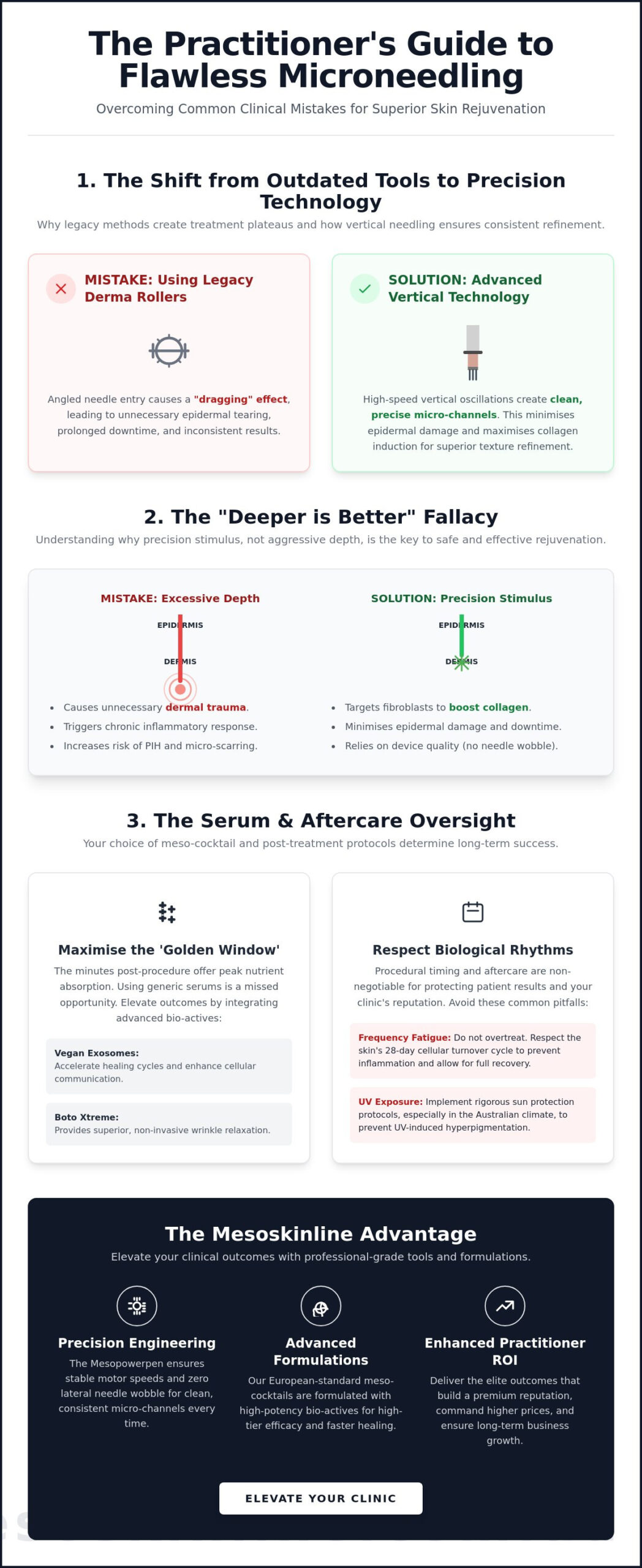
The aesthetic industry has moved beyond the rudimentary era of manual derma rollers. These legacy tools, once considered the gold standard, often caused unnecessary epidermal tearing due to their angled entry and exit points. Modern microneedling technology has replaced these with vertical, high-speed oscillations that ensure cleaner micro-channels. Without this level of precision, practitioners risk the “dragging” effect that leads to prolonged downtime and patient dissatisfaction. It’s a shift from blunt force to surgical-style accuracy.
Many clinics encounter a frustrating plateau where patient skin stops responding to treatment. This usually happens when protocols remain static and fail to evolve with the skin’s changing needs. The skin is a dynamic organ; it adapts to repetitive stimuli. To break this cycle, you must shift from basic skin needling to a comprehensive mesotherapy approach. This requires clinical-grade equipment that offers adjustable needle depths and stable motor speeds, ensuring that every session provides a fresh stimulus for repair rather than just repetitive trauma.
The Science of Controlled Micro-Injuries
The biological foundation of Collagen Induction Therapy (Microneedling) relies on the body’s innate wound-healing response. When needles penetrate the dermis, they trigger a cascade of growth factors that stimulate fibroblast cells to produce new collagen and elastin. If treatments are too superficial, they fail to reach these target cells, resulting in mediocre outcomes. Precision depth is non-negotiable for clinical efficacy. Additionally, the first few minutes post-procedure represent a ‘Golden Window’ for nutrient absorption. Using high-potency serums during this time is what separates a standard treatment from a professional-grade transformation that truly rejuvenates the skin’s architecture.
Identifying Clinical Complacency
Falling into the trap of generic, “one-size-fits-all” instructions is one of the most common microneedling mistakes to avoid in a professional setting. Every patient presents a unique canvas. A protocol designed for deep acne scarring shouldn’t mirror a treatment for delicate periorbital ageing. Clinical complacency often stems from using underperforming devices that lack the motor stability required for consistent results. If your device vibrates excessively or loses power mid-treatment, it’s impossible to maintain the precision required for high-tier aesthetics. Recognising when your equipment is failing to deliver the required torque is essential for maintaining your clinic’s reputation and ensuring long-term business profitability.
Mistake #1: Prioritising Needle Depth Over Precision and Device Quality
One of the most pervasive and dangerous common microneedling mistakes to avoid is the “deeper is better” fallacy. Many practitioners believe that aggressive needle depth correlates directly with superior results; however, excessive penetration often yields the opposite. It causes unnecessary dermal trauma, triggers a chronic inflammatory response, and increases the risk of post-inflammatory hyperpigmentation or even micro-scarring. True rejuvenation isn’t about the depth of the injury. It’s about the precision of the stimulus.
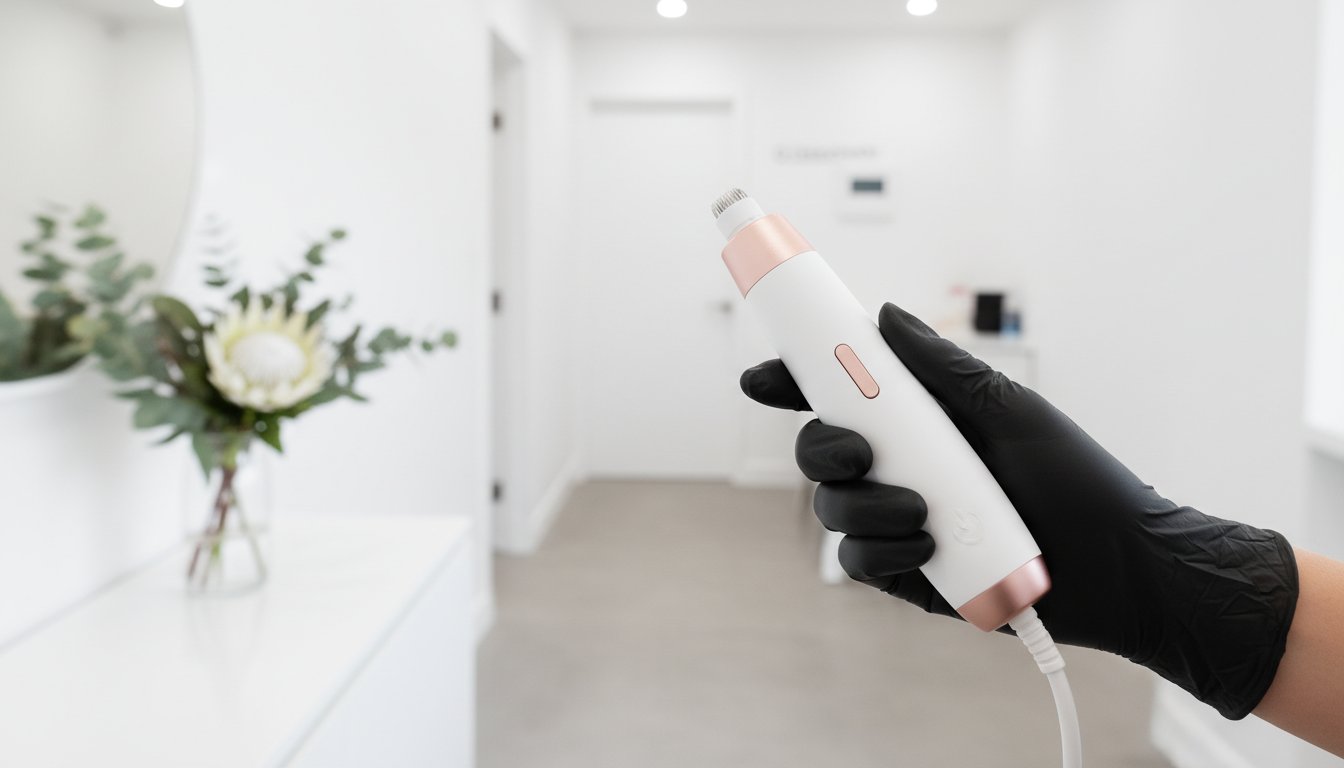
High-tier clinical outcomes require a focus on device engineering. Low-quality pens often suffer from lateral needle wobble. This creates a “dragging” effect as the needles enter and exit the skin, resulting in jagged micro-channels rather than clean, vertical punctures. The Mesopowerpen stands as the professional standard in this regard, offering consistent needle oscillation that ensures every puncture is precise and controlled. By maintaining a strictly vertical path, you minimise epidermal damage while maximising the efficiency of the treatment.
The Danger of Low-Quality Microneedling Machines
Inconsistent motor speeds are a hallmark of inferior devices. When a motor fluctuates, the needles don’t strike the skin at a uniform frequency, leading to uneven results and increased patient discomfort. Safety is also a paramount concern. Many budget-friendly devices lack anti-backflow membranes, creating a significant risk of cross-contamination between patients. This is a critical point highlighted in the FDA guidance on microneedling safety, which warns against the risks associated with unverified equipment. Consequently, discerning Australian clinics are increasingly moving away from unregulated “at-home” devices in favour of medical-grade systems that guarantee both hygiene and performance.
Calibrating Depth for Specific Outcomes
Success lies in matching needle depth to the specific anatomical thickness of the treatment area. The skin on the eyelids is vastly different from the skin on the cheeks or forehead. For fine lines and general texture improvement, a depth of 0.25mm to 0.5mm is often superior, as it allows for optimal serum delivery with minimal downtime. This is particularly effective when applying targeted solutions like Eyelift serum or Lip volume serum to delicate areas. Treating deep acne scars may require more significant penetration, but hitting the papillary dermis too aggressively in sensitive zones can lead to permanent damage. Precision calibration ensures that you trigger the body’s natural repair mechanisms without overwhelming its capacity to heal. For those seeking to elevate their clinical practice, investing in a professional-grade microneedling system is the first step toward achieving these refined results.
The Serum Oversight: Why Your Choice of Meso-Cocktail Determines Your ROI
While the mechanical device creates the architecture for change, the bioactive cocktail you introduce determines the clinical legacy of the treatment. Relying on generic Hyaluronic Acid is one of the most common microneedling mistakes to avoid if you’re aiming for premium results. HA is a foundational hydrator, but it lacks the corrective power of specialised mesotherapy supplies australia. For practitioners, the goal is a synergistic effect where the mechanical stimulus and chemical infusion work in tandem to resolve complex skin concerns.
Advanced formulations like Boto Xtreme offer a sophisticated, non-invasive alternative to traditional injectables by relaxing micro-tensions in the skin. In the same vein, vegan exosomes have emerged as the 2026 gold standard for cellular repair, providing a signalling system that accelerates tissue regeneration. Introducing “filler” ingredients or non-sterile topical products into these micro-channels is a significant risk. These can lead to granulomas or chronic inflammation, which is why understanding microneedling side effects and proper procedure is essential for every clinician. It’s about ensuring safety without sacrificing the sensory experience of a high-end treatment.
Targeted Solutions for Complex Concerns
Clinical precision requires targeted solutions. The periorbital region, for instance, demands a calibrated approach; using a high-potency Eyelift serum ensures the delicate skin is nourished without the risk of irritation. For patients battling melasma or sun damage, pigmentation solutions must be integrated directly into the needling process to inhibit melanin production at the source. Even the lips can benefit from this approach. Utilising a Lip volume serum allows you to enhance natural contours and hydration levels, providing a subtle, sophisticated alternative to dermal fillers that appeals to the modern, minimalist consumer. It’s a versatile way to expand your clinic’s service menu while maintaining a focus on natural-looking results.
The Bio-Availability Factor
Molecular weight is the silent architect of serum efficacy. If a molecule is too large, it simply sits on the surface, regardless of the micro-channels you’ve created. Professional meso-solutions are engineered for high bio-availability, ensuring they penetrate deep into the dermis where they can influence fibroblast activity. This is the fundamental difference between standard topical skincare and sterile, clinical-grade formulations. To maintain these standards, you must meticulously organise your treatment tray to prevent cross-contamination. Use single-use ampoules and sterile drawing needles to ensure that the integrity of your “cocktail” remains uncompromised from the first puncture to the final application. This level of rigour protects your patient and your professional reputation.
Procedural Pitfalls: From Frequency Fatigue to Improper Post-Treatment Care
Achieving a flawless clinical outcome requires a deep respect for biological timelines. One of the most common microneedling mistakes to avoid is performing treatments too frequently. The skin operates on a precise 28-day regenerative cycle. If you needle every fortnight, you disrupt the inflammatory phase before it can transition into the proliferative phase. This leads to “frequency fatigue,” where the skin becomes perpetually stressed rather than rejuvenated. Patience is a clinical virtue that ensures long-term tissue integrity.
In the Australian climate, the sun is a formidable adversary for post-procedure skin. Inadequate UV protection in the days following a session is a primary cause of post-inflammatory hyperpigmentation (PIH). Fresh micro-channels increase photosensitivity exponentially, making broad-spectrum protection non-negotiable. Similarly, introducing active ingredients like Retinol or Vitamin C too early can cause chemical burns on compromised tissue. These actives should be paused for at least five to seven days. Patients must also maintain a sterile post-care environment, which includes using fresh pillowcases and avoiding contact with unwashed hands to prevent secondary infections.
The Recovery Timeline
Understanding the first 72 hours is essential for patient reassurance. During the first 24 hours, expect erythema and slight swelling as the inflammatory cascade begins. By 48 hours, the skin often feels tight, similar to a mild sunburn. By the 72-hour mark, the initial healing phase is complete, and cellular regeneration starts in earnest. It’s a common misconception that “more redness” indicates a more effective treatment. Excessive, lingering redness often suggests unnecessary trauma rather than effective collagen induction. During this window, use only soothing, non-occlusive barriers to protect the skin without trapping heat.
Pre-Treatment Red Flags
Safety begins before the first needle touches the skin. You must never needle over active acne or inflamed lesions, as this risks spreading bacteria across the treatment area. Additionally, patients taking anti-inflammatory medications may experience blunted results. These drugs can inhibit the very inflammatory response required to trigger collagen synthesis. Rigorous screening for a history of keloid scarring or herpes simplex is also mandatory to prevent complications. To ensure your clinic operates with the highest safety standards and precision, you can invest in professional clinical equipment that guarantees consistent results every time.
The Mesoskinline Advantage: Elevating Professional Clinical Outcomes
Professional success in the 2026 aesthetic landscape requires more than just technical skill; it demands a synergy between advanced technology and dermatological science. Integrating the Mesopowerpen into your clinic’s service menu ensures that you aren’t just performing a treatment, but delivering a sophisticated clinical intervention. This system is designed to provide maximum efficacy while maintaining the high-end elegance your patients expect. By moving away from fragmented tools and adopting a cohesive ecosystem, you eliminate the variables that lead to inconsistent results and patient dissatisfaction.
Using European-standard, dermatologically tested formulations is a hallmark of a premier practice. These solutions are engineered to work in harmony with the skin’s biological processes, ensuring that every micro-channel created is an opportunity for targeted rejuvenation. Educating your clients on the value of this professional system is vital. You must clearly articulate why DIY alternatives or low-tier clinic treatments fail to meet the safety and efficacy standards of a medical-grade environment. Mastery of these nuances is best achieved through facial courses that focus on the intersection of precision engineering and clinical application.
Standardising Excellence in Your Practice
Creating a repeatable protocol is the foundation of clinical safety and business profitability. When your workflow is standardised, you ensure visible results for every patient, regardless of their skin concern. Investing in high-end aesthetic technology like the Mesopowerpen makes a strong business case; it reduces downtime, increases patient retention, and positions your clinic as a visionary leader. This is precisely why practitioners across Australia are switching to the Mesoskinline ecosystem. They recognise that a heritage of international quality provides the credibility needed to command premium rates in a crowded market.
Final Checklist for Success
To maintain the highest standards of care, keep this summary of common microneedling mistakes to avoid at the centre of your practice:
- Avoid excessive needle depth that causes unnecessary dermal trauma.
- Avoid using non-sterile or generic serums that lack clinical bio-availability.
- Avoid disrupting the 28-day skin cycle with over-frequent sessions.
- Avoid inadequate post-care protocols that ignore the Australian UV factor.
The “Perfect Procedure” workflow follows a logical, rhythmic path: meticulous Prep to ensure a sterile field, precision application with the Pen using calibrated depths, and rigorous Post-care utilising vegan exosomes or Boto Xtreme to lock in results. The Mesopowerpen represents the pinnacle of precision engineering for 2026, delivering the exactitude required for high-tier clinical outcomes. By adhering to these professional standards, you ensure that every treatment is a testament to your clinic’s dedication to excellence and visible transformation.
Defining the Future of Clinical Excellence
Mastering the intersection of medical science and luxury aesthetics requires a departure from outdated, depth-focused trauma. By identifying and rectifying these common microneedling mistakes to avoid, you elevate your practice from basic skin needling to a results-driven clinical system. Success in 2026 is defined by precision engineering, the strategic integration of high-potency bio-actives like vegan exosomes, and a deep respect for the skin’s natural regenerative cycles. It’s about providing consistent, high-tier outcomes that foster long-term patient trust.
As the exclusive APAC distributor of Danish clinical technology, Mesoskinline provides a complete system for success. Our dermatologically tested, European-standard serums and advanced devices are trusted by leading Australian aesthetic practitioners to deliver superior results. Don’t settle for mediocre outcomes when you can offer the pinnacle of skin rejuvenation. Explore the Mesoskinline Professional Collection for Australian Clinics and discover how our precision protocols can transform your clinical menu. Your dedication to these rigorous standards ensures that every patient experiences the visible, sophisticated transformation they deserve.
Frequently Asked Questions
Can I use my regular Vitamin C serum during microneedling?
Don’t use regular retail Vitamin C serums during the actual needling process. Most over-the-counter formulations are too acidic for sub-dermal delivery and contain non-sterile stabilisers that can cause chronic inflammation or granulomas. It’s essential to use sterile, clinical-grade meso-solutions specifically engineered for micro-channel penetration to ensure safety and efficacy.
How often should I realistically perform microneedling for the best results?
Space your professional sessions at least four to six weeks apart to respect the skin’s biological repair timeline. This window allows the 28-day cellular turnover cycle to complete and ensures the new collagen matrix has matured. Rushing into a subsequent session too early is one of the most common microneedling mistakes to avoid, as it can lead to tissue fatigue and diminished results.
Is it a mistake to use a derma roller instead of an electric pen?
Using a manual derma roller is often a mistake in a professional clinical setting. Rollers enter and exit the skin at an angle, which causes unnecessary epidermal tearing and lateral trauma. An electric device like the Mesopowerpen provides precise, vertical oscillations that create clean micro-channels, significantly reducing downtime and the risk of micro-scarring compared to legacy rolling tools.
What should I do if my skin becomes excessively bruised or swollen?
Apply a cold compress immediately and avoid anti-inflammatory medications that might disrupt the natural healing cascade. Excessive bruising often indicates that the needle depth was too aggressive or the practitioner applied too much manual pressure. If this occurs, review your protocol and ensure you’re adjusting the device settings to match the anatomical skin thickness of each specific treatment zone.
Can microneedling help with pigmentation caused by the Australian sun?
Microneedling is an excellent tool for treating sun-induced pigmentation when integrated with specialised Pigmentation solutions. The procedure helps break up concentrated melanin while the serums work to inhibit further pigment production at a cellular level. It’s critical that patients adhere to a strict UV protection protocol post-treatment to prevent the Australian sun from causing rebound hyperpigmentation on the fresh skin.
What are the most common mistakes beginners make with needle depth?
Beginners often fall into the trap of using a uniform needle depth across the entire face. The skin on the forehead and around the eyes is significantly thinner than the skin on the cheeks or jawline. Failing to adjust the depth accordingly can lead to hitting the bone or causing unnecessary pain and trauma in delicate areas, which compromises the overall patient experience.
Why is it important to avoid using retinol for several days after treatment?
Retinol is a potent active that can be far too aggressive for skin with open micro-channels. Introducing retinoids too soon can cause chemical irritation, excessive peeling, and a compromised skin barrier. Wait at least five to seven days before reintroducing these actives, allowing the initial inflammatory and proliferative phases of healing to conclude without chemical interference.
How do vegan exosomes improve the results of a standard needling session?
Vegan exosomes act as advanced intercellular messengers that signal the skin to accelerate its natural repair mechanisms. When introduced during a needling session, they significantly boost collagen and elastin production while reducing the overall recovery time. This addition elevates a standard treatment into a high-tier regenerative procedure, providing the superior texture and firmness that modern patients demand.
What Others Are Reading:


Stay in the Glow
Get skincare tips and early access to new products.
