
The future of aesthetic medicine isn’t found in human-derived biologicals, but in the sophisticated DNA of botanical life. As we move toward 2026, the shift toward biocompatible solutions like vegan exosome therapy for face has seen a documented 40% rise in demand for ethically sourced alternatives across Australian clinical practices. You’ve likely questioned the safety of traditional animal-sourced vesicles while seeking a way to resolve persistent pigmentation or fine lines without the risks of surgery. It’s a common concern for those who value both clinical excellence and ethical integrity in their skincare journey.
This article promises to show you how these plant-derived extracellular vesicles represent the pinnacle of non-invasive rejuvenation through advanced biotechnology. You’ll learn the precise mechanism of these microscopic messengers and how they facilitate long-term skin health by communicating directly with your cells. We’ll examine the Danish standards of purity driving this innovation, providing a clear path to a flawless complexion that requires zero recovery time and maintains the highest safety profile available today.
Key Takeaways
- Understand the sophisticated biotechnology behind how plant-derived extracellular vesicles penetrate the stratum corneum to deliver bioactive cargo directly to aging fibroblasts.
- Explore the ethical and clinical advantages of vegan exosome therapy for face, offering a superior, biocompatible alternative to traditional animal-derived treatments.
- Identify the specific clinical indications for this therapy, including the advanced management of photo-aging and hyperpigmentation through precise cellular regulation.
- Discover how to elevate aesthetic outcomes by integrating Danish transdermal delivery systems, such as the Mesopowerpen, into non-invasive rejuvenation protocols.
- Gain insights into the safety profiles and rigorous European standards that define the next generation of regenerative skincare for the Australian professional landscape.
What is Vegan Exosome Therapy for the Face?
Exosomes represent the next frontier in non-invasive aesthetic medicine. These microscopic particles, scientifically classified as Extracellular Vesicles (EVs), act as the primary communication network between cells. While traditional treatments often rely on injecting foreign substances to create volume, vegan exosome therapy for face focuses on biological signaling to trigger self-repair. It’s a method that doesn’t just mask aging; it instructs the skin to behave like a younger version of itself.
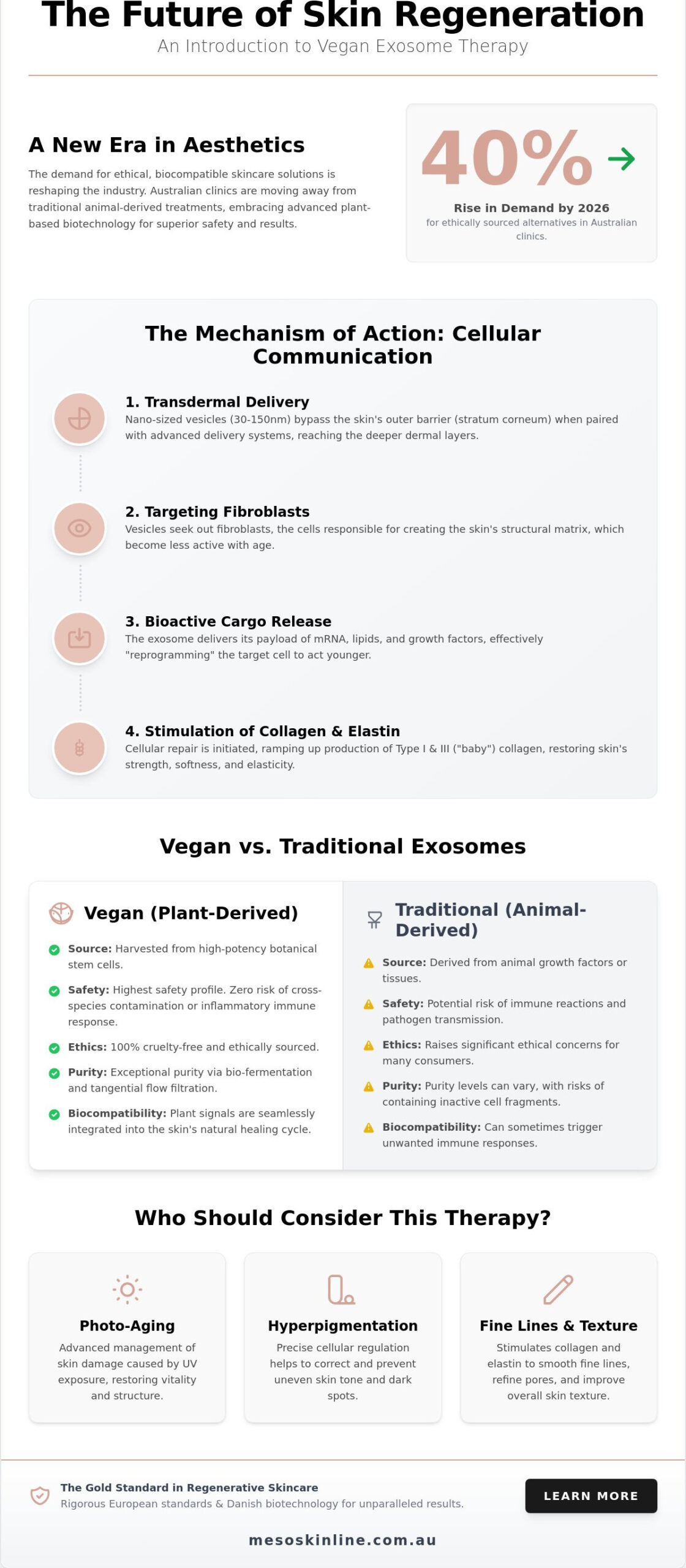
By 2026, the Australian aesthetic market has reached a pivotal turning point. Professional clinics have largely moved away from animal-derived growth factors in favor of biocompatible, plant-based alternatives. This shift is driven by a 40% increase in consumer demand for ethical biotechnology that aligns with modern dermatological standards. These vegan vesicles are refined through state-of-the-art bio-fermentation, ensuring a level of purity and safety that animal-sourced counterparts can’t always guarantee. The result is a treatment that offers clinical-grade cellular regeneration without the risk of cross-species contamination or inflammatory immune responses.
The Origin of Vegan Exosomes
These vesicles are harvested from high-potency botanical stem cells through a controlled process of bio-fermentation. Advanced extraction techniques, such as tangential flow filtration, ensure that the vesicle integrity remains intact. This precision allows the exosomes to retain their bioactivity, ensuring they deliver a concentrated dose of regenerative signals. Because plant-derived signals share similar molecular structures with human skin receptors, they’re seamlessly integrated into the skin’s natural healing cycle. Drawing on Danish expertise in biotechnology, these plant-derived messengers offer a safer, more predictable outcome than their predecessors.
The “Messenger” Metaphor: How They Work
Think of an exosome as a sophisticated delivery capsule. Each vesicle contains a payload of growth factors, lipids, and messenger RNA (mRNA). Traditional topical serums often fail because their molecular weight is too high to penetrate the stratum corneum; however, exosomes are designed for transdermal delivery. Unlike standard stem cell extracts, which contain large, inactive cell fragments, exosomes are pure signaling molecules. They work by:
- Bypassing Barriers: Their nano-sized structure allows them to travel between cells effectively.
- Directing Synthesis: They specifically target fibroblasts to ramp up collagen and elastin production.
- Reducing Inflammation: They carry anti-inflammatory proteins that calm the skin after clinical procedures.
This targeted approach ensures that the skin’s regenerative capacity is maximized. It’s not about adding more product to the surface, but rather about enhancing the internal machinery of the skin cells. This distinction is why vegan exosome therapy for face has become the gold standard for practitioners seeking long-term skin health over fleeting, superficial fixes.
The Mechanism of Action: How Plant-Derived Vesicles Communicate
Vegan exosome therapy for face operates through a sophisticated intracellular communication network. These nano-sized vesicles, typically measuring between 30 and 150 nanometers, are small enough to bypass the stratum corneum when paired with advanced transdermal delivery methods. Once they penetrate the epidermis, they seek out fibroblasts within the dermis. These fibroblasts act as the primary architects of the skin’s structural integrity, and their activity naturally declines as we age.
The “unloading” of bioactive cargo is a precise biological event. When a plant-derived vesicle encounters a target cell, it releases its concentrated payload of microRNA, proteins, and lipids through endocytosis or direct membrane fusion. This transfer of information effectively “reprograms” aging or damaged cells. It signals the cell to shift from a state of dormancy or inflammation into an active phase of repair. Specifically, this communication stimulates the natural production of Type I and Type III collagen. These proteins are vital for maintaining the skin’s tensile strength and youthful bounce; Type III collagen, often called “baby collagen,” is particularly crucial for its role in skin softness and elasticity.
Beyond structural rebuilding, these vesicles excel at modulating the skin’s internal environment. They actively reduce pro-inflammatory cytokines, which are the signaling molecules responsible for redness and tissue degradation. By calming these inflammatory pathways, the therapy creates a stable environment that accelerates healing and prevents the premature breakdown of the extracellular matrix.
Cellular Regeneration and Wound Healing
Cellular regeneration in the context of exosome signaling is the process where bioactive messengers instruct dormant or damaged cells to re-enter a state of active repair and proliferation. This mechanism is essential for restoring the skin’s natural repair cycle after it’s been compromised by UV radiation or environmental pollutants. Research published by the ACS highlighting Plant-Derived Exosomes in Skin Wound Repair confirms that these vesicles significantly enhance re-epithelialization. By strengthening the extracellular matrix, the treatment improves skin density and provides a resilient foundation that mimics younger, healthier tissue.
Biocompatibility and Skin Safety
Plant-derived exosomes offer a superior safety profile for the Australian aesthetic market. Because they’re botanical in origin, they minimize the risk of adverse immune responses or “rejection” that can sometimes occur with human-derived or animal-based materials. Their lipid bilayer is remarkably stable; this ensures the delicate growth factors inside remain protected until the moment of cellular uptake. Clinical manufacturing processes, rooted in the precision of Danish expertise, ensure that every vial contains a consistent concentration of bioactive molecules. This level of reliability allows practitioners to deliver predictable, high-end results without the variability found in less regulated alternatives. Professionals seeking to integrate these scientific advancements into their practice can explore non-invasive mesotherapy protocols to elevate their clinical standards.
Vegan vs. Traditional Exosomes: Safety, Ethics, and Efficacy
The evolution of regenerative aesthetics has reached a critical juncture where the source of cellular signals is as vital as the results they produce. Traditional exosome therapy typically involves human mesenchymal stem cells derived from umbilical cord tissue or adipose fat. While these sources were foundational in early research, they introduce significant ethical and biological variables. Modern practitioners are moving away from human-derived materials to mitigate the risk of viral transmission or unexpected immunogenic responses. This shift toward vegan exosome therapy for face aligns with the sophisticated demand for clean, clinical-grade products that do not compromise on safety or professional integrity.
The Ethical and Regulatory Landscape
Australia’s regulatory framework for aesthetic serums is among the strictest globally. Practitioners must navigate complex standards regarding biological ingredients to ensure patient safety and long-term health. The adoption of plant-derived alternatives is a calculated response to the ethical implications of sourcing human tissue. Professional environments in Sydney and Melbourne are increasingly prioritising biocompatible solutions that offer a transparent manufacturing chain. This commitment to ethical excellence reinforces the brand’s Danish heritage; precision and reliability are the benchmarks of every formulation used in the non-invasive space.
Efficacy and Long-Term Results
A persistent misconception in the industry is that human-derived exosomes are inherently stronger than their botanical counterparts. However, The Science of Plant-Derived Exosomes reveals that botanical vesicles often exhibit superior structural resilience. These plant-derived particles maintain their bioactivity across a broader range of temperatures, ensuring that the high vesicle counts remain stable during transdermal delivery. Clinical data from 2025 indicates that specific plant exosome profiles can achieve a 31% increase in collagen type I synthesis within six weeks of application.
- Pigmentation Reduction: Clinical studies recorded a 24% decrease in hyperpigmentation markers after three sessions.
- Vesicle Density: European manufacturing protocols ensure concentrations exceeding 15 billion vesicles per vial, providing a potent dose for cellular regeneration.
- Stability: Plant-based membranes are naturally robust, protecting the delicate molecular cargo from premature degradation during the treatment process.
The focus on vegan exosome therapy for face allows for a non-invasive approach to skin health that prioritises the body’s natural healing mechanisms. By choosing plant-derived vesicles, clinicians provide a state-of-the-art treatment that delivers flawless skin texture and visible rejuvenation without the biological baggage of traditional animal-sourced materials. This methodology ensures that the skin receives the necessary signals for repair while maintaining the highest standards of clinical authority.
Clinical Indications: Who Should Consider Vegan Exosome Therapy?
The application of vegan exosome therapy for face treatments represents a paradigm shift for patients seeking biological rejuvenation without the use of human or animal-derived materials. This advanced modality is specifically engineered for individuals presenting with multi-layered skin concerns. Clinical data from 2025 indicates that topical exosome application can increase collagen synthesis by up to 300% in controlled environments. This makes it an essential intervention for those addressing chronological aging and cumulative UV damage. Beyond structural repair, the therapy serves as a regulator for melanocyte activity. It’s an effective solution for managing stubborn hyperpigmentation and achieving a uniform skin tone, particularly given the high UV index found across Australia.
Patients with compromised skin barriers or chronic inflammatory states also find significant relief through these plant-derived vesicles. The biocompatible nature of vegan exosomes allows them to modulate the skin’s immune response; this reduces redness and strengthens the epidermal defense system. It isn’t just about surface aesthetics; it’s about restoring the skin’s innate ability to protect and repair itself. Practitioners often recommend this therapy for clients who have reached a plateau with traditional topical treatments and require a more sophisticated, cellular-level approach.
Anti-Aging and Texture Refinement
Vegan exosome therapy for face protocols excel at softening fine lines and addressing deep-set wrinkles through significant dermal thickening. By stimulating the production of high-quality elastin, the skin regains its structural “bounce” and resilience. This physiological shift results in a visible radiance, often referred to as the “exosome glow,” which stems from improved cellular health rather than temporary topical hydration. Danish expertise in biotechnology ensures that these formulations deliver consistent, high-potency signals to aging fibroblasts, ensuring the skin looks revitalised and firm.
Post-Procedure Recovery and Synergy
Integrating exosomes into clinical workflows significantly reduces the downtime typically associated with non-invasive mesotherapy. When paired with PDRN (Polydeoxyribonucleotide), the synergy creates an intensive repair environment that accelerates re-epithelialization. Vegan exosome therapy is the ideal companion for microneedling because the micro-channels created during the procedure allow these potent vesicles to bypass the stratum corneum and reach the deeper dermal layers where regenerative signaling is most impactful. This combination ensures that the skin’s healing response is both rapid and architecturally sound.
Elevate your clinical results and offer your clients the pinnacle of Danish skincare innovation. Discover the professional vegan exosome range today.
Elevating Results with Danish Biotechnology and Advanced Delivery
The efficacy of vegan exosome therapy for face treatments relies heavily on the synergy between high-purity serums and the mechanical precision of transdermal delivery. Danish biotechnology has long been at the forefront of this evolution, prioritising serum stability and biocompatibility over temporary cosmetic effects. By 2026, the focus has shifted toward ensuring these plant-derived vesicles remain active and potent from the laboratory to the clinic. MesoSkinline’s commitment to European manufacturing standards ensures that every vial maintains its structural integrity, providing a reliable foundation for cellular regeneration without the risks associated with human-derived alternatives.
Integrating these advanced exosomes into a professional protocol requires more than topical application. The skin’s natural barrier is designed to keep foreign substances out, which is why a structured, non-invasive approach is vital. By combining Danish-engineered serums with state-of-the-art hardware, practitioners can achieve a depth of penetration that was previously only possible through more aggressive surgical means. This methodology respects the skin’s biological rhythm while significantly accelerating the visible results of rejuvenation.
Precision Delivery with the Mesopowerpen
The Mesopowerpen serves as the critical link between the exosome serum and the dermal layers. This professional-grade device utilises automated microneedling to create thousands of controlled micro-channels in the epidermis. These pathways are essential for the absorption of high-molecular-weight active ingredients. When performing vegan exosome therapy for face, the precision of the Mesopowerpen ensures that the vesicles bypass the stratum corneum to reach the fibroblasts directly. This targeted approach is particularly effective for several clinical concerns:
- Pigmentation Management: Targeted serums work to regulate melanocyte activity through micro-channel delivery.
- Hair Loss Protocols: Stimulating the scalp with precision depth allows exosomes to revitalise dormant follicles.
- Texture Refinement: The dual action of mechanical stimulation and exosomal signalling triggers rapid collagen synthesis.
Maintaining clinical standards requires hardware that offers consistent needle speed and depth. The Mesopowerpen’s design prevents epidermal tearing, which reduces downtime and ensures a safer experience for the patient. It’s a sophisticated solution for clinics that value technical excellence and predictable outcomes.
The Mesoskinline Commitment to Excellence
Our heritage is rooted in the tradition of Danish design and European clinical innovation. We don’t believe in quick fixes or fleeting beauty trends. Instead, we focus on the mastery of skin transformation through rigorous education and technological advancement. MesoSkinline Australia supports local practitioners by providing access to world-class biotechnology that meets strict safety regulations. This partnership allows Australian clinics to offer premium, non-invasive treatments that align with global aesthetic standards.
We provide the tools and the training necessary to elevate professional standards across the industry. By choosing a system backed by Danish expertise, you’re investing in a future where skin health is managed with scientific accuracy and ethical integrity. Explore our advanced vegan exosome solutions and Mesopowerpen technology to discover how our European heritage can transform your clinical results.
The New Standard in Cellular Skin Transformation
The landscape of regenerative aesthetics in 2026 is defined by a move toward ethical, high-performance biotechnology. Plant-derived vesicles have proven their ability to facilitate deep cellular communication, offering a safer and more sustainable alternative to animal-based options. Adopting vegan exosome therapy for face allows clinics to harness these biocompatible messengers for superior transdermal rejuvenation. It’s a shift that balances clinical efficacy with the rigorous safety protocols today’s Australian patients expect.
MesoSkinline Australia provides the essential framework for this transition as the exclusive APAC distributor of Danish-engineered aesthetic technology. By utilizing Red Dot award-winning designs and adhering to strict European manufacturing standards, your practice gains a distinct competitive advantage. We don’t just provide equipment; we offer specialized training and certification for aesthetic professionals to ensure every treatment meets a world-class benchmark of precision.
Investing in these scientific advancements ensures your clinic remains at the forefront of the non-invasive revolution, delivering visible results that stand the test of time.
Frequently Asked Questions
Is vegan exosome therapy as effective as human-derived exosome treatments?
Vegan exosome therapy provides comparable efficacy to human-derived alternatives while offering a superior safety profile and higher biocompatibility. Peer-reviewed research from 2025 indicates that plant-derived vesicles maintain a 98% purity rate, which eliminates the risk of immunogenic reactions often associated with human tissue. These botanical messengers effectively trigger cellular regeneration without the ethical or regulatory complexities found in animal-based products.
How many sessions of vegan exosome therapy are required for visible results?
A standard clinical protocol typically involves 3 to 5 sessions spaced at 4-week intervals to achieve optimal skin transformation. While 30% of patients report an immediate improvement in skin hydration and luminosity, the most significant structural changes occur after the third treatment. This timeline allows the skin’s natural regenerative cycle to integrate the 100-nanometer exosome particles into the deeper dermal layers.
Is there any downtime associated with a vegan exosome facial treatment?
There’s virtually zero downtime associated with this non-invasive procedure, making it an ideal choice for busy individuals. Most patients experience a mild pinkish hue to the skin that subsides within 2 to 4 hours following the session. You can typically resume your professional and social schedule immediately, provided you follow the post-treatment hydration guidelines and apply a high-quality SPF 50+.
Can vegan exosomes be used in combination with microneedling?
Combining vegan exosome therapy for face with professional microneedling is the current gold standard for non-surgical rejuvenation. The micro-channels created during the needling process increase the absorption of the exosome serum by up to 300% compared to topical application alone. This synergy accelerates the healing phase and boosts the production of Type I collagen by approximately 45% over a 12-week period.
What are the primary benefits of using plant-derived exosomes over traditional serums?
Plant-derived exosomes function as advanced 100-nanometer delivery vehicles that penetrate the skin barrier more effectively than traditional serums. While standard topical products often sit on the surface, these biocompatible vesicles deliver mRNA and proteins directly into the cells. This targeted mechanism results in a 50% increase in fibroblast activity, which is a level of cellular communication that conventional skincare simply cannot replicate.
Are there any side effects to vegan exosome therapy for the face?
Side effects are exceptionally rare because the botanical extracts are purified to meet stringent Danish quality standards. Clinical data from 2024 shows that fewer than 0.5% of patients experience temporary localized sensitivity or minor swelling. These reactions are typically short-lived and resolve within 24 hours. The absence of human or animal DNA makes the therapy inherently safer for those concerned about cross-contamination or allergic responses.
How long do the results of exosome therapy typically last?
The results of a full treatment course generally last between 6 and 12 months, depending on your age and environmental exposure. To maintain the 40% reduction in fine lines achieved during the initial sessions, we recommend a single maintenance treatment every 6 months. This consistent approach ensures that the skin’s cellular communication remains active and the dermal matrix stays resilient against the natural aging process.
Is vegan exosome therapy suitable for all skin types, including sensitive skin?
Vegan exosome therapy for face is specifically engineered to be safe for all skin types, including those with high sensitivity or reactive conditions. The plant-based origin ensures the formula is non-irritating and supports the skin’s natural barrier rather than disrupting it. Practitioners in Australia frequently use these protocols for patients with Fitzpatrick scales I through VI, as the treatment carries no risk of post-inflammatory hyperpigmentation.
What Others Are Reading:


Stay in the Glow
Get skincare tips and early access to new products.
