
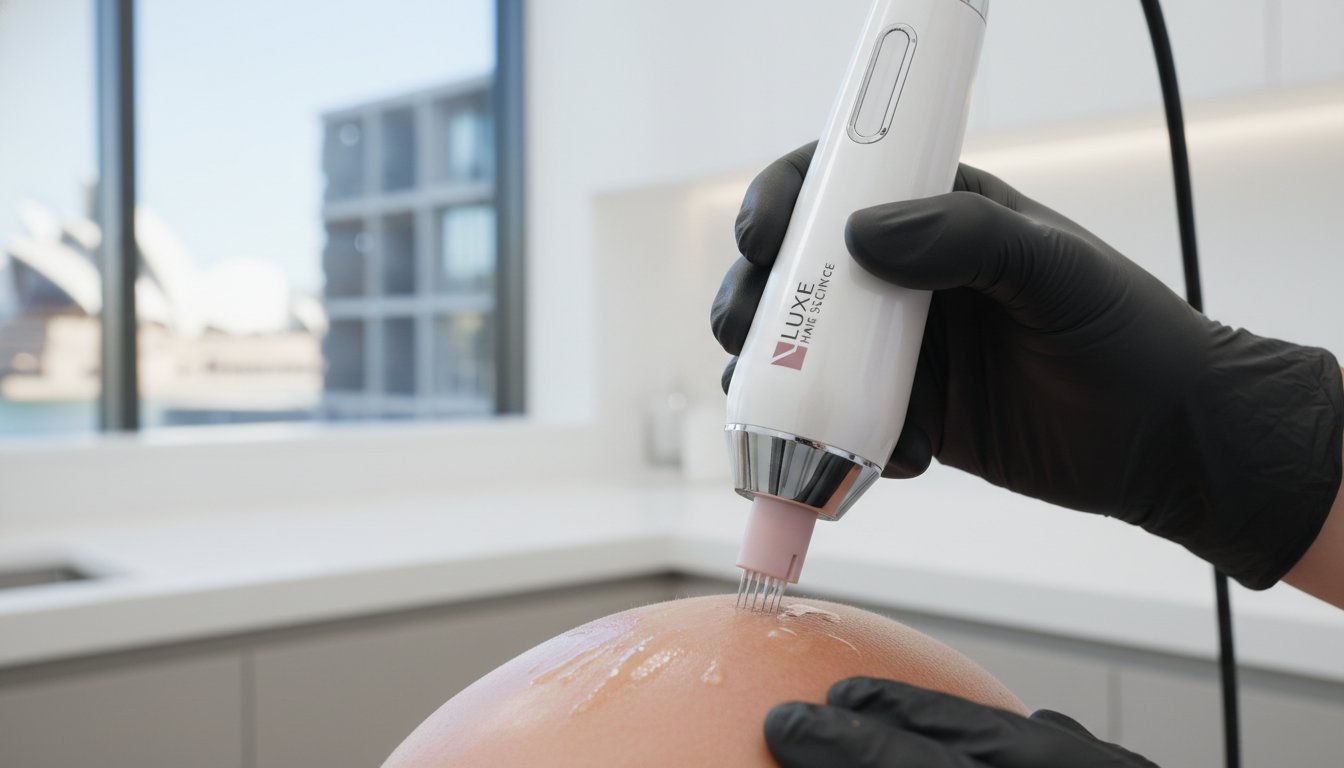
The era of choosing between ineffective topical oils and invasive, high-cost hair transplants has officially ended. You’ve likely felt the frustration of waiting months for a pharmacy-grade serum to work, only to see minimal change in your hairline. It is exhausting to navigate confusing clinical jargon while your hair density continues to decline. Scalp mesotherapy for hair thinning has emerged as the definitive 2026 standard for Australian men and women seeking a sophisticated, non-surgical solution.
This guide reveals how advanced delivery systems and high-potency bio-actives are revolutionising the hair restoration landscape. You will discover the scientific precision behind the Mesopowerpen and how vegan exosomes are setting new benchmarks for follicular health. We provide a clear, expert-led roadmap through the latest clinical protocols and TGA-compliant standards. This ensures you understand exactly how to achieve a visible increase in hair density with confidence. We examine the transition from traditional methods to modern, precision-based infusions that prioritise both safety and visible transformation.
Key Takeaways
- Understand the transition from manual nappage to automated micro-channelling; this ensures consistent nutrient delivery directly to the hair follicle.
- Discover why scalp mesotherapy for hair thinning relies on a precision-potency synergy to activate the scalp’s natural wound-healing response.
- Learn why the Mesopowerpen is the 2026 clinical standard for high-speed, non-traumatic infusion, replacing outdated manual injection techniques.
- Explore how advanced hair loss control serums and vegan exosomes modernise cellular communication to accelerate the hair restoration process.
- Establish realistic expectations by following standard Australian clinical protocols, typically requiring three to six months for visible density improvements.
What is Scalp Mesotherapy? A Modern Solution for Hair Thinning
Precision hair restoration has moved beyond the bathroom cabinet. While topical solutions often promise much and deliver little, clinical science has refined a more direct path to follicular health. Mesotherapy represents this evolution, serving as a sophisticated delivery system for bio-active nutrients. By targeting the scalp’s deeper layers, this treatment provides a biological wake-up call to dormant follicles. It is a refined, medical-grade intervention that sits comfortably between basic home care and the significant commitment of surgical hair transplants.
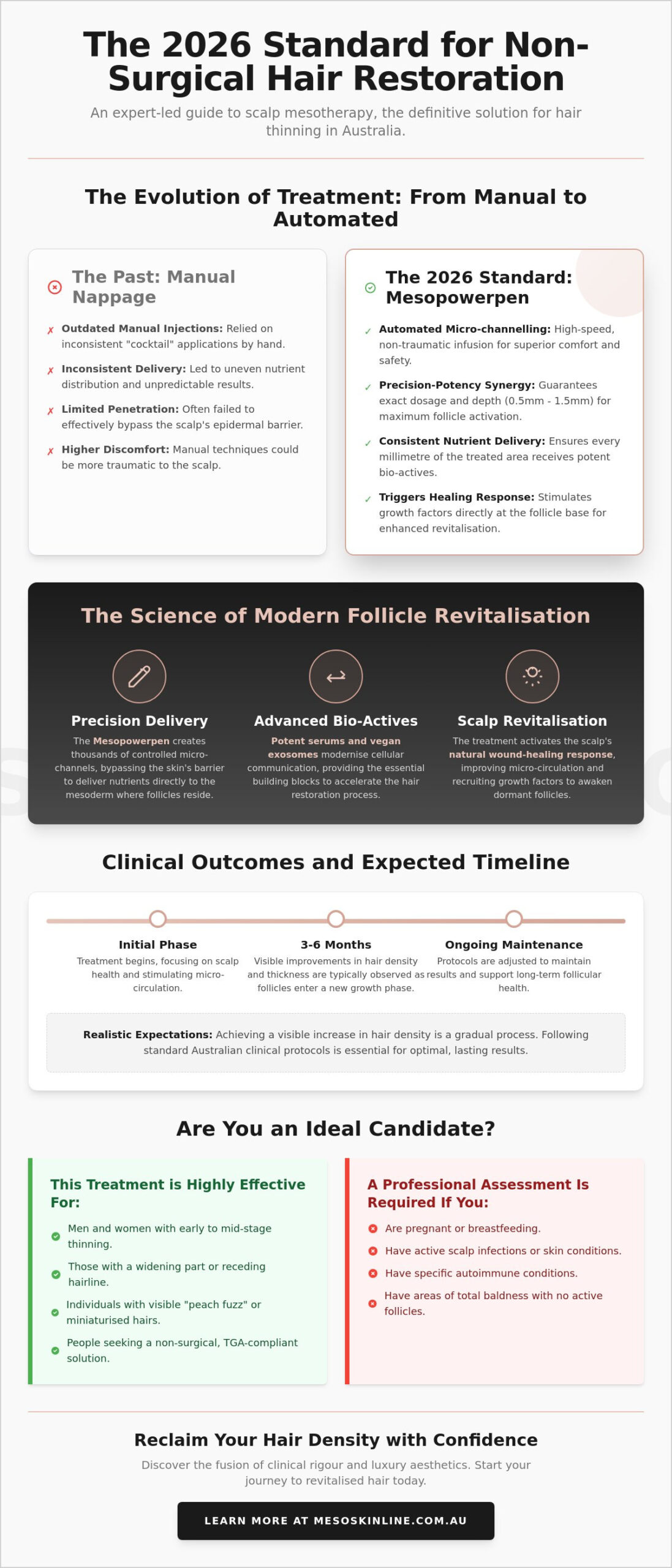
The landscape of scalp mesotherapy for hair thinning changed significantly as we entered 2026. The industry has transitioned from the traditional nappage technique, which involved manual “cocktail” injections, to automated micro-channelling. This shift ensures every millimetre of the treated area receives an exact dose of hair loss control serums. It’s no longer about a general application. It’s about precision. This method is particularly effective for addressing androgenetic alopecia and telogen effluvium, providing a structured protocol for those who want to reclaim their hair density without surgery.
The Anatomy of the Scalp and the Mesoderm
True hair revitalisation happens in the mesoderm. This middle layer of the skin houses the vital structures of the hair follicle, yet it remains shielded by the stratum corneum. Traditional topical treatments often fail because they cannot penetrate this stubborn epidermal barrier. Mesotherapy effectively bypasses this obstacle. By creating temporary micro-channels, we ensure maximum absorption of nutrients. This process doesn’t just deliver serums; it triggers a natural healing response that recruits growth factors directly to the follicle base.
Who is the Ideal Candidate for This Treatment?
Successful outcomes depend on timing and follicular viability. The ideal candidate is an Australian man or woman experiencing early to mid-stage thinning rather than total baldness. If the follicles are still active, they can be revitalised. We see exceptional results in patients who notice a widening part or a receding hairline but still possess visible “peach fuzz” or miniaturised hairs. However, certain conditions require caution. We don’t recommend this treatment for individuals with active scalp infections, specific autoimmune conditions, or those who are pregnant. A professional assessment is always the first step to ensure the protocol aligns with your physiological needs.
This treatment represents a fusion of clinical rigor and luxury aesthetics. It offers a clear, evidence-based alternative for those tired of slow-acting oils. By utilising the Mesopowerpen, practitioners can now deliver high-tier outcomes with minimal downtime. It’s a calculated, expert-led approach to hair restoration that prioritises both safety and visible transformation.
The Science of Follicle Revitalisation: Why Delivery Matters
Precision delivery is the hallmark of modern hair restoration. It is not simply about what you apply to the scalp; it is about where that substance eventually lands. In the context of scalp mesotherapy for hair thinning, the mechanical delivery system acts as a sophisticated bridge between clinical formulations and the biological structures they are designed to support. This targeted approach ensures that active ingredients reach the exact depth required to influence the hair cycle.
When the scalp experiences controlled micro-injuries, it initiates a cascade of regenerative events. This wound-healing response is the fundamental catalyst for change. It signals the body to recruit essential growth factors to the follicle base, creating a fertile environment for revitalisation. By inducing these microscopic traumas, the treatment forces the scalp to prioritise repair and nutrient distribution to areas that have previously suffered from diminished vitality.
Depth precision is non-negotiable for clinical success. Practitioners typically calibrate devices to a range between 0.5mm and 1.5mm to reach the dermal papilla effectively. This specific calibration ensures that active ingredients bypass the dead skin cells of the stratum corneum and reach the vascular network. Improved micro-circulation follows this mechanical stimulation, delivering oxygenated blood to the root while simultaneously flushing out metabolic waste products that can stifle healthy growth.
Stimulating Growth Factors and Stem Cells
The primary objective is to shift follicles from the telogen, or resting, phase back into the anagen growth phase. This transition relies heavily on the activation of stem cells located within the hair bulge. By stimulating the dermal papilla cells, the treatment strengthens the foundation of the hair shaft and increases its diameter over time. This mechanical stimulation is grounded in the same principles found in professional microneedling, which utilises these regenerative pathways to enhance structural integrity and cellular communication across the scalp.
The “Micro-Channel” Advantage
Micro-channels are temporary, microscopic pathways that remain open for a brief window following the treatment. These channels increase the absorption rate of serums by orders of magnitude compared to traditional scalp massages or topical applications. While a manual massage might provide temporary sensory benefits, it cannot penetrate the skin’s natural barrier to deliver bio-active compounds. Clinical research on dutasteride mesotherapy supports this targeted approach, demonstrating how localised delivery can achieve superior results by concentrating the active solution exactly where it is needed. Utilising sterile, professional-grade tools is essential to maintain a safe environment and ensure the integrity of these channels remains uncompromised.
For those seeking to integrate these scientific principles into a professional setting, exploring the latest hair loss control protocols provides a structured path toward achieving high-tier patient outcomes.
Comparing Delivery Methods: Manual Injections vs. The Mesopowerpen
The evolution of hair restoration technology has moved from manual artistry to mechanical precision. Historically, practitioners relied on the nappage technique, a method involving rapid, superficial manual injections. While this laid the groundwork for modern protocols, it was inherently limited by human variability. In the current landscape of scalp mesotherapy for hair thinning, automated systems have replaced these traditional methods to ensure a uniform clinical outcome. This transition is not merely about speed; it is about the uncompromising consistency required for follicular revitalisation.
Manual injections often present challenges regarding dosage control and depth uniformity. Even the most skilled practitioner cannot perfectly replicate the exact depth and pressure across hundreds of injection points. This inconsistency can lead to “hot spots” of product concentration or, conversely, areas that remain under-treated. Automated aesthetic devices eliminate this margin of error. By delivering a calibrated volume of serum at a fixed frequency, these tools guarantee that every square centimetre of the scalp receives the necessary bio-active nutrients to thrive.
The Precision of the Mesopowerpen
The Mesopowerpen represents the 2026 clinical standard for automated, high-speed delivery. Unlike manual needles that enter the skin at varying angles, this device utilises vertical needling technology. This vertical entry is crucial because it creates clean, microscopic channels without the epidermal tearing often associated with manual “flicking” motions. Practitioners can adjust depth settings with surgical precision to account for varying scalp thickness across the frontal, parietal, and occipital regions. Using high-quality mesotherapy supplies Australia ensures that these devices operate within the strict safety parameters required for professional Australian clinics.
Patient Experience and Downtime
Patient comfort has seen a significant shift with the introduction of automated technology. Manual injections are often described as a series of sharp “stings,” which can be taxing during a full scalp session. The Mesopowerpen, however, operates with a high-frequency vibration that effectively masks the sensation of the needles. This “gate control theory” of pain management makes the procedure far more tolerable for the patient. Recovery is equally efficient. Most Australian patients experience a mild erythema that typically resolves within a 24-hour period. This allows for a swift return to daily activities, making it an ideal “lunchtime” procedure for busy professionals who prioritise results without the prolonged downtime of surgical alternatives.
The shift toward automation has also optimised clinic efficiency. Shorter treatment times allow for a more streamlined patient journey while maintaining a premium, expert-led experience. By removing the physical strain of manual nappage, practitioners can focus entirely on the strategic placement of serums and the overall aesthetic outcome.
Beyond Vitamins: The Role of Exosomes and Potent Hair Loss Serums
Modern clinical protocols have evolved far beyond the generic vitamin cocktails of the past. Today, the efficacy of scalp mesotherapy for hair thinning is dictated by the sophistication of the bio-actives used during the infusion process. It isn’t enough to simply nourish the scalp. We must now communicate with the follicles at a cellular level. High-performance serums act as the software for hair restoration, providing the specific instructions required to restart the growth cycle and maintain structural integrity. This shift toward bio-signalling ensures that the treatment addresses the physiological triggers of hair loss rather than just masking the symptoms.
The core components of a 2026-standard serum include a complex blend of peptides, amino acids, and DHT-blockers. Peptides and amino acids serve as the fundamental building blocks for keratin, the primary protein responsible for hair strength. Without these precursors, the follicle cannot synthesise healthy, resilient hair shafts. Integrating DHT-blockers directly into the mesoderm is equally critical for those with androgenetic alopecia. This localised delivery protects the follicle from hormonal miniaturisation, ensuring that new growth is thick, pigmented, and sustainable over the long term.
The Power of Vegan Exosomes in Hair Restoration
Exosomes are the current benchmark for regenerative aesthetics. These extracellular vesicles function as microscopic messengers, carrying essential growth signals, proteins, and lipids directly to target cells. In hair restoration, they instruct dormant follicles to repair and revitalise. Choosing vegan exosomes ensures a high level of clinical purity and ethical alignment, avoiding the complexities associated with animal-derived alternatives. When combined with the micro-channels created by a precision device, these messengers achieve a synergy that accelerates follicle repair and significantly enhances density. It’s a visionary approach that prioritises both biological efficacy and patient safety.
Formulating for Results: What to Look for in a Serum
A professional-grade serum must address both the structure of the hair and the health of the scalp environment. Hyaluronic acid is vital for maintaining deep scalp hydration, ensuring the dermis remains a receptive environment for growth. Vitamin B complex, specifically Biotin, remains a staple for increasing hair shaft thickness and preventing premature shedding. These ingredients work in tandem to improve the overall sensory experience of the hair while delivering measurable clinical outcomes. By targeting the root cause of thinning, these formulations provide a complete system for success in any modern aesthetic practice.
Experience the future of follicle communication by integrating our advanced hair loss control solutions and precision-engineered vegan exosomes into your clinical protocol.
Clinical Outcomes and Professional Protocols for Optimal Results
Success in hair restoration is a marathon, not a sprint. While the technology behind scalp mesotherapy for hair thinning provides the catalyst, the clinical protocol determines the longevity of the results. To achieve a visible increase in hair density, patients must adhere to a structured schedule. A standard treatment programme typically involves sessions spaced every two to four weeks. This frequency ensures that the follicles remain in a constant state of stimulation and receive a steady supply of bio-active nutrients during the critical early stages of revitalisation.
Patience is essential when monitoring progress. The biological timeline for hair growth is fixed; even with advanced interventions, it usually takes three to six months to see measurable changes in coverage and thickness. Initial improvements often manifest as reduced shedding, followed by the emergence of stronger, more resilient terminal hairs. Selecting a qualified Australian practitioner is paramount to this journey. Professionals who utilise TGA-compliant delivery systems and high-tier hair loss control formulations provide the safety and precision necessary for an aspirational outcome.
The Typical Treatment Journey
A professional session begins with a comprehensive scalp assessment and medical-grade cleansing. This ensures the treatment area is free from sebum and debris, allowing for unobstructed access to the mesoderm. The practitioner then utilises the Mesopowerpen to deliver a targeted serum via vertical micro-channelling. This phase is followed by a post-treatment soothing protocol, where specific aftercare instructions are provided to manage the 24-hour recovery window. Patients should avoid harsh chemical dyes or high-heat styling for at least two days post-procedure to protect the newly created channels.
Combining Mesotherapy with Other Treatments
Optimal results often stem from a holistic approach to scalp health. While mesotherapy addresses the follicle directly, supporting the body with a nutrient-dense diet and regular scalp massage can enhance micro-circulation further. This treatment also serves as an excellent adjunctive therapy for those who have undergone hair transplant surgery, as it can help fortify the surrounding non-transplanted hair. We encourage practitioners to organise their clinical training to master these advanced protocols and ensure they are delivering the highest standard of care in the modern Australian aesthetic market.
Embracing the Future of Follicular Excellence
The transition from traditional topical treatments to precision-based clinical protocols represents a significant leap in hair restoration. We’ve seen how the integration of the Mesopowerpen and high-potency bio-actives, such as vegan exosomes, provides a level of accuracy that manual injections cannot match. By prioritising the biological triggers within the mesoderm, scalp mesotherapy for hair thinning has become the definitive choice for those seeking visible, sustainable density without the complexity of surgery.
As the exclusive APAC distributor for world-leading Danish clinical technology, we provide the tools and formulations trusted by leading Australian aesthetic clinics. Our dermatologically tested serums for hair loss control are engineered to meet the highest international standards, ensuring safety and efficacy in every session. You can now offer your patients a sophisticated, expert-led journey toward hair revitalisation with total confidence in the science behind the system. Success in this field is built on a foundation of clinical rigor and the sensory experience of premium skincare.
Explore the Mesopowerpen and Professional Hair Loss Solutions to elevate your clinical outcomes today. The path to restored hair density is clearer and more precise than ever before.
Frequently Asked Questions
Is scalp mesotherapy for hair thinning painful?
Modern automated delivery systems like the Mesopowerpen significantly reduce discomfort compared to traditional manual injections. The high-frequency vibration effectively masks the sensation of the micro-needles, which patients often describe as a mild tingling or vibrating pressure. While individual thresholds vary, most Australian patients find the procedure highly tolerable. It typically doesn’t require topical anaesthetics, allowing for a swift return to daily activities without lingering numbness.
How many sessions will I need to see a difference in my hair density?
A standard clinical protocol usually requires a series of 6 to 10 sessions to achieve optimal hair density. These treatments are typically scheduled every 2 to 4 weeks to maintain consistent biological stimulation of the follicles. While initial changes in hair texture or reduced shedding may appear sooner, the most visible results generally manifest between the third and sixth month of the treatment journey.
What is the difference between scalp mesotherapy and a hair transplant?
Scalp mesotherapy for hair thinning is a non-surgical, regenerative treatment designed to revitalise existing follicles, whereas a transplant is an invasive surgical procedure that relocates hair follicles to bald areas. Mesotherapy focuses on improving the health and thickness of your current hair through bio-active infusions. It serves as an ideal preventative measure or a maintenance strategy for those not ready for the significant costs and downtime of surgery.
Are there any side effects or risks associated with scalp needling?
Side effects are typically minimal and temporary, often limited to mild redness or slight scalp sensitivity that resolves within 24 hours. Because the procedure involves micro-injuries, there is a very low risk of infection if sterile, professional-grade tools are used in a clinical setting. Patients should ensure their practitioner follows TGA-compliant protocols and uses dermatologically tested serums to maintain the highest safety standards and clinical efficacy.
Can I wash my hair immediately after a mesotherapy session?
You should wait at least 24 hours before washing your hair or applying any topical products to the treated area. This window allows the micro-channels created during the session to close completely, preventing irritation or the introduction of bacteria. When you do wash, use a gentle, fragrance-free shampoo and avoid vigorous scrubbing to protect the scalp’s delicate recovery process during the first two days.
Does scalp mesotherapy work for female pattern hair loss?
Yes, scalp mesotherapy for hair thinning is highly effective for female pattern hair loss, particularly when targeting the widening part line or general thinning at the crown. By delivering hair loss control serums directly to the mesoderm, it helps counteract the miniaturisation of follicles caused by hormonal shifts. Australian women often choose this method for its ability to increase visible density without the systemic side effects associated with some oral medications.
How long do the results of a mesotherapy course typically last?
Results typically last for several months, but maintenance sessions are required to sustain the revitalised growth cycle. Because hair thinning is often a progressive condition, most practitioners recommend a “top-up” treatment every 3 to 6 months after the initial course is completed. This ongoing support ensures the follicles continue to receive the signals and nutrients necessary to resist thinning and maintain long-term hair density.
Can I use a scalp massager in conjunction with professional mesotherapy?
Scalp massagers can be a beneficial addition to your home care routine, provided you wait at least 48 hours after your professional session. Regular massage helps maintain the micro-circulation that mesotherapy initiates, supporting the delivery of oxygenated blood to the roots. However, manual massage cannot replace the precision delivery of bio-active compounds achieved through professional clinical microneedling and automated infusion devices.
What Others Are Reading:


Stay in the Glow
Get skincare tips and early access to new products.
