
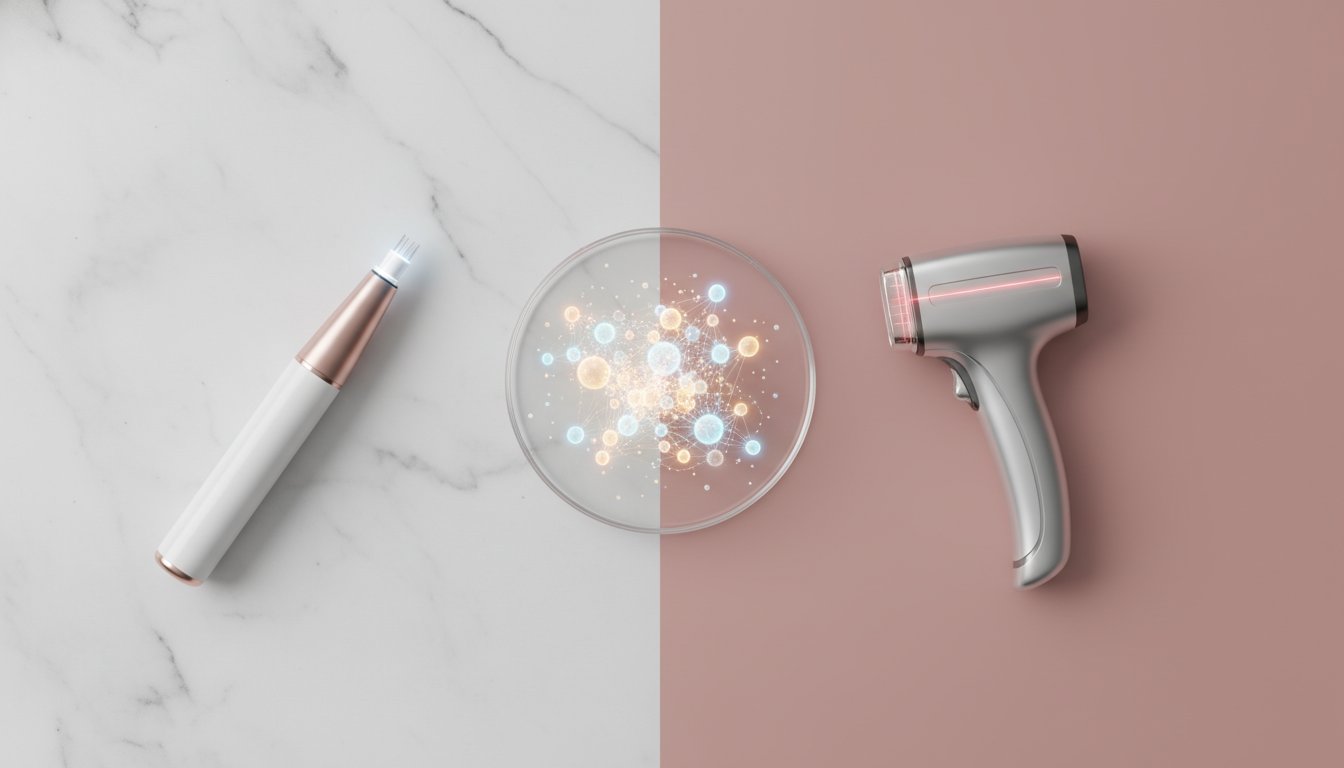
The most aggressive clinical intervention isn’t necessarily the most effective route to a flawless complexion. It’s a common misconception that higher heat always equals superior results. You’ve likely felt the frustration of choosing between thermal intensity and mechanical precision while fearing the potential for post-inflammatory hyperpigmentation or the disruption of a lengthy recovery period. When evaluating microneedling vs fractional laser for acne scars, the decision requires a sophisticated understanding of how different modalities interact with the Australian climate and diverse skin types.
You deserve a treatment plan that delivers visible transformation without compromising your skin’s long-term health. This 2026 clinical guide promises to clarify the scientific distinctions between these two leading therapies so you can make an evidence-based choice. We’ll explore the precision of the Mesopowerpen, the innovative application of vegan exosomes to enhance healing, and how these modern, minimally invasive approaches compare to traditional fractional resurfacing in both safety and clinical outcomes. By the end of this analysis, you’ll understand why the latest regenerative protocols are redefining the standard for scar revision in the professional aesthetic space.
Key Takeaways
- Contrast the precision of mechanical collagen induction with the intensity of thermal energy to determine the safest clinical path for diverse skin profiles.
- Evaluate the specific performance of microneedling vs fractional laser for acne scars to identify which modality best addresses rolling, boxcar, or ice-pick textures.
- Prepare for the recovery journey by understanding the physiological differences between temporary redness and the more intensive healing required for thermal-based resurfacing.
- Explore the 2026 breakthrough in regenerative aesthetics by utilising Vegan Exosomes to facilitate intercellular communication and significantly reduce downtime.
- Maximise your practice’s efficiency and results by leveraging the Mesopowerpen for superior mechanical precision and consistent aesthetic outcomes.
Understanding the Mechanism: Mechanical Precision vs Thermal Energy
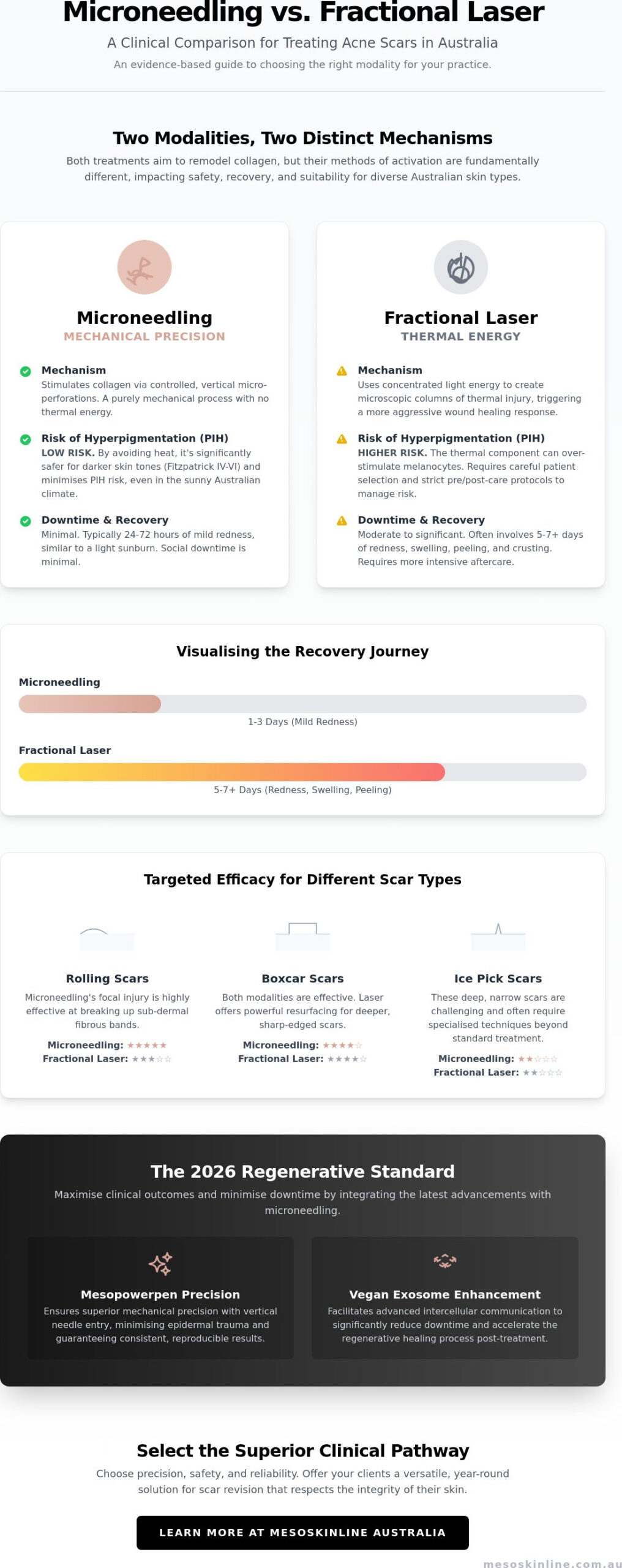
The selection between microneedling vs fractional laser for acne scars is fundamentally a choice between two distinct physiological triggers. While both modalities aim to remodel the dermal matrix, their methods of activation differ significantly. Fractional lasers operate as thermal-based resurfacing tools, using concentrated light energy to create controlled damage. Conversely, microneedling is a sophisticated form of mechanical collagen induction therapy. This process relies on physical micro-perforations rather than heat to stimulate cellular renewal. Both treatments successfully activate the body’s wound healing cascade, eventually replacing rigid, fibrotic scar tissue with a more supple and organised collagen structure. This transition from damaged tissue to healthy skin requires precise intervention to ensure the best aesthetic outcomes.
Choosing the correct mechanism is vital for managing patient safety when deciding between microneedling vs fractional laser for acne scars. Thermal energy, while powerful, carries an inherent risk of overheating the surrounding tissue. This can lead to complications such as post-inflammatory hyperpigmentation (PIH), particularly in patients with darker skin tones or those frequently exposed to the Australian sun. Mechanical stimulation avoids this risk entirely. It provides a pathway for scar revision that respects the skin’s natural temperature. By understanding these biological fundamentals, practitioners can better guide their clients toward a treatment that balances clinical efficacy with long-term skin health.
How Fractional Lasers Resurface the Dermis
Fractional lasers function by delivering precise beams of light that create Microscopic Treatment Zones (MTZs). These columns of thermal injury penetrate deep into the dermis while leaving the surrounding tissue intact. This fractionated approach accelerates healing compared to traditional fully ablative lasers. Practitioners often choose between ablative lasers, which vapourise the surface layer, and non-ablative versions that heat the underlying tissue without removing the epidermis. The resulting thermal effect on healthy tissue can be intense. It requires a robust biological response to clear the coagulated debris and initiate the repair process. While effective for deep boxcar scars, the heat involved necessitates careful pre-treatment and post-treatment protocols to prevent adverse reactions.
The Science of Precision Microneedling
Mechanical precision offers a distinct advantage for those prioritising safety and minimal downtime. Devices like the Mesopowerpen ensure the vertical entry of needles; this helps to minimise epidermal trauma and unnecessary tearing. This method bypasses the risks associated with heat, making it an ideal choice for patients prone to PIH. Instead of thermal destruction, the needles trigger a rapid release of growth factors and cytokines. For a deeper dive into these biological pathways, practitioners should review the clinical science of microneedling. By avoiding thermal damage, this mechanical approach maintains the integrity of the skin’s melanocytes. It provides a safer alternative for diverse Australian skin types, especially during the high-UV months when the skin’s barrier is already under environmental stress. This makes it a versatile tool for year-round scar revision without the seasonal restrictions often associated with intensive laser therapies.
Performance Comparison: Targeted Efficacy for Different Scar Types
Scar morphology dictates the clinical success of any revision protocol. When comparing microneedling vs fractional laser for acne scars, the choice must be guided by the specific architecture of the depression. Rolling scars, characterised by their shallow, undulating appearance, are often tethered by sub-dermal fibrous bands. While fractional lasers provide “bulk heating” to the dermis to encourage general tightening, Microneedling offers a “focal injury” that triggers targeted collagen synthesis directly within the scar floor. This mechanical disruption is often more effective at breaking the tethered bands that cause the rolling effect.
Boxcar scars present a different challenge with their sharp, vertical edges. Many practitioners traditionally lean toward fractional thermal energy to “soften” these borders through ablation. However, the lack of depth customisation in many entry-level lasers can lead to inconsistent results. Ice pick scars remain the most difficult to treat due to their narrow, deep nature. They require extreme precision. A mechanical approach allows for vertical penetration that can reach the base of these deep pits without damaging the healthy surrounding tissue; this is a feat that heat-based devices often struggle to replicate without significant collateral damage.
Suitability for Australian Skin Types (Fitzpatrick Scale)
The Australian patient profile is uniquely diverse, requiring a cautious approach to thermal treatments. For individuals with Fitzpatrick skin types IV through VI, fractional lasers carry a heightened risk of post-inflammatory hyperpigmentation. The intense heat can overstimulate melanocytes, leading to long-term discolouration that is often harder to treat than the original scarring. Microneedling is effectively “colour-blind” because it doesn’t rely on light absorption or heat. It remains the safer choice for darker skin tones. This is especially relevant given Australia’s extreme UV levels; post-laser skin is exceptionally vulnerable to solar damage during the lengthy inflammatory phase. Choosing a non-thermal path reduces this risk profile significantly.
Depth of Treatment and Customisation
Precision is the cornerstone of successful scar revision. The ability to adjust needle depth from 0.25mm to 2.5mm ensures that the treatment is bespoke to the patient’s specific dermal thickness and scar depth. Many fractional lasers operate on fixed parameters or limited presets, which can be too aggressive for the forehead or insufficient for the cheeks. Precision depth is critical for acne scar revision because it ensures the injury occurs exactly where the fibrotic tissue resides. For practitioners seeking this level of control, utilising professional microneedling solutions like the Mesopowerpen allows for rapid adjustments mid-procedure. This ensures every zone of the face receives the exact stimulus required for optimal remodelling without unnecessary trauma.
Downtime and Recovery: Managing Patient Expectations
Social impact remains a primary concern for patients evaluating microneedling vs fractional laser for acne scars. While both procedures are minimally invasive, their recovery trajectories diverge significantly. Professional microneedling typically involves a 24-hour window of social downtime; most patients report that erythema and mild swelling subside by the following morning. In contrast, fractional laser resurfacing requires a commitment of 5 to 7 days. This extended period is necessary for the skin to heal from the intentional thermal injury. During this time, patients often experience a distinct “grid-like” crusting or bronzing on the treated areas. This visual side effect is a hallmark of fractional light energy and cannot be easily concealed with standard cosmetics.
The Australian climate adds a layer of complexity to the recovery phase. Our high UV index necessitates a rigorous approach to sun avoidance. For laser patients, any solar exposure during the first week can lead to permanent pigmentary changes. Even with microneedling, the skin’s barrier is temporarily compromised, making it susceptible to environmental stress. A 2026 meta-analysis on laser vs. microneedling highlights that while efficacy is comparable for many scar types, patient satisfaction is often higher with mechanical needling due to the significantly reduced pain and downtime. This data reinforces the shift toward regenerative protocols that respect the patient’s lifestyle and work commitments.
The Post-Treatment Experience
The immediate sensation after a fractional laser session is often described as an intense “sunburnt” feeling that can last for several hours. Patients must manage this with specialized cooling balms and strict hygiene. Conversely, skin needling produces a mild warmth and tightening sensation. To ensure an optimal recovery, we recommend the following checklist:
- Apply only sterile, professional-grade serums for the first 24 hours.
- Avoid active ingredients like retinoids or acids for at least 5 days.
- Use a physical SPF 50+ daily, even when indoors.
- Keep the skin hydrated with a bland, occlusive moisturiser to support barrier repair.
Long-term Safety and Risks
While rare, long-term complications can occur if the device is poorly calibrated or the practitioner lacks experience. “Track mark” scarring is a known risk of fractional lasers when the energy density is too high or the pulse duration is incorrect. These permanent, rectangular patterns are difficult to reverse. Your history of acne spot treatment also plays a vital role in how you heal. If you have recently used aggressive topical treatments or certain medications, the skin’s regenerative capacity may be temporarily lowered. This increases the risk of infection or delayed wound healing. A thorough clinical consultation is essential to ensure your skin is sufficiently resilient for the chosen modality.
The 2026 Innovation: Enhancing Results with Vegan Exosomes
The landscape of regenerative medicine has reached a pivotal juncture. While traditional topicals focus on surface-level hydration, the emergence of Vegan Exosomes has established a new gold standard in professional skin revision. These nano-sized extracellular vesicles act as sophisticated intercellular messengers. They carry a cargo of growth factors, lipids, and microRNA directly to the fibroblasts, instructing them to accelerate the repair of damaged dermal structures. When considering the efficacy of microneedling vs fractional laser for acne scars, the ability to deliver these biologics deep into the dermis provides a significant clinical edge. Mechanical needling creates thousands of precise micro-channels that serve as direct conduits for exosome absorption, bypassing the skin’s natural barrier to initiate repair at a cellular level almost immediately.
This biological synergy addresses one of the most significant concerns in scar revision: persistent inflammation. By integrating exosomes into the treatment protocol, practitioners can effectively dampen the inflammatory response that often leads to post-inflammatory hyperpigmentation. This is particularly advantageous in the Australian climate, where environmental stress can easily compromise the healing process. The result is a more refined skin texture and a more predictable recovery profile. This advancement ensures that the focus remains on healthy tissue regeneration rather than just superficial damage control.
Why Vegan Exosomes Over Traditional Options?
Plant-derived exosomes offer a superior profile compared to animal-based or synthetic alternatives. These vegan formulations are prized for their high purity and concentration levels, which are essential for achieving consistent clinical efficacy. Because they are derived from resilient plant sources, they are naturally rich in antioxidants and signal molecules that are highly compatible with human skin cells. This ethical and clinical choice eliminates the risks of cross-contamination or adverse immune responses often associated with human-derived biologics. For a practice dedicated to premium outcomes, these formulations represent the pinnacle of safety and innovation.
Integrating Exosomes into the Acne Scar Protocol
The application process is meticulously timed to follow the creation of micro-channels. Immediately after using a precision device like the Mesopowerpen, the serum is applied to the treated area, allowing the vesicles to flood the open pathways. Clinical observations indicate that the inclusion of exosomes can reduce clinical downtime by up to 50 percent, allowing patients to return to their social and professional lives with minimal disruption. This accelerated healing does not sacrifice results; instead, it promotes long-term collagen synthesis that continues to improve skin density for months following the procedure. To experience this level of regenerative precision, you can explore our range of Vegan Exosomes and professional equipment designed for the modern aesthetician.
Selecting the Superior Clinical Pathway for Your Practice
The intersection of clinical efficacy and commercial viability is where the most successful aesthetic practices reside. When weighing microneedling vs fractional laser for acne scars, the decision often rests on the specific needs of your patient demographic and the operational overhead of your clinic. Fractional lasers represent a significant capital investment and require stringent safety protocols. Conversely, precision microneedling offers a high-margin alternative with a significantly lower risk profile. This versatility extends beyond scar revision; the same technology effectively addresses pigmentation and overall skin laxity, making it an indispensable tool for a modern practice. By opting for mechanical induction, you provide a solution that balances impressive results with the safety your clients expect.
Practitioners must consider the long-term ROI of their equipment. A high-end mechanical device allows for a broader range of treatments without the ongoing costs of specialised laser gases or expensive maintenance contracts. This efficiency does not come at the cost of quality. In the Australian market, where skin sensitivity and UV exposure are constant variables, having a “colour-blind” treatment like microneedling ensures your doors remain open to all skin types year-round. This inclusivity is a powerful business driver that complements the clinical necessity of safe scar revision.
The Case for Precision Microneedling
Mechanical precision is not a compromise; it’s a deliberate clinical choice. The Mesopowerpen stands as the pinnacle of this approach, offering a level of control that heat-based devices simply cannot match. For a clinic, the entry cost is accessible, yet the results rival more invasive modalities. Using high-end Danish-engineered equipment ensures that every treatment is delivered with surgical accuracy. This heritage of quality is vital for building patient trust and ensuring repeatable outcomes. We encourage practitioners to organise a consultation to explore our equipment training and see how these systems integrate into a high-tier service menu. Professional training ensures your staff can maximise the depth and speed settings for bespoke scar protocols.
Final Verdict for Acne Scar Revision
The final verdict depends on a nuanced assessment of the patient’s skin and lifestyle. While both have their place in a modern clinic, the following framework helps guide the decision:
- Refer for fractional laser: Best for severe, deep-seated fibrotic boxcar scars where the patient can tolerate a week of seclusion and potential crusting.
- Choose microneedling: Ideal for rolling scars, patients with Fitzpatrick types IV-VI, or those requiring a return to work within 24 hours.
Maintaining these results requires a sophisticated home-care or in-clinic maintenance regimen. Incorporating potent serums like Boto Xtreme can enhance the smoothing effect by targeting fine lines and ensuring the skin remains firm and resilient. For those ready to elevate their clinical offerings, investing in professional-grade aesthetic solutions is the definitive step toward excellence. Your choice of modality should reflect a commitment to safety, innovation, and visible transformation.
Advancing Your Clinical Standard for Scar Revision
The evolution of aesthetic medicine in 2026 has provided a clear roadmap for addressing complex textural concerns. You now understand that the debate of microneedling vs fractional laser for acne scars isn’t simply about intensity; it’s about the intelligent application of biological triggers. While fractional lasers offer power for specific deep fibrotic tissue, the mechanical precision of needling paired with regenerative biologics represents a safer, more versatile pathway for the Australian market. This combination effectively minimises the risk of heat-induced complications while significantly reducing patient downtime through superior cellular signalling.
As the exclusive APAC distributor of Danish clinical technology, we provide the tools and specialised support required for Australian aesthetic practitioners to lead this shift. You can access advanced 2026 regenerative exosome formulations and precision equipment designed for consistent, high-tier outcomes. Explore the Mesopowerpen and Vegan Exosome range for your clinic to redefine your treatment protocols and enhance your practice’s commercial viability. Your commitment to evidence-based care ensures your patients receive the safest, most effective results possible. We look forward to supporting your journey toward clinical excellence.
Frequently Asked Questions
Is microneedling or fractional laser better for deep ice pick scars?
Precision is the most critical factor when treating narrow, deep ice pick scars. While fractional lasers provide intensive resurfacing, the vertical penetration of a mechanical device like the Mesopowerpen allows for a more targeted stimulus at the base of the scar. This focal injury triggers collagen synthesis exactly where it is needed without the lateral thermal spread that can sometimes damage healthy surrounding tissue. Many practitioners prefer this mechanical approach for its ability to reach greater depths with surgical accuracy.
How many sessions are typically required for acne scar removal?
The total number of treatments depends on the scar architecture and the patient’s regenerative capacity. When comparing microneedling vs fractional laser for acne scars, most clinical protocols suggest a series of three to six sessions for mechanical induction. While aggressive ablative lasers might achieve results in fewer visits, they require significantly more downtime. A staggered approach with microneedling often delivers more consistent, natural-looking improvements with less cumulative stress on the dermal matrix.
Can I combine microneedling and laser in the same treatment plan?
Combining different modalities is a sophisticated way to address diverse scar types on a single patient. A practitioner might use fractional laser for broader boxcar scars while utilising mechanical needling for more delicate areas or rolling scars. It is vital to sequence these treatments correctly to avoid over-taxing the skin’s healing response. Most experts recommend waiting several weeks between different energy-based and mechanical sessions to ensure the skin barrier has fully recovered.
What is the average downtime for fractional laser in Australia?
In the Australian climate, patients should prepare for five to seven days of social downtime following a fractional laser session. The skin typically displays a grid-like pattern of microscopic crusts and significant redness as it heals from the thermal injury. Because our UV levels are consistently high, strict sun avoidance is mandatory during this week to prevent permanent pigmentary changes. This makes the 24-hour recovery period of mechanical needling a much more convenient option for many active Australians.
Are vegan exosomes safe for all skin types after needling?
Vegan exosomes are highly compatible with all skin types because they are derived from resilient plant sources and contain no human or animal DNA. These vesicles are engineered to be non-immunogenic, which means they don’t trigger the adverse reactions sometimes associated with older, animal-based biologics. Applying these messengers immediately after a procedure helps to dampen inflammation and accelerate tissue repair. They are an excellent addition to any scar revision protocol, regardless of the patient’s Fitzpatrick skin type.
Which treatment carries a higher risk of hyperpigmentation?
Fractional laser treatments carry a higher risk of post-inflammatory hyperpigmentation because they rely on thermal energy. This heat can inadvertently stimulate melanocytes, leading to dark patches that are particularly difficult to treat in individuals with deeper skin tones. Microneedling is considered a safer, “colour-blind” alternative. Since it uses mechanical stimulation instead of heat, it doesn’t trigger the same pigmentary response; this makes it the preferred choice for patients with Fitzpatrick types IV through VI.
How long do the results from acne scar treatments last?
The textural improvements gained from professional scar treatments are generally permanent. These procedures work by physically breaking down fibrotic tissue and replacing it with a new, organised collagen matrix. Once the skin has undergone this structural remodelling, the scars don’t return. However, the skin will continue to age naturally, so maintaining results requires a dedicated skincare routine and diligent sun protection to preserve the integrity of the newly formed collagen fibres.
Is the treatment painful, and is numbing cream required?
Most patients experience only mild discomfort during these procedures. A high-quality topical anaesthetic is typically applied for 30 to 45 minutes beforehand to ensure the area is sufficiently numbed. While fractional lasers can produce a sharp, stinging sensation due to the heat, modern microneedling devices use rapid, vertical needle entry to minimise nerve stimulation. Most clients describe the feeling as a light vibration or prickling rather than actual pain, making it a very tolerable clinical experience.


Stay in the Glow
Get skincare tips and early access to new products.
