

Preventing Post-Inflammatory Hyperpigmentation (PIH) After Needling: A Clinical Guide for 2026
Post-inflammatory hyperpigmentation isn’t an unavoidable side effect of skin rejuvenation; it’s a clinical signal of uncontrolled inflammation. For many Australian practitioners, the fear of worsening a client’s complexion often outweighs the potential benefits of collagen induction. You’ve likely seen the inconsistent results that occur when treating darker Fitzpatrick skin types or the confusion surrounding post-treatment actives. Mastering the art of preventing post-inflammatory hyperpigmentation after needling requires a shift from aggressive trauma to precision-led dermal infusion.
We understand that your professional reputation relies on predictable, even skin tones and rapid recovery times. This guide provides the definitive clinical protocols for 2026, ensuring your practice remains at the forefront of safety and efficacy. You’ll learn how to integrate ARTG-listed technology like the Mesopowerpen with advanced pigmentation solutions and vegan exosomes to stabilise melanocyte activity. We will explore the latest TGA regulations, the barrier-first philosophy, and the specific active ingredients required to eliminate PIH risks while delivering the high-tier results your clients demand.
Key Takeaways
- Identify why the Australian climate intensifies pigmentary risks and how to manage the biological “cytokine storm” that leads to melanin overproduction.
- Implement essential skin-priming protocols using tyrosinase inhibitors to “sleep-mode” melanocytes before any clinical needling begins.
- Master the clinical precision required for preventing post-inflammatory hyperpigmentation after needling by choosing vertical-entry devices like the Mesopowerpen over traumatic alternatives.
- Optimise the critical 72-hour post-treatment window with vegan exosomes and specialised pigmentation solutions that avoid aggressive acids.
- Build a barrier-first strategy to achieve predictable, even skin tones across all Fitzpatrick types while significantly reducing downtime.
Understanding Post-Inflammatory Hyperpigmentation (PIH) in Australian Aesthetics
In the Australian aesthetic market, the pursuit of dermal perfection is often shadowed by the risk of pigmentary complications. Successfully preventing post-inflammatory hyperpigmentation after needling requires more than just good technique; it necessitates a deep understanding of local environmental stressors. PIH represents a significant hurdle for practitioners aiming to deliver transformative results. It’s a condition where the skin responds to injury with an excessive production of melanin, leaving behind persistent dark patches that can take months to resolve. While erythema is a standard, expected response to needling, PIH is a pathological outcome that demands clinical intervention.
The PIH Mechanism: Why Inflammation Turns into Pigment
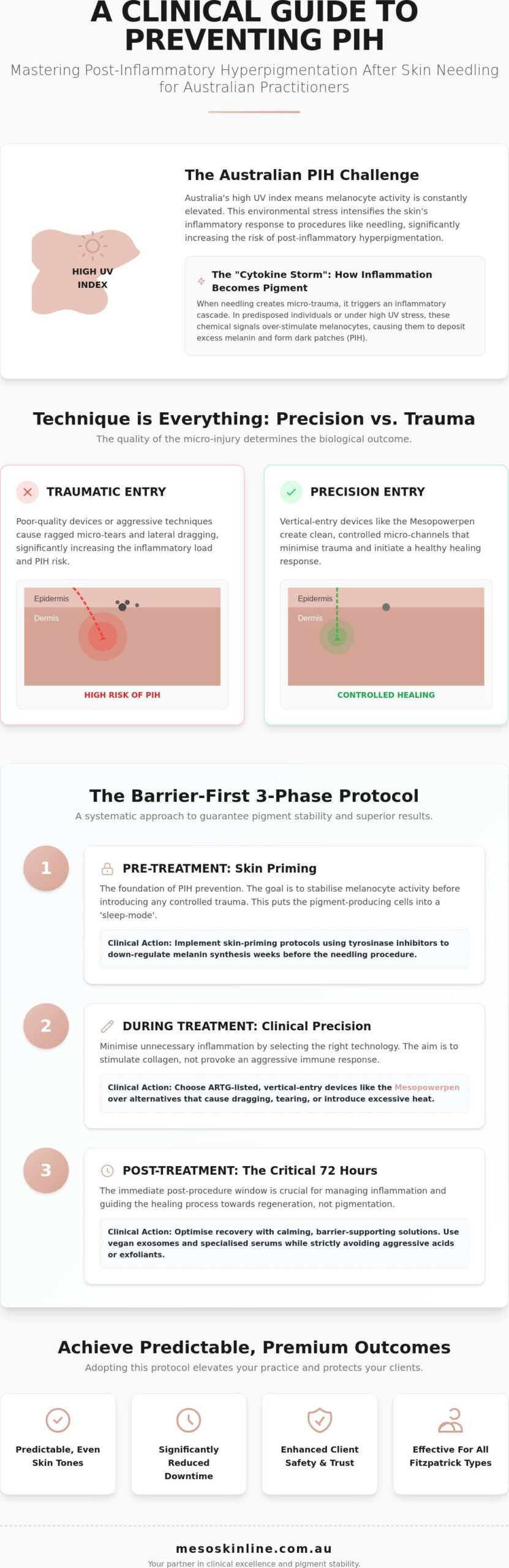
Melanocytes function as the skin’s biological “defender cells” within the basal layer of the epidermis. When needling creates micro-trauma, it initiates a complex cytokine storm and inflammatory cascade. In predisposed individuals, these chemical signals over-stimulate melanocytes, causing them to deposit pigment into the surrounding keratinocytes. PIH is a reactive melanosis following cutaneous injury. This biological safeguard, while intended to protect the skin, becomes a cosmetic liability when the inflammatory response is too aggressive or poorly managed during the wound-healing phase.
Australian Environmental Factors and Pigment Sensitivity
The Australian climate presents a unique set of challenges that heighten the risk of pigmentary rebound. Our exceptionally high UV index means that even during winter, the baseline level of melanocyte activity remains elevated. This environmental stressor exacerbates the skin’s inflammatory response post-procedure, making Understanding Post-Inflammatory Hyperpigmentation essential for every local professional. Many national practices report “rebound pigmentation” where initial improvements are quickly undone by incidental sun exposure. Vigilance is required 365 days a year regardless of the season.
Distinguishing between normal post-treatment erythema and the onset of PIH is a critical skill for the modern dermal therapist. Erythema typically subsides within 48 to 72 hours; however, if redness persists or transitions into a brown or greyish hue, it indicates a pigmentary shift. From a commercial perspective, the stakes are high. One poorly managed case of PIH can damage a clinic’s reputation and erode client trust. It’s a costly error that impacts both the patient’s psyche and the business’s bottom line. Conversely, mastering the protocols for preventing post-inflammatory hyperpigmentation after needling positions a clinic as a premium, safety-first destination. Success in 2026 relies on this level of clinical precision.
The Biological Trigger: Why Skin Needling Can Induce Pigmentary Changes
Preventing post-inflammatory hyperpigmentation after needling is a matter of managing the skin’s biochemical response to trauma. When a needle enters the skin, it does more than create a physical channel; it initiates a complex cytokine storm. Excessive trauma or imprecise technique sends distress signals to the basal layer, where melanocytes reside. These cells interpret the injury as a threat, triggering a protective but aesthetically undesirable overproduction of melanin. While some practitioners focus solely on the depth of penetration, the biological outcome is often determined by the quality of the “wound” itself.
Poor-quality needles often feature hooked tips or inconsistent diameters, leading to ragged epidermal micro-tears rather than clean, vertical punctures. This lateral tearing increases the inflammatory load significantly. Similarly, heat-based modalities like RF needling introduce thermal energy that can inadvertently act as a secondary trigger for melanocyte activity. For practitioners, the goal is to induce collagen synthesis without crossing the threshold into chronic inflammation. Research into microneedling for PIH treatment suggests that controlled, precise trauma is the only way to ensure pigment stability.
Melanocyte Activation and the Fitzpatrick Scale
Identifying high-risk candidates is the cornerstone of clinical safety. While Fitzpatrick types III through VI are traditionally most susceptible to PIH, the Australian sun changes the diagnostic landscape. Lighter skin types (Fitzpatrick I-II) are not immune; their melanocytes are often in a state of “pre-activation” due to constant UV exposure. We must also account for the “silent inflammation” phase. This occurs roughly 48 hours post-needling, where the skin may appear calm superficially while the underlying biochemical pathways are still deciding whether to produce excess pigment. Professionals should consider integrating stabilising serums during this window to ensure a predictable result.
Vegan Exosomes: A New Standard in Pigment Control
Innovation in 2026 has introduced vegan exosomes as a potent tool for preventing post-inflammatory hyperpigmentation after needling. These plant-derived vesicles act as anti-inflammatory powerhouses, delivering high-precision instructions to skin cells. Unlike traditional synthetic anti-inflammatories that merely suppress the immune response, exosomes communicate directly with melanocytes to modulate their activity. They effectively “instruct” the cells to remain in a homeostatic state rather than reacting to the needling trauma. This advanced signaling capability ensures that the wound-healing response remains focused on repair and regeneration, rather than pigmentary defense. By choosing plant-derived exosomes, clinics provide a cleaner, more biocompatible solution that aligns with the growing demand for high-performance, vegan-friendly aesthetics.
Strategic Pre-Treatment: Preparing the Skin for Clinical Needling
Clinical excellence is engineered long before the first micro-channel is created. For Australian practitioners, skipping the priming phase isn’t just a missed opportunity; it’s a significant clinical risk. Preventing post-inflammatory hyperpigmentation after needling requires a proactive strategy that addresses melanocyte sensitivity before the physical trigger occurs. We must transition the skin from a reactive state to a stable, resilient one. This preparation ensures that the subsequent wound-healing response is focused on collagen synthesis rather than pigmentary defence.
The cornerstone of this strategy involves “sleep-moding” melanocytes using tyrosinase inhibitors. These specialised actives act as biological regulators, preventing the enzyme tyrosinase from over-stimulating melanin production. By introducing these agents two to four weeks prior to treatment, we ensure that when the needle enters the dermis, the melanocytes are in a dormant state. This lead time is non-negotiable for high-risk Fitzpatrick types, yet it remains equally vital for lighter skin types exposed to the harsh Australian UV index.
Selecting the Right Pigmentation Solutions
Success depends on the synergy of the ingredients used during the priming phase. Niacinamide and stable forms of Vitamin C are essential for their ability to strengthen the skin’s barrier and stabilise the basement membrane. Unlike aggressive chemical peels that can compromise the lipid barrier, professional pigmentation solutions focus on calming the skin while suppressing excess melanin. We advise practitioners to avoid harsh exfoliants in the seven days leading up to a session. A compromised barrier increases the risk of “frictional” inflammation, which is a primary driver of PIH in the immediate post-needling window.
Clinical Priming Protocols for High-Risk Patients
For patients with Fitzpatrick IV-VI profiles, a disciplined four-week priming routine is the gold standard for preventing post-inflammatory hyperpigmentation after needling. This protocol should prioritise deep hydration and pigment suppression. Dehydrated skin is more prone to micro-tearing and heat retention, both of which escalate the inflammatory cascade. Practitioners should educate clients on the following requirements:
- Daily application of broad-spectrum, tinted SPF with iron oxides for visible light protection.
- Introduction of tyrosinase inhibitors at least 28 days before the procedure to cover a full cellular turnover.
- Cessation of high-strength retinoids and AHAs three to five days before treatment to ensure barrier integrity.
- Strict sun avoidance and the use of physical barriers like wide-brimmed hats during the priming window.
By establishing these strict pre-treatment boundaries, you provide the skin with the biological framework it needs to recover without complication. It’s about moving away from the “treat and hope” mentality toward a system of predictable, high-tier outcomes. This level of preparation is what separates a standard service from a truly elite clinical protocol.
Professional Precision: Minimising Trauma with Advanced Needling Technology
While pre-treatment priming sets the stage, the mechanical execution of the procedure dictates the final inflammatory outcome. Not all devices are created equal; in fact, the mechanical integrity of your equipment is a decisive factor in preventing post-inflammatory hyperpigmentation after needling. Low-quality devices often suffer from needle “chatter”, microscopic vibrations that cause the needles to enter the skin at uneven angles. This lack of stability leads to lateral tearing of the epidermis, which triggers a much more aggressive immune response than a clean, vertical puncture.
Sterility and precision are the twin pillars of professional safety. Any introduction of pathogens or even excessive mechanical friction can extend the inflammatory phase, increasing the likelihood of melanocyte over-activation. By utilising high-performance technology, practitioners ensure that the skin’s barrier is breached with minimal collateral damage, allowing for rapid epidermal closure and a more controlled healing environment. If the trauma is uncontrolled, the risk of pigmentary rebound remains high regardless of the serums used.
Mesopowerpen vs. Generic Needling Devices
The Mesopowerpen represents a significant leap forward in clinical safety. Unlike generic devices with unstable motors, its advanced oscillation technology ensures perfectly vertical needle entry and exit. This precision eliminates the “hooking” effect often seen with cheaper alternatives, where the needle tip drags through the tissue during the high-speed cycle. High-quality microneedling systems use ultra-fine needle gauges that facilitate faster healing. When the epidermal entry point is clean and narrow, the skin closes the wound in minutes rather than hours, drastically reducing the window for potential inflammatory triggers.
Depth Control and Tissue Temperature
A common misconception in Australian clinics is that deeper penetration always yields superior results. However, when treating pigment-prone areas or patients with a history of PIH, a “less is more” philosophy is essential. Excessive depth can reach the deeper dermal layers where the inflammatory response is more profound, potentially waking up dormant melanocytes. Finding the “sweet spot”, typically between 0.25mm and 1.0mm for pigmentation, allows for the infusion of actives without causing unnecessary trauma. Precision depth control is the primary technical safeguard against PIH. By adjusting your protocol to the specific needs of the tissue, you achieve remarkable rejuvenation without the risk of dark spots.
To ensure your practice delivers these high-tier outcomes with every session, invest in the precision of the Mesopowerpen and experience the difference that clinical-grade engineering makes to your results.
Clinical Aftercare Protocols for Long-Term Pigment Stability
The final phase of any needling protocol is arguably the most critical for ensuring pigment stability. The first 72 hours post-procedure represent a high-stakes window where the skin is most vulnerable to external triggers. Preventing post-inflammatory hyperpigmentation after needling during this time requires a strict focus on cooling, calming, and barrier re-establishment. Any heat retention or irritation during this phase acts as a catalyst for melanocyte over-activity. Practitioners must mandate a “no acid” rule for at least seven days, replacing aggressive exfoliants with soothing, bio-compatible formulations that support the skin’s natural repair mechanisms.
Long-term maintenance is the secret to ensuring that the coveted “needling glow” doesn’t eventually transition into “needling spots.” This involves a commitment to professional-grade serums that continue to modulate melanin production long after the initial redness has subsided. By maintaining a stable environment for the skin, you ensure that the results of the Mesopowerpen treatment remain flawless and even-toned for months to come. This disciplined approach to aftercare is what secures the clinical reputation of a premium aesthetic practice.
The Role of Eyelift and Targeted Serums in Recovery
Recovery protocols must be as precise as the treatment itself. For the delicate peri-orbital area, using a specialised Eyelift serum is essential to manage the unique sensitivity of the eye contour. This region is particularly prone to PIH due to its thin epidermal structure. Additionally, integrating Boto Xtreme into the aftercare regimen helps reduce muscular-stress-induced inflammation, which can inadvertently prolong the healing phase and trigger a pigmentary response.
The most significant advancement for 2026 is the application of vegan exosomes immediately post-procedure. These vesicles act as a biological “off switch” for the inflammatory cascade, communicating directly with the cells to cease the production of pro-inflammatory cytokines. This high-precision signalling is the ultimate tool in preventing post-inflammatory hyperpigmentation after needling, as it addresses the root cause of pigmentary shifts at a cellular level. By switching off the distress signals, you allow the skin to focus entirely on regeneration.
National Sun Safety Standards for Post-Needling
In the Australian climate, sun protection isn’t a suggestion; it’s a clinical requirement. Given our extreme UV index, patients must adhere to a strict two-week “no-sun” rule. This means avoiding direct exposure and relying on physical barriers like wide-brimmed hats and umbrellas. Regarding topical protection, physical sunscreens containing zinc oxide or titanium dioxide are superior for compromised skin. They sit on the surface and reflect UV rays, whereas chemical filters can sometimes cause heat retention or irritation in freshly needled tissue.
Managing incidental UV exposure is a constant challenge for Australian patients. Even a brief walk to the car can trigger a melanocyte response if the skin isn’t properly shielded. We recommend tinted physical sunscreens that include iron oxides, as these provide an extra layer of protection against visible light, which is now recognised as a secondary driver of PIH. Consistent, high-level protection ensures that the skin’s basement membrane remains stable and the results of your clinical work are preserved against environmental stressors.
Elevating the Standard of Australian Dermal Care
Achieving flawless pigment stability is a multifaceted discipline that requires clinical foresight and technological precision. By harmonising strategic pre-treatment with the meticulous vertical accuracy of the Mesopowerpen, you eliminate the traumatic variables that lead to melanocyte over-activity. The integration of high-performance aftercare, specifically advanced vegan exosome formulations, ensures the inflammatory cascade is effectively managed before pigmentary shifts can occur. Successfully preventing post-inflammatory hyperpigmentation after needling is no longer a challenge of chance; it’s a predictable outcome of rigorous clinical standards and superior engineering.
As the exclusive APAC distributor of Danish Mesoskinline technology, we are proud to support leading Australian aesthetic practitioners with a complete system for success. Our commitment to innovation provides you with the tools necessary to deliver transformative results while maintaining the highest levels of safety and exclusivity. From our advanced vegan exosome formulations to precision-led devices, we offer the science required for superior recovery and long-term skin health.
Discover the Mesopowerpen and Clinical Serums for Your Practice
Elevate your clinic’s offering and provide your clients with the confidence of an impeccably even, radiant complexion.
Frequently Asked Questions
Can I get skin needling if I already have hyperpigmentation?
Yes, you can proceed with treatment, but it requires a structured clinical approach. Skin needling is often used to treat existing hyperpigmentation by facilitating the deep infusion of lightening agents. However, the skin must be properly primed with tyrosinase inhibitors for at least two weeks prior to the session to ensure melanocytes remain stable during the procedure.
What is the best way to prevent dark spots after a microneedling treatment?
The most effective method for preventing post-inflammatory hyperpigmentation after needling is a combination of skin priming, using high-precision devices, and strict post-treatment barrier care. You must avoid inflammatory triggers like direct UV exposure, excessive heat, and harsh acids for at least seven days. Consistent use of professional pigmentation solutions during the recovery phase is essential for long-term stability.
How long does post-inflammatory hyperpigmentation last if it occurs?
If PIH occurs, it typically lasts between three to twenty-four months depending on the depth of the pigment and the individual’s natural skin turnover rate. In some cases, epidermal PIH resolves faster with targeted clinical interventions. However, dermal PIH is more persistent and may require a series of specialised treatments and dedicated home care to fully clear the complexion.
Which Fitzpatrick skin types are most at risk of PIH after needling?
Fitzpatrick types III through VI are at the highest risk due to their more reactive melanocytes. These skin types produce melanin more readily as a defence mechanism against trauma. In the Australian climate, even those with Fitzpatrick types I and II can experience pigmentary rebound if their skin’s barrier is compromised or if they fail to follow strict UV protection protocols.
Are vegan exosomes effective for preventing PIH in Australian clinics?
Yes, vegan exosomes are highly effective as they modulate cellular communication to “switch off” the inflammatory cascade immediately after trauma. This advanced signalling prevents the melanocyte over-activity that lead to dark spots. By using these plant-derived vesicles, practitioners can significantly reduce the risk of pigmentary complications in high-UV environments like Australia.
Should I avoid the sun completely after a skin needling session?
Strict sun avoidance is a clinical requirement for at least fourteen days post-treatment. During this window, the skin’s natural defences are significantly lowered, making it hypersensitive to UV radiation. Even incidental exposure during a short walk can trigger permanent pigmentary changes. We recommend wearing broad-spectrum, physical SPF and a wide-brimmed hat whenever you are outdoors.
Can certain serums like Boto Xtreme help with post-needling recovery?
Yes, Boto Xtreme is designed to reduce muscular-stress-induced inflammation, which helps calm the skin’s overall response to the needling trauma. By minimising the tension and stress within the tissue, it supports a more stable and rapid recovery phase. When integrated into a professional protocol, it works alongside other calming agents to ensure a smooth, even-toned result.
Is the Mesopowerpen safer than other needling pens for pigment-prone skin?
The Mesopowerpen is significantly safer because its vertical precision eliminates the lateral tearing and “chatter” common in generic devices. This reduction in mechanical trauma is vital for preventing post-inflammatory hyperpigmentation after needling in sensitive or pigment-prone patients. Clean, vertical punctures heal much faster and carry a lower risk of triggering the inflammatory signals that lead to excess melanin production.
What Others Are Reading:


Stay in the Glow
Get skincare tips and early access to new products.
