
Microneedling Contraindications Checklist for Australian Clinics: The 2026 Practitioner Guide
A $25,200 fine is a powerful motivator for any aesthetic professional. With the Therapeutic Goods Administration prioritising cosmetic compliance throughout 2026, the margin for error in patient screening has vanished. You likely already understand that maintaining a prestigious reputation depends on more than just your technique; it relies on the invisible rigour of your safety protocols. This guide provides a definitive microneedling contraindications checklist for clinics designed to protect your patients from adverse reactions and shield your business from the legal complexities of inadequate screening.
We recognise that the fear of causing permanent scarring or navigating complex medical histories can be a significant burden for practitioners. By implementing a robust clinical screening protocol, you can transform these anxieties into a mark of luxury clinical authority. We promise to equip your team with the knowledge to mitigate liability while maintaining the highest standards of aesthetic excellence. This article reviews the critical red flags that demand a medical referral, the latest TGA device standards including UDI requirements, and how to refine your selection process to ensure every treatment with your Mesopowerpen or vegan exosomes delivers the transformative results your clients expect.
Key Takeaways
- Understand why rigorous screening is a hallmark of a prestigious Australian clinic, ensuring patient safety and superior clinical results.
- Learn to distinguish between absolute contraindications that require immediate refusal and relative ones that demand heightened clinical caution.
- Implement a definitive microneedling contraindications checklist for clinics to standardise your 2026 medical history reviews and visual skin analyses.
- Navigate the specific risks of the Australian climate, including how to identify solar keratosis and manage sun-damaged skin without compromising safety.
- Discover how precision tools like the Mesopowerpen and post-treatment vegan exosomes enhance your clinic’s safety profile while accelerating patient recovery.
The Clinical Necessity of Rigorous Contraindication Screening
In the high-stakes environment of Australian medical aesthetics, prestige is defined by more than just the aesthetic of your waiting room. It’s rooted in clinical rigour. True authority manifests through the precision of your intake process; it’s the invisible shield that separates elite practitioners from the rest of the market. When you prioritise safety over a quick booking, you aren’t just following a rulebook. You’re building a brand synonymous with reliability and excellence. This commitment to safety ensures that every patient journey is predictable, professional, and ultimately successful.
The physiological success of Collagen induction therapy (microneedling) depends entirely on the skin’s ability to mount a controlled inflammatory response without interference from underlying pathologies. A comprehensive microneedling contraindications checklist for clinics serves as the foundation of this expert-led screening. It transforms the initial consultation from a simple sales pitch into a sophisticated diagnostic journey. By positioning yourself as a clinical mentor rather than a service provider, you instill a level of trust that high-value clients find reassuring and essential.
Standardising your intake systems is also a critical step in mitigating professional indemnity risks. In an era where the TGA has tightened device classifications, your documentation must be impeccable. A robust microneedling contraindications checklist for clinics ensures that every staff member, regardless of their experience level, adheres to the same uncompromising safety standards. This consistency protects your practitioners and ensures that your clinic maintains the highest standards of aesthetic medicine.
Protecting Clinic Reputation and Patient Trust
A single adverse event can ripple through your digital footprint with devastating speed. In our interconnected market, patient trust is your most valuable currency. Rigorous screening identifies those at risk of hyperpigmentation or infection before a needle ever touches the skin. High-value clients appreciate this meticulousness; they don’t want a practitioner who says yes to everyone. They want an expert who understands the unique complexities of their medical history and prioritises their long-term skin health over a single session’s revenue.
The Business Case for Turning Away Unsuitable Candidates
There is a tangible commercial cost to managing a post-treatment complication. Between the lost chair time, the cost of corrective products, and the potential for a refund, a “bad” candidate is a significant financial liability. Long-term profitability is built on patient retention and a flawless safety record. By identifying “modifiable” candidates, such as those who need to cease specific medications before starting a course, you create future revenue streams rather than immediate risks. Selecting the right candidate ensures that treatments like the Mesopowerpen deliver the visible transformations that drive word-of-mouth referrals and sustainable growth.
Categorising Microneedling Red Flags: Absolute vs. Relative
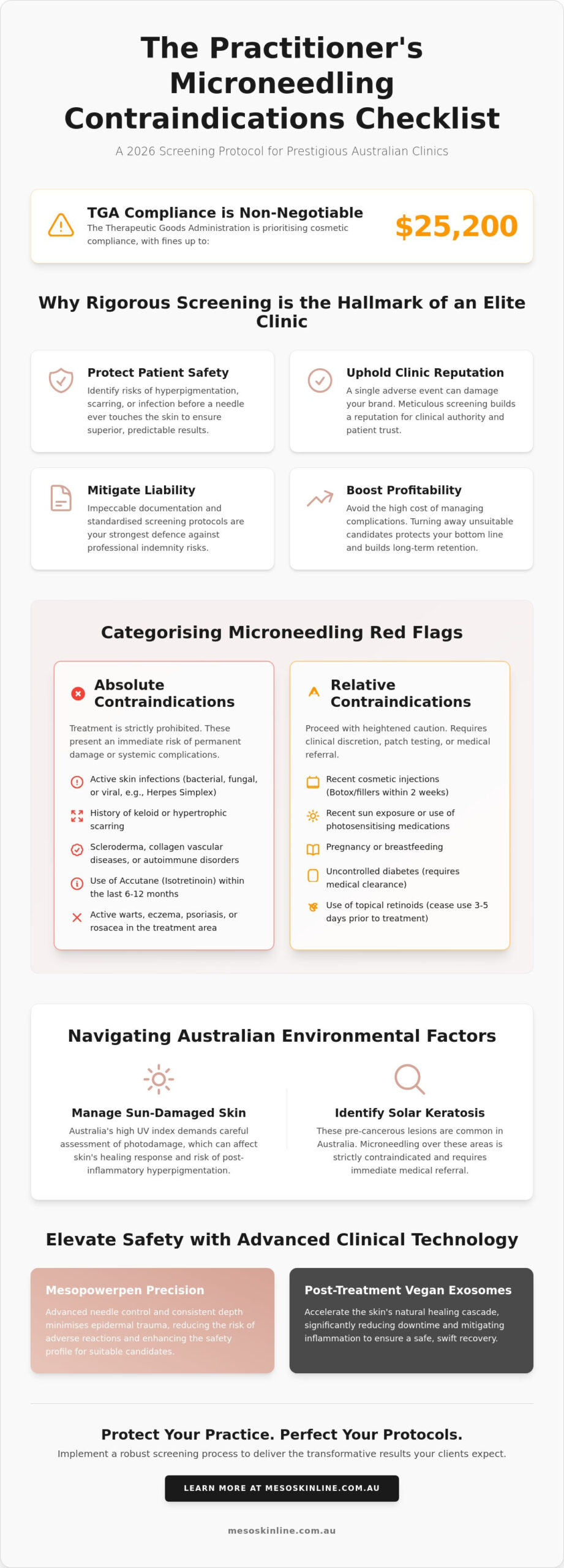
Effective screening requires a binary understanding of risk. A practitioner’s ability to categorise patient data determines the safety of the clinical environment. According to a Clinical Review of Microneedling Contraindications, red flags are split into absolute barriers and relative factors that require professional discretion. Using a standardised microneedling contraindications checklist for clinics allows your team to make these distinctions with surgical precision. It’s about protecting your patient and your professional reputation simultaneously.
Absolute Contraindications: Non-Negotiable Exclusions
These conditions represent an immediate risk of permanent damage or systemic complication. Treatment is strictly prohibited when these factors are present because the skin’s baseline state cannot safely tolerate the controlled trauma of needling. You must refuse treatment for:
- Active skin infections: Any bacterial, fungal, or viral outbreaks, particularly Herpes Simplex, must be fully resolved to prevent systemic spread.
- Keloid or hypertrophic scarring: Clients with a known history of these in the treatment area face a high risk of disfiguring outcomes.
- Scleroderma and collagen vascular diseases: These systemic conditions severely impair the skin’s natural healing response and collagen synthesis.
Active papulopustular rosacea is an absolute exclusion because the mechanical trauma of needling can trigger severe, uncontrolled inflammatory flare-ups and exacerbate underlying vascular damage.
Medication and recent history are equally vital components of your screening. Isotretinoin (Roaccutane) requires a mandatory cessation period, typically six months, to ensure skin integrity and prevent abnormal scarring. Anticoagulant therapy increases bruising and bleeding risks significantly. For those recently receiving aesthetic interventions, wait times are non-negotiable. Dermal fillers require a minimum of four weeks for product integration, while anti-wrinkle injections need at least two weeks. Chemical peels or laser resurfacing usually demand a four to six week recovery window depending on the depth of the procedure. Ensuring your clinic uses high-precision tools like the Mesopowerpen can help manage some of these relative risks by providing predictable, adjustable needle depths.
Relative and Modifiable Contraindications
Relative factors don’t always necessitate a refusal, but they do demand heightened clinical caution or a change in protocol. Managing clients with controlled hypertension or diabetes requires understanding that their healing response may be delayed. For autoimmune conditions like Lupus, mandatory written clearance from a GP or specialist is essential before proceeding. The 2026 clinical consensus for pregnancy and breastfeeding remains conservative; practitioners should avoid treatment due to hormonal skin fluctuations and the potential risks associated with topical anaesthetics. This disciplined approach ensures that your microneedling contraindications checklist for clinics remains your most effective tool for maintaining clinical excellence.
The Practitioner’s Microneedling Checklist: A 2026 Screening Protocol
Precision is the hallmark of the modern Australian practitioner. A robust microneedling contraindications checklist for clinics is more than a formality; it’s a sophisticated operational standard that ensures no clinical detail is overlooked. By following a structured five-step protocol, you transform the intake process into a definitive safety net. This systematic approach allows you to identify high-risk variables before they manifest as complications. It’s about maintaining a flawless reputation for safety and efficacy.
- Step 1: Medical History and Medication Review. Conduct a deep-dive into systemic health, focusing on conditions that impair wound healing or immune response.
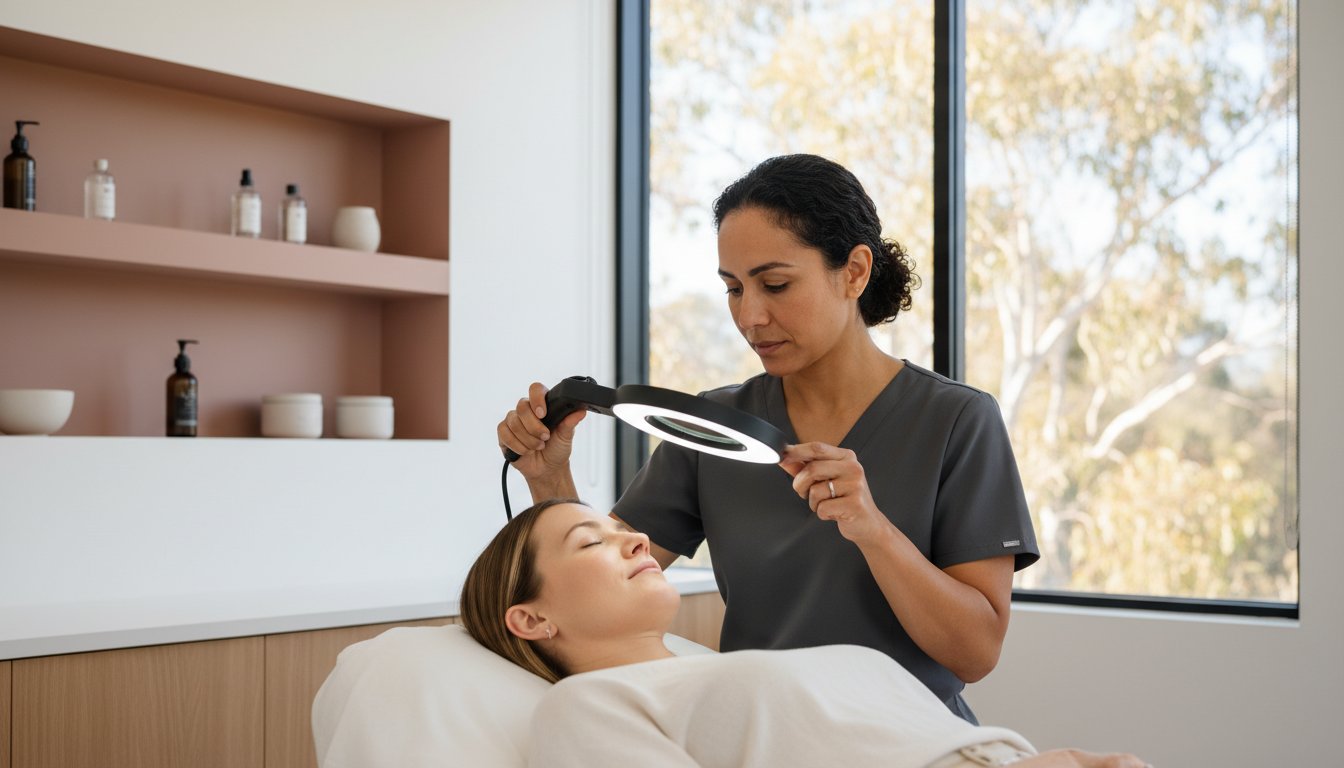
- Step 2: Visual Skin Analysis. Perform a meticulous examination using high-intensity magnification to classify the patient on the Fitzpatrick scale and detect active pathologies.
- Step 3: Procedural History. Verify wait-periods for recent interventions, ensuring at least four weeks have passed since dermal fillers or aggressive chemical peels.
- Step 4: Allergy Screening. Test for sensitivities to nickel or stainless steel, as well as specific actives found in clinical serums.
- Step 5: Consent and Documentation. Secure informed consent and capture high-resolution baseline photography to track clinical progress and provide a legal record of the skin’s pre-treatment state.
Adhering to these steps ensures your clinic remains aligned with the latest Microneedling Contraindications and international safety benchmarks. This rigour protects your patients and your professional indemnity.
The Visual Assessment: Identifying Hidden Risks
The Australian climate presents unique challenges for skin assessment. Practitioners must remain vigilant for solar keratosis and undiagnosed lesions that may be precancerous. Treating these areas with a Mesopowerpen is strictly contraindicated; they require immediate medical referral. Assessing skin barrier integrity is equally vital. If the acid mantle is compromised, needle penetration can lead to prolonged erythema or infection. Additionally, practitioners should be trained to recognise signs of body dysmorphic disorder (BDD). Patients with unrealistic expectations or a history of excessive aesthetic procedures often require psychological support rather than further treatment.
Medication and Supplement Deep-Dive
Pharmacological screening is a non-negotiable component of your microneedling contraindications checklist for clinics. The 12-month rule for Roaccutane (Isotretinoin) remains the gold standard in Australian clinics to prevent abnormal scarring and delayed healing. Even common supplements like fish oils and NSAIDs such as ibuprofen can significantly increase bruising by thinning the blood. If a patient is on a course of steroids, their inflammatory response will be suppressed, which directly hinders the efficacy of the treatment. For patients recovering from minor inflammatory states, incorporating vegan exosomes into the post-care protocol can support the skin’s natural repair mechanisms without the risks associated with more aggressive interventions.
Australian Environmental Factors: Sun Damage and Solar Keratosis
Australia’s harsh UV radiation creates a unique dermatological landscape. For the local practitioner, sun damage is more than a cosmetic concern; it represents a state of chronic, low-grade inflammation that can compromise treatment outcomes. When updating your microneedling contraindications checklist for clinics, you must account for the specific environmental stressors that Australian patients face daily. Performing collagen induction on skin that is currently sunburnt or excessively sensitised by recent UV exposure is a significant clinical error that leads to poor healing and patient dissatisfaction.
Solar keratosis represents a critical safety boundary. These precancerous, scaly lesions are common in the Australian demographic and require a vigilant eye during the visual assessment phase. Microneedling directly into these lesions is strictly contraindicated. The mechanical trauma can disrupt the cellular structure of these abnormal cells, potentially complicating future medical treatments. If you identify suspicious, rough patches that do not resolve with standard hydration, a medical referral is the only professional course of action. This expert-led approach reinforces your clinic’s status as a centre of medical excellence.
Post-inflammatory hyperpigmentation (PIH) is a heightened risk in our climate. Patients with higher Fitzpatrick scores are particularly susceptible when their melanocytes are already in a state of high alert due to sun exposure. To mitigate this, many elite clinics now favour scheduling intensive microneedling series during the Australian winter. This seasonal strategy reduces the likelihood of incidental UV exposure during the critical post-procedural window when the skin’s barrier is temporarily vulnerable.
Pre-Treatment Priming for Sun-Damaged Skin
Stabilising the skin before the first needle is inserted is essential for predictable results. Using targeted pigmentation solutions to suppress overactive melanocytes can prevent rebound hyperpigmentation. A sophisticated pre-procedure protocol often includes high-potency Vitamin C and Niacinamide for at least two weeks prior to treatment. These ingredients strengthen the skin barrier and improve the baseline inflammatory state. Education is your best tool; ensure sun protection is a mandatory prerequisite for any patient appearing on your microneedling contraindications checklist for clinics.
Identifying High-Risk Textural Concerns
Distinguishing between benign solar lentigines and suspicious lesions is a core competency. While microneedling is an excellent tool for addressing the textural signs of photo-ageing, it must never be used as a diagnostic or treatment tool for undiagnosed skin spots. The Fitzpatrick scale remains a vital framework for assessing risk in the diverse Australian population. If a lesion appears irregular in colour or border, refer the client to a dermatologist before proceeding. Maintaining this level of clinical rigour ensures your practice remains a trusted name in the industry. For clinics looking to elevate their results while maintaining these strict safety standards, integrating professional-grade pigmentation solutions into your treatment plans offers a pathway to superior clinical outcomes.
Elevating Safety with Advanced Clinical Technology
Precision engineering is the final pillar of clinical safety. While your microneedling contraindications checklist for clinics identifies who should avoid treatment, your choice of technology determines the safety and comfort of those who proceed. In the 2026 landscape, elite practitioners must move beyond basic tools to systems that offer granular control over every micro-injury. This level of technical rigour is what defines a premium Australian aesthetic centre. It’s about choosing hardware that respects the skin’s biological limits while delivering the transformative outcomes your high-value clients demand.
Hardware Matters: Reducing Procedural Risk
The quality of your device is your primary defence against unnecessary epidermal trauma. High-precision tools like the Mesopowerpen are engineered with superior needle quality and oscillation speeds that ensure pure vertical penetration. This avoids the “dragging” or “tearing” of tissue often associated with lower-quality pens. Adjustable needle depth is equally critical; it allows practitioners to adhere strictly to AHPRA guidelines, ensuring non-medical staff don’t exceed the 1.0mm threshold without direct supervision. Sterility remains a non-negotiable standard. Professional pens must utilise single-use, gamma-sterilised cartridges to eliminate any risk of cross-contamination, ensuring your clinic meets the stringent hygiene requirements set by local Australian councils.
Serum Synergy: Enhancing the Healing Cascade
The post-procedural window is a period of both opportunity and vulnerability. Integrating vegan exosomes into your protocol significantly accelerates re-epithelialisation. This reduces the inflammatory window that can lead to complications in sensitive or reactive skin profiles. Unlike generic serums, these plant-derived signals communicate directly with skin cells to trigger a natural repair response without the risk of an adverse immune reaction. For patients who appear on your checklist as high-risk candidates, perhaps due to keloid tendencies or active inflammatory conditions, you don’t have to turn them away empty-handed. Boto Xtreme offers a sophisticated, non-invasive alternative that delivers visible smoothing results without compromising the skin barrier. Standardising these protocols across your team is essential for maintaining your clinic’s reputation. Enrolling staff in advanced facial courses ensures that every practitioner operates with the same visionary expertise. This turns a simple safety checklist into a complete system for clinical and commercial success.
Securing Your Clinical Legacy through Expert-Led Safety
In the evolving landscape of 2026, a commitment to safety is the ultimate mark of a visionary practitioner. By integrating a standardised microneedling contraindications checklist for clinics, you ensure that every patient interaction is grounded in clinical rigour and medical science. You’ve explored how to categorise complex risks, identify the unique textural concerns of the Australian demographic, and utilise advanced hardware to mitigate epidermal trauma. This meticulous approach doesn’t just prevent complications; it builds the aspirational trust that defines a high-end aesthetic centre.
As the exclusive APAC distributor for Danish clinical technology, we are dedicated to providing the precision tools and sophisticated formulations needed for success. Our systems, engineered for medical-grade safety, currently support over 5,000 global clinics in delivering visible, life-changing transformations. Elevate your practice by choosing a system that values scientific excellence as much as you do.
Explore the Mesopowerpen and Professional Clinical Range to begin your journey toward unparalleled clinical results. We look forward to supporting your clinic’s growth and safety standards.
Frequently Asked Questions
Can I perform microneedling on a client with active acne?
You must not perform microneedling on a client with active papulopustular acne. The mechanical action of a device can rupture pustules and spread bacteria across the treatment area; it also risks triggering a severe, uncontrolled inflammatory response. Wait until the active breakout has fully resolved before proceeding with treatments designed for acne scarring.
How long must a client wait after having anti-wrinkle injections or fillers?
Clients should wait at least 14 days after anti-wrinkle injections and 28 days after dermal fillers. This mandatory window ensures that the injectables have fully integrated into the tissue and won’t be displaced by the mechanical pressure of the procedure. Including these wait periods in your microneedling contraindications checklist for clinics is essential for maintaining predictable aesthetic outcomes.
Is microneedling safe for clients with a history of cold sores?
Microneedling is safe for clients with a history of Herpes Simplex, provided no active lesions are present on the day of treatment. You should advise the client to begin a course of prophylactic antiviral medication two to three days before the procedure. This precaution prevents the mechanical trauma of the needles from triggering a viral outbreak during the initial healing phase.
What is the standard wait period after a client finishes Roaccutane?
The standard clinical wait period after finishing Roaccutane (Isotretinoin) is six months in Australian clinics. This duration is necessary to allow the skin’s natural barrier and regenerative mechanisms to return to baseline. Treating the skin earlier than this increases the risk of abnormal scarring and significantly delayed re-epithelialisation.
Are there specific contraindications for using exosomes with microneedling?
Vegan exosomes are generally safe, but they should be avoided on patients with active skin malignancies or undiagnosed lesions. Because these are potent biostimulators, they must only be applied to healthy tissue to ensure a safe healing cascade. Ensure your microneedling contraindications checklist for clinics includes a specific verification step for these advanced regenerative formulations.
Can I treat a client who is pregnant or breastfeeding?
Practitioners should avoid treating clients who are pregnant or breastfeeding. Hormonal fluctuations during this time can lead to unpredictable pigmentation results, such as melasma; furthermore, the systemic absorption of topical anaesthetics has not been sufficiently studied in these patient groups. It’s best to delay treatment until the client has finished breastfeeding and their hormones have stabilised.
How do I handle a client with a nickel or stainless steel allergy?
If a client has a known nickel or stainless steel allergy, you must utilise medical-grade titanium needles. Many professional cartridges are made from stainless steel alloys that may contain trace amounts of nickel, which can trigger an allergic contact dermatitis. Always verify the metallurgical composition of your hardware before treating a patient with known metal sensitivities.
What should I do if I suspect a client has solar keratosis in the treatment area?
You should immediately withhold treatment and refer the client to a GP or dermatologist for a formal skin check. Solar keratoses are precancerous lesions that are highly prevalent in the Australian climate and must never be punctured. Mechanical disruption of these cells can complicate future medical treatments or potentially obscure the progression of the lesion.


Stay in the Glow
Get skincare tips and early access to new products.
