
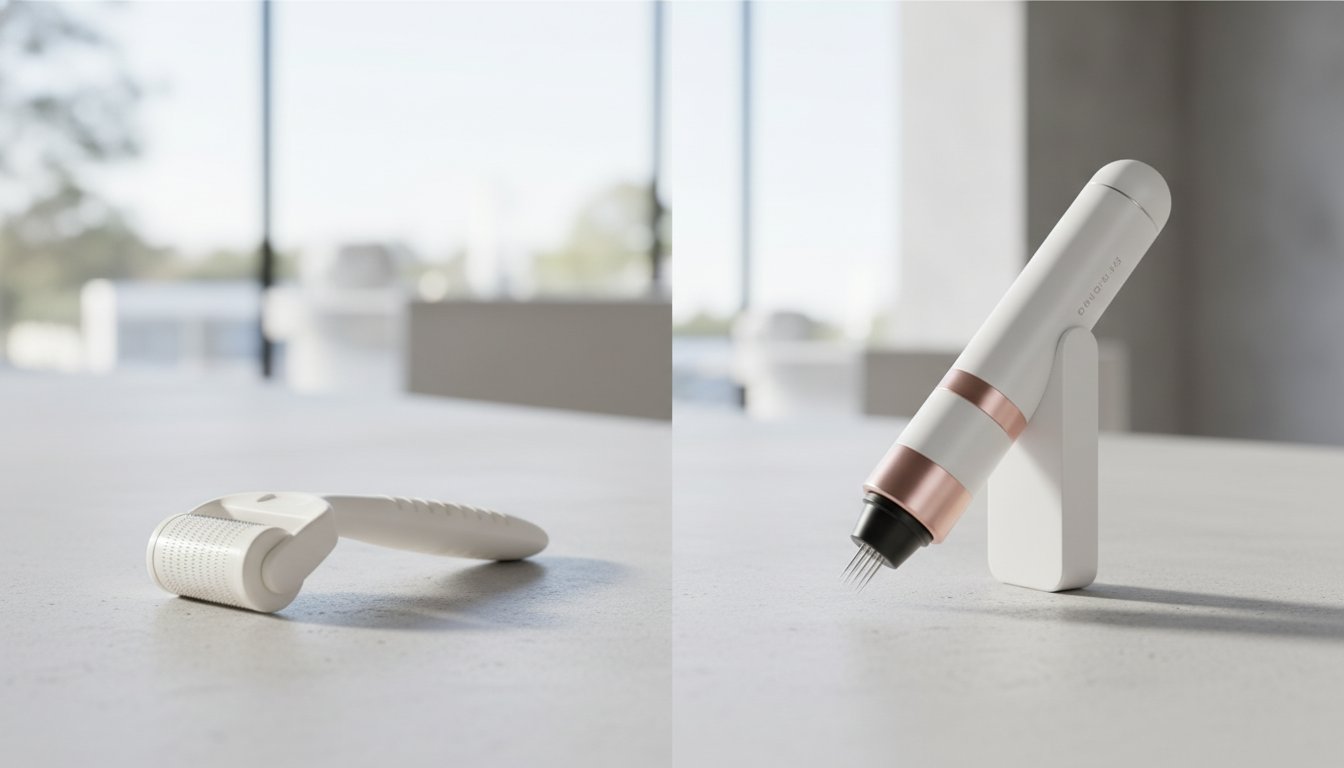
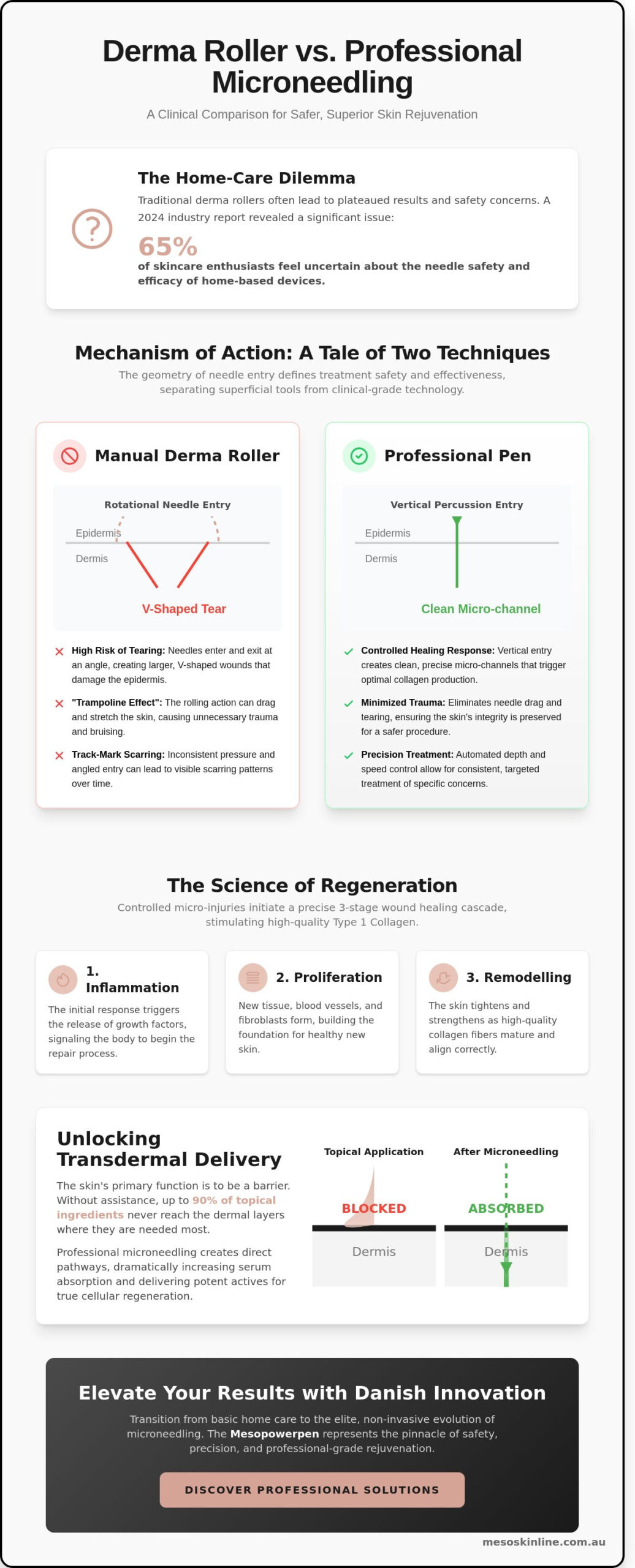
The traditional consumer derma roller, while easily accessible at your local chemist, often functions more as a superficial exfoliant than a true catalyst for deep cellular regeneration. While these manual tools offer a point of entry into skin health, many users find that their results plateau quickly, leaving concerns like deep-seated pigmentation or textured scarring largely unresolved. It’s a common frustration within the Australian aesthetic market, where a 2024 industry report indicated that 65% of skincare enthusiasts feel uncertain about needle safety and the long-term efficacy of home-based devices.
You’ve likely experimented with at-home treatments to reclaim your skin’s natural radiance, yet you’re seeking a more sophisticated, evidence-based approach that prioritises safety over fleeting trends. This definitive 2026 guide explores the clinical science of transdermal delivery and explains how to transition from basic home care to professional-grade rejuvenation. We’ll examine the technical distinctions between manual rolling and state-of-the-art non-invasive mesotherapy, ensuring you possess the Danish-inspired expertise required to achieve a truly flawless, biocompatible transformation.
Key Takeaways
- Understand the clinical science of transdermal induction and how controlled micro-injuries trigger the biological mechanisms essential for cellular repair and rejuvenation.
- Learn the critical distinctions between the manual derma roller and professional vertical devices to avoid common risks such as skin tearing and track-mark scarring.
- Compare the biocompatibility and durability of titanium versus surgical stainless steel to select the optimal needle material for superior hygiene and precision.
- Adopt professional-grade protocols, including clinical double-cleansing and rigorous disinfection, to maximise safety and enhance the transdermal absorption of premium serums.
- Discover how to elevate your skin results with Danish innovations like the Mesopowerpen, representing the elite, non-invasive evolution of traditional microneedling technology.
Understanding the Derma Roller: The Science of Transdermal Induction
The derma roller represents a cornerstone in non-invasive aesthetic medicine, functioning as a precision-engineered handheld device equipped with a rotating drum of surgical-grade micro-needles. Its primary objective is to facilitate Collagen induction therapy by creating controlled, microscopic perforations in the skin’s surface. While the epidermis serves as a vital biological shield against environmental stressors and pathogens, its dense structure often prevents 90% of topical active ingredients from reaching the deeper dermal layers. By bypassing this barrier, the device enables superior transdermal delivery, ensuring that potent serums penetrate the cellular level where regeneration actually occurs.
This biological mechanism relies on the skin’s innate ability to repair itself. When the needles create these micro-channels, the body perceives a localized injury and immediately mobilizes its repair kit. This isn’t about damaging the skin; it’s about sending a sophisticated signal to the fibroblasts to produce more structural proteins. The result is a refined texture and improved elasticity that topical creams alone cannot achieve.
The History of Collagen Induction Therapy
The journey from aggressive dermatological abrasion to refined microneedling reflects a broader shift toward biostimulation. Early techniques in the 1990s utilized larger needles to break up scar tissue, yet modern Danish expertise has transformed these tools into sophisticated instruments of rejuvenation. Current European standards, such as the CE mark and ISO 13485 certifications, have redefined safety protocols for both professional and home use. This evolution prioritizes the skin’s integrity, moving away from invasive surgical procedures toward methodical, non-ablative treatments that respect the skin’s natural architecture and promote long-term health.
How Micro-Injuries Stimulate Type 1 Collagen
When the needles of a derma roller penetrate the skin, they initiate a precise three-stage wound healing cascade: inflammation, proliferation, and finally, tissue remodelling. This process encourages the production of Type 1 collagen, the high-quality protein responsible for skin elasticity, rather than the disorganized Type 3 collagen typically found in scar tissue. Clinical observations indicate that results depend more on the frequency of treatment than the sheer depth of the needle. Regular, controlled stimulation ensures a sustained regenerative response without causing unnecessary trauma. This methodical approach aligns with the philosophy that skin transformation is a journey of precision rather than force.
- Inflammation: The immediate response that triggers the release of growth factors.
- Proliferation: New tissue and blood vessels form to support the healing area.
- Remodelling: The skin tightens as new collagen fibres align and strengthen.
Derma Roller vs. Professional Microneedling: A Clinical Comparison
The fundamental distinction between a manual derma roller and an automated professional device lies in the geometry of the needle entry. While a drum-based system relies on a 360-degree rotation to penetrate the tissue, professional systems like the Mesopowerpen employ a vertical percussion mechanism. This mechanical difference isn’t merely a matter of convenience; it defines the integrity of the skin barrier post-treatment. Clinical observations indicate that vertical entry creates clean, microscopic channels that trigger a controlled healing response, whereas the rotational movement of a roller often leads to unnecessary trauma that can compromise long-term skin health.
The Trampoline Effect and Epidermal Tearing
When using a rolling device, the needles enter the tissue at an acute angle and exit at a corresponding opposite angle. This creates a “fanning” motion within the dermis, often referred to as the trampoline effect. This action results in a V-shaped wound that is significantly larger than the needle’s actual diameter. In sensitive regions like the periorbital area, this needle drag can cause visible bruising or long-term “track-mark” scarring. Epidermal tearing is the unintended lateral trauma caused when a needle enters and exits the skin at an oblique angle during the rolling motion. By contrast, professional microneedling ensures the needle path is perpendicular to the skin surface, preserving the surrounding tissue and accelerating the natural regenerative cycle.
Speed and Density: Why Automation Wins
Automation provides a level of precision and density that manual tools simply can’t match. A standard derma roller might create a few hundred punctures per pass, but a professional microneedling pen can generate over 1,200 micro-channels per second. This high-density perforation ensures a more uniform distribution of biocompatible serums into the deeper layers of the skin, maximizing the efficacy of transdermal delivery. The speed of these vertical needles also plays a crucial role in patient comfort. Because the needles move so rapidly, the skin’s sensory receptors don’t register the same level of discomfort associated with the slower, more sustained pressure of a manual device.
This efficiency allows practitioners to achieve superior results in a fraction of the time, typically reducing clinical recovery periods from 48-72 hours down to less than 24 hours. Professionals looking to elevate their practice can explore the latest Danish-engineered technology to ensure the highest standards of safety and efficacy for their clients. By transitioning to automated systems, clinicians can offer adjustable needle depths ranging from 0.25mm to 2.0mm, allowing for a bespoke treatment plan that addresses varying skin thicknesses across the face and body with absolute clinical confidence.
Navigating Needle Gauges and Materials: Titanium vs. Stainless Steel
The efficacy of a derma roller depends on the structural integrity of its micro-needles. Choosing the right material isn’t just about durability; it’s a critical decision for biocompatibility and cellular safety. While titanium is often marketed for its longevity because the metal is harder and resists blunting, surgical-grade stainless steel remains the professional choice. It allows for a finer, sharper point that enters the tissue with minimal resistance. This precision reduces the risk of epidermal tearing, which is a common issue with lower-grade devices.
Needle gauge, or thickness, is just as vital as length. A professional device typically uses a 30 to 33-gauge needle. If the needle is too thick, it creates excessive trauma rather than controlled micro-channels. You should avoid mass-produced rollers using stamped metal wheels. These are essentially serrated gears that slice the skin rather than puncturing it. High-end Danish expertise ensures each needle is individually set to maintain the highest safety standards and ensure a flawless transdermal path.
Needle Lengths for Home vs. Clinical Use
Safe home protocols are limited to lengths between 0.25mm and 0.5mm. These depths focus on enhancing the absorption of transdermal serums and stimulating the epidermis without reaching the deeper dermis. Treatments involving needles of 1.0mm or greater require a clinical environment. Attempting to treat deep acne scars at home with longer needles poses a significant risk of post-inflammatory hyperpigmentation if not managed by a professional. In Australia, professional treatments are regulated to ensure patient safety and optimal rejuvenation results. Precision is paramount for safety.
Sterilisation and Material Integrity
Surgical-grade stainless steel is the benchmark for minimising infection risks. It’s a non-porous material that responds effectively to sterilisation protocols. You’ll notice that needles dull after several uses, which can lead to skin dragging and unnecessary irritation. A professional-grade needle cartridge should meet these criteria:
- Individual needle placement rather than stamped wheels to prevent skin slicing.
- Gamma-ray or EO gas sterilisation packaging to ensure absolute hygiene upon arrival.
- Compliance with European medical device standards such as the CE marking for safety.
- Medical-grade 316L stainless steel composition for maximum biocompatibility.
Selecting a high-quality derma roller means prioritising the long-term health of your skin over the convenience of a low-cost alternative. By focusing on material integrity and correct needle gauge, you ensure that every treatment is a step toward genuine cellular regeneration rather than superficial damage.
The Professional Protocol: Maximising Safety and Serum Absorption
Clinical excellence in skin transformation isn’t achieved by the device alone; it’s the result of a rigorous, medical-grade protocol. Every session starts with a thorough double cleanse using pH-balanced clinical cleansers to remove lipids and impurities without disrupting the skin’s delicate acid mantle. Once the surface is prepared, disinfection of the skin and the derma roller is a non-negotiable step. Using 70% isopropyl alcohol or chlorhexidine ensures a sterile environment, reducing the risk of cross-contamination to near zero. This meticulous preparation sets the stage for a safe and effective treatment that prioritises long-term dermal health.
The actual needling follows a structured ‘star’ pattern technique to ensure total precision. By gliding the device vertically, horizontally, and diagonally across each section of the face, you achieve a uniform density of micro-perforations. This systematic approach prevents over-treatment in a single area while ensuring no spot is missed. These micro-channels create a ‘window of opportunity’ that lasts approximately 20 to 30 minutes. During this brief period, the skin’s transdermal permeability increases by up to 80%, allowing for the deep delivery of potent biotechnological compounds that would otherwise remain on the surface.
Pairing Needling with Targeted Mesotherapy Serums
The efficacy of the treatment is amplified when paired with specialized serums like Boto Xtreme or Eyelift. These formulas are specifically designed to traverse the micro-channels created by the derma roller, reaching the deeper layers where cellular regeneration occurs. Incorporating vegan exosomes into the protocol represents a leap in Danish skincare innovation. These biocompatible messengers facilitate rapid intercellular communication, effectively ‘resetting’ the skin’s repair mechanisms and accelerating collagen synthesis. It’s vital to use only ‘clean’ formulas during this process. Products must be free from synthetic fragrances, colours, and preservatives to avoid irritation or the formation of granulomas within the open channels.
Post-Treatment Care and Recovery
Recovery is as critical as the procedure itself for achieving a flawless finish. For the first 24 hours, clients must adhere to a strict ‘no-go’ zone, avoiding makeup, heavy exercise, or direct heat sources like saunas. These activities can introduce bacteria or cause excessive vasodilation that delays the natural healing response. We recommend applying a professional post-care balm to calm immediate erythema and provide a protective, breathable moisture seal. Given the intensity of the Australian sun, applying a broad-spectrum SPF 50+ every morning is essential to protect the newly sensitized skin from UV-induced damage during the healing phase.
Elevate your clinical results by exploring our range of professional mesotherapy solutions and equipment designed for the modern practitioner.
Beyond the Roller: Professional-Grade Rejuvenation with Mesoskinline
While the manual derma roller served as a vital foundation for transdermal induction, the modern aesthetic landscape requires more sophisticated, automated solutions. Mesoskinline Australia represents this elite evolution, merging Danish engineering with clinical efficacy through the Mesopowerpen. This device isn’t merely a tool; it’s a high-performance system designed for practitioners who prioritize precision and safety in non-invasive treatments. By choosing Danish-designed technology, Australian clinics align themselves with a legacy of scientific credibility and aesthetic elegance.
The transition to advanced microneedling technology is about more than just speed; it’s about the integrity of the skin barrier. Mesoskinline Australia provides a comprehensive ecosystem where premium hardware meets specialized training. This ensures that every treatment delivered is backed by a professional certification, allowing practitioners to master the intersection of biotechnology and skincare. When clinics utilize these high-end European consumables, they offer their clients a level of refinement and safety that manual tools simply cannot replicate. Clinics looking to scale their offerings cost-effectively should also consider exploring professional microneedling pen wholesale options to maximise their investment in premium equipment.
The Mesopowerpen Advantage
The Mesopowerpen utilizes a precision-engineered motor that delivers high-frequency punctures, which significantly reduces epidermal trauma compared to manual tools. Its adjustable needle depth allows for seamless transitions between delicate areas like the periocular region and denser tissue on the scalp or body. This versatility is essential when integrating specialized serums for lip volume or hair loss, as the device ensures active ingredients reach the precise dermal layer required for cellular regeneration. Transitioning from a manual derma roller to this automated system allows for a more comfortable patient experience and superior, predictable results across a variety of skin concerns.
Why Danish Standards Matter in Australian Aesthetics
Danish skincare technology is defined by rigorous testing and ethical manufacturing, ensuring every component is biocompatible and safe for long-term use. Mesoskinline Australia supports local clinics by providing direct access to these premium European consumables, alongside professional certification programs. This educational focus ensures that practitioners aren’t just using a device, but are mastering a comprehensive rejuvenation protocol. For Australian clinics seeking to make an informed hardware investment, our professional microneedling pen guide for 2026 outlines the technical benchmarks and safety protocols required to select a device that delivers predictable, high-level results. Sourcing from a local distributor means clinics receive consistent technical support and reliable supply chains, which are critical for maintaining high professional standards in the Australian market.
The commitment to non-invasive excellence is what sets Mesoskinline Australia apart from standard aesthetic suppliers. By focusing on the mastery of skin transformation through technology and training, the brand empowers clinicians to achieve flawless results without the risks associated with more aggressive procedures. Explore the Mesoskinline Australia professional range today to elevate your practice with world-class innovation and Danish expertise.
Mastering the Future of Non-Invasive Skin Transformation
The evolution of transdermal induction in 2026 demands a shift from basic tools to sophisticated clinical protocols. While a manual derma roller offers an entry-level approach to skin health, it lacks the vertical precision and controlled depth required for genuine cellular regeneration. Clinical benchmarks indicate that professional-grade microneedling enhances the penetration of biocompatible serums by up to 80% compared to traditional topical applications. Success in the Australian aesthetic market requires a foundation of Danish-designed technology and specialized training to ensure patient safety. As the exclusive APAC distributor of MesoSkinline, we empower practitioners to deliver world-class results through state-of-the-art European engineering and non-invasive mesotherapy techniques. You’ll find that aligning your practice with these high-level standards creates a clear distinction in a competitive landscape. Elevate your clinic with the Mesopowerpen and Danish-engineered serums to redefine your treatment outcomes. We’re committed to helping you achieve the highest levels of clinical excellence and patient satisfaction.
Frequently Asked Questions
How often should I use a derma roller for the best results?
You should use a derma roller every four to six weeks to allow for a full 28 day cellular regeneration cycle. Using it more frequently can disrupt the skin’s natural healing response and lead to chronic inflammation. Clinical data suggests that collagen synthesis peaks at the three week mark; therefore, patience is essential for achieving a refined and rejuvenated complexion without compromising the skin barrier.
Is derma rolling painful, and do I need numbing cream?
Most users experience a mild prickling sensation, but you’ll likely require a topical numbing cream for needle lengths exceeding 1.0mm. In Australia, the Therapeutic Goods Administration (TGA) regulates these anaesthetics to ensure safety during non-invasive procedures. For shorter needles used in home maintenance, the discomfort is typically rated a two out of ten on a standard pain scale, making it manageable for most individuals.
Can a derma roller help with deep acne scarring and pigmentation?
A derma roller is highly effective for treating deep acne scarring and hyperpigmentation by triggering the body’s wound healing cascade. This process replaces damaged tissue with fresh collagen and elastin fibers. Research indicates that 85% of patients observe a visible reduction in scar depth after four professional sessions. It’s an ideal solution for those seeking long term structural skin improvement rather than temporary topical fixes.
What is the difference between a derma roller and a derma stamp?
The primary difference lies in the entry angle of the needles; a derma roller enters the skin at a slanted angle while a derma stamp provides vertical penetration. This vertical approach reduces the risk of unnecessary epidermal tearing, which is a common concern with rolling motions. While the roller is efficient for covering larger surface areas like the cheeks, the stamp offers superior precision for targeted areas or localized scarring.
How do I properly clean and disinfect my derma roller at home?
You must disinfect your device by soaking the needle head in 70% isopropyl alcohol for exactly ten minutes before and after every use. This concentration is the laboratory standard for eliminating 99.9% of surface pathogens. Always rinse the device with warm distilled water after the alcohol soak and allow it to air dry in its protective case to maintain the integrity of the medical grade steel.
Are there any skin conditions that make derma rolling unsafe?
You shouldn’t use microneedling tools if you have active acne, rosacea, or psoriasis in the treatment area. Performing the procedure on active pustules can spread bacteria across the face, increasing the risk of secondary infections by 60%. Additionally, individuals on blood thinning medications or those with a history of keloid scarring should consult a clinical professional before beginning any transdermal induction therapy to ensure patient safety.
Can I use a derma roller on my scalp for hair regrowth?
You can certainly use a derma roller on the scalp to stimulate dormant hair follicles and improve the absorption of growth serums. A 2013 study published in the International Journal of Trichology found that participants using microneedling alongside topical treatments saw a 40% greater increase in hair count compared to those using topicals alone. This mechanical stimulation increases localized blood flow, providing essential nutrients to the hair bulb for enhanced regrowth.
Why should I upgrade from a manual roller to a microneedling pen?
Upgrading to a microneedling pen provides automated precision and adjustable needle depths that a manual roller cannot match. These state of the art devices perform up to 100 punctures per second, creating clean micro channels with minimal downtime. While manual tools are a foundational starting point, Danish engineered pens offer a more sophisticated, controlled experience that aligns with professional European standards for non-invasive aesthetic excellence. Practitioners seeking to equip their clinics cost-effectively can benefit from reviewing a comprehensive guide to professional microneedling pen wholesale purchasing to make informed, budget-conscious decisions.
What Others Are Reading:


Stay in the Glow
Get skincare tips and early access to new products.
