
The Science of Radio Frequency for Skin: A Comprehensive Guide to Thermal Rejuvenation
Could a precisely calibrated thermal “injury” be the most sophisticated method for preserving the skin’s structural integrity? While the Australian aesthetic market has seen a 15% increase in demand for non-surgical tightening over the last year, many professionals remain cautious about the underlying physics. It’s common to feel overwhelmed by the technical distinctions between various devices or to worry about the long-term safety of deep tissue heating. You recognize that true rejuvenation requires more than a superficial fix; it demands a deep, cellular recalibration that respects the skin’s biological limits.
This guide clarifies the complex science of radio frequency for skin, moving beyond the noise to explain how controlled electromagnetic energy stimulates neocollagenesis. You’ll discover the clinical differences between monopolar and bipolar systems, learn to mitigate risks like unintended fat volume loss, and understand how to integrate Danish-inspired serum protocols for enhanced outcomes. We’ll examine the specific mechanisms that turn thermal energy into a long-lasting aesthetic transformation, providing you with the expertise to deliver safe, world-class results that defy the typical limitations of non-invasive care.
Key Takeaways
- Understand the biological process of collagen denaturation and how targeted thermal energy triggers fibroblasts to synthesise new Type I and Type III collagen for structural rejuvenation.
- Explore the clinical distinctions between Monopolar, Bipolar, and Multipolar radio frequency for skin to determine the most effective modality for specific facial and body concerns.
- Discover the “Thermal Priming” protocol, a 2026 gold standard that utilises RF energy to increase skin permeability for the enhanced delivery of high-potency mesotherapy serums.
- Learn to evaluate professional hardware based on Danish design principles, ensuring superior safety through precise temperature control and advanced sensor technology.
- Master the integration of thermal energy with biocompatible actives to offer clients a sophisticated, non-invasive alternative to traditional surgical interventions.
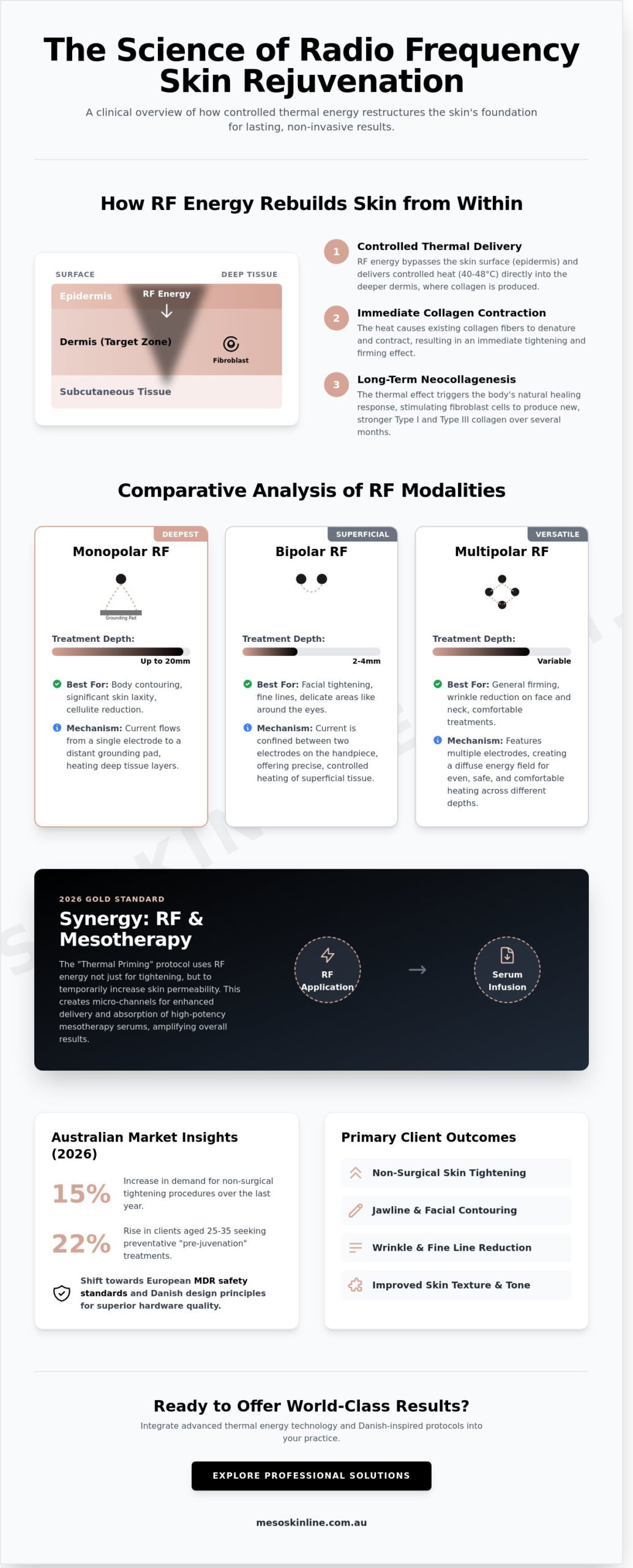
The Science of Radio Frequency for Skin Rejuvenation
Radio frequency for skin treatments utilise non-ionising radiation to induce rapid oscillation in polar molecules, effectively generating volumetric heat within the tissue. This electromagnetic energy source functions by resisting the flow of the current within the dermis, converting that electrical energy into thermal energy. Unlike traditional laser technologies that rely on specific chromophores such as melanin or haemoglobin, RF is chromophore-independent. This unique characteristic allows practitioners to treat a diverse range of skin phototypes without the heightened risk of post-inflammatory hyperpigmentation often associated with light-based therapies.
The efficacy of this modality lies in its ability to bypass the epidermis and target the deeper dermal layers directly. By maintaining a cooler temperature at the surface while heating the underlying structure, we achieve a controlled thermal injury. This precise heating, typically reaching temperatures between 40 and 48 degrees Celsius, triggers the body’s natural wound-healing response. The process begins with the immediate contraction of existing collagen fibres, followed by a secondary phase of neocollagenesis. This long-term cellular regeneration is what leads to the visible lifting and firming results that clients seek in a professional clinical environment.
The transition of this technology from its 1920s origins in electrosurgical cauterisation to modern aesthetic applications represents a significant leap in biotechnological precision. While early medical iterations were aggressive and focused on tissue destruction, contemporary radio-frequency skin tightening protocols prioritise thermal modulation. This shift ensures that the integrity of the skin barrier remains intact while the internal architecture is systematically rebuilt.
What is Radio Frequency for Skin?
Radio frequency for skin is a form of non-ionising electromagnetic radiation that induces molecular oscillation to generate therapeutic heat within the dermal matrix. While lasers target specific pigments, RF energy is distributed based on tissue resistance, making it an exceptionally versatile tool for various skin depths. The primary aesthetic objectives of these treatments include non-surgical tightening, jawline contouring, and the refinement of skin texture through fractional resurfacing techniques.
The Evolution of Non-Invasive Tightening in 2026
The Australian aesthetic market in 2026 is witnessing a definitive shift toward “pre-juvenation,” with a 22% increase in clients aged 25 to 35 seeking preventative thermal treatments. We’ve moved away from the aggressive ablative methods of previous decades, favouring sophisticated thermal modulation that requires zero downtime. Australian clinics are increasingly adopting rigorous European safety standards, such as the Medical Device Regulation (MDR) frameworks, as the benchmark for patient care. This alignment with Danish and broader European engineering ensures that devices provide consistent, biocompatible results that respect the long-term health of the skin rather than offering temporary, superficial fixes.
Biological Mechanisms: How Thermal Energy Restructures the Dermis
The efficacy of radio frequency for skin rejuvenation depends on the precise delivery of controlled thermal energy into the reticular dermis. Unlike superficial treatments, RF energy bypasses the epidermis to target the structural layers where aging begins. This process creates a thermal field that triggers a sophisticated biological response, moving beyond simple surface-level aesthetics to achieve genuine cellular transformation. It’s a method rooted in Danish clinical precision, ensuring that the skin’s integrity remains protected while its internal architecture is rebuilt.
Collagen Denaturation and Neocollagenesis
At the heart of this transformation is the collagen molecule, a triple-helix protein that provides the skin’s foundational strength. When the dermis reaches a sustained temperature of 40-45 degrees Celsius, the heat-sensitive hydrogen bonds within these helices begin to break. This causes the collagen fibers to contract and thicken, resulting in the immediate “flash” tightening often observed by clients post-treatment. This evidence-based effect is only the beginning of the journey.
The thermal stress initiates a natural wound-healing cascade without causing an actual wound. Fibroblasts, the skin’s primary connective tissue cells, are activated by this stimulus. Over the following 12 to 24 weeks, these cells synthesise fresh Type I and Type III collagen. This long-term remodeling phase replaces old, fragmented fibers with a dense, organized matrix. Maintaining consistent temperature is vital; professional-grade Danish-engineered equipment ensures the heat remains within the therapeutic window to avoid tissue damage while maximizing the regenerative output.
Impact on Cellular Metabolism and Circulation
Radio frequency for skin treatments does more than just manipulate collagen; it significantly enhances the local physiological environment. The deep heating effect promotes vasodilation, which improves microcirculation and oxygenates the treated area. This increased blood flow facilitates the rapid removal of metabolic waste through the lymphatic system, often resulting in a clearer, more refined skin texture within days of the procedure.
- Heat Shock Proteins (HSPs): Thermal energy stimulates the production of HSP70, a chaperone protein that assists in proper protein folding and cellular longevity.
- Elastin Synthesis: While collagen provides structure, RF also encourages the production of elastin, the protein responsible for the skin’s “snap-back” elasticity.
- Hyaluronic Acid Production: The metabolic boost encourages the synthesis of endogenous hyaluronic acid, improving internal hydration levels and reducing the appearance of fine lines.
The result is a comprehensive improvement in skin quality that evolves over several months. While a single session provides a subtle lift, a structured course of treatments allows the biological “compounding effect” to take hold. This methodical approach to rejuvenation prioritizes long-term health, moving away from the aggressive, high-downtime methods of the past in favor of sophisticated, non-invasive mastery.
Navigating RF Modalities: A Comparative Analysis of Treatment Options
Selecting the appropriate delivery method is critical for achieving predictable clinical outcomes in a professional aesthetic environment. Radio frequency for skin rejuvenation isn’t a singular technology; it represents a sophisticated spectrum of electrical modalities designed to interact with biological tissue at specific depths. Practitioners must distinguish between these configurations to ensure patient safety and treatment efficacy while maintaining the high standards expected in the Australian aesthetic market.
Monopolar vs. Bipolar vs. Multipolar RF
Monopolar RF systems utilize a single active electrode paired with a grounding pad. This configuration forces the current to travel through the body, reaching depths of up to 20mm. It’s the preferred choice for deep volumetric heating, particularly when addressing submental laxity or body contouring. Bipolar and multipolar systems, however, contain all electrodes within the handpiece. This design restricts the current flow to the superficial layers, typically 2mm to 4mm deep. These modalities offer a superior safety profile for delicate areas like the periocular region, where precision is paramount. Downtime remains minimal for these non-ablative options, with most clients returning to daily activities immediately after a 30-minute session.
The Rise of Fractional RF and Dermal Stamping
The integration of mechanical needling with thermal energy has transformed the treatment of structural skin concerns. Fractional RF, often delivered via dermal stamping, creates microscopic thermal zones while leaving surrounding tissue intact. This dual-action approach is highly effective for treating atrophic acne scarring and deep rhytids. The evidence-based effects of radiofrequency treatment show that this controlled thermal stress initiates a cascade of cellular regeneration and collagen synthesis. Clinical data suggests that a series of three to four treatments can lead to a 25% to 40% improvement in skin texture and scar depth, provided the practitioner follows rigorous Danish-inspired safety protocols.
When implementing radio frequency for non-invasive skin rejuvenation, the practitioner must align the device frequency with the target tissue’s depth and resistance. Choosing the right modality requires a meticulous assessment based on these specific criteria:
- Skin Thickness: Thinner epidermal layers on the forehead require lower energy densities, whereas the dense dermal tissue of the cheeks can tolerate higher temperatures.
- Laxity Severity: Mild sagging often responds well to multipolar RF, but significant structural breakdown may necessitate the deeper reach of fractional or monopolar systems.
- Anatomical Location: Bipolar RF is indicated for the thin skin around the eyes; monopolar is reserved for the jawline and neck.
Professional training is vital to master these nuances. Without a high-level understanding of thermal dynamics, the risk of Post-Inflammatory Hyperpigmentation (PIH) increases, especially in the diverse skin types encountered across Australia. Mesoskinline Australia emphasizes Danish expertise in its certification programs, ensuring that every treatment is a marriage of state-of-the-art technology and clinical precision.
Beyond Tightening: Synergising RF with Advanced Mesotherapy
Thermal priming is the foundational concept that separates standard aesthetic results from exceptional clinical outcomes. Using radio frequency for skin to elevate the dermal temperature to a consistent 40 to 42 degrees Celsius does more than trigger neocollagenesis; it fundamentally alters the skin’s receptivity. This controlled heat increases microcirculation and temporarily enhances the permeability of the lipid barrier. In 2026, leading Australian practitioners recognise this as the gold standard for preparation. They no longer view RF as a solo act but as the essential first step in a multi-layered biological intervention.
Clients often present the objection that RF alone isn’t enough to resolve deep, structural wrinkles or significant volume loss. This assessment is often accurate when technology is used in isolation. However, the synergy between thermal energy and Mesoskinline cocktails bridges this gap. By addressing the mechanical tightening of the skin while simultaneously delivering high-potency bio-actives, you treat the concern from the surface down to the cellular level. This approach moves away from fleeting trends and focuses on long-term dermal health through biocompatible innovation.
Transdermal Delivery and the Mesopowerpen
The Mesopowerpen acts as the critical bridge in the transdermal delivery process. It creates precise micro-channels that allow active ingredients to bypass the stratum corneum’s natural defenses. When these channels are opened immediately following RF treatment, the bio-availability of serums increases by up to 85% compared to topical application alone. A notable application is the combination of RF with Meso Boto Xtreme. This protocol provides a needle-free reduction in expression lines by targeting the skin’s structural integrity and muscle tension simultaneously. It’s a sophisticated alternative for clients seeking refinement without the use of traditional toxins.
Vegan Exosomes and Cellular Regeneration
Post-thermal recovery is where the quality of mesotherapy truly manifests. Vegan exosomes have emerged as a powerhouse for accelerating cellular regeneration after heat-based treatments. These plant-derived messengers modulate the inflammatory response, ensuring that the “controlled injury” of RF leads to productive healing rather than prolonged redness. When integrated with PDRN (Polydeoxyribonucleotide) and plant-based growth factors, the collagen synthesis triggered by RF is significantly amplified. This dual-action method is particularly effective in bespoke protocols for pigmentation control and hair loss, where cellular signaling is paramount. These formulations ensure the skin functions at a more youthful biological level, providing results that are both visible and sustainable. For practitioners looking to further expand their non-invasive toolkit, understanding how a clinical-grade led face mask complements post-RF cellular regeneration can significantly enhance treatment outcomes.
Elevate your clinical results and offer your clients the pinnacle of non-invasive transformation by integrating our professional mesotherapy solutions into your RF protocols.
Professional Implementation: Choosing the Right Technology for Results
Selecting a platform for radio frequency for skin treatments is a strategic decision that defines a clinic’s reputation and long-term success. Superior outcomes aren’t accidental; they’re the result of hardware engineered according to Danish design principles and rigorous European clinical standards. When evaluating equipment, practitioners should prioritize technical integrity over marketing hype. This means looking for devices that offer precise temperature control. To trigger neocollagenesis effectively, the dermis must reach a therapeutic threshold of approximately 40 to 45 degrees Celsius. Without real-time safety sensors to monitor this heat, the risk of thermal injury increases, while insufficient heat leads to underwhelming results.
For Australian clinic owners, the integration of high-end RF technology is a move toward better ROI and improved client retention. The Australian aesthetic market is highly competitive, and clients increasingly demand non-invasive solutions that provide visible lifting without the recovery time associated with surgery. By investing in European-certified hardware, clinics can justify premium pricing and foster trust. Success in this field requires more than just a machine; it demands a partnership with a provider that offers comprehensive education and technical mastery.
Safety Standards and Practitioner Certification
Professional training is a non-negotiable pillar of RF safety. While the technology is non-invasive, it involves the delivery of controlled energy into deep tissue layers. Practitioners must be expertly trained to navigate contraindications. Clients with cardiac pacemakers, cochlear implants, or internal metal plates in the treatment area are generally unsuitable for RF due to the risk of electrical interference or localized overheating. Mesoskinline Australia provides the necessary educational framework to ensure practitioners can identify these risks and customize protocols for every skin type. This level of certification transforms a technician into a trusted clinical authority.
Elevating Your Clinic with Mesoskinline Australia
The Mesopowerpen stands as a benchmark for versatility in the modern clinic. It functions as a sophisticated tool that bridges the gap between RF energy and advanced mesotherapy, allowing for deeper transdermal delivery of biocompatible actives. Sourcing both hardware and specialized serums from a single, high-end European distributor ensures that every component of the treatment is designed to work in harmony. This holistic approach minimizes adverse reactions and maximizes cellular regeneration. Practitioners who align with this methodology don’t just offer treatments; they offer a refined aesthetic experience rooted in Danish expertise.
To elevate your practice with state-of-the-art technology and world-class training, explore the Mesoskinline range of professional aesthetic solutions.
Mastering the Future of Dermal Transformation
Mastery of thermal rejuvenation requires a deep understanding of how energy interacts with dermal architecture. Utilizing radio frequency for skin isn’t just about immediate tightening; it’s about initiating a long-term biological response that restores structural integrity. When you combine these thermal modalities with advanced mesotherapy techniques, the results for ageing, pigmentation, and hair loss become significantly more profound. Success in the Australian aesthetic market depends on the synergy between state-of-the-art technology and rigorous professional education. We’re the exclusive APAC distributor of Danish-engineered Mesoskinline products, offering high-performance, non-invasive solutions that prioritize patient safety and clinical excellence. Our specialised training and certification programs empower practitioners to deliver consistent, world-class outcomes. This methodical approach ensures that every treatment protocol remains rooted in scientific credibility rather than fleeting beauty trends. Elevate your practice by embracing the intersection of biotechnology and refined skincare to achieve the flawless results your clients expect.
Discover the Mesopowerpen and Advanced Professional Serums
Frequently Asked Questions
Is radio frequency for skin tightening safe for all skin types?
Radio frequency for skin treatments is safe for all skin types, including darker complexions categorized as Fitzpatrick levels IV to VI. Unlike light-based therapies that target melanin, RF energy uses electrical resistance to generate heat within the dermis. This mechanism minimizes the risk of post-inflammatory hyperpigmentation. Clinical data indicates a safety profile exceeding 98% for non-ablative RF procedures when performed by certified Australian practitioners.
How many radio frequency sessions are needed to see visible skin results?
Most clients require a structured course of 6 to 10 sessions to achieve optimal physiological changes. While an immediate “flash” effect occurs due to collagen fiber contraction, the biological synthesis of new type I collagen takes approximately 21 to 28 days. Practitioners typically schedule these appointments at 7 to 14-day intervals to maintain the thermal stimulus required for long-term dermal remodeling and rejuvenation.
What is the difference between home RF devices and professional clinical RF?
The primary distinction lies in the power output and the precision of thermal delivery. Professional clinical systems often operate at 50 to 100 watts with integrated safety cooling, whereas home devices are limited to roughly 5 to 10 watts for consumer safety. This power differential means professional treatments reach the critical 40 to 42 degree Celsius threshold required for neocollagenesis significantly faster and more consistently than handheld alternatives.
Does radio frequency for skin hurt, and is there any downtime?
Radio frequency for skin treatments is generally perceived as a comfortable, warming sensation similar to a hot stone massage. There’s zero clinical downtime, allowing clients to return to daily activities immediately after a 30-minute session. You might experience mild erythema for roughly 60 to 120 minutes post-treatment. This transient redness indicates that the target tissue has reached the necessary therapeutic temperature for effective cellular regeneration.
Can radio frequency treatments cause fat loss in the face?
Facial fat loss is avoidable when a technician uses correct protocols and controlled depth settings. Professional RF platforms utilize specific frequencies to target the dermis at depths of 2 to 3 millimetres, which is well above the subcutaneous adipose layer. Practitioners must undergo rigorous training to ensure the thermal energy remains focused on collagen structures rather than deeper fat cells, maintaining the face’s youthful volume and contours.
How long do the effects of a professional RF skin treatment last?
The results of a complete professional protocol typically persist for 9 to 12 months. Since the treatment stimulates the body’s natural regenerative processes, the longevity depends on your individual rate of cellular aging and lifestyle factors. We recommend a single maintenance session every 3 to 6 months to sustain the density of the newly formed collagen matrix and counteract natural degradation over time.
Can I combine radio frequency with other treatments like microneedling or Botox?
Combining radio frequency with modalities like non-invasive mesotherapy or microneedling creates a powerful synergistic effect on skin texture. If you’ve had Botox or dermal fillers, it’s vital to wait at least 14 days before undergoing an RF session in that area. This waiting period ensures the injectables have fully integrated into the tissue, preventing any potential displacement from the thermal energy and massage action.
What is the ideal age to start radio frequency skin treatments?
Most experts suggest starting preventative RF treatments in your late 20s or early 30s. Since natural collagen production decreases by approximately 1% every year after age 25, early intervention helps maintain dermal thickness and elasticity. While clients in their 40s and 50s see the most dramatic lifting results, younger individuals benefit from “collagen banking,” which builds a resilient foundation for the future using Danish-inspired clinical standards.
What Others Are Reading:

Stay in the Glow
Get skincare tips and early access to new products.
