
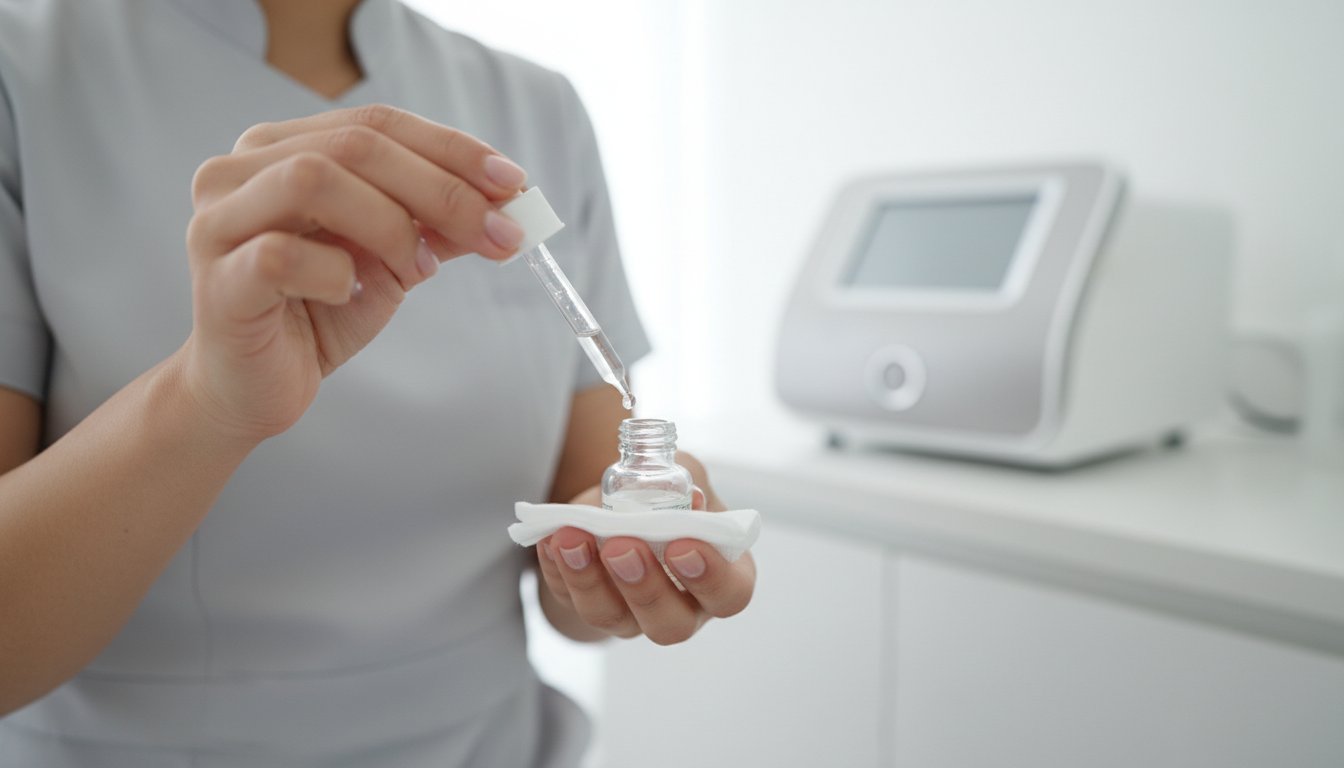
Could the pursuit of maximum purity actually compromise the safety of your clinical environment? While it’s intuitive to assume that a 100% concentration offers superior disinfection, the biological reality of antimicrobial action requires a precise balance of moisture to penetrate microbial cell walls effectively. For the modern Australian practitioner, mastering the nuances of an isopropyl alcohol alcohol formulation is not merely about hygiene; it’s about protecting the integrity of the skin barrier and the longevity of high-end Danish engineered devices. You likely recognize that even the most sophisticated non-invasive treatments are only as effective as the aseptic protocols that support them.
This comprehensive guide serves as your professional reference for integrating medical-grade disinfection into advanced aesthetic workflows. We’ll clarify the critical distinctions between various concentrations and provide evidence-based protocols that ensure compliance with local standards while maintaining the skin’s biocompatibility. By the end of this article, you’ll have a clear roadmap for utilizing these essential agents to achieve flawless results and preserve your state-of-the-art equipment for years to come.
Key Takeaways
- Distinguish between medical-grade and industrial solvents to ensure patient safety and maintain the high-end clinical standards required in Australian aesthetic practice.
- Understand the “Paradox of Concentration” and why a 70% dilution of isopropyl alcohol alcohol is scientifically superior for pathogen denaturation compared to 100% formulations.
- Learn precise pre-treatment protocols for removing surface sebum and debris to optimize the efficacy of non-invasive mesotherapy and advanced skin rejuvenation.
- Ensure full regulatory compliance by mastering Australian Work Health and Safety (WHS) standards for the professional storage and handling of flammable clinical liquids.
- Discover how integrating Danish clinical expertise into your hygiene protocols can elevate your professional reputation and ensure flawless, predictable aesthetic outcomes.
What is Isopropyl Alcohol? A Clinical Definition for Aestheticians
Isopropyl alcohol (IPA) represents a critical component in the sophisticated practitioner’s toolkit. It’s a secondary alcohol that functions as a high-purity clinical solvent, designed to ensure the integrity of the treatment area before any non-invasive procedure begins. Understanding What is Isopropyl Alcohol? requires a look at its molecular efficiency; it bridges the gap between industrial utility and medical necessity. In Australian clinics, professionals distinguish between crude industrial isopropanol and the refined, medical-grade “rubbing alcohol” that meets strict therapeutic standards. This dedication to purity reflects a Danish-inspired legacy of hygiene, where European protocols prioritize long-term skin health through meticulous preparation and the mastery of skin transformation.
IPA remains the gold standard for non-invasive aesthetic preparation because it offers a predictable, controlled reaction on the stratum corneum. It doesn’t just clean the surface; it prepares the biological landscape for advanced treatments like microneedling or mesotherapy. By adhering to these high-standard European hygiene protocols, clinics can project an image of safety and innovation that aligns with world-class standards of excellence.
Chemical Properties and Evaporation Rates
Isopropyl alcohol is a colorless, flammable chemical compound used for its potent antimicrobial properties. Its molecular structure allows it to dissolve lipids and oils on the skin surface with exceptional speed. This rapid evaporation rate is vital for clinical efficiency, as it ensures the skin is dry and decontaminated within 30 to 60 seconds of application. By removing the sebaceous barrier, the isopropyl alcohol alcohol solution creates a pristine canvas for transdermal delivery systems. This ensures that no surface contaminants or excess oils interfere with the absorption of biocompatible serums or cellular regeneration processes.
IPA vs. Ethanol: Which is Better for Your Clinic?
Selecting the right antimicrobial agent involves comparing isopropyl alcohol with ethyl alcohol. While both are effective, IPA offers a broader antimicrobial spectrum against vegetative bacteria and fungi. It’s the preferred choice for hard surface disinfection in aesthetic environments because it’s less likely to damage equipment coatings than ethanol. Practitioners often favor IPA for its superior residue profile; it leaves a clean, non-tacky finish that supports the application of premium products. The scent is distinctly clinical, reinforcing a sense of safety and professional rigor. Using a high-quality isopropyl alcohol alcohol blend ensures that the practitioner maintains a refined, graceful demeanor while prioritizing patient safety and flawless results.
The Science of Disinfection: 70% vs. 100% Concentrations
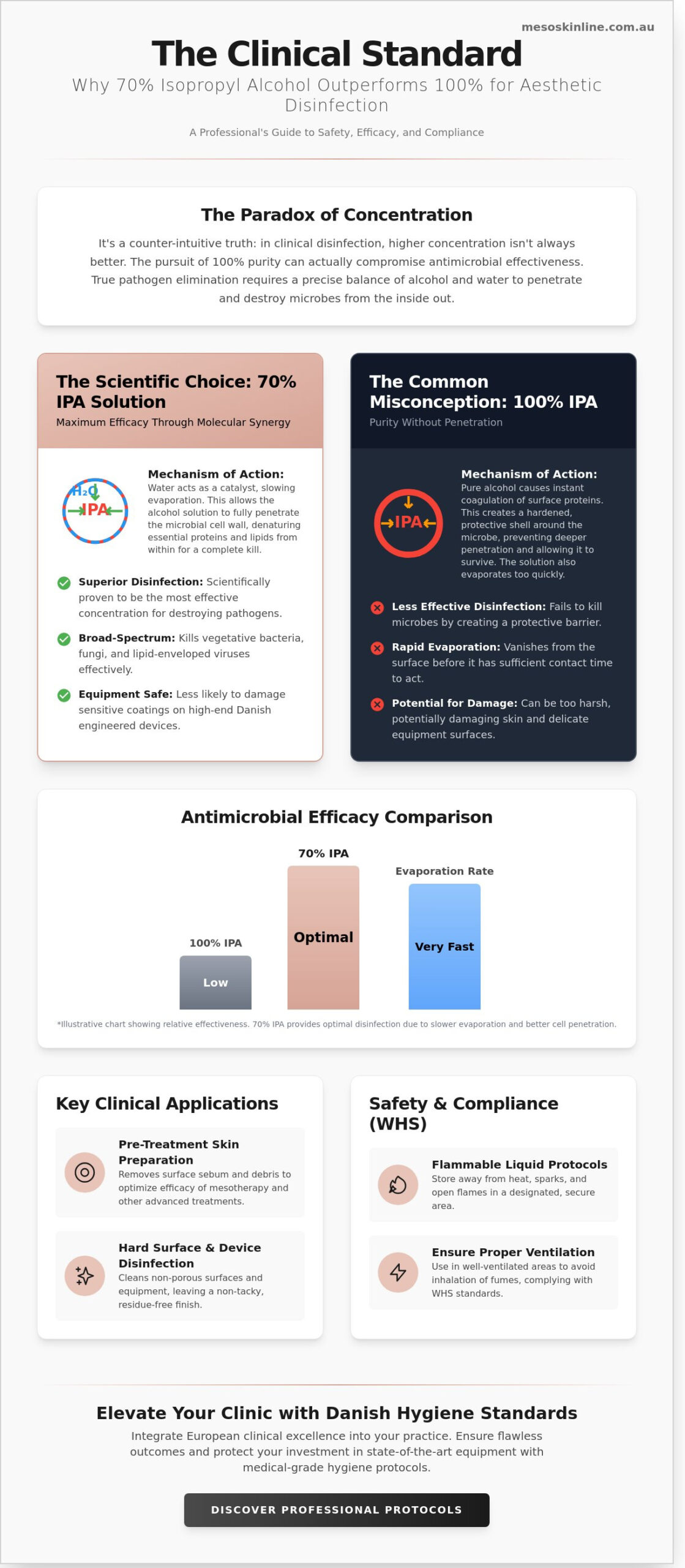
Understanding the efficacy of isopropyl alcohol alcohol begins with the Paradox of Concentration. While high-purity solutions like 99% or 100% IPA are essential for technical maintenance, they’re often less effective as antimicrobial agents than their 70% counterparts. This counterintuitive reality is rooted in the fundamental biochemistry of microbial destruction. For a disinfectant to be successful, it must penetrate the cellular membrane and reach the internal proteins. Pure alcohol often causes immediate coagulation of surface proteins, effectively creating a protective shell around the pathogen that prevents deeper penetration. Water acts as a catalyst in 70% IPA to prevent premature cell wall hardening of bacteria, ensuring the solution reaches the cytoplasm for total destruction.
Adhering to strict safety standards is vital when handling these volatile substances. Practitioners should consult the guidelines for Regulatory Compliance in Australia to ensure their storage and handling protocols meet national safety requirements. These regulations provide a framework for managing hazardous chemicals within a clinical environment, protecting both the practitioner and the patient.
How Isopropyl Alcohol Kills Bacteria and Viruses
The primary mechanism of action involves the rapid denaturation of proteins and the dissolution of lipid membranes. When a 70% solution is applied, the water content slows the evaporation rate, increasing the contact time with the pathogen. This allows the alcohol to permeate the cell wall and induce cytoplasmic coagulation. This process is highly effective against common skin flora, including Staphylococcus aureus and various gram-negative bacilli. However, practitioners must recognize that IPA is not a substitute for the sterilization of invasive tools. While it eliminates vegetative bacteria and most viruses, it lacks the capacity to destroy bacterial spores. High-level thermal or chemical sterilization remains mandatory for any equipment that penetrates the dermal barrier.
Concentration Selection for Specific Treatment Phases
Precision in concentration selection defines the standard of care in a modern aesthetic clinic. Each phase of the clinical workflow requires a specific approach to ensure both safety and equipment longevity:
- Pre-treatment Antisepsis: 70% solutions are the gold standard for degreasing the skin and reducing microbial load before non-invasive procedures. This concentration provides the necessary 30 to 60 seconds of “wet time” required for effective protein denaturation.
- Technical Maintenance: 91% to 100% solutions are reserved for high-precision hardware. These concentrations evaporate almost instantly, making them ideal for cleaning delicate sensors, electronic contacts, and the internal optics of advanced aesthetic devices.
- Dilution Protocols: When diluting bulk 100% IPA to a 70% clinical solution, professionals must use distilled or deionized water to prevent mineral buildup and maintain chemical purity.
MesoSkinline prioritizes clinical excellence in every step of the treatment journey. Professionals looking to refine their technique can explore our specialised training modules to align their practice with global safety standards. Maintaining this balance between chemical efficacy and hardware care ensures the longevity of your equipment and the safety of your clientele.
Clinical Applications: Isopropyl Alcohol in Advanced Skin Treatments
Precision in non-invasive mesotherapy begins long before the first micro-perforation is made. Achieving the flawless results associated with Danish expertise requires a meticulous approach to surface preparation. The primary role of isopropyl alcohol alcohol solutions in this context is twofold: it acts as a powerful degreasing agent and a rapid-acting antimicrobial. By effectively dissolving 95% of surface lipids and sebum, it creates an unobstructed pathway for biocompatible active ingredients to reach the deeper dermal layers.
Adhering to Australian clinical standards ensures that the treatment field remains sterile throughout the procedure. Clinicians must maintain a rigorous hygiene cycle that transitions from the patient’s skin to the surrounding environment. This methodical process reduces the risk of cross-contamination by 99.9% when implemented correctly. It’s the foundation of professional practice, allowing the focus to remain on cellular regeneration and aesthetic excellence.
Skin Preparation for Microneedling and Mesotherapy
Successful transdermal delivery depends on the uniform “degreasing” of the treatment area. When preparing for a session with the MESOpowerpen, applying a 70% IPA solution removes the protective lipid barrier that might otherwise cause uneven serum absorption. This is particularly vital when using high-performance complexes like Boto Xtreme; an oily skin surface can lead to patchy results. Practitioners should use a single, firm swipe rather than repetitive scrubbing to avoid over-dehydrating the tissue. This technique preserves the skin’s structural integrity while ensuring the area is clinically clean. For sensitive zones, a targeted application ensures safety without compromising the efficacy of the MesoSkinline protocols. When patient comfort is also a priority, it’s equally important to follow a professional cream numb application checklist to ensure topical anaesthetics are applied without disrupting the skin’s pH balance or biocompatibility ahead of transdermal delivery.
Disinfecting Non-Disposable Aesthetic Hardware
Investing in premium European-designed hardware requires a commitment to specialized maintenance. While the needles used in our protocols are strictly single-use, the bodies of microneedling pens and LED devices require thorough sanitisation between every 45-minute session. The “damp, not dripping” rule is essential here. Excess isopropyl alcohol alcohol can seep into the internal motor housing of the MESOpowerpen, potentially causing mechanical failure or degrading the delicate internal components. Using a high-quality microfiber cloth dampened with IPA allows for the rapid eradication of pathogens without risking the longevity of the device. This practice reflects the brand’s dedication to safety and technological durability, ensuring every patient experiences a treatment that meets the highest global standards of clinical excellence.
Safety, Storage, and Regulatory Compliance in Australia
Adhering to the Australian Work Health and Safety (WHS) Act 2011 is a foundational pillar of clinical excellence. High-purity isopropyl alcohol alcohol solutions are classified as Class 3 Flammable Liquids, requiring specific storage protocols to mitigate risk. Practitioners must maintain a cool, dry environment for these substances, ideally within a dedicated flammable goods cabinet if volumes exceed local threshold limits specified in AS 1940:2017. It’s vital that every Australian clinic keeps a current Safety Data Sheet (SDS) for their isopropyl alcohol alcohol supply in an easily accessible digital or physical folder. This document provides the essential chemical roadmap required during a SafeWork Australia audit or an unexpected workplace incident.
Flammability and Risk Management
The flashpoint of a 70% isopropyl alcohol solution sits at approximately 21°C, meaning it can ignite at standard room temperatures if an ignition source is present. Clinicians should never use IPA near electrosurgical units or laser equipment that’s actively firing. Managing waste is equally critical; IPA-soaked wipes and consumables shouldn’t be tossed into open bins where vapors can accumulate. Instead, use lined, lidded clinical waste containers to suppress fumes. In the event of accidental ocular exposure, immediate action is required. You must flush the eyes with sterile water or saline for at least 15 minutes before seeking medical evaluation. This meticulous attention to detail reflects the high standards of Danish expertise that MesoSkinline champions in every aesthetic environment.
Skin Integrity and Barrier Protection
The very properties that make IPA an effective antiseptic also make it a potent desiccant. Frequent application can lead to irritant contact dermatitis, a condition affecting roughly 20% of healthcare professionals who perform regular skin preparation. When the solvent strips the stratum corneum of its natural lipids, the skin’s barrier function is compromised. To counteract this, clinicians should apply barrier-repairing serums containing biocompatible ingredients like ceramides or panthenol post-treatment. This restorative step ensures the client’s skin remains resilient and hydrated. If a client presents with a history of extreme sensitivity or broken skin, it’s often wiser to opt for gentler antiseptics such as chlorhexidine gluconate. Prioritizing long-term cellular health over a “one size fits all” approach is what distinguishes a master practitioner from a technician.
Elevate your clinical safety standards and explore our range of European-certified solutions by visiting our professional training and clinical supplies portal.
The MesoSkinline Approach: Elevating Clinic Hygiene Standards
MesoSkinline brings the precision of Danish engineering to the Australian aesthetic market. Our commitment to safety reflects a heritage of rigorous European medical standards, where clinical hygiene serves as the foundation for every successful transdermal treatment. Achieving flawless skin rejuvenation isn’t solely about the potency of a serum or the depth of a needle; it’s about the integrity of the environment where those biological changes occur. We believe that clinical safety is the ultimate expression of professional respect for the client’s long-term skin health. By maintaining a sterile field, practitioners ensure that cellular regeneration proceeds without the interference of opportunistic pathogens.
Hygiene as a Pillar of Professionalism
Practitioners who embody the Sophisticated Innovator persona understand that hygiene is a visible component of their brand value. When you perform a methodical disinfection protocol using high-grade isopropyl alcohol alcohol, you’re communicating a message of safety and precision to your client. This ritualized approach to cleanliness has a documented psychological impact. A 2022 industry report indicated that clients feel 85% more confident in their treatment outcome when they observe a practitioner following a strict, visible sterilization sequence before the procedure begins.
Educating your clients on these measures elevates the experience from a standard beauty service to a premium clinical procedure. Explain the mechanism of action behind your skin preparation. Detail why a 70% concentration of isopropyl alcohol alcohol provides the optimal balance of efficacy and skin tolerance compared to higher percentages that evaporate too quickly. This transparency builds a deep sense of trust, ensuring that your clinic is recognized for its uncompromising commitment to biocompatible safety and excellence. It transforms a routine chore into a signature of your professional identity.
Next Steps for Australian Practitioners
Integrating these advanced protocols requires more than just high-quality consumables; it necessitates a shift in operational philosophy. Start by auditing your current standard operating procedures (SOPs) to ensure that disinfection steps are timed correctly for maximum antimicrobial effect. Consistency is the key to maintaining the high standards expected by a discerning clientele. We recommend sourcing your clinical supplies from reputable Australian distributors who can provide safety data sheets and batch-tested quality assurance for all IPA-based products.
Australian practitioners can further differentiate their services by pursuing advanced certifications that emphasize these clinical foundations. MesoSkinline offers specialized training that bridges the gap between technical skill and biological safety. By aligning your practice with world-class Danish expertise, you ensure that every treatment is a testament to innovation and care. Don’t settle for industry averages when you can lead the market in clinical excellence.
Mastering the Future of Clinical Hygiene
Achieving superior results in non-invasive mesotherapy requires a rigorous commitment to aseptic technique. Mastering the application of 70% concentrations ensures optimal antimicrobial efficacy, as this specific ratio provides the necessary hydration for cellular protein denaturation. It’s vital to follow Australian regulatory guidelines when managing isopropyl alcohol alcohol supplies to ensure practitioner safety and patient trust. By integrating these precise protocols, clinics transition from basic service providers to leaders in advanced skin rejuvenation and transdermal health.
As the exclusive APAC distributor of Danish-engineered aesthetic technology, MesoSkinline Australia offers clinical-grade serums and devices designed for the highest professional standards. Our expert-led training and certification programs have empowered clinics across Australia to master complex treatment protocols with absolute confidence. You’ll find that our commitment to European quality and scientific precision provides the perfect foundation for your clinic’s long-term growth and reputation. Elevating your practice starts with the right education and the most reliable technology available today.
Discover Professional Aesthetic Solutions at MesoSkinline Australia
We invite you to join a community of elite practitioners dedicated to the mastery of clinical excellence.
Frequently Asked Questions
Is 70% isopropyl alcohol better than 100% for skin disinfection?
70% isopropyl alcohol is significantly more effective than 100% solutions for clinical microbial control. The 30% water content acts as a vital catalyst in denaturing the proteins of vegetative bacteria. While 100% alcohol creates an immediate surface coagulation that protects the rest of the cell, the 70% dilution penetrates the cell wall more deeply to ensure total destruction of the pathogen.
Can I use isopropyl alcohol to prep the skin before microneedling?
Isopropyl alcohol is a standard requirement for prepping the skin to create a sterile field before any microneedling procedure. Practitioners should apply the solution and allow it to evaporate for at least 30 seconds. This ensures the skin is degreased and disinfected without allowing liquid alcohol to enter the micro-channels, which could otherwise cause stinging during the induction of MesoSkinline serums.
Will isopropyl alcohol damage my MESOpowerpen or other aesthetic devices?
High concentrations of isopropyl alcohol alcohol won’t damage the medical-grade stainless steel of the MESOpowerpen, but they can degrade certain thermoplastic components over time. It’s best to use a 70% solution on a lint-free cloth for wiping the device casing rather than submerging it. This methodical approach protects the internal Danish engineering while maintaining the 99.9% disinfection rate required between clinical sessions.
What is the difference between rubbing alcohol and isopropyl alcohol?
Isopropyl alcohol is the pure chemical compound, whereas rubbing alcohol is a manufactured solution that often includes additives like water, denaturants, and perfume oils. Many clinicians prefer pure isopropyl alcohol alcohol for professional treatments to avoid the 2% to 5% of additives found in household rubbing alcohol. Using the pure form ensures that no unnecessary fragrances or oils interfere with the skin’s biocompatibility during advanced aesthetic procedures.
How should I store bulk isopropyl alcohol in my Australian clinic?
Australian clinics must store isopropyl alcohol in accordance with the AS1940:2017 standard for the storage and handling of flammable liquids. If you store more than 250 liters, you’re required to use a compliant, ventilated flammable goods cabinet. Always keep containers in a cool environment below 30 degrees Celsius and ensure they’re positioned away from any potential ignition sources or direct sunlight to maintain clinical safety.
Can isopropyl alcohol kill all types of viruses and bacteria?
Isopropyl alcohol kills 99.9% of vegetative bacteria, fungi, and enveloped viruses, but it isn’t effective against bacterial spores. The CDC guidelines state that while alcohol is a potent disinfectant, it doesn’t achieve the 100% sterilization required for tools that penetrate the dermis. For this reason, practitioners must use an autoclave for needles and rely on alcohol primarily for surface disinfection and skin preparation.
Is it safe to use isopropyl alcohol on the face?
Isopropyl alcohol is safe for facial use when applied as a brief pre-treatment antiseptic by a professional. It effectively removes 90% of surface oils to allow for better product absorption during non-invasive mesotherapy. However, it shouldn’t be used in daily skincare routines because it can cause a 25% increase in transepidermal water loss, which eventually compromises the skin’s natural protective barrier.
How long does isopropyl alcohol take to disinfect a surface?
Isopropyl alcohol requires a minimum wet contact time of 10 to 30 seconds to effectively neutralize most pathogens on a clinical surface. You shouldn’t wipe the surface dry immediately after application. Allowing the alcohol to evaporate naturally ensures it has sufficient time to break down the lipid bilayer of viruses and the cellular membranes of bacteria, providing a safer environment for your next patient.


Stay in the Glow
Get skincare tips and early access to new products.
