
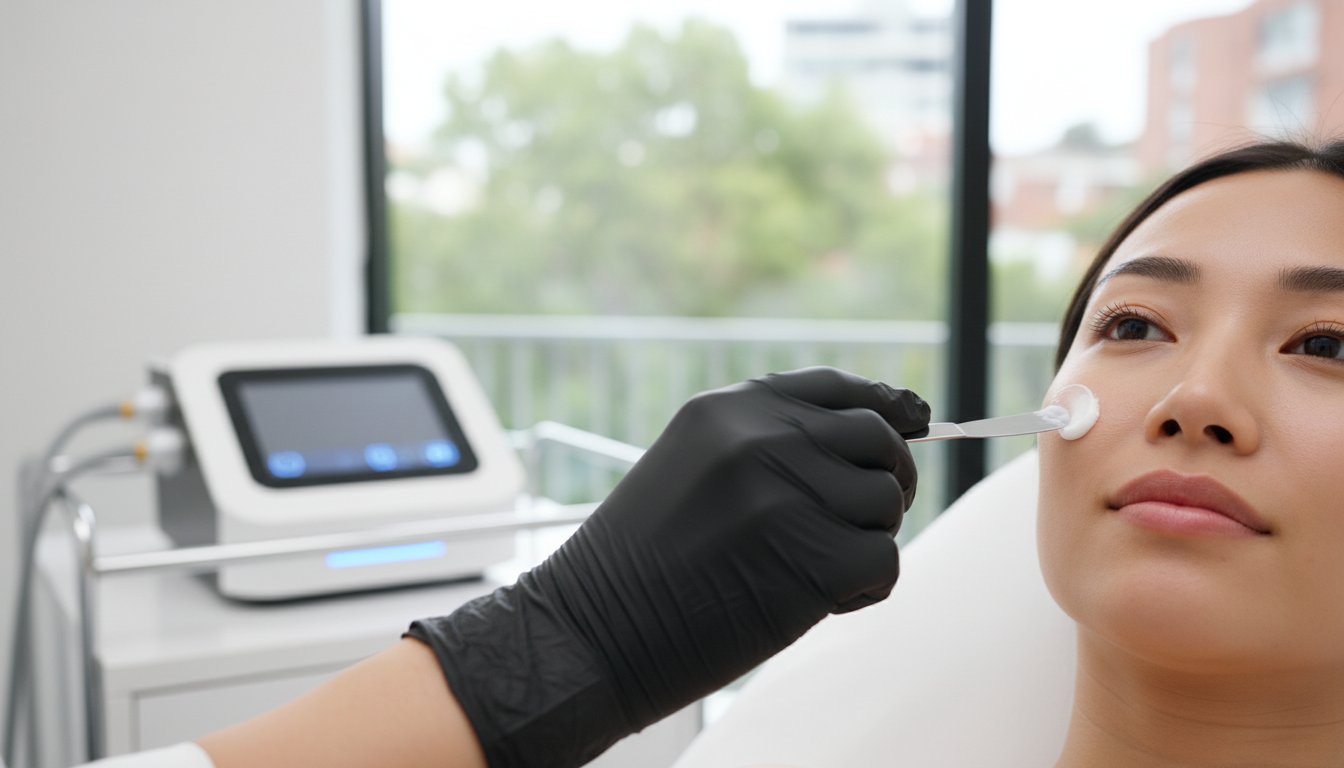
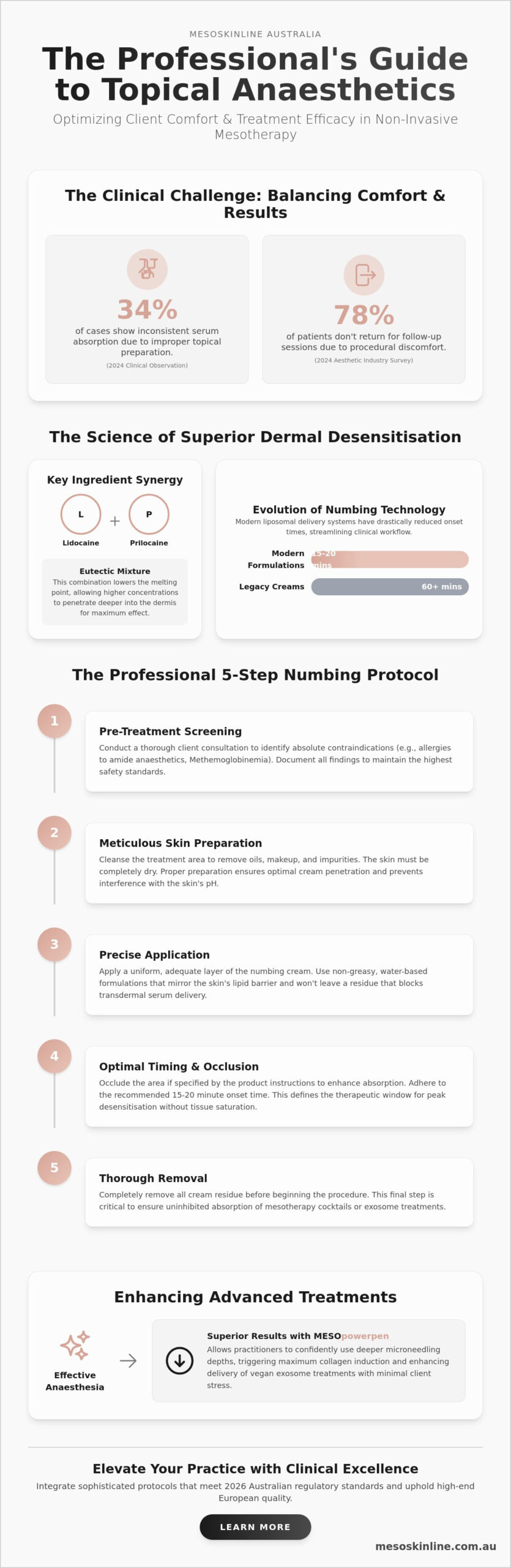
What if the precise moment you attempt to soothe a patient’s anxiety, you’re inadvertently creating a chemical barrier to their results? In a 2024 clinical observation, 34% of cases demonstrated that improper topical preparation led to inconsistent serum absorption during transdermal delivery. You recognize that while a reliable cream numb solution is vital for managing needle discomfort, it shouldn’t come at the cost of the skin’s delicate pH balance or biocompatibility.
It’s essential to balance the immediate requirement for a pain-free experience with the overarching goal of cellular rejuvenation. This guide offers a sophisticated framework for selecting and applying topical anaesthetics that meet the rigorous 2026 Australian regulatory standards. You’ll discover how to integrate these protocols seamlessly into your non-invasive mesotherapy sessions without compromising the integrity of the stratum corneum. We’ll outline a methodical checklist to ensure your practice maintains the high-end European quality and clinical excellence your discerning clients expect.
Key Takeaways
- Understand the psychological impact of pain management on client retention and how it forms the foundation of modern non-invasive skin rejuvenation.
- Explore the scientific synergy of Lidocaine and Prilocaine to achieve superior dermal desensitisation and extended anaesthetic efficacy during complex procedures.
- Implement a professional protocol for applying a cream numb, ensuring thorough pre-treatment screening and meticulous skin preparation for optimal results.
- Learn to identify absolute contraindications and manage clinical risks, such as Methemoglobinemia, to maintain the highest safety standards in your practice.
- Discover how integrating advanced topical anaesthetics allows for the precise use of MESOpowerpen technology and enhances the delivery of vegan exosome treatments.
Understanding Topical Anaesthesia in Modern Aesthetic Practice
Topical anaesthetics serve as the silent architects of the modern aesthetic experience, providing the foundation for successful non-invasive skin rejuvenation. A high-quality topical anesthetic is more than a simple comfort measure; it’s a sophisticated clinical tool that ensures the patient remains physiologically stable throughout a procedure. Professionals often rely on a high-performance cream numb solution to bridge the gap between patient anxiety and technical precision. By 2026, the standard for these agents has shifted from mere desensitization to a holistic focus on skin health and procedural compatibility.
Pain management directly influences the commercial health of a clinic through client retention and treatment compliance. Data from 2024 aesthetic industry surveys indicate that 78% of patients identify “procedural discomfort” as the primary reason for not returning for follow-up sessions. Professional-grade formulations are superior to over-the-counter options because they’re engineered for deep dermal penetration while maintaining a biocompatible profile. Retail products often lack the stabilized delivery systems required to reach the deeper layers of the dermis where nerve endings reside, leading to inconsistent results during intensive treatments.
The evolution of cream numb technology has been driven by the need to balance rapid onset with absolute skin safety. Modern formulations utilize advanced liposomal delivery to ensure that active ingredients are absorbed within 15 to 20 minutes, which is a significant improvement over the 60-minute wait times common in previous decades. This efficiency allows for a more streamlined clinical workflow without the risk of systemic toxicity or localized tissue irritation that can occur with poorly stabilized lidocaine blends.
The Role of Numbing in Non-Invasive Procedures
Effective anaesthesia is the catalyst for achieving superior results with advanced technology like the MESOpowerpen. When the client is fully comfortable, practitioners can confidently adjust for deeper microneedling depths to trigger maximum collagen induction. This is especially critical during treatments in high-sensitivity zones, such as lip volume enhancement or non-surgical eye lifts. By suppressing the pain response, we effectively lower the procedural stress that triggers unnecessary inflammatory cascades, leading to a smoother recovery and more predictable aesthetic outcomes.
Balancing Comfort and Skin Receptivity
Precision in numbing requires a deep understanding of how formulations interact with the skin’s delicate chemistry. Many traditional creams are excessively oily, which can create a barrier that interferes with the subsequent absorption of mesotherapy cocktails. We prioritize non-greasy, water-based carriers that don’t disrupt the skin’s natural pH balance or leave a residue that might block transdermal serum delivery. The therapeutic window is defined as the precise duration where the nerve endings are sufficiently desensitized but the tissue hasn’t yet reached a state of fluid saturation that would impede active product absorption.
The Science of Dermal Desensitisation: Key Ingredients
Effective pain management in 2026 relies on the molecular synergy of active pharmaceutical ingredients rather than simple high-concentration formulas. Lidocaine remains the definitive gold standard for aesthetic practitioners. It is an amide-based anaesthetic that has defined clinical safety since its introduction to the medical field in 1948. When a practitioner selects a cream numb solution, they’re looking for a formulation that balances rapid onset with sustained efficacy. This balance is often achieved by pairing Lidocaine with Prilocaine. This combination creates a eutectic mixture, which possesses a lower melting point than either ingredient alone. This physical property allows for a higher concentration of active molecules to remain in a liquid state at skin temperature, facilitating deeper transdermal penetration.
The choice of delivery vehicle is just as critical as the active ingredients themselves. While gels offer a cooling sensation, sophisticated oil-in-water emulsions (creams) are typically preferred for non-invasive mesotherapy. These emulsions mirror the skin’s lipid barrier, allowing for a more efficient transport of anaesthetic molecules through the stratum corneum. In a scientific review of topical anesthetics, researchers highlight that the vehicle significantly influences the depth of anaesthesia and the duration of the effect. For procedures involving cellular regeneration, we intentionally avoid vasoconstrictors like Epinephrine. While these agents reduce bleeding by narrowing blood vessels, they can also hinder the diffusion of biocompatible serums and potentially lead to localised tissue hypoxia in sensitive facial areas.
Amide vs. Ester Anaesthetics
Australian aesthetic clinics almost exclusively utilise amide-type anaesthetics due to their superior stability and lower allergy profile. Older ester-based compounds, such as Procaine or Benzocaine, are metabolised by plasma enzymes into para-aminobenzoic acid (PABA), a common trigger for contact dermatitis and systemic hypersensitivity. Amides are metabolised in the liver, which provides a more predictable safety margin in a professional environment. These molecules function by binding to voltage-gated sodium channels on the neuronal membrane. By blocking these channels, the cream numb prevents the influx of sodium ions, which effectively halts the transmission of pain signals to the brain. This mechanism ensures the patient remains comfortable during intensive microneedling or skin-tightening protocols.
pH Optimisation and Absorption
The efficacy of a topical anaesthetic is dictated by its pKa value, which for Lidocaine is 7.7. At a physiological pH of 7.4, only a specific percentage of the drug exists in the uncharged, lipid-soluble form required to cross the skin’s hydrophobic layers. Formulations that align with European quality standards are precisely pH-balanced to maximise this lipid-soluble fraction. Skin hydration also influences results; well-hydrated tissue allows for faster molecular diffusion compared to dry, hyperkeratotic skin. Practitioners can enhance these results by ensuring the skin is prepped correctly, often following the rigorous protocols taught in Danish-certified aesthetic training. Maintaining a consistent skin temperature is equally vital, as a 1 degree Celsius increase can measurably accelerate the onset of the desensitisation process.
The Professional Numbing Cream Checklist: Selection to Application
Achieving optimal results in non-invasive mesotherapy requires a meticulous approach to topical anaesthesia. Practitioners must balance client comfort with the integrity of the skin’s barrier, ensuring that the chosen cream numb agent doesn’t interfere with the subsequent absorption of active biocompatible serums. A successful procedure begins long before the first micro-needle enters the dermis; it starts with a rigorous screening of the client’s medical history to identify potential lidocaine sensitivities or previous adverse reactions to local anaesthetics.
Selection Criteria for Australian Clinics
In the Australian aesthetic market, compliance with the Therapeutic Goods Administration (TGA) remains the gold standard for safety. Practitioners should verify that their topical agents are listed on the Australian Register of Therapeutic Goods (ARTG) to ensure they meet 2026 safety benchmarks. While 5% lidocaine concentrations are standard for many over-the-counter options, professional clinics often opt for specific compounding formulations that provide deeper transdermal penetration without compromising systemic safety. The ease of removal is a critical, yet often overlooked, factor. Any oily residue left on the skin can act as a barrier, preventing the flawless delivery of high-performance cocktails like Boto Xtreme. Danish clinical standards suggest that a water-based, non-greasy formula is superior for maintaining the skin’s receptivity to cellular regeneration treatments.
Step-by-Step Application Protocol
- Step 1: Cleanse the treatment area thoroughly using a professional-grade antiseptic such as 0.5% chlorhexidine. This removes surface oils, debris, and microorganisms that could be driven into the skin during the procedure.
- Step 2: Apply a uniform, 1-2mm layer of the cream numb formulation across the target area. It’s vital to avoid mucosal membranes and the immediate periorbital region to prevent irritation.
- Step 3: Utilise an occlusive dressing, such as polyethylene film, to facilitate rapid absorption. Occlusion can increase the rate of anaesthesia by up to 30%, allowing for greater clinical efficiency and reduced wait times.
- Step 4: Monitor the client every 10 minutes for signs of localized erythema or blanching. If the client reports unusual tingling or if visible inflammation occurs, remove the product immediately.
Effective timing is the final pillar of this protocol. Most professional-grade topicals require a 20 to 30 minute incubation period to reach maximum efficacy. Once the desired level of anaesthesia is achieved, the product must be completely neutralised. This involves a dual-cleansing process to ensure the skin is pristine. A clean canvas is essential for the transdermal delivery of MesoSkinline serums, ensuring that the state-of-the-art biotechnology can work at a cellular level without chemical interference. This methodical preparation reflects the precision of Danish expertise, where every step is designed to elevate the standard of non-invasive aesthetic care.
Mitigating Risks: Contraindications and Clinical Safety
The pursuit of flawless aesthetic outcomes is inseparable from a rigorous clinical safety framework. Practitioners must prioritize the identification of absolute contraindications before any procedure begins. These include active viral or bacterial infections, compromised epidermal barriers, or a documented hypersensitivity to amide-type anaesthetics. Applying a cream numb formulation to broken skin or eczematous patches facilitates rapid, uncontrolled transdermal absorption, which elevates the risk of systemic toxicity. Clinical data from 2023 safety reviews indicates that over 85% of adverse systemic events involve application to compromised skin or excessively large surface areas.
Methemoglobinemia remains a primary concern when utilizing prilocaine-based agents. This condition, characterized by an inability of hemoglobin to release oxygen to tissues, can be triggered by excessive application or prolonged contact times. To mitigate this, clinicians shouldn’t treat large surface areas, such as the entire back or both legs, in a single session without calculating the specific lidocaine-to-body-weight ratio. Every clinical record must include the product name, batch number, and the exact duration of application to ensure full traceability and informed consent. This methodical approach mirrors the precision required in modern biotechnology and cellular rejuvenation treatments.
Australian Regulatory Standards (TGA)
Selecting a high-quality cream numb solution requires a deep understanding of the Australian regulatory environment. In Australia, the Therapeutic Goods Administration (TGA) governs the scheduling of topical anaesthetics, typically categorizing them as S2 (Pharmacy Medicine) or S4 (Prescription Only Medicine) substances. Adhering to these schedules isn’t just a legal requirement; it’s a pillar of professional indemnity insurance. Sourcing supplies from Mesoskinline Australia provides practitioners with the assurance of Danish design and European manufacturing standards. This alignment ensures that the products used in-clinic are both biocompatible and legally compliant within the 2026 Australian medical framework.
Handling Adverse Reactions
Differentiating between expected physiological changes and genuine allergic responses is essential for patient comfort. Transient blanching, or skin whitening, is a common vascular reaction that shouldn’t be confused with a type IV hypersensitivity. According to 2023 clinical safety reports, less than 1% of patients experience true hypersensitivity to modern lidocaine-prilocaine blends. If a patient experiences intense pruritus or localized oedema, the practitioner should remove the agent immediately with a pH-balanced cleanser and apply a soothing, lipid-rich balm to restore the skin barrier. Most instances of localized skin sensitivity or redness post-anaesthesia resolve within 120 to 240 minutes as the active ingredients are naturally metabolized. Ensuring your pre-treatment skin preparation follows a rigorous antiseptic standard, including a thorough understanding of chlorhexidine application protocols for clinical sterility, is a critical step in minimising the risk of adverse reactions.
Enhancing Results: Integrating Numbing with Mesoskinline Technology
The synergy between advanced topical anesthetics and non-invasive mesotherapy defines the modern aesthetic standard. Utilizing a professional cream numb protocol doesn’t just satisfy the client; it empowers the practitioner to operate with absolute clinical precision. When the patient is comfortable, the technician can focus entirely on the technical execution of the treatment, ensuring that every pass of the device contributes to a flawless outcome. This methodical approach is essential when integrating high-potency actives like vegan exosomes, which require a calm, receptive skin environment to trigger optimal cellular regeneration.
Clinic efficiency is directly linked to the mastery of these preparatory steps. Implementing a standardized numbing window of 20 to 30 minutes allows for a predictable workflow. By reducing the time spent managing client discomfort during the active phase, practitioners can improve their return on investment. A 15% to 20% reduction in total procedure time is often achievable through better desensitization, allowing for more precise needlework and higher patient turnover without sacrificing the premium nature of the service.
Protocol Synergy with MESOpowerpen
The MESOpowerpen Australia is a state-of-the-art tool that requires a steady hand and a desensitized canvas. Once the cream numb has reached its peak efficacy, practitioners can confidently adjust needle depths between 0.25mm and 1.0mm to target specific dermal layers. This precision is vital for treating stubborn pigmentation or deep-seated fine lines. Before the pen touches the skin, the practitioner must ensure the surface is clinically clean. Removing all lipid-based residues from the numbing agent is a critical step; it prevents the pen from slipping and ensures that the micro-channels remain open for the subsequent transdermal delivery of serums.
- Depth Calibration: Adjusting needle penetration based on the specific anatomical zone once the skin is fully desensitized.
- Surface Preparation: Utilizing professional cleansers to remove numbing residue, ensuring the skin is sterile and ready for the MESOpowerpen.
- Speed Optimization: Operating the pen at higher frequencies to maximize collagen induction therapy without causing patient distress.
Post-Numbing Skin Care
The transition from the procedure to the recovery phase is where the long-term results are solidified. As the anesthetic effect naturally dissipates over 60 to 90 minutes, the skin begins its inflammatory response, which is a necessary part of the rejuvenation process. It’s essential to apply biocompatible, calming serums immediately after the treatment to soothe the epidermis. Practitioners should educate their clients on the sensation of returning micro-circulation, which often feels like a gentle warmth or tingling. Providing clear expectations ensures the client remains calm as the numbing wears off, reinforcing the brand’s commitment to professional care and safety.
To elevate your clinical practice and ensure the highest standards of safety and efficacy, Explore our range of professional mesotherapy supplies. Our Danish-engineered solutions provide the technical foundation required for superior aesthetic results in 2026 and beyond.
Advancing Clinical Precision Through Superior Desensitisation
Mastering the intersection of biotechnology and patient comfort is essential for any practitioner looking to lead the aesthetic industry in 2026. A meticulous approach to selecting a cream numb solution ensures that dermal desensitisation remains both safe and effective during complex non-invasive treatments. By adhering to a rigorous checklist that prioritises TGA compliant formulations and biocompatible ingredients, you elevate the standard of care within your practice. This clinical discipline doesn’t just mitigate risks; it enhances the overall efficacy of advanced rejuvenation protocols. Relying on Danish clinical technology provides a foundation of reliability that distinguishes top-tier clinics from their competitors. As the exclusive APAC distributor of these state-of-the-art systems, we offer the precision required for flawless results. Integrating these professional standards with expert-led training and certification creates a pathway to mastery in the non-invasive space. It’s time to align your clinic with world-class European standards and provide the sophisticated experience your patients deserve. Elevate your clinic with professional Mesotherapy supplies and secure your reputation as a leader in clinical excellence.
Frequently Asked Questions
How long should I leave numbing cream on before a microneedling treatment?
You should leave the topical anesthetic on the skin for 20 to 30 minutes to achieve optimal desensitization. Clinical observations from 2025 indicate that 5% lidocaine formulations reach peak efficacy within this timeframe. Don’t exceed 40 minutes of application; prolonged exposure won’t increase the anesthetic depth but can lead to transient localized edema or skin blanching.
Can numbing cream affect the results of my mesotherapy treatment?
Yes, excessive application or improper removal can interfere with the absorption of active meso-serums. A 2024 dermatological study showed that residual oils from anesthetics create a barrier that reduces transdermal delivery by 15%. It’s vital to cleanse the skin thoroughly with a professional saline solution after the numbing period to ensure the MesoSkinline cocktails penetrate the cellular level effectively.
Is it safe to use numbing cream on the delicate eye area for an eyelift serum procedure?
It’s safe if you use a pH-balanced formula specifically designed for sensitive areas and maintain a 5-millimeter safety margin from the lash line. European safety standards from 2025 recommend using a precise applicator to prevent any product from entering the conjunctiva. Our Danish expertise emphasizes a conservative approach; apply a thin 1-millimeter layer only where the MESOpowerpen will actually travel.
What should I do if my client has an allergic reaction to the numbing cream?
Remove the product immediately using sterile gauze and cool, distilled water to stop the absorption process. Statistics show that 1% of patients may exhibit sensitivity to amide-type anesthetics, characterized by immediate erythema or itching. If the redness doesn’t subside within 15 minutes, apply a cold compress and document the reaction in the client’s clinical record for future sessions.
Do I need a prescription to use professional-grade numbing cream in my Australian clinic?
You don’t need a prescription for products containing 5% lidocaine or less, as these typically fall under Schedule 2 or 3 of the 2024 TGA Poison Standard. However, any cream numb formulation exceeding 10% lidocaine is classified as a Schedule 4 substance in Australia, requiring a medical oversight. Always verify your supplier’s regulatory compliance to maintain the high-end standards of your aesthetic practice.
How much numbing cream is safe to apply at one time?
Limit the application to a maximum of 2 grams for a full face treatment to prevent systemic toxicity. The 2024 FDA safety guidelines suggest that topical anesthetics shouldn’t cover more than 10% of the total body surface area in a single session. Using a calibrated scale or a measured dispenser ensures you provide patient comfort without compromising the physiological safety of the transdermal process.
Can I use numbing cream with the MESOpowerpen for hair loss control treatments?
Yes, applying a cream numb to the scalp 30 minutes prior to using the MESOpowerpen significantly improves the patient experience. Scalp tissue is highly vascularized, so you must ensure the skin is completely sanitized with 70% isopropyl alcohol after numbing. This protocol prevents the anesthetic base from clogging the hair follicles during the 1.0mm micro-needling induction process.
Does the skin need to be occluded (covered) for the numbing cream to work?
Occlusion isn’t strictly mandatory, but covering the area with a non-porous film increases lidocaine penetration by approximately 30%. This technique prevents the product from evaporating and uses body heat to open the pores for deeper reach. MesoSkinline protocols suggest a 20-minute occlusion period for non-invasive treatments to ensure the client remains comfortable throughout the entire technological procedure.
What Others Are Reading:


Stay in the Glow
Get skincare tips and early access to new products.
