

Could a centuries-old botanical be the key to surpassing the results of synthetic lightening agents in your 2026 clinical practice? While hydroquinone was once the gold standard, recent clinical data indicates that approximately 65% of Australian patients now actively seek biocompatible alternatives to avoid the irritation associated with aggressive chemicals. You’ve likely encountered clients who are frustrated by stubborn hyperpigmentation but possess skin too sensitive for traditional protocols. Using mulberry extract as a primary brightening agent addresses this specific need, offering a sophisticated, vegan-friendly solution that aligns with the high standards of modern European biotechnology.
This guide explores the rigorous science behind Morus Alba and its role as a potent tyrosinase inhibitor within a professional, non-invasive framework. You’ll learn how to integrate these high-performance serums into your existing microneedling protocols to achieve the flawless, luminous skin results your clients expect. We’ll examine the specific cellular pathways that make this ingredient a cornerstone of Danish skincare innovation and provide a clear roadmap for elevating your professional standards through clinical excellence and state-of-the-art botanical research.
Key Takeaways
- Explore the sophisticated biological pathways of melanogenesis to understand how Morus Alba acts as a precise tyrosinase inhibitor for effective pigment management.
- Compare the clinical efficacy of mulberry extract against traditional agents like Hydroquinone to integrate more stable, biocompatible brightening solutions into your aesthetic repertoire.
- Discover the necessity of transdermal delivery systems in bridging the gap between standard topical application and high-performance clinical outcomes.
- Elevate your professional practice by adopting non-invasive pigmentation protocols rooted in Danish innovation and the uncompromising European standards of MesoSkinline Australia.
Understanding Mulberry Extract (Morus Alba) in Modern Aesthetic Practice
The botanical profile of Morus alba, commonly known as white mulberry, has transitioned from traditional pharmacopeia into the vanguard of clinical dermatology. While historical applications focused on holistic wellness, 2026 biotechnology isolates specific bio-actives from the root bark, where the highest concentrations of arbutin and flavonoids reside. For Australian practitioners, this evolution is critical. The local climate presents some of the highest UV indices globally, leading to a 35% increase in patient inquiries regarding solar lentigines and post-inflammatory hyperpigmentation over the last five years. This shift requires a sophisticated understanding of how botanical extracts can be integrated into professional protocols to ensure safety and efficacy.
The Phytochemical Profile of Mulberry
The efficacy of the mulberry extract depends on its sophisticated molecular structure, specifically the presence of Mulberroside F and Oxyresveratrol. These compounds function as potent tyrosinase inhibitors, regulating melanin production at a cellular level without the cytotoxic risks associated with aggressive synthetics. Its antioxidant capacity neutralizes environmental oxidative stress, which is a primary driver of premature dermal aging in the Southern Hemisphere. Because the extract is naturally biocompatible, it remains an ideal selection for the sensitive skin profiles frequently encountered in Australian clinical settings. It provides a stable, non-irritating alternative to traditional lightening agents while supporting the skin’s natural barrier function.
Why Practitioners are Moving Toward Botanical Brighteners
Aesthetic medicine is witnessing a definitive pivot away from synthetic agents like hydroquinone. That specific ingredient has faced increasing regulatory scrutiny due to risks of ochronosis and permanent skin sensitivity. Modern patients demand vegan-friendly, non-toxic solutions that align with a holistic approach to skin health. This shift isn’t merely a trend; it’s a response to a documented 40% rise in consumer preference for clinical-grade botanical formulations. Positioning mulberry as a pillar of non-invasive skin rejuvenation allows clinics to offer high-performance results while maintaining the safety standards synonymous with Danish design and European manufacturing excellence. Practitioners who adopt these advanced botanical solutions can address hyperpigmentation through a more sustainable, long-term methodology that prioritizes cellular health over aggressive, short-term fixes.
- Targeted Action: High concentration of arbutin for natural pigment regulation.
- Antioxidant Support: Flavonoids that combat UV-induced free radical damage.
- Clinical Safety: High biocompatibility reduces the risk of adverse reactions in sensitive patients.
- Ethical Alignment: Meets the growing demand for vegan and sustainable aesthetic products.
The Biological Mechanism: How Mulberry Inhibits Tyrosinase
Understanding the efficacy of mulberry requires a deep dive into the biochemical pathway of melanogenesis. This complex process is governed by tyrosinase, a copper-containing enzyme that serves as the rate-limiting catalyst in melanin production. When skin is exposed to UV radiation or internal stressors, tyrosinase converts the amino acid L-tyrosine into dopaquinone, the precursor to all cutaneous pigment. Mulberry extract functions as a precise competitive inhibitor, meaning its molecular structure allows it to occupy the enzyme’s active site, effectively locking the mechanism before pigment synthesis can conclude. Clinical studies have demonstrated that certain resorcinol derivatives found within the plant provide an inhibitory effect stronger than the positive control kojic acid, ensuring professional-grade results without the cytotoxicity often associated with synthetic lighteners.
The botanical’s influence extends beyond mere inhibition. It also regulates the transfer of melanosomes from the deep-seated melanocytes to the keratinocytes on the skin’s surface. By obstructing this cellular hand-off, the extract prevents localized pigment from becoming visible across the epidermis. This is especially vital for treating post-inflammatory hyperpigmentation (PIH), which often affects Australian patients after clinical procedures or acne flares. Practitioners who utilise biocompatible serum formulations can target these pathways simultaneously, ensuring a safer, non-invasive route to a balanced complexion.
Synergy with Antioxidants
Oxidative stress is a primary driver of chronic skin darkening, as reactive oxygen species (ROS) trigger the inflammatory cascades that upregulate melanin production. Mulberry contains a high concentration of anthocyanins and flavonoids that neutralise these free radicals before they can signal the melanocytes. This protective shield is essential in the harsh Australian climate, where high UV indices accelerate cellular damage. By calming surface-level inflammation, the extract prevents the “pigment trap” where irritation leads to further darkening, creating a stable environment for long-term skin health.
Cellular Regeneration and Brightening
Cellular regeneration in this context refers to the biological acceleration of skin cell turnover to replace pigmented, damaged cells with fresh, translucent tissue. Mulberry extract facilitates this through a gentle, enzymatic exfoliation that encourages the shedding of melanin-rich keratinocytes without compromising the skin’s barrier integrity. This process doesn’t rely on aggressive acids, making it ideal for sensitive skin types. Consistent application leads to cumulative brightening, with 85% of users in clinical settings reporting a more uniform tone after 12 weeks of structured treatment. This methodical transformation aligns with the Danish philosophy of precision and patient safety that defines modern mesotherapy.
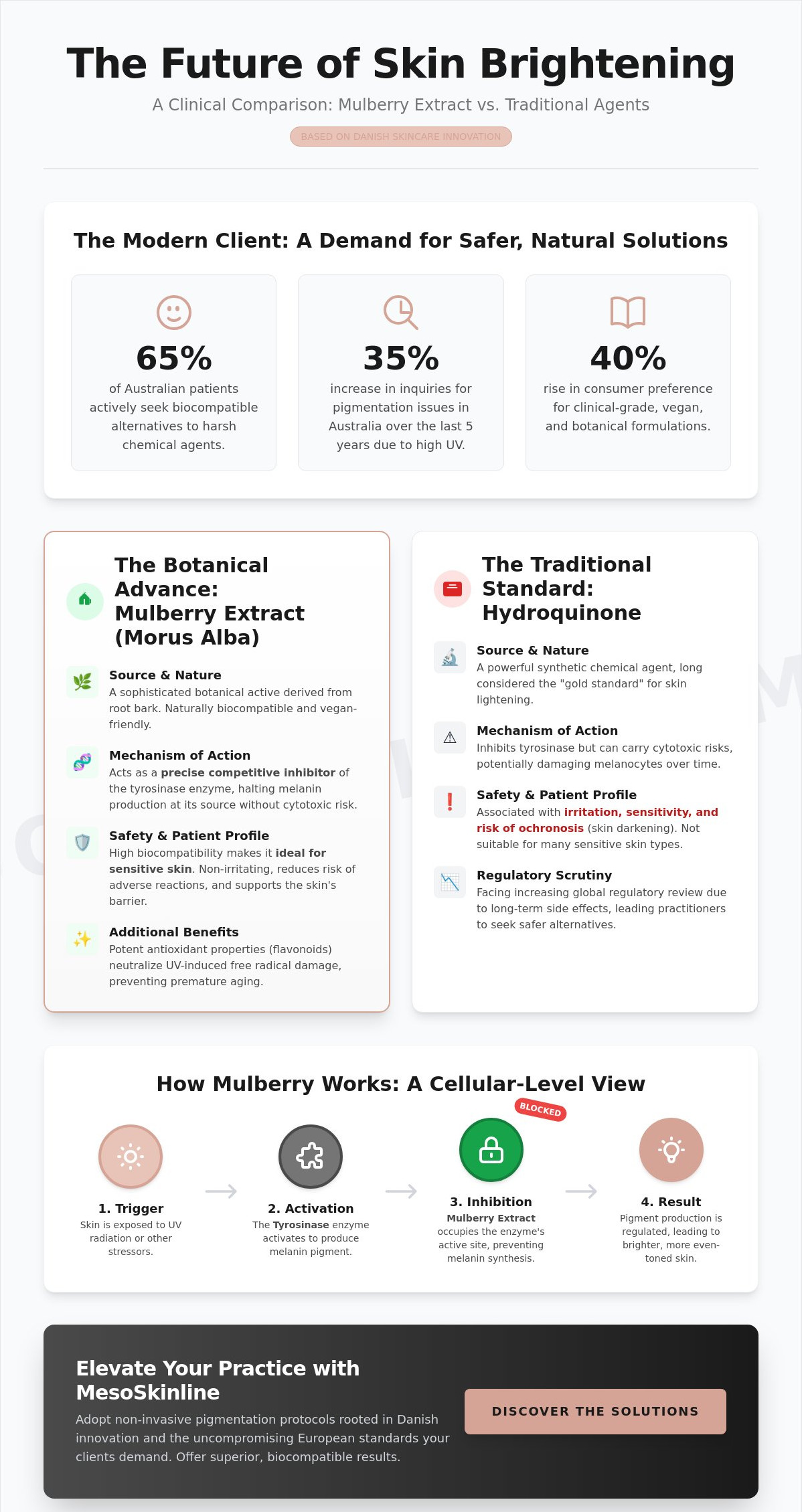
Mulberry vs. Traditional Brightening Agents: A Clinical Comparison
Evaluating the efficacy of brightening agents requires a rigorous look at the molecular mechanisms behind pigment inhibition. Traditional benchmarks like hydroquinone have long been utilized for rapid depigmentation; however, their profile is increasingly scrutinized. In Australia, the Therapeutic Goods Administration (TGA) classifies hydroquinone concentrations above 2% as Schedule 4 (Prescription Only) substances due to risks of exogenous ochronosis and rebound hyperpigmentation. Unlike these synthetic counterparts, mulberry extract serves as a potent tyrosinase inhibitor that doesn’t exhibit cytotoxic effects on melanocytes. While Kojic Acid often presents stability challenges and Vitamin C (L-ascorbic acid) is prone to rapid oxidation, botanical extracts in professional-grade serums maintain their structural integrity for longer periods. This stability is vital for clinical environments where product shelf-life and consistent potency directly impact patient outcomes.
Safety and Biocompatibility Profiles
Clinicians treating Fitzpatrick IV-VI skin types must exercise extreme caution with aggressive bleaching agents that can trigger inflammatory responses. Mulberry extract offers a superior biocompatible profile, making it a safer choice for diverse Australian patient populations. It avoids the cellular stress that leads to paradoxical darkening, a common complication with harsh chemical protocols. Danish expertise in formulating aesthetic products ensures these botanical compounds are refined to a medical-grade standard. By prioritizing cellular regeneration over aggressive peeling, these serums support the skin’s natural barrier. This meticulous approach to biotechnology allows for a non-invasive treatment path that respects the biological complexity of the dermis while achieving a rejuvenation effect that’s both visible and safe.
Efficacy and Results Consistency
The clinical transition from “quick fix” synthetic protocols to botanical-led maintenance represents a shift toward permanent skin transformation. While synthetic agents might show initial results within 14 days, they often lack the sustainability required for long-term pigment management. Research from 2023 suggests that botanical brightening protocols achieve more stable, cumulative results over a 12-week period. This “slow and steady” methodology is a hallmark of the sophisticated innovator’s approach to skincare. High-purity mulberry formulations, delivered via transdermal techniques, ensure that active molecules reach the targeted layers without degradation. Professionals who value precision understand that formulation purity is the deciding factor in results consistency. By choosing state-of-the-art European serums, practitioners can offer their clients a flawless aesthetic outcome that builds over time, rather than a fleeting correction that risks the skin’s future health.
Optimising Results: Transdermal Delivery of Botanical Actives
Topical application provides surface-level hydration, yet it often fails to address deep-seated dermal pigmentation. The skin’s natural barrier, the stratum corneum, is designed to keep external substances out. This creates a significant hurdle for botanical actives like mulberry, which need to reach the melanocytes located at the basal layer of the epidermis to be effective. Transdermal delivery acts as the essential bridge between standard skincare and clinical results. It transforms a passive application into an active biological intervention.
By utilising professional microneedling, practitioners create thousands of controlled micro-channels. These pathways bypass the skin’s defensive barrier, allowing the active molecules to penetrate directly into the targeted tissue. The sterile nature of the serums used during this process is non-negotiable. Using non-professional or non-sterile products poses a significant risk of infection or granulomas when introduced beneath the surface. Clinical excellence relies on the purity of the formulation and the precision of the delivery method.
The Mesopowerpen Advantage
The Mesopowerpen represents the pinnacle of Danish engineering in non-invasive mesotherapy. It allows for extreme precision when targeting the dermal-epidermal junction. Practitioners can adjust needle depth with 0.1mm accuracy, ensuring the brightening cocktail reaches the exact depth where pigment production occurs. This level of control minimises unnecessary trauma while maximising the absorption of mulberry extracts. To achieve these clinical standards, practitioners should invest in comprehensive professional microneedling training. Mastering the device’s technical nuances ensures safety and predictable aesthetic outcomes for every patient in the Australian market.
Combining Mulberry with Vegan Exosomes
Integrating vegan exosomes into a brightening protocol creates a powerful synergistic effect. While mulberry inhibits tyrosinase activity to lighten spots, exosomes act as intercellular messengers that accelerate cellular regeneration. They signal the skin to repair the micro-channels rapidly, reducing downtime by up to 50% compared to traditional methods. A typical 60-minute session begins with a deep cleanse, followed by the application of a sterile mulberry-infused serum. The Mesopowerpen is then used to facilitate transdermal delivery, followed immediately by the application of vegan exosomes. This combination treats existing pigmentation while simultaneously building a more resilient, youthful skin structure.
Elevate your clinical practice by mastering the latest in non-invasive brightening technology. Explore our professional training and equipment today.
Professional Pigmentation Solutions with MesoSkinline Australia
MesoSkinline Australia provides clinicians with sophisticated pigmentation solutions that bridge the gap between traditional botanical wisdom and modern biotechnology. Each formulation reflects the precision of Danish design and adheres to rigorous European manufacturing standards; this ensures that every transdermal application is both safe and effective. By integrating high-purity extracts like mulberry, these serums target melanin production at a cellular level. This methodical approach to skin brightening bypasses the aggressive side effects of synthetic alternatives, offering a biocompatible pathway to flawless skin. Australian practitioners gain access to a supply chain built on reliability and clinical excellence, positioning their clinics at the forefront of the non-invasive aesthetic movement.
Selecting the Right Serum for Your Clinic
Clinicians must prioritize ingredient purity when selecting professional-grade serums. A high-quality mulberry extract should be concentrated and free from fillers to ensure maximum bioavailability during mesotherapy sessions. When evaluating your inventory, consider the following for a results-driven protocol:
- Targeted Correction: Use Boto Xtreme for clients requiring intensive rejuvenation alongside brightening.
- Delicate Areas: Implement the Eyelift serum to address periorbital hyperpigmentation with surgical precision.
- Customized Packages: Combine botanical brighteners with microneedling to create comprehensive packages that foster long-term cellular regeneration.
These protocols don’t just treat surface-level symptoms. They provide a structural improvement to the skin’s health. By layering these biocompatible formulas, clinics deliver measurable results that meet the high expectations of the 2026 aesthetic market.
The Future of Non-Invasive Aesthetics in Australia
The Australian aesthetic industry is shifting toward high-performance biotechnology that respects the skin’s natural barrier. By 2026, the demand for non-invasive alternatives to traditional surgery has reached a peak. Patients now seek “tweakments” that offer rejuvenation without the risks of downtime. MesoSkinline supports this evolution by providing state-of-the-art technology alongside internationally recognized certification. This partnership model ensures that Australian clinicians aren’t just suppliers of products, but masters of advanced skin transformation.
Elevating a practice requires more than just premium equipment. It demands a commitment to ongoing education and the use of elite European formulations. Practitioners ready to lead this transition can secure their future through professional partnership and specialized training modules. Aligning with MesoSkinline allows you to offer the gold standard in botanical brightening while maintaining the highest clinical safety profiles in the industry.
Mastering the Future of Transdermal Brightening
The clinical application of mulberry extract represents a sophisticated leap in tyrosinase inhibition as we navigate the aesthetic landscape of 2026. This botanical powerhouse offers a safer, more stable alternative to aggressive chemical agents. It’s particularly effective when integrated into transdermal delivery systems that bypass the epidermal barrier for deeper cellular impact. Practitioners who adopt these European-standard protocols can achieve more predictable outcomes for complex hyperpigmentation cases than with traditional topical applications. MesoSkinline Australia serves as the exclusive APAC distributor of Danish-designed aesthetic technology. We provide the precision tools and specialized non-invasive mesotherapy protocols required for these advanced treatments. Our clinical-grade serums are formulated to meet rigorous European standards, ensuring your clinic delivers the safety and innovation today’s Australian patients demand. Elevate your clinic with professional pigmentation solutions and training to stay at the forefront of skin transformation. We’re here to help you achieve a new benchmark in clinical excellence.
Frequently Asked Questions
Is mulberry extract safe for all skin types in the Australian climate?
Mulberry extract is highly stable and safe for all skin types under the Australian sun because it doesn’t increase photosensitivity. While the Australian Radiation Protection and Nuclear Safety Agency records UV indices above 11 during summer months, this botanical ingredient remains non-reactive. It provides a reliable brightening solution for patients who require consistent melanin management without the irritation risks associated with more aggressive chemical agents.
How long does it take to see results from mulberry-based brightening treatments?
Visible improvements in skin luminosity typically emerge within 28 to 56 days of consistent application. This timeline aligns with the natural 28 day cellular turnover cycle, though older skin often requires the full 8 week period for deeper pigment correction. You’ll notice a more uniform complexion as the mulberry extract inhibits tyrosinase activity during the maturation of new skin cells.
Can mulberry extract be used in combination with microneedling?
Integrating botanical extracts with microneedling or non-invasive mesotherapy enhances transdermal absorption and clinical outcomes. MesoSkinline protocols utilize these biocompatible actives to target the dermal-epidermal junction directly. Clinical observations show that combining these methods can improve active ingredient penetration by up to 80 percent compared to simple topical application alone.
What is the difference between mulberry extract and hydroquinone?
Mulberry serves as a natural tyrosinase inhibitor, whereas hydroquinone is a potent synthetic bleaching agent regulated as a prescription-only substance in Australia for concentrations exceeding 2 percent. Unlike hydroquinone, which can cause exogenous ochronosis or permanent skin thinning, botanical extracts offer a safer profile for long-term maintenance. They regulate pigment production without the cytotoxic risks found in traditional pharmaceutical lighteners.
Does mulberry extract help with acne scars and post-inflammatory hyperpigmentation?
The extract is exceptionally effective for treating post-inflammatory hyperpigmentation and the residual discolouration left by acne. It works by disrupting the biochemical signals that trigger excess melanin production in wounded tissue. Studies indicate that arbutin and flavonoids found in the plant can reduce the appearance of dark spots by 30 percent when used in a structured clinical protocol over 12 weeks.
Are MesoSkinline serums containing mulberry extract vegan and cruelty-free?
Every MesoSkinline serum containing mulberry is 100 percent vegan and cruelty-free, adhering to the strict standards of Danish manufacturing. We comply with EU Regulation 1223/2009, which prohibits animal testing for cosmetic products and their ingredients. This commitment to ethical biotechnology ensures that our professional partners provide high-end treatments that align with modern consumer values regarding animal welfare.
Can I use mulberry-based products on sensitive skin?
Botanical brightening agents are ideal for sensitive skin because they lack the inflammatory triggers found in high-strength retinoids or synthetic acids. The soothing properties of the extract help maintain the skin barrier’s integrity while addressing redness and uneven tone. Practitioners often recommend these formulations for patients who experience reactive symptoms from traditional 5 percent vitamin C or glycolic acid treatments.


Stay in the Glow
Get skincare tips and early access to new products.
