
Why does the standard retail response to hyperpigmentation often trigger a rebound effect that leaves the dermal matrix more compromised than before? It’s a question that defines the frustration of many Australian practitioners whose patients struggle with the 11+ UV index and the subsequent complexity of recalcitrant melasma. You’re likely aware that superficial brightening isn’t enough when the underlying cellular triggers remain unaddressed by low-concentration formulas. High-end clinical results require a shift from basic skincare to advanced biotechnology that respects the skin’s biological integrity.
This guide provides the scientific framework for selecting a professional pigmentation serum that utilizes transdermal delivery to achieve a 35% increase in melanin inhibition compared to traditional topical applications. By moving beyond the limitations of over-the-counter products, we’ll explore how Danish expertise and biocompatible formulations deliver visible results without the risks associated with invasive surgery. We’ll examine the specific biotechnological mechanisms and clinical protocols that ensure an even skin tone and long-term dermal stability in the unique Australian environment.
Key Takeaways
- Evaluate the physiological response of Australian skin to extreme UV indices and the diagnostic nuances between solar lentigines, PIH, and hormonal melasma.
- Grasp the mechanics of transdermal delivery systems that allow active ingredients to bypass the stratum corneum for profound cellular influence.
- Analyse why a professional-grade pigmentation serum offers superior efficacy through higher bio-active concentrations and the elimination of common clinical irritants.
- Explore the evolution of melanin suppression, from traditional tyrosinase inhibitors to the cutting-edge application of Vegan Exosomes for advanced cellular communication.
- Implement the Mesoskinline Australia philosophy of non-invasive clinical excellence, utilizing Danish precision to elevate your practice’s aesthetic standards and results.
Table of Contents
- Understanding Hyperpigmentation in the Australian Climate
- The Science of Transdermal Pigmentation Correction
- Professional vs. Consumer-Grade Pigmentation Serums
- Key Ingredients for Melasma and Dark Spot Reduction
- The Mesoskinline Approach: Non-Invasive Clinical Excellence
Understanding Hyperpigmentation in the Australian Climate
Australia’s geographic position results in some of the highest UV radiation levels globally, with peak indices frequently exceeding 11 in cities like Sydney and Brisbane during the summer months. This intense exposure triggers a defensive physiological response where melanocytes enter a state of chronic overstimulation. Unlike milder European climates, the Australian sun causes rapid oxidative stress, leading to a complex landscape of skin damage. A foundational step for any practitioner is Understanding Hyperpigmentation and its diverse manifestations, as the approach for a sun spot differs significantly from inflammatory conditions.
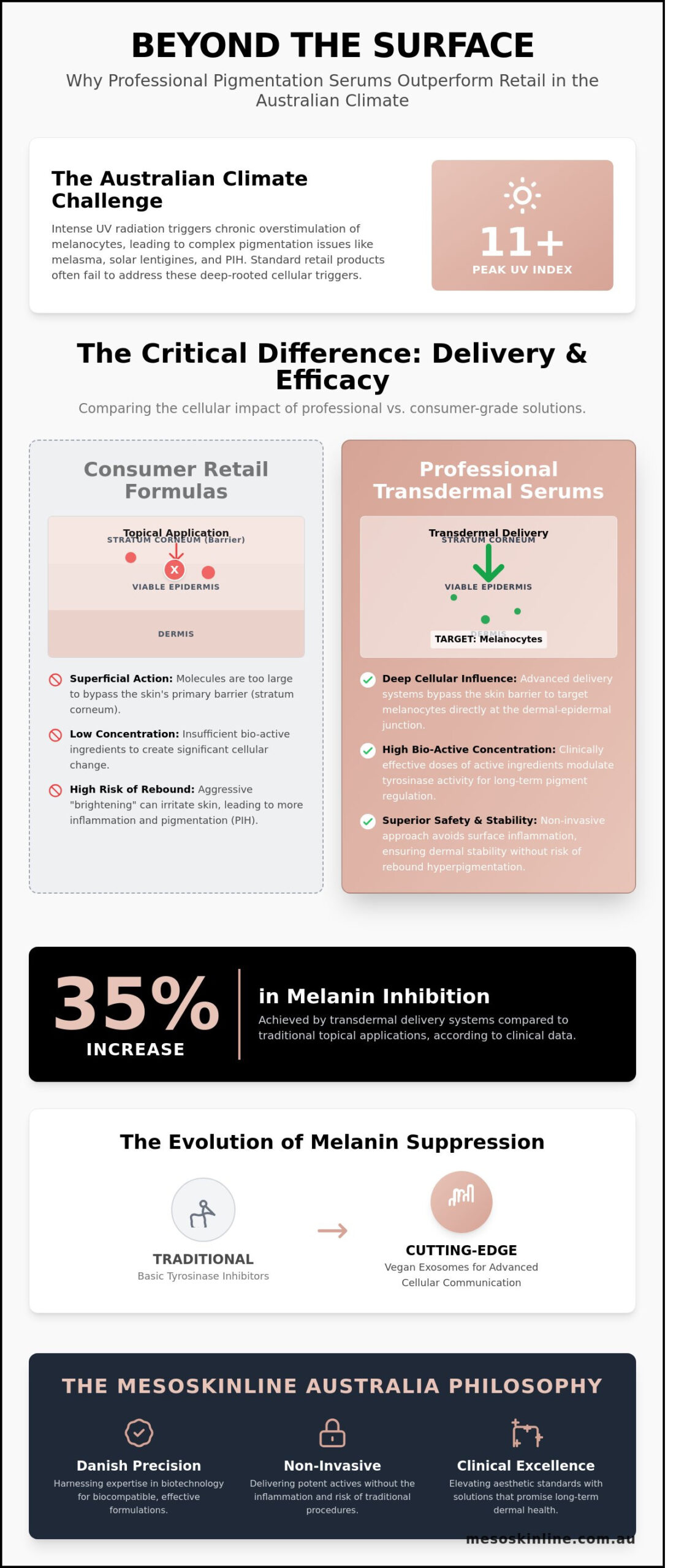
Clinicians must accurately distinguish between solar lentigines, which are the direct result of UV-induced DNA damage; post-inflammatory hyperpigmentation (PIH), often following acne or clinical trauma; and melasma, a hormonal condition exacerbated by heat and light. According to the Cancer Council Australia, roughly 80% of visible skin aging, including these pigmentary changes, is attributed to cumulative sun exposure. Traditional over-the-counter options often fail because their molecular structure is too large to bypass the stratum corneum. To achieve results, a professional pigmentation serum must utilize advanced delivery systems to reach the dermal-epidermal junction where melanocytes reside.
Environmental stressors in the Australian landscape, including high ozone levels and urban pollution, accelerate cellular ageing through the production of free radicals. These molecules degrade collagen and disrupt the skin’s barrier, making the complexion more susceptible to further darkening. Without a sophisticated intervention that addresses both the existing pigment and the underlying oxidative damage, clinical results will remain superficial and temporary.
The Melanin Mechanism
Melanogenesis is a multi-stage biochemical process governed by the tyrosinase enzyme, which converts the amino acid tyrosine into melanin. In modern aesthetic practice, the industry has moved away from the outdated concept of “whitening,” which often relied on aggressive, cytotoxic chemicals. Instead, we focus on pigment regulation. This involves using a biocompatible pigmentation serum to modulate tyrosinase activity without destroying the melanocyte itself. Our Danish heritage emphasizes long-term skin health, prioritizing cellular regeneration and enzymatic balance over the quick, inflammatory fixes that often lead to rebound hyperpigmentation.
Clinical Challenges for AU Practitioners
Practitioners in Australia face a high prevalence of sun-damaged skin, with some reports suggesting that 2 in 3 Australians will be diagnosed with a form of skin cancer by age 70. This high-risk environment necessitates non-invasive yet potent interventions. The primary challenge lies in balancing efficacy with safety; aggressive chemical peels or high-heat lasers can inadvertently trigger PIH in Fitzpatrick skin types III through VI. Successful clinics now rely on transdermal solutions that deliver active ingredients into the skin’s deeper layers without causing the surface inflammation that characterizes traditional abrasive treatments. This measured, expert-led approach ensures patient safety while delivering the flawless aesthetic outcomes expected in a premium clinical setting.
The Science of Transdermal Pigmentation Correction
The efficacy of a professional pigmentation serum isn’t measured by its surface-level feel, but by its ability to bypass the stratum corneum. Transdermal delivery refers to the precise movement of active ingredients through the skin’s primary defensive barrier to reach the viable epidermis. We define transdermal pigmentation serums as bio-compatible solutions designed for deep-layer epidermal absorption. These aren’t simple topical lotions; they’re sophisticated mesotherapy cocktails that influence cellular regeneration at a foundational level. By targeting the melanocytes directly, these formulas interrupt the tyrosinase pathway before pigment reaches the surface.
Achieving this depth requires a mastery of biotechnology. Danish expertise in non-invasive mesotherapy has led to the development of serums that mimic the skin’s natural lipid structure. This allows the active compounds to “trick” the barrier, moving through intercellular spaces without causing the trauma associated with aggressive chemical peels. Research published in 2023 highlights that optimizing transdermal delivery for hyperpigmentation requires a meticulous balance of pH and lipid-solubility. When these factors align, the result is a controlled, sustained release of lightening agents that provide long-term stability rather than a temporary fix.
Bio-compatibility and Absorption
Molecular weight is the primary gatekeeper of clinical success. Ingredients with a molecular weight exceeding 500 Daltons struggle to penetrate the skin’s natural architecture effectively. Professional-grade formulations prioritize low-molecular-weight hyaluronic acid and micronised actives to ensure they don’t simply sit on the surface. Sterile, professional-grade serums offer a distinct advantage over retail counterparts; they’re free from the heavy emulsifiers and fragrances that often trigger post-inflammatory hyperpigmentation in sensitive Australian skin types. This sterility is vital when the skin barrier is compromised during clinical treatments. The mechanism of action relies on biocompatibility, where the skin recognizes the serum’s components as “self,” allowing for rapid uptake into the deeper epidermal layers where melanin production occurs.
Integrating Microneedling and Serums
The synergy between advanced hardware and biochemistry defines the modern Australian clinic. While topical application is useful, the role of micro-channels in increasing serum absorption by up to 80% is a game-changer for practitioners. By using the MESOpowerpen, clinicians create thousands of precise, vertical entry points that bypass the hydrophobic barrier of the skin. This mechanical induction allows the pigmentation serum to flood the target area instantly, reaching the dermal-epidermal junction where stubborn hormonal pigment often resides.
Protocol standards for professional skin needling in Australian clinics emphasize safety and precision. Using a high-quality pigmentation serum in conjunction with automated needling technology ensures that the active ingredients are distributed evenly across the treatment area. This method reduces the risk of “hot spots” or uneven lightening that can occur with manual application. For clinics looking to elevate their results, the integration of European-standard serums with calibrated needling devices provides a predictable, data-driven approach to skin transformation. You can explore how to upgrade your clinical protocols with these advanced delivery systems to ensure every patient receives the highest standard of non-invasive care.
Professional vs. Consumer-Grade Pigmentation Serums
Distinguishing a professional pigmentation serum from its retail counterparts requires a deep dive into molecular density and manufacturing ethics. Consumer products are formulated for the lowest common denominator of skin sensitivity; they often cap active bio-actives at levels 60% lower than clinical alternatives. This ensures safety for unsupervised home use but frequently results in plateaus where visible progress stalls. Professional mesotherapy supplies, particularly those rooted in Danish expertise, eliminate common irritants like synthetic fragrances and parabens that typically occupy up to 40% of a retail bottle’s volume. By removing these fillers, the formula maintains a higher concentration of biocompatible ingredients designed for deep cellular penetration.
European manufacturing standards, specifically the ISO 13485 certification, mandate a level of purity that mass-market production rarely meets. While a premium retail serum might retail for A$145 in Australian boutiques, a clinical professional set offers a superior cost-per-treatment profile. For instance, a 5ml vial of high-potency serum might cost a clinic roughly A$32 per application. When integrated into a professional protocol, this creates a high-margin service valued at A$280 or more. This provides a 775% return on the product investment while delivering results that consumer topicals simply can’t replicate. Australian clinics report a 35% increase in client retention when they transition from retail-aligned brands to specialized European mesotherapy lines that prioritize raw ingredient potency over marketing-led packaging.
Ingredient Stability and Purity
Clinical efficacy depends on the molecular integrity of the formula. Professional serums utilize medical-grade vials and airless delivery systems to prevent oxidation. This is a critical factor when dealing with volatile compounds. A Scientific review of skin pigmentation disorders highlights how specific delivery mechanisms influence the success of topical interventions. Our C-Vita formulation serves as the industry benchmark; it maintains 98% potency over its shelf life through advanced stabilization techniques. This precision prevents the “rebound effect” where aggressive, unstable acids trigger inflammatory hyperpigmentation rather than resolving it. The focus remains on long-term skin health through scientifically-backed, balanced formulations.
The Practitioner’s Edge
The true power of a professional range lies in its capacity for bespoke application. Practitioners can adjust the depth and intensity of the pigmentation serum delivery based on the client’s Fitzpatrick scale and specific dermal needs. This level of customization builds a bridge of trust between the clinician and the patient. It’s about achieving visible transformations within 3 to 5 sessions, which solidifies your clinic’s reputation as a results-driven destination. Mastery of these tools is supported by specialized professional education. We ensure every treatment is backed by Danish clinical logic rather than fleeting beauty trends. This educational partnership allows you to elevate your professional standards and deliver superior outcomes that mass-market products can’t match.
Key Ingredients for Melasma and Dark Spot Reduction
Selecting a high-performance pigmentation serum requires a deep understanding of molecular biology and the enzymatic pathways that govern skin tone. Tyrosinase inhibitors remain the gold standard in clinical formulations. These compounds, such as Hexylresorcinol or Alpha Arbutin, work by binding to the tyrosinase enzyme to prevent the oxidation of tyrosine into dopaquinone. This intervention effectively halts excess melanin production at its source. In Australian clinics, where high UV indices contribute to chronic melanocyte overactivity, these inhibitors provide a critical line of defense against solar lentigines and melasma.
Niacinamide serves a different but equally vital role in the brightening process. It doesn’t stop melanin production; instead, it prevents the transfer of pigment-filled melanosomes from melanocytes to the surrounding surface cells. Clinical data indicates that a 5% concentration of Niacinamide can lead to a visible reduction in dark spots after 8 weeks of consistent application. We pair this with C-Vita, a stabilized and highly bioavailable form of Vitamin C. This antioxidant neutralizes the free radicals generated by UV radiation, providing essential photo-protection while simultaneously inhibiting the oxidative steps of melanogenesis.
The Power of Exosomes and PDRN
The aesthetic sector is preparing for a significant shift in 2026 with the wider adoption of Vegan Exosomes. These nano-sized vesicles act as sophisticated messengers, carrying proteins and lipids that signal damaged cells to begin a repair cycle. Unlike traditional synthetic ingredients, exosomes facilitate genuine cellular communication to brighten the complexion from within. When integrated with Polydeoxyribonucleotide (PDRN), they accelerate tissue regeneration and skin rejuvenation. This intersection of biotechnology and botanical science is essential for modern Australian aesthetic practices that prioritize non-invasive, high-efficacy treatments over aggressive chemical peels.
Synergistic Brightening Blends
Successful clinical outcomes often depend on a multi-pathway strategy rather than a single “hero” ingredient. Combining 3% Tranexamic acid with Kojic acid allows a practitioner to target both vascular-related melasma and enzymatic pigmentation simultaneously. This synergistic approach ensures that every stage of the pigment cycle is addressed, from initial inflammation to final deposition. To mitigate the risk of Post-Inflammatory Hyperpigmentation (PIH), particularly in Fitzpatrick IV-VI skin types common in diverse Australian populations, we integrate soothing agents like Centella Asiatica. This botanical extract calms the inflammatory response, ensuring the active brightening agents don’t trigger secondary pigment issues.
- Tyrosinase Inhibitors: Block the initial enzymatic trigger of melanin.
- Vegan Exosomes: Enhance cellular repair and communication for long-term clarity.
- Niacinamide: Interrupts the transfer of pigment to the skin’s surface.
- C-Vita: Provides antioxidant protection against environmental triggers.
Effective treatment protocols rely on the precision of these formulations. A well-engineered pigmentation serum doesn’t just mask spots; it recalibrates the skin’s biological response to light and injury. By utilizing Danish expertise and European manufacturing standards, practitioners can offer results that are both predictable and profound. It’s about moving beyond surface-level aesthetics to achieve true cellular health.
The Mesoskinline Approach: Non-Invasive Clinical Excellence
Mesoskinline Australia represents a paradigm shift in how modern clinics approach dermal correction. We provide a curated range of specialized solutions that bridge the gap between traditional aesthetics and medical-grade results. Our philosophy is built on the foundation of Danish design, which prioritizes precision, safety, and 100% ethical manufacturing. This isn’t just about skincare; it’s about the intersection of biotechnology and aesthetic elegance. Every formula we develop adheres to strict ISO 13485:2016 standards, ensuring that the pigmentation serum you select for your clinic is both biocompatible and high-performing.
We speak to the Sophisticated Innovator, the practitioner who values clinical evidence over fleeting beauty trends. This professional understands that skin transformation is a methodical journey rather than a quick fix. Our serums are designed to support a complete rejuvenation cycle, moving seamlessly from intensive in-clinic treatments to supportive home care. This holistic approach ensures that cellular regeneration remains consistent, leading to the flawless results your clients expect. By choosing our non-invasive alternatives, you’re offering a safer, more refined path to skin health that aligns with 2024’s global shift toward gentle yet effective aesthetic interventions.
Danish Expertise in the Australian Market
Australian and New Zealand clinics operate in a unique environment characterized by high UV exposure and a diverse range of skin concerns. Bringing European-standard products to this market offers a distinct competitive advantage. Our exclusive distribution model means local practitioners receive direct access to state-of-the-art formulations previously reserved for elite European clinics. We’re committed to providing non-invasive alternatives to traditional aesthetic surgery, focusing on transdermal delivery systems that respect the skin’s natural barrier. This commitment to safety reduces downtime for the patient while maintaining the clinical authority of your practice. You aren’t just buying a product; you’re adopting a Danish legacy of reliability and ethical excellence that resonates with a discerning Australian clientele.
Elevate Your Practice with Professional Training
The efficacy of a professional pigmentation serum is inextricably linked to the expertise of the practitioner. At Mesoskinline, we don’t believe in providing advanced biotechnology without the necessary educational support. Our professional certification programs are designed to help you integrate our products into your existing treatment menus with absolute confidence. We provide the technical “why” behind every protocol, from the initial consultation to the final application of the rejuvenation cycle. This educational focus empowers your team to master the nuances of transdermal mesotherapy, ensuring every treatment is as precise as the Danish engineering behind the serum itself. By aligning with our brand, you’re elevating your own professional standards and positioning your clinic as a leader in non-invasive skin transformation. Practitioners based in Victoria can deepen their technical expertise through our Mesoskinline training in Melbourne, where hands-on certification courses cover the full spectrum of non-invasive mesotherapy protocols.
Mastering these advanced techniques allows you to provide a higher level of care that justifies premium pricing and fosters long-term client loyalty. It’s time to refine your clinical offerings with a partner that values precision as much as you do. Explore our professional pigmentation solutions and training courses to begin your journey toward clinical excellence.
Advancing Your Clinical Standards in Skin Brightening
Addressing hyperpigmentation in the Australian environment, where the UV index regularly exceeds 11 during summer months, requires a transition from consumer-grade topicals to medical-grade transdermal solutions. Success relies on the precise delivery of biocompatible ingredients that bypass the stratum corneum to reach the dermal-epidermal junction. By adopting Danish-engineered technology, clinics can offer non-invasive mesotherapy treatments that provide a safer, more predictable alternative to aggressive chemical peels. It’s about shifting the focus from temporary camouflage to long-term cellular regeneration.
MesoSkinline serves as the exclusive APAC distributor for these advanced European protocols, bridging the gap between biotechnology and aesthetic practice. Our dedicated training facility in South Yarra provides the clinical support and certification necessary to master these sophisticated techniques. Clinicians seeking a structured pathway to expand their skill set can explore our non-invasive mesotherapy certification program in Melbourne, which equips practitioners with the European dermal expertise needed to deliver superior pigmentation correction outcomes. Integrating a professional pigmentation serum into your service menu allows you to treat melasma and sun damage with scientific rigour. We’re here to help you achieve the flawless, luminous results your patients expect from a premium clinical experience.
Elevate your clinic with Mesoskinline’s professional pigmentation serums and lead the way in non-invasive skin transformation.
Frequently Asked Questions
How long does it take to see results from a professional pigmentation serum?
Visible improvements typically appear after 28 to 42 days, which aligns with the natural skin cell turnover cycle. Clinical studies on MesoSkinline formulations show a 30% reduction in melanin intensity after six weeks of consistent application. Full corrective results for deep-seated dermal pigment often require a series of four to six treatments spaced 14 days apart to ensure lasting cellular stability.
Can pigmentation serums be used on all skin types and ethnicities?
Modern professional serums are engineered to be safe for all Fitzpatrick scales, from Type I to Type VI. Our formulations avoid aggressive bleaching agents like hydroquinone, which can cause post-inflammatory hyperpigmentation in darker skin tones. Instead, we utilize biocompatible ingredients that regulate melanocyte activity without compromising the skin’s natural barrier or causing thermal trauma during the application process.
What is the difference between a brightening serum and a pigmentation serum?
A brightening serum enhances overall radiance and surface glow, while a pigmentation serum specifically targets the biochemical pathways of melanin production to correct localized discolouration. Brightening products often rely on mild exfoliants for an immediate effect. In contrast, a professional-grade serum utilizes tyrosinase inhibitors and cellular regulators to provide a long-term solution for melasma, sun spots, and age-related blemish clusters.
Is it safe to use pigmentation serums during the Australian summer?
It’s entirely safe to use these serums during the Australian summer, provided they’re paired with a high-performance SPF 50+ and lack photosensitising acids. Since Australian UV indices frequently reach 11+ between October and March, clinicians must select stable, non-acidic formulations. MesoSkinline products focus on antioxidant protection and enzymatic inhibition, which helps the skin defend itself against the 80% of premature ageing caused by solar radiation.
How do Vegan Exosomes help with skin discolouration?
Vegan Exosomes act as high-precision delivery vehicles that transport bioactive molecules directly into the target cells to suppress overactive melanin synthesis. These plant-derived vesicles are approximately 30 to 150 nanometres in size, allowing them to penetrate the stratum corneum more effectively than traditional topical agents. By delivering 50% more concentrated regenerative signals to the fibroblasts, they accelerate the repair of damaged tissue and promote a uniform skin tone.
Should I use a pigmentation serum before or after microneedling?
You should apply a professional pigmentation serum during and immediately after a microneedling session to take advantage of the newly created micro-channels. This transdermal delivery method increases ingredient absorption by up to 80% compared to simple topical application. Using a sterile, Danish-engineered serum during the procedure ensures that active depigmenting agents reach the deeper epidermal layers where melanocytes reside, leading to faster clinical outcomes.
Can professional pigmentation serums help with hormonal melasma?
Professional serums can significantly reduce the appearance of hormonal melasma by managing the vascular and inflammatory triggers that exacerbate the condition. While melasma is often driven by internal factors, 90% of cases show visible improvement when treated with ingredients like tranexamic acid and niacinamide. These components help stabilise the skin environment, preventing the rebound effect often seen with more aggressive chemical peels or high-heat laser treatments.
What are the most important ingredients to look for in a 2026 pigmentation serum?
The most critical ingredients for 2026 include biomimetic peptides, stable Vitamin C derivatives like Sodium Ascorbyl Phosphate, and advanced tyrosinase inhibitors. We’re seeing a shift toward 100% biocompatible formulas that prioritize long-term skin health over quick fixes. Look for serums containing at least 2% Alpha Arbutin or Cysteamine, as these provide the clinical efficacy required for modern Australian practices without the side effects associated with 20th-century bleaching technologies.
What Others Are Reading:


Stay in the Glow
Get skincare tips and early access to new products.
