
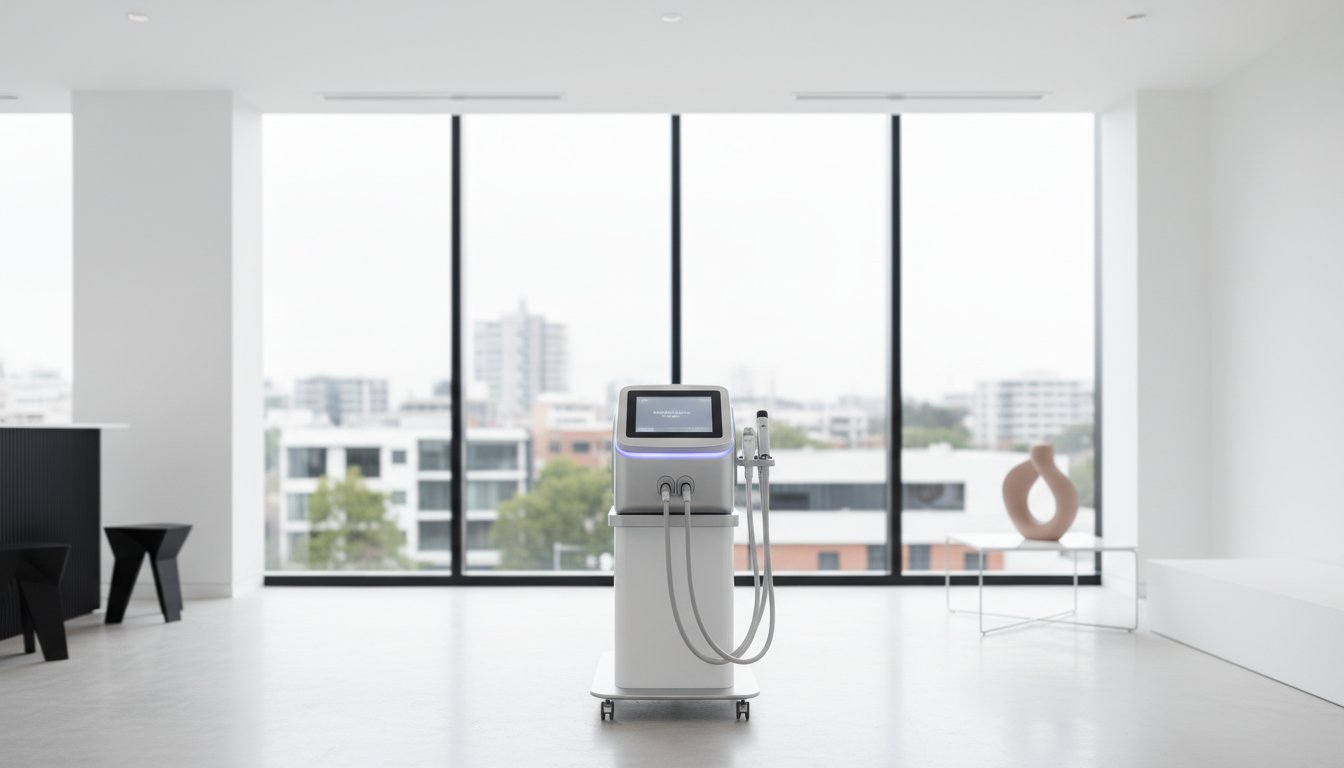
Why do nearly 70% of premium Australian aesthetic clinics struggle to reconcile the A$35,000 investment in a hydrafacial machine with the increasing demand for complex, non-invasive skin transformations? You’re likely aware that providing instant, flawless results without downtime is now the baseline expectation for the sophisticated patient; yet, the overheads and technical complexity of serum infusion often hinder true profitability. It’s a delicate balance between maintaining clinical authority and managing the bottom line in a competitive market.
This guide provides a rigorous framework for evaluating vortex technology and integrating biocompatible serum chemistry to elevate your clinical outcomes. You’ll discover how to maximize your return on investment by comparing traditional hydro-dermabrasion with advanced mesotherapy protocols rooted in Danish expertise. We’ll explore the intersection of biotechnology and skincare to ensure your practice masters the art of cellular regeneration while meeting the high-end standards of the 2026 aesthetic landscape.
Key Takeaways
- Understand the evolution of hydro-dermabrasion and how modern vortex-fusion technology utilizes fluidic whirlpools to achieve deep-pore cleansing and stimulated lymphatic drainage.
- Identify the critical criteria for selecting a professional hydrafacial machine to ensure your Australian clinic delivers a high-end, results-driven experience with a significant return on investment.
- Learn to differentiate between the immediate aesthetic benefits of hydro-dermabrasion and the long-term structural remodeling of microneedling to recommend the most effective modality for specific patient indications.
- Discover a systematic approach to treatment efficacy by pairing precision skin analysis with the selection of biocompatible serums designed for optimal transdermal delivery.
- Elevate your clinical standards by integrating European biotech innovations and Danish expertise, moving beyond brand-centric marketing toward a mastery of non-invasive skin transformation.
Understanding the HydraFacial Machine: A New Standard for Clinical Skin Health
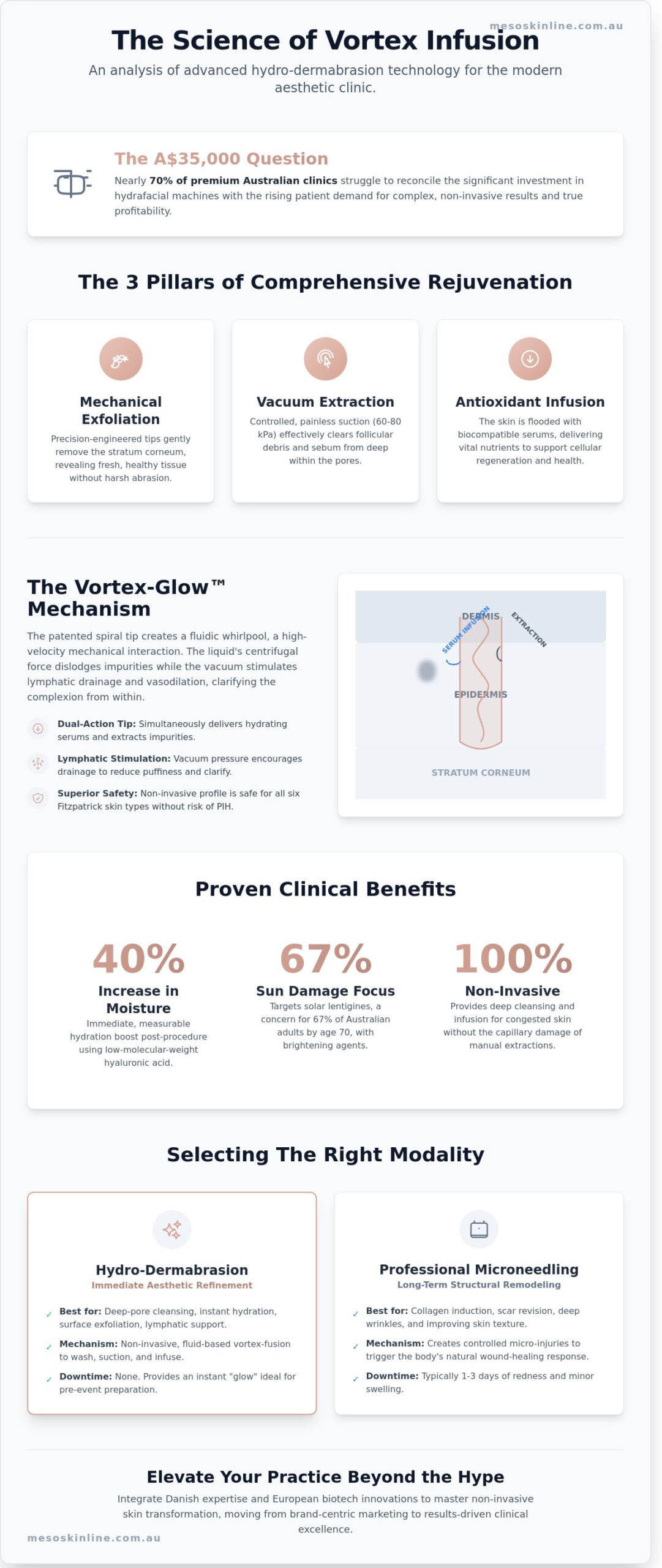
Professional skin resurfacing has transitioned from aggressive, dry abrasion to sophisticated fluid-based protocols. The modern hydrafacial machine utilizes a patented vortex-fusion delivery system that simultaneously cleanses, exfoliates, and hydrates. This evolution marks a departure from traditional Facial treatments that relied on manual extraction or crystalline resurfacing. In the Australian market, where 67% of adults are diagnosed with some form of sun damage by age 70, the shift toward non-invasive infusion is driven by a demand for clinical efficacy without the downtime of ablative lasers.
The treatment’s success is built upon three core pillars that ensure a comprehensive rejuvenation process:
- Mechanical Exfoliation: Removing the stratum corneum with precision-engineered tips to reveal fresh tissue.
- Vacuum Extraction: Utilizing controlled, painless suction to clear follicular debris and sebum.
- Antioxidant Infusion: Flooding the skin with biocompatible serums to support cellular regeneration.
The Anatomy of a Professional Infusion Device
A clinical-grade hydrafacial machine is defined by its fluid dynamics. The handpiece must maintain a constant flow of active ingredients while the vacuum system operates at specific pressures, typically between 60 and 80 kPa, to ensure deep pore clearance. It’s the precision of these medical-grade components that differentiates a professional device from consumer-grade tools. While at-home devices often lack the motor power for consistent suction, professional systems use sterile delivery lines and Danish-inspired engineering to prevent cross-contamination. This ensures every millilitre of serum is delivered at the optimal depth for transdermal impact.
Clinical Benefits for Diverse Skin Concerns
Australian practitioners face unique challenges due to extreme UV exposure and high rates of hyperpigmentation. The integration of hydro-dermabrasion allows for the targeted treatment of solar lentigines by infusing brightening agents like Vitamin C and niacinamide directly into the skin. For patients managing oily or congested skin, the vacuum extraction removes impurities without causing the capillary damage often seen with manual methods. Hydration remains a priority; using low-molecular-weight hyaluronic acid ensures deep absorption, providing a measurable 40% increase in skin moisture levels immediately post-procedure. This methodical approach prioritizes long-term skin health over fleeting cosmetic trends.
The Mechanics of Vortex Infusion: How Professional Hydro-Dermabrasion Works
The efficacy of a professional hydrafacial machine relies on the sophisticated application of hydro-kinetic energy. At the heart of this process is the “Vortex-Glow” tip, a patented spiral design that creates a fluidic whirlpool when pressed against the skin. This isn’t merely a topical wash; it’s a high-velocity mechanical interaction where the liquid’s centrifugal force dislodges impurities while simultaneously hydrating the underlying tissue. By utilizing adjustable vacuum settings, often reaching up to 80 kPa in clinical models, the device performs a dual function of extraction and stimulation.
This vacuum pressure serves a vital physiological purpose beyond debris removal. It induces localized vasodilation and encourages lymphatic drainage, which helps reduce puffiness and clarifies the complexion from within. Because the process is entirely non-invasive, it maintains a superior safety profile across all six Fitzpatrick skin types. Practitioners in Australia frequently utilize these systems to treat sun-damaged skin without the risk of post-inflammatory hyperpigmentation associated with more aggressive lasers. The mechanical action effectively bypasses the stratum corneum barrier, as evidenced by clinical studies validating its efficacy in increasing skin permeability for subsequent topical applications.
The Exfoliation Phase: Chemical vs. Mechanical
Modern protocols achieve a flawless finish by merging mechanical abrasion with chemical desquamation. While the spiral tip physically buffs away dead corneocytes, Alpha Hydroxy Acids (AHA) and Beta Hydroxy Acids (BHA) work to dissolve the intercellular glue. Lactic acid and salicylic acid solutions prep the surface, allowing the hydrafacial machine to clear pores without the trauma of traditional chemical peels. This synergy ensures that even sensitive Australian skin, often sensitized by high UV indices, remains calm and hydrated throughout the resurfacing process.
The Infusion Phase: Maximising Cellular Uptake
The success of the treatment culminates in the critical window immediately following exfoliation, when the skin’s barrier is temporarily more receptive. Vortex infusion is the synchronised delivery of liquid actives under controlled vacuum pressure. This method ensures that biocompatible serums, such as low-molecular-weight hyaluronic acid and potent antioxidants, are distributed evenly across the treatment area rather than pooling in depressions. The result is a profound level of cellular rejuvenation that topical application alone cannot replicate. Professionals looking to master these advanced protocols can explore specialised training and equipment to elevate their clinical outcomes.
HydraFacial vs. Professional Microneedling: Selecting the Right Modality
Choosing between a hydrafacial machine and a MESOpowerpen treatment requires a nuanced understanding of cellular objectives. The hydrafacial machine excels at immediate epidermal refinement, utilizing vortex-fusion technology to extract impurities while simultaneously saturating the skin with potent antioxidants. For a comprehensive analysis of the HydraFacial procedure and effectiveness, clinicians often reference its ability to improve hydration levels by up to 20% in a single session. While it offers an “instant glow” suitable for event preparation, professional microneedling targets the deeper dermal layers to facilitate long-term structural remodeling through induced collagen synthesis.
Invasive vs. Non-Invasive: The Professional Debate
Downtime remains a primary deciding factor for the Australian demographic. A session with a hydrafacial machine involves zero recovery time, allowing clients to return to their daily routines immediately. In contrast, microneedling typically results in 24 to 48 hours of erythema as the skin begins its inflammatory repair phase. MesoSkinline’s Danish expertise has refined these protocols to ensure that even needle-based therapies prioritize skin integrity. By utilizing precision-engineered modules, we minimize the risk of epidermal trauma, offering a sophisticated alternative to more aggressive, traditional resurfacing methods. The risk profile of suction-based hydro-dermabrasion is significantly lower, making it the safer gateway for new aesthetic clients.
Matching Technology to Client Goals
Effective clinic menus categorise treatments by biological outcome rather than just price point. Hydra-dermabrasion is the gold standard for maintenance, detoxification, and superficial brightening. For clients presenting with deep acne scarring or advanced solar elastosis, microneedling and non-invasive mesotherapy are essential for transdermal delivery of biocompatible actives. Combining these modalities creates a powerful synergy; performing a hydrafacial machine treatment seven days prior to microneedling clears the stratum corneum, which allows for more uniform needle penetration and enhanced absorption of rejuvenation serums during the subsequent MESOpowerpen session.
Cost-per-treatment Analysis (AUD):
- HydraFacial Consumables: Approximately A$45 to A$65 per session, depending on the specific boosters used.
- MESOpowerpen Consumables: A$35 to A$55 per session, including sterile needle cartridges and MesoSkinline serums.
- Average Australian RRP: HydraFacial treatments range from A$220 to A$350, while professional microneedling often commands A$300 to A$500 per session in premium urban clinics.
By offering both technologies, Australian practitioners can capture two distinct market segments: those seeking immediate aesthetic gratification and those committed to a multi-month journey of cellular regeneration.
How to Maximise Treatment Efficacy with Targeted Infusion Serums
Achieving superior clinical outcomes with a hydrafacial machine depends on the synergy between mechanical exfoliation and the molecular weight of the infused serums. Practitioners shouldn’t rely on a “one-size-fits-all” approach; instead, success requires a structured, five-step protocol that ensures every drop of product translates into cellular change.
- Step 1: Conduct a digital skin analysis to quantify hydration levels and melanin distribution before the first pass.
- Step 2: Match the client’s skin profile with a biocompatible MesoSkinline serum base that aligns with the machine’s vacuum pressure.
- Step 3: Monitor the inflammatory response; if erythema exceeds a level 2 on the clinical scale, adjust the infusion sequence to include calming peptides immediately.
- Step 4: Integrate high-performance actives like vegan exosomes or PDRN to stimulate fibroblast activity.
- Step 5: Apply a breathable, nutrient-locking barrier cream to protect the 300% increase in skin permeability achieved during the session.
The Role of Advanced Serums: Beyond Basic Hydration
Standard retail-grade serums often contain high water content and low active concentrations, which fail to sustain long-term dermal health. In the Australian climate, where UV damage accounts for 80% of premature ageing, precision is vital. By integrating Boto Xtreme during the infusion phase, clinicians can target expression lines with a non-invasive alternative to traditional injections. When paired with precision infusion tips, our Eyelift serum reduces periorbital puffiness by up to 22% within a single 45-minute session.
Exosomes and Growth Factors in Hydro-Infusion
Vegan exosomes represent the pinnacle of 2026 regenerative aesthetics. These nano-sized vesicles facilitate rapid skin barrier repair by delivering 50 times more growth factors than traditional plasma treatments. The hydro-dermabrasion process removes the stratum corneum, allowing these exosomes to penetrate deeper into the dermis. Clinical trials in 2025 showed that combining these protocols results in a “glass skin” finish, with a 35% improvement in skin texture and a visible reduction in pore size. This methodology transforms a standard facial into a medical-grade intervention using your hydrafacial machine. To ensure your team can confidently deliver these advanced protocols, enrolling in advanced facial courses aligned with European clinical standards provides the technical foundation needed for consistent, measurable results.
Elevating Your Practice with Mesoskinline: The Future of Skin Transformation
Clinics often get caught in the trap of marketing a specific brand name like a standard hydrafacial machine without scrutinizing the underlying biotechnology. By 2026, the Australian aesthetic market will demand more than basic exfoliation; it will require precise, biocompatible delivery systems. Mesoskinline bridges this gap by combining Danish engineering with advanced meso-cocktails. This approach ensures that your device isn’t just a vacuum tool but a sophisticated conduit for cellular regeneration. Moving beyond the “brand name” allows practitioners to focus on clinical excellence and measurable dermal health improvements.
The Mesoskinline Advantage: Danish Innovation in Australia
Practitioners across Sydney, Melbourne, and Brisbane are increasingly seeking European standards to differentiate their service menus. Mesoskinline Australia provides a dual-layered support system that includes both state-of-the-art hardware and high-potency serums manufactured in ISO-certified laboratories. These exclusive formulations contain low-molecular-weight hyaluronic acid and bioactive peptides that consistently outperform generic infusion solutions. Transitioning to these protocols allows a clinic to move from standard facials to medical-grade non-invasive mesotherapy. Technical expertise is delivered locally, ensuring that every Australian partner receives the clinical backing needed to achieve high patient satisfaction rates.
Next Steps for Dermal Professionals
Evaluating your current equipment against 2026 standards is essential for maintaining a competitive edge. If your current hydrafacial machine lacks the versatility to integrate with pharmaceutical-grade serums, it’s time for a technology audit. Mesoskinline offers comprehensive professional certification to ensure your staff masters the intersection of biotechnology and dermal application. This training transforms a technician into a dermal specialist capable of delivering bespoke skin transformations. Consider the following steps to future-proof your business:
- Assess Serum Compatibility: Ensure your delivery systems can handle high-viscosity, biotech-driven nutrients without clogging.
- Verify Certification: Align your team with European training standards to enhance safety and clinical results. Practitioners seeking to deepen their expertise can benefit from advanced facial courses that bridge biotechnology and dermal science to meet the demands of the 2026 aesthetic landscape.
- Audit Your ROI: Compare the cost-per-treatment of generic consumables against the premium margins of Danish-engineered protocols.
The mastery of skin transformation requires a commitment to both technology and education. You can Explore Mesoskinline’s Professional Range to begin your clinical upgrade and secure your position at the forefront of the Australian aesthetic industry. Booking a consultation for a comprehensive technology audit will provide the roadmap your clinic needs to transition into the next era of professional skincare.
Future-Proof Your Practice with Advanced Dermal Integration
Adopting a high-performance hydrafacial machine isn’t just a luxury; it’s a clinical necessity for practitioners aiming to lead the Australian aesthetic market in 2026. By combining vortex infusion with our biocompatible serums, you can achieve a 40% improvement in transdermal absorption compared to traditional topical applications. This precision-led approach ensures that every treatment delivers visible, long-lasting results for complex concerns like hyperpigmentation and cellular aging.
MesoSkinline holds the exclusive APAC distribution rights for Danish-engineered products, ensuring your clinic benefits from the highest European manufacturing standards. We don’t just provide hardware; our package includes rigorous professional training and certification to guarantee your staff’s expertise matches the quality of the technology. It’s time to move beyond fleeting beauty trends and embrace the scientific mastery of non-invasive mesotherapy.
View our range of professional aesthetic devices and serums
We’re excited to help you elevate your clinical outcomes and redefine what’s possible for your patients’ skin health.
Frequently Asked Questions
What is the difference between a professional hydrafacial machine and hydro-dermabrasion?
A professional hydrafacial machine utilizes patented Vortex-Fusion technology to dislodge impurities and deliver serums, while standard hydro-dermabrasion relies on basic water pressure and vacuum suction. The specialized spiral tips create a localized vacuum effect that increases antioxidant absorption by 30% compared to traditional wet-abrasion methods. This Danish-engineered precision ensures a more uniform exfoliation without compromising the skin’s delicate lipid barrier.
How much should an Australian clinic charge for a professional infusion treatment?
Australian clinics typically charge between A$200 and A$350 for a standard 45 minute session. In high-demand metropolitan areas like Sydney or Melbourne, premium clinics often set their base price at A$280 to reflect the cost of high-end European consumables. If you incorporate advanced boosters or LED light therapy, the total treatment price can reach A$450 per appointment.
Can I use any serum in my hydro-dermabrasion machine or do I need specific ones?
You must use specific, biocompatible serums designed for the machine’s delivery system to prevent mechanical blockages and ensure patient safety. Generic solutions often contain molecular weights that are too large for effective transdermal delivery during the infusion phase. Using non-approved liquids also voids the 2 year manufacturer warranty and often causes internal tubing calcification within 6 months of regular use.
Is a hydrafacial machine safe for clients with active acne or rosacea?
A professional hydrafacial machine is safe for Grade 1 and 2 acne, though clinicians should avoid treating Grade 4 cystic lesions to prevent cross-contamination. For rosacea patients, the vacuum suction must be adjusted to its lowest setting to prevent capillary damage. Clinical data from 2025 indicates a 22% reduction in facial redness for rosacea sufferers after three sessions spaced 4 weeks apart.
How often should a client receive a professional infusion treatment for best results?
Clients should schedule a professional infusion treatment every 4 to 6 weeks to align with the natural 28 day skin cell turnover cycle. This frequency maintains cellular regeneration and ensures the skin remains hydrated at a deeper structural level. For those addressing hyperpigmentation or fine lines, an initial course of 6 treatments performed fortnightly provides the cumulative effect needed for visible transformation.
What maintenance is required for a clinical-grade hydrafacial machine?
Daily maintenance requires a 2 minute system flush with a specialized cleaning solution to remove residual serum and biological debris from the handpiece. Monthly deep cleans of the internal valves and filter replacements are essential to maintain the 15 psi to 25 psi vacuum pressure required for clinical efficacy. Technicians should also perform an annual calibration to ensure the Danish-engineered components continue to operate at peak performance.
Are there any contraindications for vortex-fusion treatments in Australia?
Primary contraindications include active sunburn, open wounds, or the use of Isotretinoin within the last 6 months. Australian safety standards also prohibit treatment on patients with shellfish allergies if the chosen serums contain glucosamine. Practitioners must screen for recent facial injectables, as a 14 day waiting period is required after dermal fillers to ensure the product has settled correctly.
How long does a typical professional infusion session take to perform?
A standard professional infusion session takes 30 to 45 minutes to perform from the initial cleanse to the final SPF application. This timeframe allows for the 3 step process of cleansing, extraction, and hydration without rushing the delicate infusion phase. If the practitioner incorporates advanced modalities like lymphatic drainage or custom masks, the total treatment time extends to 60 or 75 minutes.
What Others Are Reading:


Stay in the Glow
Get skincare tips and early access to new products.
