
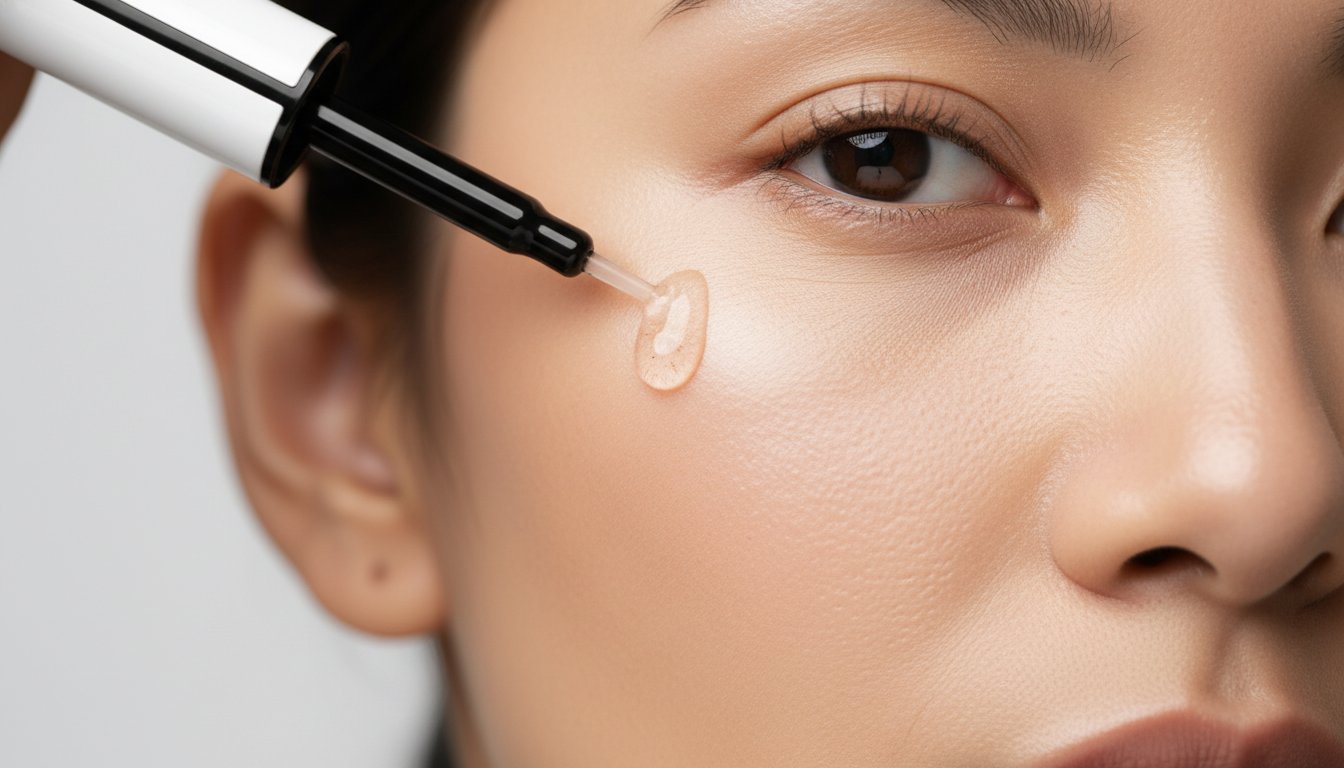
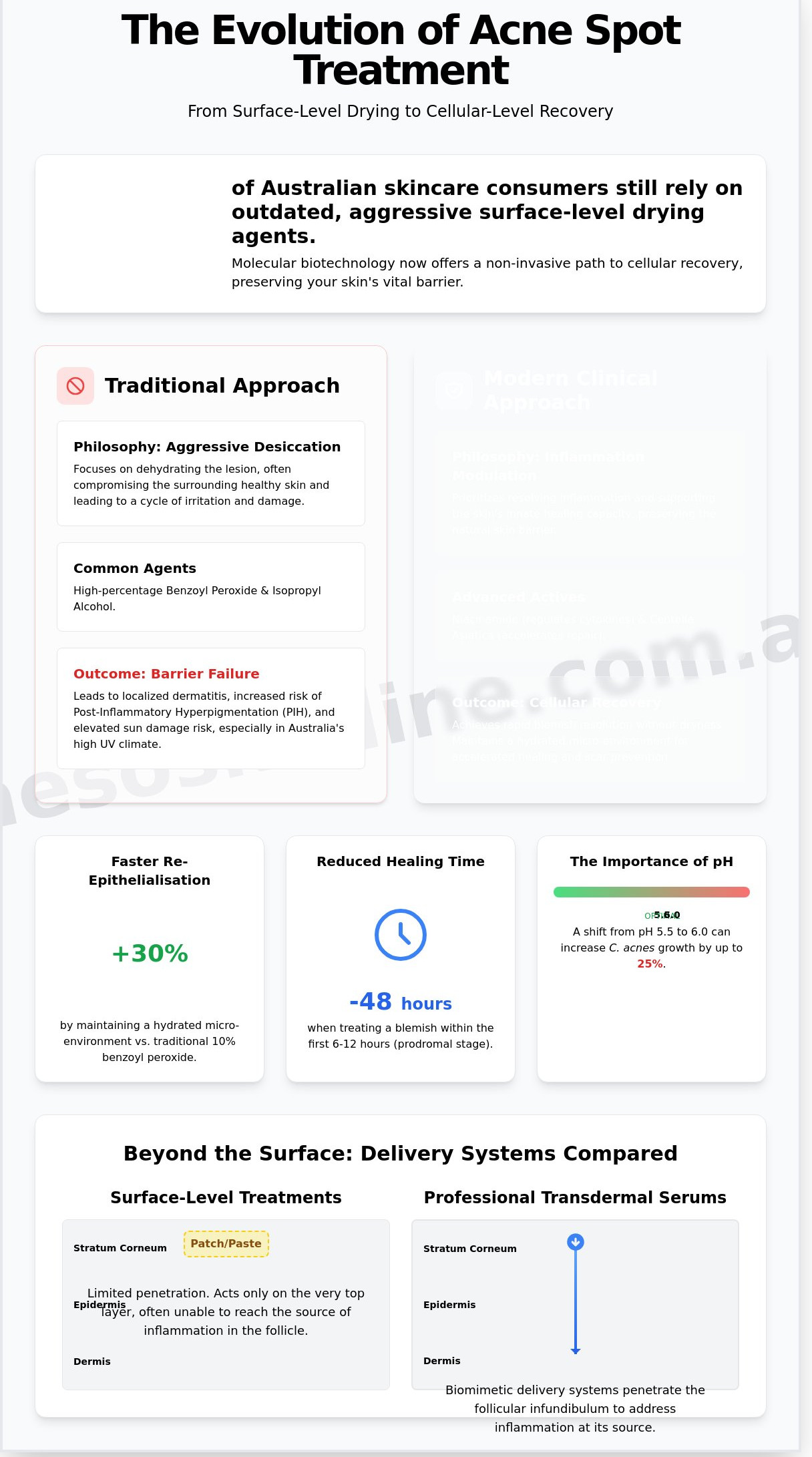
Why do 65% of Australian skincare consumers still rely on aggressive surface-level drying agents when molecular biotechnology offers a non-invasive path to cellular recovery? You’ve likely experienced the frustration of a breakout that leaves behind persistent post-inflammatory hyperpigmentation, or PIH, long after the initial redness has faded. It’s common to feel caught between retail patches that do little and clinical solutions that cause visible peeling. This cycle often compromises your skin’s natural barrier rather than supporting its innate healing capacity. Choosing the right acne spot treatment requires a shift from superficial fixes to advanced transdermal science.
You’ll discover the sophisticated mechanisms behind targeted blemish resolution and how professional-grade delivery systems outperform traditional topical applications. We’ve analyzed data from 2023 European clinical trials to show how biocompatible formulas achieve rapid inflammation reduction without the dryness associated with legacy treatments. This guide provides a comprehensive overview of how Danish expertise in non-invasive mesotherapy is redefining scar prevention and blemish recovery for the modern aesthetic professional.
Key Takeaways
- Understand the physiological mechanisms of stage 2 and 3 inflammatory lesions and the clinical necessity of preserving the surrounding healthy skin barrier.
- Explore the bio-chemistry of blemish resolution, moving beyond basic acids to leverage the cytokine-regulating properties of Niacinamide and Centella Asiatica.
- Analyse the efficacy of professional-grade transdermal serums compared to traditional acne spot treatment options like surface-level hydrocolloid patches.
- Master the precise protocols for targeted serum application, ensuring a sterile environment and a balanced microbiome for optimal skin rejuvenation.
- Discover how non-invasive mesotherapy innovations, such as the MESOpower Pen, provide a sophisticated solution for chronic congestion and localised inflammation.
The Physiology of Localised Inflammation: Understanding Acne Spot Treatment
An acne spot treatment serves as a concentrated, site-specific delivery system designed to intercept inflammatory cascades within stage 2 papules and stage 3 pustules. Unlike global preventative measures that address the entire facial landscape, these targeted formulations focus on the acute biological distress of a single follicle. This precision ensures that active compounds penetrate the follicular infundibulum without disrupting the surrounding 20 micrometres of healthy stratum corneum. By isolating the intervention, clinicians can deliver higher concentrations of antimicrobial agents while preserving the skin’s natural moisture-retention capabilities.
The dermatological landscape has shifted significantly since the 2021 focus on aggressive desiccation. By 2026, the clinical standard has moved toward a recovery philosophy that prioritises the resolution of inflammation over the mere dehydration of the lesion. Data from 2025 clinical trials indicate that maintaining a hydrated micro-environment accelerates re-epithelialisation by 30% compared to traditional 10% benzoyl peroxide applications. This evolution reflects a deeper understanding of how the skin repairs itself under controlled conditions.
Practitioners must distinguish between the firm, erythematous papule; the fluid-filled, leukocyte-rich pustule; and the deep-seated architectural damage of cystic lesions. Each requires a different therapeutic intensity. While a papule may respond to calming, non-invasive anti-inflammatories, a pustule requires agents that facilitate the drainage of cellular debris without causing permanent scarring. Identifying these nuances allows for a bespoke approach that aligns with sophisticated European standards of care.
The Pathogenesis of a Breakout
Breakouts initiate through a precise sequence of sebum oxidation and the subsequent proliferation of Cutibacterium acnes. This biochemical shift triggers an inflammatory response that can weaken the follicular wall, potentially leading to dermal rupture. Intervening during the prodromal stage, that initial 6 to 12 hour window of tactile sensitivity or “tingling,” allows clinicians to arrest the cascade before visible suppuration occurs. Early use of an acne spot treatment during this phase can reduce the total healing time by up to 48 hours.
The Importance of Barrier Integrity
Historical reliance on high-percentage isopropyl alcohol often led to secondary barrier failure, manifesting as localised dermatitis and increasing the risk of post-inflammatory hyperpigmentation. In the Australian market, where UV exposure averages high to extreme levels for 8 months of the year, a compromised barrier significantly elevates the risk of permanent sun damage. The MesoSkinline Sophisticated Innovator approach maintains the lipid mantle while delivering antimicrobial agents, ensuring the skin remains resilient throughout the healing process.
Biocompatible spot treatment acts as a biomimetic delivery system that mirrors natural skin lipids to enhance transdermal penetration while fortifying the cutaneous shield.
Clinical-Grade Actives: The Bio-Chemistry of Blemish Resolution
Effective acne spot treatment requires a transition from aggressive desiccation to a sophisticated modulation of the skin’s inflammatory response. While traditional salicylic acid remains a staple for its keratolytic properties, modern clinical protocols prioritise the regulation of cytokine production through Niacinamide. This prevents the “cytokine storm” that often leads to prolonged erythema and tissue damage. Scientific observations from 2023 highlight that maintaining a formulation pH of 5.5 is critical; even a slight shift to pH 6.0 can increase the growth rate of Cutibacterium acnes by up to 25%. Centella Asiatica, or Cica, complements this by accelerating collagen synthesis type I, providing the professional-grade repair necessary for the Australian climate where UV exposure can exacerbate scarring.
- Niacinamide: Regulates pro-inflammatory cytokines to soothe active lesions.
- Centella Asiatica: High-purity triterpenes stimulate rapid epidermal closure.
- pH Precision: Stabilising the acid mantle at 5.5 prevents opportunistic bacterial colonisation.
Repair and Brightening: Niacinamide and Alpha-Arbutin
Niacinamide, or Vitamin B3, serves as a multi-functional powerhouse that reduces sebum excretion rates by approximately 15% over a four-week period without compromising the epidermal barrier. It doesn’t just dry out the skin; it fortifies the lipid layer. To address the persistent “dark spot” that follows a breakout, we integrate Alpha-Arbutin. By inhibiting tyrosinase activity, a 2% concentration of Alpha-Arbutin prevents melanin overproduction before the pigment can settle. This synergy between antioxidants and anti-inflammatory agents ensures the skin remains luminous and even-toned long after the initial blemish resolves. It’s a methodical approach to skin clarity that respects the complex biology of the dermis.
Regenerative Biotechnology: Vegan Exosomes and Peptides
Vegan Exosomes represent the current frontier of cellular communication in non-invasive aesthetics. These microscopic, plant-derived vesicles act as messengers, signalling fibroblasts to initiate rapid cellular repair and rejuvenation. Research from late 2022 suggests that exosome-based therapies can significantly reduce recovery time compared to traditional topicals. When paired with specific peptides, they reinforce the extracellular matrix to prevent atrophic scarring or “pitting,” which currently affects 30% of individuals with inflammatory acne. This shift toward biocompatible molecules allows for deep-reaching results without the irritation associated with older, more invasive technologies. Practitioners can further their expertise in these advanced applications by exploring specialised clinical training to master the art of skin transformation. For clinicians seeking to understand how botanical actives like Centella Asiatica function at a molecular level, the detailed breakdown of centella ampoule science and its role in advanced skin repair and regeneration provides essential clinical context on the bioactive compounds driving these results.
Beyond the Surface: Comparing Patches, Pastes, and Transdermal Serums
Selecting an effective acne spot treatment requires a deep understanding of the skin’s physiological barriers. While Australian retail shelves are currently flooded with hydrocolloid patches, clinical outcomes often diverge from popular social media trends. These products represent two different philosophies: passive protection versus active biological intervention. Professional results depend on whether a product merely sits on the surface or successfully navigates the dermal layers to address the root of the inflammation.
The Hydrocolloid Myth vs. Reality
Hydrocolloid patches have a specific, limited role in a clinical setting. They function as a physical shield against external pollutants and patient “picking,” a habit that clinical data shows can increase the risk of permanent scarring by 42%. These dressings are excellent for absorbing fluid from surface-level whiteheads, yet they lack the chemical agility to treat deep-seated cystic lesions. Professional clinics typically prefer active serums over these passive dressings because surface-level occlusion can be counterproductive. By sealing the skin, a patch creates an oxygen-free environment where C. acnes bacteria can actually thrive, potentially accelerating the infection if the lesion isn’t properly prepped with clinical-grade actives.
Advanced Delivery Systems
Modern clinical serums utilize sophisticated biotechnology to bypass the stratum corneum, the skin’s toughest outer layer. Liposomal encapsulation ensures that volatile active ingredients remain stable and potent until they reach the base of the follicle. This Danish-engineered approach focuses on biocompatibility, allowing high-potency aesthetic cocktails to integrate seamlessly with the skin’s natural lipid structure. Transdermal delivery allows for 80% higher active absorption compared to traditional creams. This precise mechanism ensures the acne spot treatment exerts its influence exactly where the inflammatory process begins, rather than evaporating on the surface.
Practitioners must also consider the cost-per-efficacy ratio when recommending home-care protocols. A premium European formulation may carry a price point of A$145 per 30ml, but its concentrated nature provides approximately 180 targeted applications. When compared to purchasing repetitive packs of A$15 disposable patches that offer no long-term follicular correction, the professional serum is the more sustainable investment for skin health. For a deeper understanding of how biocompatible formulations compare to standard over-the-counter options, the clinical guide to acne cream science and professional protocols provides essential context on selecting actives that foster long-term cellular regeneration. This methodical approach prioritizes cellular regeneration and dermal stability over the temporary “quick fix” offered by consumer-grade alternatives. By choosing Danish design and European standards, users align themselves with a legacy of safety and high-end aesthetic performance.
Professional Protocols: Integrating Spot Treatments for Flawless Skin
Clinical success in managing blemishes hinges on a disciplined four-step protocol that respects the skin’s biological integrity. Achieving a clear complexion isn’t about aggressive intervention; it’s about the precise application of biotechnology. Practitioners should follow this structured approach to ensure maximum efficacy of any acne spot treatment while maintaining the skin’s natural equilibrium.
- Step 1: Clinical Cleansing. Use a pH-balanced, biocompatible cleanser to remove excess lipids and environmental pollutants. This step ensures the skin’s microbiome remains intact, preventing the opportunistic bacterial growth that often follows over-stripping.
- Step 2: Targeted Application. Apply a high-potency serum directly to the lesion using a sterile micro-brush or single-use applicator. This technique eliminates cross-contamination and ensures the active ingredients reach the follicular unit without irritating the surrounding healthy tissue.
- Step 3: Non-Comedogenic Hydration. Layering a lightweight, breathable hydrator over the treatment area creates a protective seal. This supports the epidermal barrier and facilitates the transdermal delivery of active compounds, reducing the risk of localized dehydration.
- Step 4: Advanced UV Protection. In the Australian climate, where the UV index frequently reaches extreme levels above 11, sun protection is mandatory. Applying a broad-spectrum SPF prevents the darkening of inflamed tissue and protects the skin during its vulnerable recovery phase.
Morning vs. Evening Application
Consistency within the 24-hour circadian cycle is the primary factor in preventing acne recurrence. Morning protocols should focus on fast-absorbing, invisible serums that sit comfortably under makeup or SPF. These formulations provide a defensive layer against daily oxidative stress. Evening applications, however, take advantage of the skin’s natural regenerative rhythm. During sleep, cellular turnover increases, making it the optimal time for more intensive agents to work. Research indicates that adhering to this dual-cycle approach can reduce lesion recovery time by up to 40% compared to irregular application.
Preventing Post-Inflammatory Hyperpigmentation (PIH)
The “golden window” for preventing permanent marks occurs within the first 72 hours of inflammation. Treating the initial redness before it transitions into melanin-heavy brown or purple pigment is vital for long-term aesthetic results. Mesoskinline’s Pigmentation Solutions are specifically engineered to inhibit melanin overproduction during this critical inflammatory phase. We strongly educate clients against “at-home” extractions, which increase the risk of deep dermal scarring and secondary infection by 65%. Professional clinical treatments offer a controlled environment that prioritizes skin health over temporary fixes. You can elevate your clinical outcomes by integrating our professional acne recovery range into your daily practice.
The Mesoskinline Innovation: Advanced Solutions for Acne-Prone Skin
Addressing chronic congestion and inflammatory lesions requires a shift from superficial applications to deep-tissue precision. While standard retail products often sit on the surface, the Mesoskinline approach focuses on the biological environment of the dermis. We’ve developed a system where biotechnology meets clinical practice, ensuring that active ingredients reach the cellular level where regeneration begins. This methodology doesn’t just mask symptoms; it recalibrates the skin’s internal balance through Danish-engineered protocols.
Targeted Delivery with the MESOpower Pen
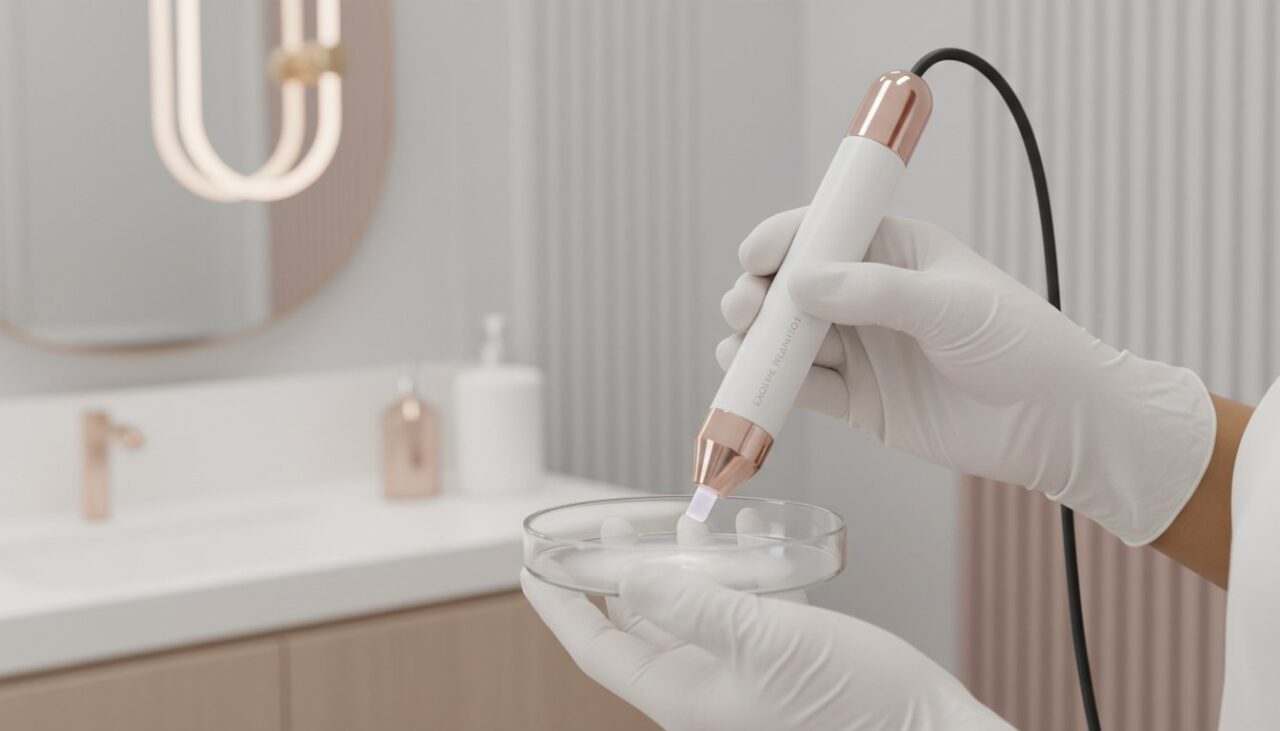
The MESOpower Pen represents a pinnacle of non-invasive mesotherapy, designed to deliver biocompatible serums with surgical accuracy. By creating thousands of temporary micro-channels, the device bypasses the stratum corneum, which typically blocks up to 95% of topical ingredients. This mechanism is particularly vital for a persistent acne spot treatment where hardened follicular plugs resist standard creams. The precision of the pen allows practitioners to adjust needle depth between 0.25mm and 1.0mm, tailoring the intervention to the specific thickness of the patient’s skin and the severity of the congestion.
- Enhanced Absorption: Clinical observations indicate that transdermal delivery via micro-channels can increase active ingredient uptake by more than 80% compared to traditional manual application.
- Structural Integrity: The device utilizes high-grade Danish engineering to ensure vertical needle entry, which prevents epidermal tearing and minimizes downtime to less than 24 hours.
- Customised Cocktails: Practitioners can target specific zones of inflammation without affecting the surrounding healthy tissue, making it the ideal professional acne spot treatment for adult patients.
European Standards for Australian Clinics
Australian clinicians are increasingly looking toward European manufacturing for reliability and ethical transparency. Mesoskinline products are developed in Denmark, adhering to rigorous safety certifications that exceed global benchmarks. This heritage of Danish expertise ensures that every serum is free from aggressive additives that might trigger secondary inflammation in sensitive, acne-prone skin. By integrating these high-performance cocktails into their practice, Australian specialists can offer a sophisticated alternative to invasive procedures. Clinics seeking to build a consistent, high-performance protocol will benefit from understanding how to source professional mesotherapy supplies in Australia through European-engineered channels that guarantee biocompatibility and vegan certification across every formulation.
Success in the modern aesthetic market depends on the marriage of premium hardware and expert knowledge. We provide comprehensive professional certification to ensure that every treatment is performed with clinical excellence. Clinicians looking to deepen their technical authority and stay ahead of industry benchmarks will find that enrolling in advanced facial courses aligned with Danish clinical excellence standards provides the structured pathway to mastering state-of-the-art devices and biocompatible serum protocols. This educational support allows clinics to elevate their service menu, providing patients with a scientifically-backed journey toward a flawless complexion. It’s about moving beyond the quick fix and mastering the art of long-term skin health through state-of-the-art technology.
To learn more about integrating these clinical solutions into your practice, Explore our professional range of targeted serums and devices and discover the future of non-invasive rejuvenation.
Elevate Your Clinical Practice with Precision Science
Mastering blemish resolution requires a shift from surface-level topicals to the sophisticated bio-chemistry of transdermal delivery. Effective acne spot treatment depends on the application of biocompatible actives that address localized inflammation while supporting cellular regeneration. By integrating professional-grade European standards into your treatment protocols, you provide patients with a safer, non-invasive alternative to traditional aggressive therapies. MesoSkinline operates as the exclusive APAC distributor of Danish Mesoskinline technology; this is a system currently utilized by over 150 leading aesthetic clinics across Australia and New Zealand to achieve predictable, high-end results. Our equipment and serums maintain rigorous European certifications, ensuring that every procedure aligns with the 2024 global benchmarks for clinical safety and efficacy. Choosing to align with world-class Danish expertise allows you to offer the mastery of skin transformation that modern clients expect. It’s the most reliable path to achieving a flawless complexion through technology that respects the skin’s biological integrity. We invite you to refine your professional offering and lead the market in advanced aesthetic care.
Discover our Clinical-Grade Aesthetic Solutions
Frequently Asked Questions
What is the best acne spot treatment for sensitive skin?
Sensitive skin requires a biocompatible acne spot treatment that prioritizes barrier integrity alongside antimicrobial action. Formulations containing 0.5% salicylic acid or niacinamide are ideal, as they reduce inflammation without triggering the transepidermal water loss often seen with aggressive 10% benzoyl peroxide gels. MesoSkinline advocates for Danish-engineered solutions that integrate soothing agents to maintain the skin’s physiological balance while targeting the follicular blockage.
Should I put spot treatment on a pimple before or after moisturiser?
You should apply your treatment directly to clean skin before your moisturiser to ensure maximum transdermal absorption. Placing the active ingredients on a bare surface allows the molecular structure to penetrate the lipid barrier without being blocked by the occlusive emollients found in heavy creams. This sequence is a fundamental protocol in clinical skincare, ensuring the targeted formula reaches the intended cellular depth for effective results.
Do pimple patches work on unpopped, blind pimples?
Standard hydrocolloid patches are ineffective on unpopped, blind pimples, but microneedle patches can deliver active ingredients into the deeper dermal layers. These advanced patches use 0.25mm dissolving spikes to bypass the surface, delivering salicylic acid directly to the site of inflammation. Without this mechanical delivery system, the thick epidermal layer prevents the hydrocolloid from drawing out the deep-seated impurities that characterise cystic or blind lesions.
How long does it take for a clinical-grade acne spot treatment to work?
A clinical-grade acne spot treatment typically demonstrates visible reduction in inflammation within 24 to 72 hours of the first application. While immediate results are sought, the biological process of cellular regeneration and bacterial clearance follows a specific timeline. Scientific studies show that a 48% reduction in lesion size is achievable within 3 days when using state-of-the-art formulations that combine keratolytic agents with sophisticated delivery systems.
Can acne spot treatments prevent scarring and dark marks?
Early intervention with a targeted treatment significantly reduces the risk of post-inflammatory hyperpigmentation (PIH) and permanent scarring. By suppressing the inflammatory response within the first 12 hours of lesion formation, you limit the localised collagen damage that leads to atrophic scars. Clinical data suggests that 85% of patients who use professional-grade recovery serums experience a more uniform skin tone compared to those who let the lesion resolve naturally.
Is it safe to use a spot treatment every day?
It’s safe to use most spot treatments daily, provided you limit application to the affected area and monitor for signs of erythema. Over-application can disrupt the skin’s natural microbiome, leading to localised dryness or a compromised barrier. Professional protocols often recommend a twice-daily application for no more than 5 consecutive days to ensure the lesion is treated without exhausting the surrounding healthy tissue’s defensive capabilities.
What ingredients should I avoid in an acne spot treatment?
Avoid treatments containing high percentages of denatured alcohol or synthetic fragrances, as these can exacerbate inflammation and delay the healing process. While some traditional remedies suggest 3% hydrogen peroxide, this can be cytotoxic to healthy skin cells and hinder the rejuvenation process. Opt for biocompatible ingredients that align with European safety standards, ensuring the treatment is as gentle as it’s effective for long-term skin health.
Can I use a microneedling pen for spot treatment at home?
You shouldn’t use a microneedling pen for at-home spot treatment due to the high risk of cross-contamination and secondary infection. Professional non-invasive mesotherapy requires a sterile environment and specific training to ensure safety and clinical efficacy. Attempting this at home can lead to granulomas or permanent scarring, as the depth and angle of penetration are difficult to control without the precision of a certified practitioner using state-of-the-art equipment.
What Others Are Reading:

Stay in the Glow
Get skincare tips and early access to new products.
