
Professional Microneedling Pen Guide 2026: Selecting Clinical Excellence for Australian Practices
In the Australian aesthetic market, the difference between a high-performance treatment and a sub-optimal result often comes down to a 0.01mm variance in needle precision. While many clinics struggle with inconsistent outcomes or the rising costs of proprietary consumables, the shift toward clinical excellence in 2026 demands a more rigorous approach to hardware selection. You’ve likely observed that a superior microneedling pen must do more than create micro-channels; it must preserve the integrity of the skin barrier while ensuring the biocompatible delivery of active ingredients.
This guide provides the technical benchmarks and safety protocols required to choose a professional device that delivers predictable, high-level skin rejuvenation. We’ll explore how Danish engineering and ergonomic design can reduce practitioner fatigue. We’ll also examine how to eliminate the 15% margin of error often found in lower-grade devices. By the end of this article, you’ll have a clear framework for integrating advanced transdermal serums and selecting technology that aligns with the highest European quality standards for your Australian practice.
Key Takeaways
- Identify the essential technical specifications, such as needle oscillation precision and motor stability, that distinguish high-performance tools from those that risk epidermal snagging.
- Examine the critical safety distinctions and certification requirements that separate professional clinical devices from high-risk consumer-grade alternatives found on mass-market platforms.
- Master a strategic framework for selecting a professional microneedling pen by calculating the Total Cost of Ownership (TCO) and assessing ergonomic features tailored for high-volume Australian practices.
- Explore the synergy between Danish innovation and advanced serum delivery through the MESOpowerpen, setting a new benchmark for non-invasive cellular regeneration and clinical excellence.
The Evolution of the Microneedling Pen in Professional Aesthetics
The professional aesthetic landscape across Australia has undergone a significant transformation since the TGA (Therapeutic Goods Administration) intensified its oversight of skin-penetrating devices in 2018. The traditional manual derma roller, once the industry standard, has largely been replaced by the automated microneedling pen. This shift represents more than just a change in hardware; it’s a move toward precision-engineered vertical oscillation that minimizes epidermal trauma. Modern devices now operate at frequencies exceeding 100 cycles per second, ensuring clean punctures that facilitate rapid recovery rather than the “track-mark” tearing often associated with rolling mechanisms.
Australian practitioners are increasingly adopting these high-efficacy, non-invasive solutions to meet a 15% annual rise in demand for skin rejuvenation treatments that don’t involve surgical downtime. In clinical settings, the microneedling pen has proven indispensable for addressing complex dermatological concerns. Recent research, including findings published in the Journal of Cosmetic Dermatology in 2022, highlights its efficacy in treating refractory melasma and androgenetic alopecia by stimulating dormant follicular units through localized growth factor release.
Collagen Induction Therapy: The Biological Mechanism
The efficacy of this treatment relies on a precisely orchestrated wound-healing cascade. When the needles penetrate the dermis, they initiate a release of growth factors that first stimulate the production of Type III collagen, which is eventually replaced by the more resilient, organized Type I collagen over a period of 3 to 6 months. This structural remodeling is the key to long-term dermal density and elasticity. Collagen Induction Therapy is a controlled physiological response to mechanical stimulus.
Beyond Needling: The Transdermal Delivery Revolution
The role of the modern device has expanded to include advanced mesotherapy protocols. By creating thousands of temporary micro-channels, the device bypasses the stratum corneum, allowing high-molecular-weight actives to reach the viable epidermis. By 2026, industry standards in premium Australian clinics will focus heavily on the delivery of biocompatible substances like vegan exosomes and Polydeoxyribonucleotide (PDRN). These ingredients, when paired with Danish-engineered precision, offer a cellular-level intervention that traditional topical applications cannot match. This evolution ensures that clinicians provide results that are both scientifically verifiable and aesthetically superior, aligning with the highest European standards of safety and innovation.
Technical Specifications: What Defines a High-Performance Skin Needling Pen?
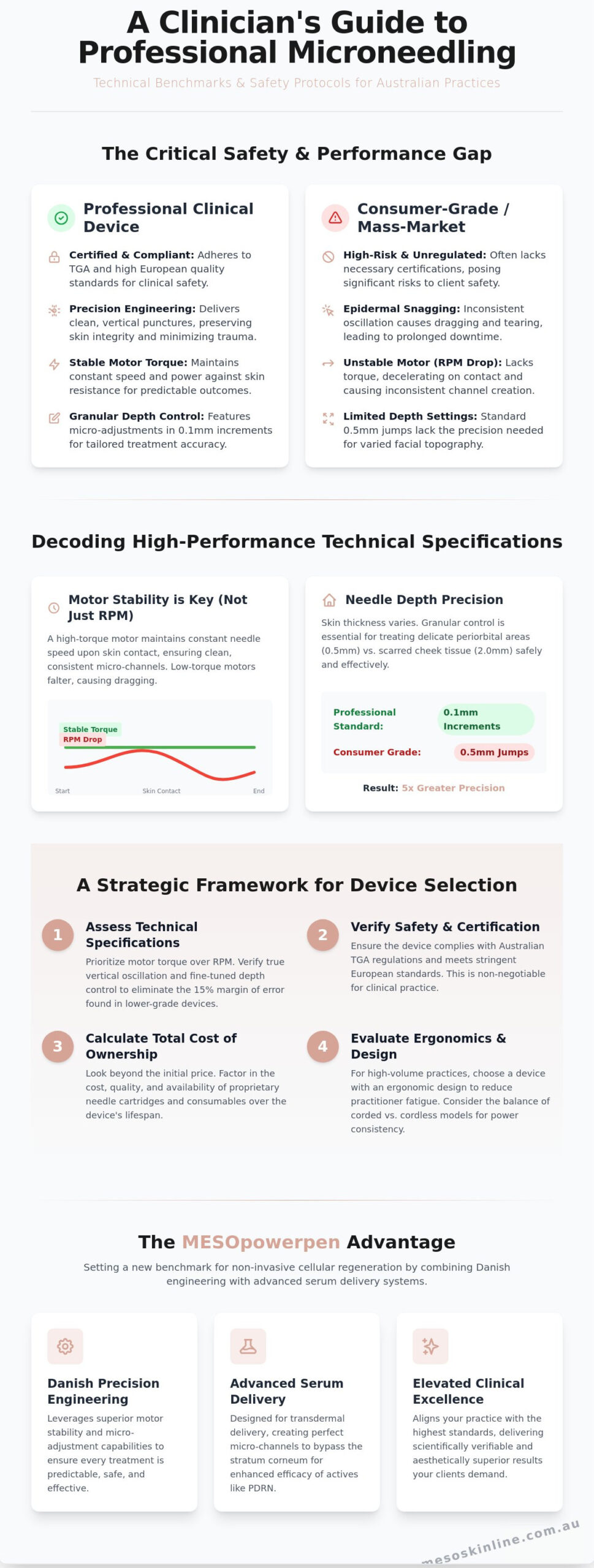
Clinicians often focus on revolutions per minute (RPM) as the primary indicator of power, yet this metric alone is frequently misleading. A high RPM count doesn’t guarantee a clean puncture if the motor lacks the torque to maintain that speed against the skin’s natural resistance. When a motor falters under pressure, the needles decelerate mid-insertion, causing the “dragging” or “snagging” effect that leads to unnecessary epidermal trauma and prolonged downtime for your Melbourne patients. A professional microneedling pen must demonstrate motor stability that ensures the needles vibrate at a constant frequency, regardless of skin density or fibrous tissue resistance.
Precision engineering requires depth adjustments in 0.1mm increments rather than the standard 0.5mm jumps found in entry-level devices. This level of granularity is the professional standard because skin thickness varies significantly across the facial landscape. Treating the delicate 0.5mm skin of the periorbital region requires a vastly different approach than addressing a 2.0mm deep acne scar on the malar cheek. Devices that offer these micro-adjustments allow practitioners to tailor treatments with mathematical accuracy, ensuring the needle reaches the targeted dermal layer without over-penetrating.
Choosing between battery-operated and corded models involves balancing mobility with power consistency. While cordless designs offer ergonomic freedom, they can suffer from voltage drops as the battery depletes, leading to uneven results across a single session. High-performance systems often utilize a hybrid approach or high-capacity lithium-ion batteries that deliver a steady current until the final minute of use. Consistent power delivery is vital for creating a uniform field of micro-channels, which is the foundation of effective transdermal delivery.
Motor Engineering and Needle Stability
The physics of vertical oscillation determines the success of the inflammatory response. High-quality motors are engineered to ensure needles enter and exit the skin at a perfect 90-degree angle. If the needle tilts even slightly, it creates a wedge-shaped tear instead of a clean channel. Advanced Danish engineering focuses on reducing internal vibration, which doesn’t just extend the device’s lifespan but also significantly improves patient comfort. A stable motor can produce over 1,500 micro-channels per second, maximizing the density of the treatment without compromising the integrity of the skin barrier.
Needle Cartridge Quality and Sterility
Patient safety hinges on the quality of the consumables used during the procedure. Professional cartridges utilize 316L medical-grade stainless steel, which maintains its sharpness throughout the entire treatment. Lower-quality alloys can dull quickly, leading to “hooking” where the needle tip bends slightly and tears the tissue upon exit. It’s essential to use cartridges equipped with anti-backflow membranes to prevent blood and serum from entering the device body, eliminating the risk of cross-contamination. Practitioners should verify that all consumables are sourced through TGA-compliant channels to meet Australian regulatory standards. Clinicians who prioritize these technical details often find that specialised professional certification helps them master the nuances of high-end hardware for superior clinical outcomes.
Professional vs. Consumer-Grade Pens: Addressing the Safety Gap
The proliferation of low-cost devices on mass-market platforms has created a challenging environment for Melbourne clinicians. While a basic microneedling pen might appear functionally identical to a professional system, the mechanical reality tells a different story. These consumer-grade units often lack the motor torque required to maintain consistent needle speed, resulting in varied penetration depths that compromise clinical outcomes. Practitioners must understand that true skin transformation requires the vertical precision found only in high-end European engineering.
The Risk of Epidermal Tearing and Scarring
Cheap devices frequently suffer from needle oscillation, where the needles wobble during high-speed movement. Instead of creating clean, vertical micro-channels, these unstable needles enter the skin at an angle and exit with a “hooking” motion. This creates microscopic tears in the epidermis, often referred to as track-mark scarring. MesoSkinline’s Danish-engineered systems prioritize skin integrity by ensuring a perfect 90-degree entry and exit. This precision prevents the mechanical trauma that leads to post-inflammatory hyperpigmentation; a risk that increases by 30% when using non-professional hardware on Fitzpatrick scales IV-VI.
Improper needle angles don’t just damage the surface; they disrupt the dermal matrix. When a device lacks the power to pierce cleanly, it pushes against the tissue, causing blunt force trauma rather than controlled bio-stimulation. This leads to prolonged downtime and may trigger a chronic inflammatory response instead of the desired cellular regeneration. Understanding the full clinical science behind professional microneedling and precision collagen induction is essential for practitioners who want to distinguish safe, effective protocols from the risks posed by substandard consumer devices.
Regulatory Compliance and Clinical Standards
Australian clinics operate under strict Therapeutic Goods Administration (TGA) guidelines, which distinguish between aesthetic tools and medical-grade equipment. Using a device that lacks proper CE marking or TGA inclusion places a clinic at significant legal risk. Professional accountability is paramount. If a complication occurs, indemnity insurance providers often refuse coverage if the practitioner used an unapproved, consumer-grade device. This financial risk far outweighs the initial savings of a cheaper unit.
Investing in a professional microneedling pen is a commitment to evidence-based technology. High-quality systems like those from MesoSkinline are built on years of biotechnological research, ensuring every transdermal delivery is safe and effective. While a consumer device might cost A$200, a professional system represents a multi-thousand dollar investment in safety, longevity, and superior patient results. This price difference reflects the cost of biocompatible materials, rigorous manufacturing standards, and the sophisticated circuitry required to handle various facial zones, from the delicate 0.25mm depth needed for periorbital rejuvenation to the deeper 1.5mm required for structural remodeling. Clinics evaluating their current device investment may benefit from reviewing a detailed Dermapen 4 vs. MESOpower Pen professional comparison to understand how proprietary cartridge costs and technical limitations affect long-term profitability.
Choosing professional-grade equipment isn’t just about the hardware; it’s about the certification and training that accompany it. A clinician’s expertise is only as effective as the tools they employ. By aligning with world-class Danish design, Melbourne practitioners elevate their service from a basic beauty treatment to a sophisticated medical-aesthetic procedure.
Selecting a Microneedling Pen for Your Clinic: A Strategic Framework
Investing in a professional microneedling pen requires a shift from viewing the device as a mere purchase to evaluating it as a long-term clinical asset. Practitioners in Melbourne operate in a sophisticated market where precision and safety define professional reputation. A strategic framework for selection prioritizes technical specifications that support both the practitioner’s physical health and the clinic’s financial viability.
Ergonomics and Operational Efficiency
Device weight directly impacts the longevity of an aesthetician’s career. A balanced tool weighing less than 100 grams reduces the risk of repetitive strain injuries during back-to-back sessions. While wireless configurations offer 360-degree mobility, many Australian clinics prefer hybrid models. These allow for corded use to ensure consistent power delivery during intensive 90-minute protocols without the downtime of battery recharging. Seamless surfaces are non-negotiable for decontamination. Cross-contamination risks decrease significantly when using devices with integrated safety membranes and smooth, medical-grade housings that withstand hospital-grade disinfectants required by local health regulations.
Calculating the Total Cost of Ownership (TCO) reveals the true financial impact of your investment. While a premium hardware unit might range from A$2,200 to A$4,800, the ongoing expense of sterile, single-use cartridges dictates the profit margin. A clinic performing 15 treatments per week can expect cartridge overheads to fluctuate between A$450 and A$900 monthly. Choosing a system designed for biocompatible serums ensures the device remains relevant as transdermal delivery technology evolves. Future-proofing your practice means selecting a manufacturer that provides regular firmware updates and hardware compatibility with next-generation needle configurations.
Training and Professional Certification
The efficacy of a microneedling pen depends on the practitioner’s mastery of needle depth and speed variables. Danish expertise provides a distinct advantage, as European training protocols emphasize the intersection of biotechnology and skin histology. Mastery of these settings allows for the treatment of diverse concerns, from fine lines to deep scarring, with clinical precision.
Melbourne clients increasingly look for evidence of professional certification before booking an appointment. Displaying a European-accredited certificate serves as a powerful marketing tool; it signals that the clinic prioritizes safety and follows rigorous international standards. This educational foundation transforms a standard service into a high-end clinical treatment, building a foundation of trust that is essential for client retention. A device is a tool, but the certification is the proof of expertise that justifies premium pricing.
Elevate your clinical standards and ensure superior patient outcomes by exploring our professional microneedling equipment and certification programs.
The MESOpowerpen Advantage: Precision Engineering Meets Danish Innovation
The MESOpowerpen represents the ultimate evolution in non-invasive mesotherapy technology, meticulously engineered in Denmark to meet the rigorous standards of the European Union. It’s more than a simple microneedling pen; it’s a precision instrument that serves as the foundation for a sophisticated dermatological ecosystem. By integrating this hardware into your Melbourne clinic, you’re adopting a philosophy that prioritizes long-term skin health through cellular regeneration and scientific precision. This device allows practitioners to deliver consistent, predictable results that align with the expectations of high-end clientele who seek European quality and safety.
Synergy with Advanced Mesotherapy Cocktails
The true power of the device is realized when it’s paired with Mesoskinline’s targeted serum range. These professional-only cocktails are formulated for biocompatibility, ensuring that active ingredients work in harmony with the skin’s natural physiology. Protocols for pigmentation, hair loss, and anti-ageing utilize specific blends that have been refined through 15 years of clinical application. For instance, the Eyelift and Lip Volume serums provide non-surgical alternatives for delicate areas, while Boto Xtreme offers a refined approach to expression lines. The MESOpowerpen facilitates the transdermal delivery of potent actives by creating precise micro-channels that bypass the stratum corneum to reach the deeper epidermal layers. This process is further enhanced by the inclusion of 100% vegan exosomes, which accelerate tissue repair and collagen synthesis without the ethical concerns of animal-derived products.
Joining the Mesoskinline Professional Network
Adopting the MESOpowerpen grants your practice access to an exclusive network of support across Australia and New Zealand. This isn’t merely a hardware purchase; it’s an investment in a partnership that includes dedicated clinical training and distribution rights for a premium European brand. The influence of Danish design and the “Made in Europe” seal of quality can increase a clinic’s perceived value by up to 35% among discerning patients who value transparency and ethical manufacturing. To elevate your practice, you must choose tools that reflect your commitment to excellence. By selecting the Sophisticated Innovator’s choice, you position your clinic as a leader in the Australian aesthetic market, offering a level of sophistication that distinguishes your brand from the competition. Your next step involves integrating these world-class protocols to ensure every patient experiences the pinnacle of skin rejuvenation technology through a high-performance microneedling pen system.
Advancing Your Practice Toward Clinical Mastery
The Australian aesthetic landscape in 2026 requires a transition from basic equipment to specialized clinical instruments. Success rests on two pillars: the integration of medical-grade hardware and the mastery of advanced transdermal protocols. By prioritizing Danish engineering and European quality standards, practitioners ensure every treatment delivers the consistent results modern patients demand. Selecting a professional microneedling pen represents more than a hardware purchase; it’s an investment in a system that includes exclusive professional training and certification. This educational foundation ensures your clinic operates at the highest tier of safety and efficacy.
When you utilize the MESOpowerpen, you gain access to technology optimized specifically for high-performance mesotherapy cocktails. This precision allows for deeper cellular regeneration and more predictable outcomes compared to unregulated alternatives. Aligning your practice with these rigorous European standards protects your reputation while fostering long-term patient loyalty. It’s time to refine your approach and embrace the future of non-invasive skin transformation with confidence.
Elevate your clinic with the MESOpowerpen, explore our professional range today.
Frequently Asked Questions
Is a professional microneedling pen better than a manual derma roller for clinic use?
A professional microneedling pen is superior because it creates vertical micro-channels without the epidermal tearing caused by the arching motion of a manual roller. This precision allows for adjustable depths ranging from 0.25mm to 2.5mm, which ensures you’re targeting the correct dermal layer for every patient. The motorized delivery reduces downtime and provides a more comfortable experience than traditional rolling methods.
Can I use any serum with a professional microneedling pen?
No, you shouldn’t use standard topical serums; only sterile, biocompatible solutions designed for transdermal delivery are safe for clinical use. MesoSkinline formulations are specifically engineered with precise molecular weights to ensure deep penetration without the risk of granulomas or adverse reactions. Using non-sterile products can lead to infections or inflammatory responses that compromise your patient’s safety and your clinic’s reputation.
How often should the needle cartridges be replaced in a clinical setting?
Needle cartridges must be replaced after every single patient session to maintain absolute sterility and surgical-grade sharpness. Reusing a cartridge, even on the same patient at a later date, increases the risk of cross-contamination and causes blunt-force trauma to the skin tissue. Our protocols require a fresh, TGA-compliant cartridge for every procedure to ensure the highest standards of Danish clinical excellence.
What is the recommended needle depth for facial rejuvenation treatments?
For standard facial rejuvenation, a depth between 0.5mm and 1.0mm is typically recommended to reach the dermo-epidermal junction effectively. Thinner areas like the periocular region require a shallower setting of 0.25mm, while deeper acne scarring might necessitate 1.5mm. Precise depth control is essential for triggering cellular regeneration without causing unnecessary trauma to the surrounding tissue.
Is training mandatory for operating the MESOpowerpen in Australia?
Yes, professional certification is required to ensure you’ve mastered the clinical protocols and safety standards specific to our technology. MesoSkinline Australia provides comprehensive training that covers TGA guidelines, skin anatomy, and advanced mesotherapy techniques. This education ensures you can deliver consistent, high-end results while maintaining the rigorous safety standards expected in a premium Melbourne clinic.
What happens if I use a non-compliant microneedling pen in my practice?
Using a device not listed on the Australian Register of Therapeutic Goods (ARTG) exposes your practice to significant legal liability and will likely void your professional indemnity insurance. Since January 2023, Australian regulatory bodies have increased oversight on unlisted aesthetic devices. Clinics found using non-compliant equipment face potential fines exceeding A$20,000 and damage to their professional standing.
How do I calculate the ROI of a professional microneedling pen for my clinic?
You can calculate your ROI by subtracting the A$35 to A$50 cost of consumables from the average treatment price of A$350 per session in the Melbourne market. Most practitioners find that a high-quality microneedling pen pays for itself within the first 15 to 22 treatments. This rapid return is bolstered by the device’s versatility in treating both anti-ageing and dermatological concerns.
Can microneedling pens be used for hair loss treatments?
Microneedling pens are highly effective for treating various forms of alopecia by stimulating localized blood flow and enhancing the delivery of growth factors. Clinical data shows a 40% increase in hair density when mechanical stimulation is combined with specialized meso-cocktails like MESO HAIR LOSS CONTROL. It’s a non-invasive alternative to more aggressive hair restoration surgeries that appeals to a broad patient demographic.
What Others Are Reading:


Stay in the Glow
Get skincare tips and early access to new products.
