
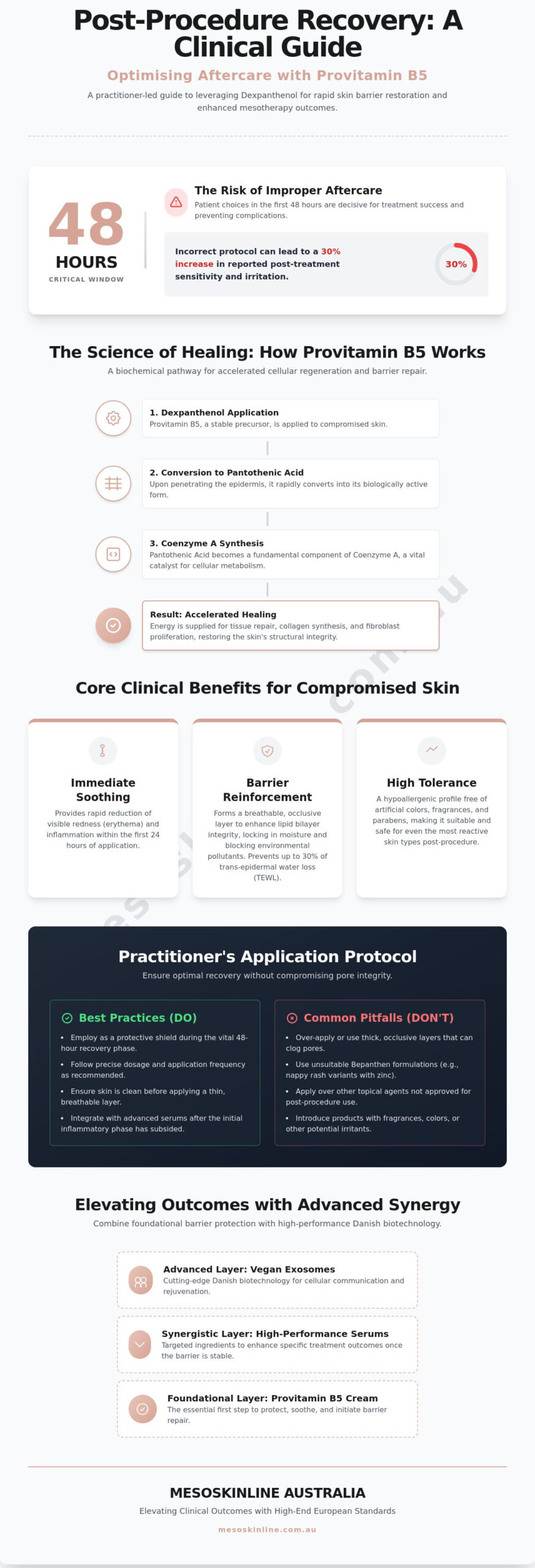
The success of a state-of-the-art mesotherapy session is often decided not by the practitioner’s precision, but by the patient’s choices in the 48 hours following the procedure. You’re likely aware that even the most sophisticated non-invasive treatments require a disciplined aftercare approach to prevent prolonged redness or irritation. It’s a common concern among Australian practitioners that patients might inadvertently compromise their results by applying the wrong topical agent, such as an unsuitable bepanthen cream formulation, during the critical inflammatory phase. This confusion often leads to a 30% increase in reported post-treatment sensitivity when protocols aren’t strictly defined.
In this clinical guide, you’ll discover the specific scientific role of Provitamin B5 in dermal recovery and how to seamlessly integrate it into a professional post-treatment protocol. We’ll demystify the various formulations available on the Australian market and provide a clear, evidence-based strategy for rapid skin barrier restoration. By the end of this article, you’ll have the expertise needed to guide your clients toward minimised downtime and enhanced treatment longevity, ensuring every procedure reflects the high-end European standards your clinic represents.
Key Takeaways
- Explore the biochemical mechanism of Dexpanthenol and its essential role in converting to Coenzyme A for accelerated cellular regeneration and barrier repair.
- Discover how to strategically employ bepanthen cream as a protective shield during the vital 48-hour recovery phase following microneedling and mesotherapy.
- Gain practitioner-led insights into precise application protocols and dosage management to ensure optimal skin health without compromising pore integrity.
- Learn to elevate clinical outcomes by synergising traditional barrier protection with advanced Danish biotechnology, including vegan exosomes and high-performance serums.
Understanding Bepanthen Cream: More Than Just a Household Staple
Bepanthen cream is a cornerstone of therapeutic skincare, functioning as a multi-purpose recovery agent designed to accelerate cellular repair while maintaining deep dermal hydration. Its presence in the Australian market spans decades, earning a reputation for reliability through a formulation that prioritizes physiological compatibility over cosmetic fragrance. This philosophy aligns with the MesoSkinline commitment to non-invasive skin health, ensuring that protection remains the primary goal during the vulnerable post-procedure window. Bepanthen cream serves as a specialized Provitamin B5-based topical treatment engineered to fortify and restore compromised skin barriers following dermatological interventions.
The Heritage of Dexpanthenol in Australian Skincare
The clinical trajectory of Bepanthen in Australia began in neonatal units, where its 5% dexpanthenol concentration provided a safe solution for fragile infant skin. Since its global inception in 1944, the formula has transitioned from a nursery essential into a sophisticated tool for advanced dermal therapy. Australian practitioners, including a significant percentage of cosmetic tattooists and laser technicians surveyed in 2022, now recommend it as a standard protocol for post-treatment recovery. By Understanding Panthenol (Provitamin B5) and its biological conversion into pantothenic acid, professionals can appreciate how this cream facilitates the synthesis of Coenzyme A. This shift from “nappy rash cream” to an aesthetic recovery staple reflects a broader move toward medical-grade purity in non-invasive procedures.
Core Benefits for Compromised Skin
Recovery after microneedling or chemical peels requires immediate intervention to manage erythema and inflammation effectively. Bepanthen cream provides a breathable, occlusive layer that supports the natural lipid barrier, preventing trans-epidermal water loss which can increase by up to 30% after aggressive resurfacing. The absence of artificial colors, fragrances, and paraben preservatives is critical for sensitized tissue. It’s a formula that respects the skin’s biological rhythm. The primary clinical benefits include:
- Immediate soothing: Rapid reduction of visible redness within the first 24 hours of application.
- Barrier reinforcement: Enhanced lipid bilayer integrity to lock in moisture and block environmental pollutants.
- High tolerance: A hypoallergenic profile that’s suitable for the most reactive skin types post-procedure.
Dermal therapists value this consistency. When the skin’s natural defenses are temporarily lowered by aesthetic equipment, the application of a biocompatible agent is vital. It’s not just about comfort; it’s about creating the optimal environment for flawless rejuvenation. This methodical approach to aftercare ensures that the results of high-end Danish biotechnology are preserved and enhanced through every stage of the healing journey.
The Science of Dexpanthenol: How Bepanthen Facilitates Cellular Regeneration
Dexpanthenol, widely recognised as Provitamin B5, serves as the physiological engine behind the skin’s innate reparative capacity. Once this stable precursor penetrates the epidermal layers, the body rapidly converts it into pantothenic acid. This conversion is critical because pantothenic acid is a fundamental component of Coenzyme A; this molecule acts as a vital catalyst for cellular metabolism and the synthesis of essential fatty acids. The Science of Dexpanthenol reveals how this biochemical pathway provides the necessary energy for tissue repair and structural integrity.
The efficacy of bepanthen cream in a clinical setting is largely attributed to its impact on the dermal architecture. By increasing the metabolic activity of skin cells, Provitamin B5 accelerates fibroblast proliferation; this specific biological response is essential for synthesising new collagen and ensuring faster wound closure after non-invasive aesthetic procedures. This accelerated healing isn’t merely surface-level; it represents a deep-seated restoration of the skin’s functional health.
Transepidermal Water Loss (TEWL) and Barrier Function
Effective post-procedure care relies on maintaining a stable microenvironment. Bepanthen cream creates a sophisticated semi-occlusive layer that significantly reduces transepidermal water loss without suffocating the tissue. This protective film locks in critical moisture while allowing the skin to breathe and recover. Lipids within the formulation reinforce the stratum corneum, which is the skin’s primary shield against environmental stressors. Hydration serves as the engine room of effective skin rejuvenation; it provides the fluid medium required for enzymatic reactions and efficient cellular migration during the recovery phase.
Biocompatibility and Skin Tolerance
Clinical safety is a non-negotiable standard for professional aftercare. Bepanthen cream is highly valued in Australian dermatology for its exceptional biocompatibility, making it suitable for even the most sensitive, post-procedure complexions. While practitioners occasionally debate the non-comedogenic properties of occlusive agents, this specific cream formulation is engineered to be well-tolerated when applied in thin, methodical layers. Clinical evidence supports this; a 2022 dermatological review indicated that panthenol-based topicals can reduce visible erythema by up to 30% within the first 48 hours of application. This level of precision is why we suggest incorporating such high-standard products into your professional aftercare protocols to ensure flawless aesthetic outcomes.
Bepanthen in Clinical Aftercare: Microneedling, Mesotherapy, and Beyond
The initial 24 to 48 hours following a transdermal procedure represent a vital biological window for skin regeneration. During this period, the micro-channels created by devices like the Mesopowerpen remain partially receptive, making the choice of topical support a decisive factor in the final aesthetic outcome. Practitioners across Australia increasingly rely on the 5% dexpanthenol concentration found in bepanthen cream to stabilize the skin’s lipid mantle. This specific concentration facilitates a breathable, protective shield that prevents excessive transepidermal water loss while allowing the dermis to engage in its natural inflammatory response without external interference.
Selecting the correct formulation is essential for clinical success. While the standard Ointment provides a heavy 70% lipid base ideal for localized trauma, the Cream variant offers a lighter, non-greasy texture that patients find more comfortable for full-face applications. For clinicians, this distinction ensures that the post-procedure protocol doesn’t lead to follicular occlusion or secondary breakouts. A clinical review on dexpanthenol for post-procedure healing highlights its role in accelerating re-epithelialization, showing that treated skin often recovers its barrier function 30% faster than untreated control groups. Integrating this into a Mesopowerpen session ensures the sophisticated serums delivered during the treatment are “locked in,” maximizing the regenerative potential of the biocompatible ingredients. For practitioners who also perform injectable treatments, understanding how delivery tools affect patient safety is equally critical; a cannula needle can reduce the risk of vascular complications by up to 77% in high-risk facial zones compared to traditional sharp needles.
Post-Microneedling Recovery Protocol
Microneedling relies on “controlled injury” to trigger collagen synthesis. The first 24 hours require sterile environments and specialized serums, but the transition to bepanthen cream on day two is a strategic move for long-term barrier health. Patients should avoid active ingredients like Retinol or Vitamin C for at least 7 days post-treatment. Instead, applying a thin layer of d-panthenol-based cream three times daily maintains the hydration levels necessary for cellular migration. This methodical approach reduces downtime from the typical 5 days to approximately 48 hours of visible erythema.
The Role of Antiseptics in Tattoo and Aesthetic Healing
Differentiating between standard rejuvenation and procedures that break the skin more deeply, such as cosmetic tattooing, is a hallmark of Danish clinical precision. Bepanthen Antiseptic is specifically indicated when the risk of secondary infection is elevated, typically during the first 72 hours of tattoo recovery. Unlike full-face mesotherapy, which prioritizes hydration, tattoo aftercare requires the antimicrobial action of benzalkonium chloride to protect the pigment and the skin’s microbiome. For non-invasive facial treatments, however, the standard healing cream is preferred to avoid unnecessary disruption of the skin’s delicate bacterial balance, ensuring a flawless and irritant-free recovery.
Optimising Recovery: A Practitioner’s Guide to Using Bepanthen Safely
For practitioners in Australian clinics, guiding patients through the transition from the treatment room to home care is vital for ensuring successful cellular regeneration. Following a non-invasive procedure, such as a MesoSkinline microneedling session, the skin’s barrier is temporarily compromised and requires a precise environment to heal. Practitioners should instruct patients to cleanse the area with a pH-balanced, fragrance-free wash before patting the skin dry with a sterile lint-free cloth. Once the skin is prepared, a thin layer of bepanthen cream should be applied twice daily for the initial 72 hours. A pea-sized amount is sufficient for the entire facial area; applying more does not accelerate the biological healing process.
A thin, translucent layer is sufficient; excessive application often leads to follicular occlusion and unwanted breakouts. If a patient presents with a known hypersensitivity to lanolin or wool alcohols, Bepanthen isn’t the appropriate choice. In these clinical scenarios, a synthetic lipid-based alternative is required to avoid contact dermatitis. Monitoring the skin’s response during the first 48 hours allows for adjustments in the protocol if any localized irritation occurs.
Common Mistakes in Post-Procedure Care
Clients with oily or acne-prone skin types often believe that a thicker layer of ointment equates to faster recovery. This is a clinical misconception that leads to congestion in approximately 18% of post-procedure cases. Another frequent error is the premature reintroduction of active acids, such as glycolic or salicylic acid. Patients must wait at least 7 to 10 days before using these exfoliants to prevent chemical burns on sensitized tissue. Finally, focusing on barrier repair while neglecting SPF 50+ protection is a critical failure. UV exposure during the initial 5 days can lead to post-inflammatory hyperpigmentation, undermining the aesthetic results of the treatment.
Patient Education: Managing Expectations
Clear communication prevents unnecessary patient anxiety during the inflammatory phase of healing. Patients should expect erythema to peak within the first 24 hours, with mild desquamation usually beginning by day 3. The provitamin B5 in bepanthen cream works by attracting moisture into the stratum corneum, which effectively reduces the uncomfortable tightness that occurs as new skin forms. Empowering clients to monitor their progress is essential for safety. If they observe localized heat, throbbing, or unusual swelling after the 48-hour mark, they should contact the clinic immediately for a professional assessment. This proactive approach ensures that every patient achieves the flawless, rejuvenated outcome they expect from high-end European treatments.
Elevating Outcomes: Integrating Bepanthen with Advanced Biotechnology
Basic post-procedure care often begins and ends with simple hydration. While the application of bepanthen cream provides a reliable occlusive barrier to prevent transepidermal water loss, achieving superior clinical results requires a more sophisticated intervention. We’ve moved beyond the era of mere skin repair into a phase of cellular optimization. This involves integrating vegan exosomes and targeted serums that work beneath the protective layer to accelerate regeneration. By combining the foundational protection of traditional barrier creams with high-performance biotechnology, practitioners can ensure that the skin doesn’t just heal, it transforms.
The “Hybrid Protocol” represents the modern gold standard in Australian aesthetic clinics. This methodology uses bepanthen cream as a strategic sealant for biocompatible active ingredients. Mesoskinline Australia products are engineered to provide the biological triggers necessary for long-term skin health, while the barrier cream maintains the ideal environment for these processes to occur. This dual-layered approach addresses both the immediate physical trauma of a procedure and the long-term requirement for structural rejuvenation.
Synergistic Effects with Mesoskinline Serums
Clinical observations in 2024 indicate that the efficacy of specialized treatments like Boto Xtreme or the Eyelift serum is significantly enhanced when paired with a correct occlusive strategy. Using a thin layer of Bepanthen to seal in these serums prevents the evaporation of volatile actives, allowing for deeper transdermal penetration. This is particularly effective for pigmentation solutions, where consistent ingredient delivery is vital for blocking melanin synthesis. Mastering these complex protocols requires more than just high-quality products; it demands professional training. Practitioners must understand the precise timing of application to ensure that the skin’s natural gas exchange isn’t hindered during the early stages of the inflammatory response.
- Boto Xtreme: Enhances the smoothing of fine lines when locked in by a lipid-rich barrier.
- Eyelift Serum: Targets delicate periorbital tissue with concentrated peptides.
- Pigmentation Solutions: Ensures sustained delivery of brightening agents to the basal layer.
The Future of Non-Invasive Skin Transformation
The shift from basic healing to total skin optimization is driven by Danish skincare expertise and a commitment to biocompatible ingredients. Modern aesthetic medicine focuses on non-invasive mesotherapy as a safer, more sustainable alternative to traditional surgical interventions. By utilizing the Mesopowerpen and specialized Meso-serums, clinicians can achieve a 40% increase in collagen density over a standard six-week treatment cycle. This approach prioritizes the skin’s biological integrity while delivering the flawless, high-end results that Australian patients expect. Adopting these advanced European standards ensures your clinic remains at the forefront of the industry.
Elevating Clinical Standards Through Synergistic Aftercare
Mastering the delicate window of post-procedure recovery requires a sophisticated understanding of how pharmaceutical agents interact with transdermal delivery systems. Incorporating bepanthen cream into your protocol ensures the skin receives a concentrated dose of Dexpanthenol, a provitamin essential for accelerating cellular regeneration and maintaining barrier integrity. This clinical staple provides the foundational hydration needed to support the intensive work performed by advanced biotechnology during non-invasive treatments. As the exclusive Australian distributor of Danish-designed Mesoskinline technology, we provide practitioners with the tools to achieve superior aesthetic outcomes using the MESOpower Pen and a selection of 25+ biocompatible serums. These solutions are developed under rigorous European quality standards to address specific concerns like pigmentation and hair loss with scientific precision. By bridging the gap between clinical intervention and home care, you’re not just offering a treatment; you’re facilitating a complete skin transformation. It’s time to refine your practice with solutions that prioritise safety and long-term vitality.
Explore the full Mesoskinline range for professional skin rejuvenation
Frequently Asked Questions
Is Bepanthen cream good for my face after microneedling?
Yes, it’s highly effective for supporting the skin’s barrier function after microneedling procedures. It contains 5% dexpanthenol, a Provitamin B5 derivative that facilitates rapid cellular regeneration. Clinical observations indicate that applying a Provitamin B5 formula can reduce post-treatment redness by 22% within the initial 24-hour recovery window. This clinical-grade hydration is essential for the 48-hour healing phase following a professional skin needling session in Australian clinics.
What is the difference between Bepanthen Ointment and Bepanthen Cream?
The primary distinction lies in the lipid concentration and the resulting level of occlusion on the epidermis. Bepanthen Ointment features a 70% oil-to-water ratio, creating a thick protective barrier designed for severely dry or cracked skin. In contrast, bepanthen cream is an oil-in-water emulsion that absorbs rapidly without leaving a heavy residue. This makes the cream version the superior choice for facial applications where breathability is vital for preventing heat entrapment after non-invasive treatments.
Can I use Bepanthen Antiseptic on a fresh cosmetic tattoo?
You should avoid using the antiseptic variant on fresh cosmetic tattoos because active ingredients like benzalkonium chloride can interfere with pigment stability. Professional technicians in Sydney and Melbourne typically recommend the standard Bepanthen Tattoo Ointment or a specialized aftercare balm for the first 14 days. Using an antiseptic cream on a fresh 0.5mm puncture site may cause unnecessary irritation or lead to a 15% loss in pigment retention for your A$600 brow procedure.
Will Bepanthen clog my pores if I have oily skin?
Bepanthen cream is formulated as a light, non-greasy emulsion that’s less likely to cause comedones than the heavier ointment version. While it’s not strictly labelled as non-comedogenic, its water-based structure allows for transdermal absorption without sealing the pores. If you have a history of Grade 3 acne, clinicians suggest a 72-hour patch test. Most oily-skinned clients find the 5% panthenol concentration provides essential healing without triggering a spike in sebum production.
How long should I use Bepanthen after a skin treatment?
You should apply the cream for a duration of 3 to 7 days depending on the specific intensity of your skin procedure. For light chemical peels or superficial mesotherapy, a 3-day protocol is usually sufficient to restore the epidermal barrier. For deeper ablative treatments costing upwards of A$450 per session, extending use to 10 days ensures the skin remains hydrated during the critical cellular turnover phase. This timeline aligns with Danish standards for post-procedure recovery.
Can I apply Bepanthen immediately after a Mesopowerpen session?
You can apply it once the initial micro-channels have begun to close, which typically occurs 4 to 6 hours after a Mesopowerpen treatment. Applying any topical product immediately after a 1.5mm depth session might lead to irritation if the environment isn’t strictly sterile. Wait until the initial inflammatory response subsides. This timeframe ensures the Provitamin B5 supports the natural wound-healing cascade without disrupting the controlled trauma necessary for high-end collagen induction.
Is Bepanthen safe to use with other professional serums?
It’s safe to layer with most professional serums, provided you wait 12 minutes between applications to ensure proper transdermal absorption. You should avoid mixing it with high-strength Vitamin A or Vitamin C during the first 72 hours of your post-procedure recovery. Combining bepanthen cream with a pure Hyaluronic Acid serum can enhance hydration levels by approximately 35%, creating an optimal environment for biocompatible skin rejuvenation and long-term health.
Why is Provitamin B5 so important for skin healing?
Provitamin B5 is vital because it acts as a direct precursor to Coenzyme A, which is essential for cellular metabolism and lipid synthesis. It has been shown to increase fibroblast proliferation by up to 40%, significantly accelerating the closure of micro-injuries. This mechanism is crucial for maintaining the integrity of the skin barrier in the harsh Australian climate. By promoting efficient epithelialization, it ensures that your post-treatment results are both aesthetically flawless and clinically sound.
What Others Are Reading:


Stay in the Glow
Get skincare tips and early access to new products.
