
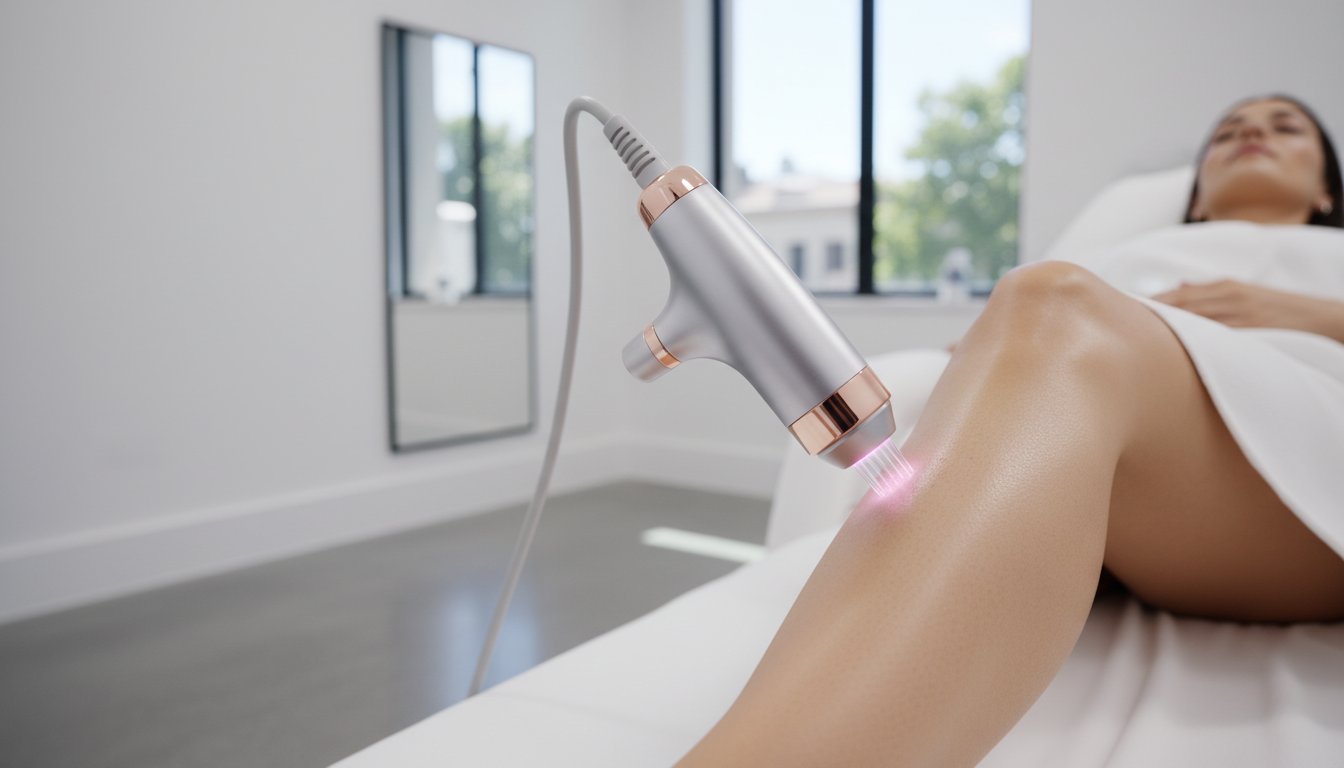
Your physical body scrub might be exacerbating the very texture issues you’re attempting to erase. While 40% of Australian adults contend with the follicular congestion commonly known as strawberry skin, the reliance on aggressive manual exfoliation often leads to micro-tears rather than cellular clarity. You’ve likely found that over-the-counter solutions offer little relief for the persistent, dark-pitted appearance on the nose or the stubborn bumps on your limbs. We understand the frustration of investing in regimes that fail to penetrate the epidermal barrier effectively.
This clinical guide explores the biological mechanisms of keratinisation and the professional protocols necessary to transition from temporary fixes to a flawless, refined complexion. You’ll discover how state-of-the-art transdermal serums and non-invasive resurfacing technologies facilitate deep cellular regeneration. We provide a comprehensive overview of the Danish-engineered devices and biocompatible formulations that are setting new European standards for dermatological excellence in Australian clinics today.
Key Takeaways
- Distinguish between follicular congestion and sebaceous filaments to understand the biological mechanisms behind persistent texture irregularities.
- Learn how hyperkeratosis contributes to the strawberry skin phenomenon and why the Australian climate necessitates specific clinical interventions for dehydration.
- Evaluate the clinical superiority of controlled mechanical resurfacing over aggressive at-home exfoliation to ensure skin barrier integrity and optimal results.
- Explore the two-step professional protocol involving enzymatic preparation and precision microneedling with the Danish-engineered Mesopowerpen.
- Discover how non-invasive mesotherapy cocktails and advanced European technology work in synergy to refine pore architecture and restore a flawless complexion.
Decoding the Strawberry Phenomenon in Professional Dermatology
The term strawberry skin serves as a common colloquialism for a range of follicular textures, most notably Keratosis Pilaris (KP) and open comedones. Within the Australian clinical landscape, practitioners frequently encounter these concerns as patients seek to rectify follicular congestion on the limbs or the appearance of a “strawberry nose” through professional resurfacing. While the former typically involves the accumulation of keratin in the hair follicle, the latter often refers to the visible presence of sebaceous filaments on the nasal bridge and chin. These conditions aren’t merely cosmetic nuisances; they represent a significant disruption in the skin’s ability to reflect light uniformly, which diminishes the overall complexion health.
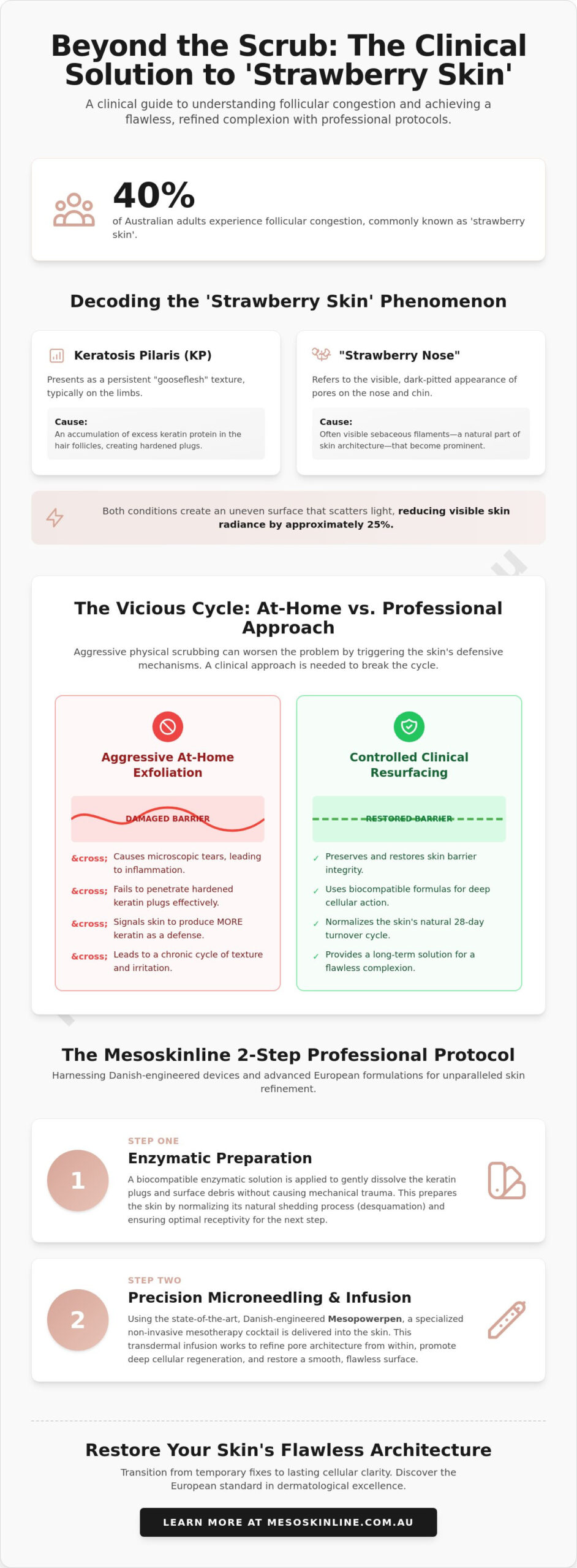
Keratinised plugs act as microscopic obstructions that trap debris and alter the skin’s surface geometry. This structural irregularity can reduce visible skin radiance by approximately 25% because the uneven surface scatters light rather than reflecting it smoothly. Generic botanical extracts often fail to provide results because they lack the molecular weight and transdermal delivery mechanisms necessary to penetrate the hardened keratin. Professional-grade solutions, rooted in Danish expertise and high-end European standards, focus on biocompatible exfoliation to restore a flawless, high-end aesthetic. This expert-led approach prioritises long-term skin health over the fleeting trends often found in the retail beauty market.
Keratosis Pilaris vs. Folliculitis: A Clinical Distinction
Distinguishing between these two conditions is vital for safe treatment protocols. Keratosis Pilaris presents as a persistent “gooseflesh” texture caused by keratin buildup in the follicle, whereas folliculitis is an inflammatory response, often triggered by improper hair removal techniques or bacterial infection. Clinical data from 2023 indicates that up to 40% of adults experience some form of KP, making it a primary driver for resurfacing consultations. Practitioners must identify inflammatory markers before initiating any transdermal protocols to ensure the integrity of the cellular regeneration process isn’t compromised.
The Role of Sebaceous Filaments in Nasal Texture
The nasal texture often termed “strawberry nose” is frequently misunderstood by consumers who mistake sebaceous filaments for blackheads. These filaments facilitate the transport of sebum to the skin’s surface, maintaining the essential lipid balance required for a healthy barrier. Sebaceous filaments are a natural part of human skin architecture. Because they’re a permanent physiological feature, clinical management focuses on refining their appearance through state-of-the-art, non-invasive technology rather than aggressive, damaging extraction methods that can lead to permanent pore dilation and scarring.
The Biological Mechanism of Follicular Congestion
The phenomenon commonly termed strawberry skin is rooted in a physiological dysfunction known as follicular hyperkeratosis. This occurs when the body produces an excess of keratin, a fibrous protein that typically protects the skin from infections and environmental stressors. In cases of follicular congestion, this protein accumulates within the hair follicle, creating a hardened plug that traps sebum and debris. This process is often detailed by Johns Hopkins Medicine on Keratosis Pilaris, where the mechanical blockage results in the characteristic textured appearance practitioners see in clinic.
In the Australian climate, high UV indices and fluctuating humidity levels accelerate trans-epidermal water loss. When the lipid barrier is compromised, the skin lacks the necessary hydration to facilitate natural enzyme activity required for shedding dead cells. This dehydration triggers a defensive response. Instead of refining itself, the skin thickens. Aggressive physical scrubbing often worsens the condition. Mechanical trauma signals the skin to produce even more keratin as a protective shield, leading to a cycle of chronic texture and inflammation that’s difficult to break with home care alone.
Cellular Regeneration and the Keratin Cycle
A healthy epidermis undergoes a desquamation process roughly every 28 days. During this cycle, new cells migrate from the basal layer to the surface. Hormonal fluctuations can increase sebum viscosity, making it harder for these cells to detach. By introducing biocompatible ingredients, practitioners can signal the skin to normalise this turnover. This approach ensures that the strawberry appearance is addressed at a cellular level rather than through superficial means. It’s about restoring the skin’s innate intelligence to shed and renew without obstruction.
Transdermal Delivery: Moving Beyond the Surface
The stratum corneum is a formidable barrier. It prevents roughly 90% of traditional topical treatments from reaching the deeper epidermal layers where regeneration occurs. Molecular weight is critical here; large molecules simply sit on the surface without effect. Non-invasive mesotherapy bypasses this barrier by creating controlled pathways for active compounds. This method allows high-performance serums to reach the follicular root, promoting long-term health. Professionals looking to master these advanced techniques can explore specialised clinical training to elevate their practice and deliver superior patient outcomes.
Professional Resurfacing vs. At-Home Mitigation
Achieving a refined skin texture requires a departure from aggressive home remedies toward evidence-based clinical interventions. While many individuals attempt to resolve strawberry skin with over-the-counter solutions, these often lack the precision required to address the underlying follicular congestion safely. It’s a common misconception that a single treatment can permanently cure this condition. In reality, maintaining a flawless aesthetic requires a structured protocol of professional resurfacing and consistent cellular support. MesoSkinline’s approach emphasizes that long-term skin health isn’t a “quick fix” but a journey of precision and Danish expertise.
The Pitfalls of Physical Exfoliation
Aggressive physical exfoliation often does more harm than good for compromised skin barriers. Retail walnut scrubs or coarse loofahs create microscopic tears in the stratum corneum, which triggers secondary inflammation and disrupts the skin’s protective barrier. This disruption leads to a “rebound effect” where the skin overproduces sebum to compensate for lost essential lipids, potentially worsening the appearance of pores. Clinical practitioners instead advocate for enzymatic or mechanical precision. By using controlled methods, we avoid the jagged friction of DIY tools that often lead to localized redness and irritation. This shift toward non-invasive, professional-grade care ensures the skin remains resilient while undergoing transformation.
Clinical Protocols: The Gold Standard for Texture
Professional resurfacing offers a level of stability and concentration that retail products cannot match. While at-home serums might contain Vitamin C or Niacinamide, professional-grade formulations utilize stabilized, high-concentration actives designed for transdermal delivery. The synergy between chemical resurfacing, utilizing AHAs and BHAs, and mechanical microneedling provides a comprehensive approach to texture refinement. According to the Mayo Clinic’s guide to keratosis pilaris, this condition is caused by the buildup of keratin, making professional intervention necessary to clear the follicular plug effectively.
Modern clinical protocols have evolved to include the integration of PDRN (Polydeoxyribonucleotide) and Exosomes into resurfacing treatments. These biocompatible elements accelerate cellular regeneration and enhance the skin’s structural integrity from within. Professional intervention reduces the risk of post-inflammatory hyperpigmentation, a common complication when attempting aggressive DIY peels without expert supervision. For practitioners in Australia, aligning with European standards of safety and innovation means offering treatments that prioritize the skin’s biological health. By moving beyond the surface-level effects of strawberry skin, we can deliver a more uniform, luminous complexion that reflects the high standards of Danish design and biotechnology.
- Microneedling: Offers controlled mechanical exfoliation without the risk of irregular tearing.
- High-Concentration Actives: Professional serums provide stable Vitamin C and Niacinamide for superior brightening.
- Safety First: Clinical environments mitigate the risk of scarring and PIH through monitored application.
Advanced Protocols for Skin Refinement and Pore Minimisation
The resolution of follicular congestion, often colloquially termed strawberry skin, demands a rigorous five-step clinical methodology. Professionals must move beyond superficial exfoliation to address the structural integrity of the pore and the underlying keratinisation process. This systematic approach ensures that results are both immediate and sustainable, leveraging Danish expertise in non-invasive mesotherapy.
- Step 1: Deep clinical cleansing and enzymatic preparation. Begin with a proteolytic enzyme treatment to dissolve the superficial protein bonds holding keratin plugs in place. This prepares the treatment area for deeper penetration.
- Step 2: Mechanical refinement using the Mesopowerpen. Utilise precise, vertical needle delivery to create controlled micro-channels. This mechanical disruption is essential for breaking down the rigid structure of “strawberry” follicles.
- Step 3: Infusion of targeted serums. Introduce bio-active solutions like C-Vita or Pigmentation Solutions. These formulas are designed for transdermal delivery, ensuring high-potency actives reach the targeted dermal layers.
- Step 4: Post-treatment soothing and barrier restoration. Apply a biocompatible, cooling mask to reduce erythema and replenish the lipid barrier. This step is vital for preventing post-inflammatory hyperpigmentation.
- Step 5: Prescribing a professional home-care regimen. Maintain clinical results with a curated selection of AHAs and moisturisers that prevent the re-accumulation of keratin.
The Power of Microneedling for Keratosis Pilaris
Microneedling serves as a sophisticated mechanical disruptor for stubborn keratinised plugs. By inducing controlled micro-injuries, the Mesopowerpen triggers a natural healing cascade that replaces rigid, plugged tissue with smooth, refined skin architecture. Practitioners shouldn’t use a universal depth for all body parts. The skin on the posterior arms is often thinner, requiring a conservative depth of 0.25mm to 0.5mm. Conversely, the denser dermis of the legs often requires depths of up to 1.0mm to effectively reach the follicle base and stimulate cellular regeneration. This precision ensures the treatment remains non-invasive while delivering medical-grade outcomes.
Serum Selection for Strawberry Skin
The efficacy of the resurfacing protocol relies heavily on the biocompatibility of the infused serums. Niacinamide is a key component in this process; it works to regulate sebum production and refine the visual diameter of the pore. For patients presenting with the dark spots often associated with KP, the C-Vita solution provides a stable, high-performance form of Vitamin C to brighten the complexion. Integrating Vegan Exosomes into the protocol marks a significant advancement in biotechnology. These plant-derived vesicles facilitate rapid cellular communication, which can accelerate the repair process and significantly improve skin texture within a single treatment cycle.
Explore our range of state-of-the-art equipment and professional training and certification to master these advanced protocols.
The Mesoskinline Approach to Flawless Skin Architecture
The Mesopowerpen represents a significant leap in clinical resurfacing technology, merging Danish engineering with the meticulous precision required for advanced texture refinement. It’s not merely a device; it’s a professional instrument designed for controlled transdermal delivery. This technology allows Australian practitioners to address the root causes of follicular congestion without the trauma associated with traditional ablative methods. By facilitating the delivery of non-invasive mesotherapy cocktails, the Mesopowerpen promotes rapid cellular regeneration and structural integrity. Our serums represent the pinnacle of European quality, formulated with high-purity, biocompatible ingredients that adhere to the most stringent EU safety regulations. This focus on purity ensures that clinicians can treat sensitive concerns like strawberry skin with absolute confidence in the biological response.
Clinical excellence in the AU and NZ markets relies on more than just superior hardware. It requires a deep understanding of skin biology and the mastery of specialized protocols. Mesoskinline prioritizes this through comprehensive professional training and certification programs. We don’t just provide tools; we provide a complete educational framework that empowers practitioners to deliver predictable, high-end results. This systematic approach to skin health ensures that every treatment session contributes to long-term architectural improvement rather than offering a temporary aesthetic fix. By aligning with a brand rooted in scientific credibility, clinics can elevate their standards and offer a level of care that distinguishes them from competitors relying on generic technologies.
Danish Expertise in Non-Invasive Aesthetics
European manufacturing standards ensure our serums maintain a level of purity that supports the “Skin Health First” philosophy. These biocompatible formulations work in harmony with the Mesopowerpen to provide a sophisticated alternative to aggressive chemical peels. We support Australian clinics by providing world-class technology and the education necessary to implement these advanced protocols safely. This ensures practitioners can achieve flawless results while maintaining the skin’s natural protective barrier.
Integrating Texture Treatments into Your Practice
Marketing treatments for strawberry skin allows clinics to tap into a high-demand niche of clients seeking relief from persistent follicular texture. By offering specialized refinement packages, your practice can see a substantial ROI through high client retention and visible clinical outcomes. These targeted solutions for texture concerns provide a unique value proposition in the Australian aesthetic market. Elevate your clinic with the Mesopowerpen and professional serums to begin offering these elite resurfacing protocols.
Elevating Clinical Standards in Texture Refinement
Achieving a flawless dermal profile requires a shift from basic exfoliation to advanced transdermal protocols. Addressing the follicular congestion often referred to as strawberry skin demands a precise methodology that balances cellular regeneration with non-invasive safety. Clinical applications of Danish-engineered microneedling confirm that targeted delivery of biocompatible serums can significantly refine pore architecture without the trauma of traditional surgical resurfacing. It’s about mastering the intersection of biotechnology and aesthetic elegance to ensure long-term skin health.
We’re the exclusive APAC distributor of Mesoskinline products, bringing world-class Danish design to practitioners throughout Australia. Our systems are trusted by leading aesthetic professionals across Australia and New Zealand for their clinical excellence and adherence to high-end European standards. These protocols offer a sophisticated solution for professionals who don’t settle for fleeting trends but instead seek measurable, scientific results for their clients. By aligning with a brand that prioritizes education and precision, you’re investing in the future of non-invasive mesotherapy.
Explore our range of professional microneedling pens and serums to integrate state-of-the-art innovation into your clinical practice. We’re here to support your transition toward more refined, expert-led skin transformations.
Frequently Asked Questions
What exactly causes the “strawberry” appearance on legs and arms?
The “strawberry” appearance, clinically known as Keratosis Pilaris or open comedones, is caused by an accumulation of keratin and sebum that plugs the hair follicle. This buildup creates a darkened or textured pore that resembles the seed of a fruit. In approximately 40% of adults, this physiological process is exacerbated by dry skin; it’s a condition that prevents natural exfoliation and leads to follicular congestion.
Can microneedling effectively treat Keratosis Pilaris (strawberry skin)?
Professional microneedling effectively treats strawberry skin by stimulating the body’s natural wound-healing response and inducing cellular regeneration. The mechanical action of the needles breaks up keratin plugs while creating micro-channels for the transdermal delivery of biocompatible serums. This dual-action approach refines the skin’s surface. Clinical observations show it can improve texture by up to 50% after a patient completes their full treatment protocol.
How many professional sessions are required to see a change in skin texture?
Most patients require a series of 3 to 6 professional sessions to achieve a visible and lasting change in skin texture. These treatments are typically spaced at 4 to 6 week intervals to align with the natural 28 day skin cell turnover cycle. While initial smoothing’s often felt after the first appointment, the most profound structural improvements usually manifest between the third and fourth session when collagen synthesis peaks.
Is there a specific serum that helps with sebaceous filaments on the nose?
Serums containing 2% Salicylic Acid or specialized meso-cocktails are the most effective solutions for managing sebaceous filaments. These lipophilic formulas penetrate deep into the pore to dissolve the sebum and debris that cause the darkened appearance. Using a professional-grade delivery system ensures these active ingredients reach the necessary dermal depth. It’s more effective than topical applications that often sit on the skin’s surface without penetrating.
Why do my “strawberry legs” look worse after shaving?
Shaving often worsens the appearance of textured legs because the razor blade can cause micro-trauma and inflammation around the follicular opening. When the hair’s cut bluntly at the surface, the remaining dark root remains visible through the pore, while the physical irritation makes the surrounding skin appear red and raised. This 24 hour post-shave inflammatory response highlights the underlying congestion, making these texture issues much more prominent.
Can I use the Mesopowerpen on sensitive skin with texture issues?
The Mesopowerpen is specifically designed for use on sensitive skin because its adjustable needle depth allows for a highly customized and controlled treatment. Practitioners can select precise settings, such as a 0.25mm depth for delicate areas, to ensure the skin’s barrier remains intact while still addressing texture irregularities. This Danish-engineered technology provides a safe, non-invasive alternative for individuals who can’t tolerate aggressive chemical peels or high-heat laser treatments.
What is the difference between strawberry skin and permanent scarring?
Follicular congestion is a functional blockage of the hair follicle, whereas permanent scarring involves structural damage to the deeper dermal layers. These visible pores can be resolved through professional resurfacing and proper exfoliation, but scars often require more intensive collagen induction therapy to remodel the tissue. Understanding this distinction is vital; 100% of follicular issues are treatable with the right clinical protocol, while scarring may only be improved.
How does the Australian climate affect the severity of strawberry skin?
The Australian climate significantly impacts skin texture, as high UV exposure and low humidity levels lead to increased transepidermal water loss. In regions like Western Australia or the Northern Territory, skin dehydration can increase by 15%, causing the skin to thicken and trap keratin more easily. This environmental stress necessitates a robust clinical approach. It should combine deep hydration with professional exfoliation to maintain a smooth, refined appearance throughout the year.
What Others Are Reading:


Stay in the Glow
Get skincare tips and early access to new products.
