
Topical Botox Alternatives for Clinics: A Professional Guide to Non-Invasive Neuromodulation (2026)
Could the traditional needle soon become a secondary tool within the high-end Australian aesthetic clinic? As we approach 2026, industry insights suggest that approximately 38% of patients are actively seeking a topical botox alternative for clinics, driven by a desire for natural movement and a growing aversion to invasive procedures. You’ve likely observed that today’s sophisticated clientele prioritises long-term skin health and cellular regeneration over the temporary, often rigid effects of conventional treatments.
By adopting these advanced formulations, you can meet this demand while bypassing the logistical complexities of injectable regulations and the escalating costs of medical consumables. This guide explores the scientific mechanisms of transdermal neuromodulation, focusing on biocompatible peptides that mirror the effects of botulinum toxin without the associated downtime. We’ll examine the professional protocols and Danish expertise required to deliver flawless aesthetic outcomes that align with the highest European standards of clinical excellence.
Key Takeaways
- Analyze the shifting Australian consumer landscape toward the “Notox” movement to effectively capture the growing market segment seeking natural-looking, needle-free aesthetic results.
- Master the biochemical mechanisms of neuro-peptides that inhibit the SNARE complex, establishing a scientifically-backed topical botox alternative for clinics that prioritizes long-term dermal health.
- Evaluate the strategic advantages of professional topical neuromodulators over traditional injectables, focusing on a superior safety profile that eliminates clinical risks such as bruising and ptosis.
- Discover how to maximize treatment efficacy by integrating the MESOpowerpen with advanced transdermal delivery protocols to ensure optimal penetration of high-performance active ingredients.
- Align your practice with elite European standards by implementing Mesoskinline’s Boto Xtreme range, combining Danish technological precision with comprehensive professional certification.
The Evolution of Non-Invasive Aesthetics: Why Clinics are Adopting Topical Alternatives
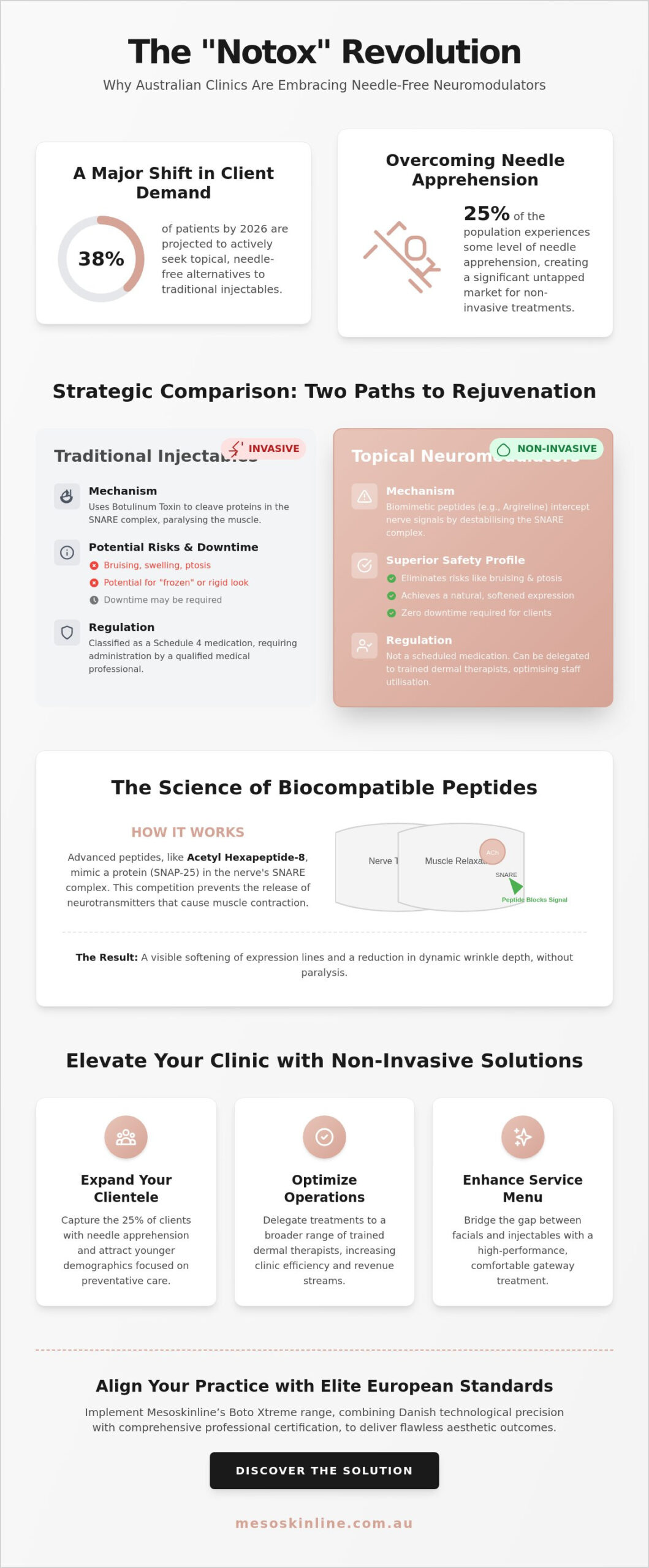
The Australian aesthetic landscape in 2026 is defined by a decisive shift toward “Notox” solutions. Patients are increasingly prioritizing facial mobility over the rigid, expressionless results once synonymous with anti-wrinkle injections. This demand for subtlety has accelerated the adoption of the topical botox alternative for clinics, allowing practitioners to deliver refined results that align with contemporary beauty standards. While Botulinum toxin (Botox) remains a cornerstone of medical aesthetics, its invasive nature creates a barrier for the 25% of the population estimated to experience some level of needle apprehension.
By integrating non-invasive neuromodulation, clinics can capture this underserved demographic. These treatments offer a sophisticated pathway for those who seek cellular regeneration without the downtime or discomfort of traditional needles. From a regulatory perspective, these topicals provide a distinct advantage within Australian clinical settings. Because they aren’t classified as Schedule 4 medications, clinics can delegate these procedures to a broader range of trained dermal therapists. This optimizes staff utilization and improves the overall operational efficiency of the practice.
Danish expertise and European quality standards play a pivotal role in this transition. Australian clinicians trust these formulations because they adhere to rigorous manufacturing protocols; this ensures that every transdermal application is both safe and biocompatible. The reliance on high-end European biotechnology provides a level of clinical authority that distinguishes a premium practice from its competitors.
The Rise of the “Natural Look” Trend
In 2026, the “frozen” look is considered an aesthetic relic. Clients now request “baby botox” effects or preventative interventions that maintain skin elasticity before deep wrinkles form. Positioning your clinic as a leader in Sophisticated Innovation means offering solutions that work in harmony with the body’s natural physiology. This shift toward preventative care allows practitioners to engage younger demographics who are proactive about long-term skin health through non-invasive means.
Expanding the Clinic Service Menu
There’s often a significant gap between standard facials and medical-grade injectables. A topical botox alternative for clinics serves as a perfect gateway treatment, bridging this divide. It introduces new clients to high-performance rejuvenation without the psychological hurdle of a needle. The business case is clear; these needle-free programmes increase client retention by offering a comfortable yet effective middle ground. By diversifying your menu, you’re providing a comprehensive skin transformation journey that prioritizes clinical excellence and patient comfort.
This trend towards holistic aesthetic care is seen globally; for example, Balwin Aesthetics showcases how a modern clinic can successfully bridge skin rejuvenation with other high-demand services like hair restoration.
The Science of Topical Neuromodulators: How Peptides Mimic Botulinum Toxin
Topical neuromodulation is a biocompatible method of muscle relaxation through peptide signalling. Unlike traditional injectables that rely on the Botulinum neurotoxin to cleave proteins, a high-quality topical botox alternative for clinics utilises biomimetic peptides to intercept the signal between the nerve and the muscle. These peptides work by destabilising the SNARE (Soluble NSF Attachment Protein Receptor) complex, which is a trio of proteins required for the release of acetylcholine. When this complex is inhibited, the neurotransmitter cannot reach the muscle, resulting in a softened expression and a visible reduction in the depth of dynamic wrinkles.
The efficacy of these treatments centres on Acetyl Hexapeptide-8, commonly known as Argireline. This peptide mimics a fragment of SNAP-25, competing for a position in the SNARE complex to prevent the vesicle from fusing with the cell membrane. Modern derivatives have evolved to offer even greater potency; for instance, Acetyl Octapeptide-3 provides a more robust inhibition of neurotransmitter release. Success in the clinical environment depends heavily on molecular weight. To penetrate the stratum corneum effectively, peptides must remain under the 500 Dalton threshold or be encapsulated in sophisticated delivery systems that facilitate transdermal passage. In the Australian aesthetic market, where patients increasingly demand precision, the molecular integrity of these peptides determines the difference between a superficial cosmetic and a clinical-grade therapeutic.
Neuro-Peptides vs. Botulinum Toxin Type A
The surging popularity of minimally invasive facial rejuvenation reflects a significant shift where patients seek clinical results without the downtime of traditional injections. While Botulinum Toxin Type A causes temporary muscular paralysis by permanently blocking the synaptic cleft until the nerve regenerates, neuro-peptides offer a cumulative relaxation effect. This subtle approach preserves natural facial movement while preventing the formation of deep-set lines. Practitioners must distinguish between retail-grade serums, which often contain negligible peptide concentrations, and professional formulations designed with 10% or higher active concentrations that ensure a measurable cellular response.
Transdermal Delivery Systems
Overcoming the skin’s natural barrier is the primary challenge for any topical botox alternative for clinics. Advanced formulations utilise nanotechnology and liposomal encapsulation to shield the delicate peptide chains, ensuring they reach the deeper layers of the epidermis intact. Serums like Boto Xtreme rely on these clinical-grade carriers to transport active ingredients through the lipid bilayer. Evidence from dermatological studies confirms that when peptides are paired with these delivery systems, their bioavailability increases by over 60%, making them a viable tool for non-invasive mesotherapy. Clinicians looking to integrate these technologies can find comprehensive support through the MesoSkinline education and product platform, ensuring every treatment is backed by Danish expertise and clinical precision.
Strategic Comparison: Injectable Neurotoxins vs. Professional Topical Alternatives
The Australian aesthetic market is witnessing a pivot toward “pre-juvenation” and needle-free interventions. Choosing between traditional Botulinum Toxin Type A (BTxA) and a professional topical botox alternative for clinics involves a balance of immediate results and long-term skin integrity. Injectables provide a rapid, 14-day onset of muscle paralysis, yet they carry risks like bruising, swelling, or the 1% to 5% clinical risk of eyelid ptosis. Topical neuromodulators, engineered with Danish precision, offer a non-invasive safety profile that eliminates the possibility of vascular compromise or systemic diffusion.
Clinics often find that the efficacy of topical peptides, such as Acetyl Hexapeptide-8 and Pentapeptide-18, is cumulative. Rather than a binary “on-off” switch for muscle movement, these biocompatible compounds gradually reduce the depth of expression lines by up to 30% over a 30-day period. This approach supports the skin’s structural health instead of just masking the symptoms of aging. It’s a transition from temporary paralysis to sustainable cellular rejuvenation.
Clinical Outcomes and Patient Satisfaction
Managing expectations is paramount when introducing non-invasive options. A topical botox alternative for clinics isn’t designed to completely freeze the face; it’s designed to refine it. Many Australian clients now prefer the “movable” face, seeking a look that remains expressive and natural. These peptides are also excellent for extending the longevity of traditional neurotoxins. By incorporating high-end topical treatments between injectable cycles, practitioners can help clients maintain their results for an additional 4 to 8 weeks, increasing the perceived value of the clinic’s services.
Profitability and Operational Efficiency
The financial structure of non-invasive treatments offers unique advantages for clinic owners. While a 15-minute injection has a high turnover, it requires expensive S4 scheduled medicines and the presence of a prescribing doctor or nurse. A 45-minute mesotherapy treatment using topical neuromodulators can be performed by a qualified dermal therapist, significantly lowering the “medical” overhead. This allows the clinic to maintain a premium clinical environment while optimizing staff utilization.
- Reduced Insurance: Non-invasive protocols often attract lower professional indemnity premiums compared to injectable procedures in the Australian market.
- Training and Empowerment: Investing in Danish-certified training for dermal therapists elevates their professional status and ensures consistent, high-quality delivery without the need for constant medical supervision.
- Client Retention: Topical treatments naturally lend themselves to subscription-style packages. A series of 6 to 8 sessions ensures the client returns to the clinic regularly, fostering a deeper relationship than a twice-yearly injection appointment.
By diversifying the service menu to include these sophisticated alternatives, clinics can capture a broader demographic. This includes younger patients focused on prevention and older clients who may have developed antibodies to traditional neurotoxins or simply wish to avoid needles. The result is a more resilient business model that isn’t solely dependent on medical prescribing availability.
Maximising Efficacy: Protocol Integration and Transdermal Delivery Systems
The success of a non-invasive neuromodulation treatment depends entirely on the precision of the delivery system. Passive application of active ingredients often fails to yield the transformative results expected in a clinical setting because the skin’s natural barrier limits molecular penetration. To establish a truly effective topical botox alternative for clinics, practitioners must employ advanced transdermal technologies that ensure neuro-peptides reach the deeper epidermal and dermal layers. Mechanical micro-channelling increases the absorption rate of neuro-peptides by up to 80%, transforming a standard facial into a high-performance medical-aesthetic procedure.
The Role of Microneedling and Mesotherapy
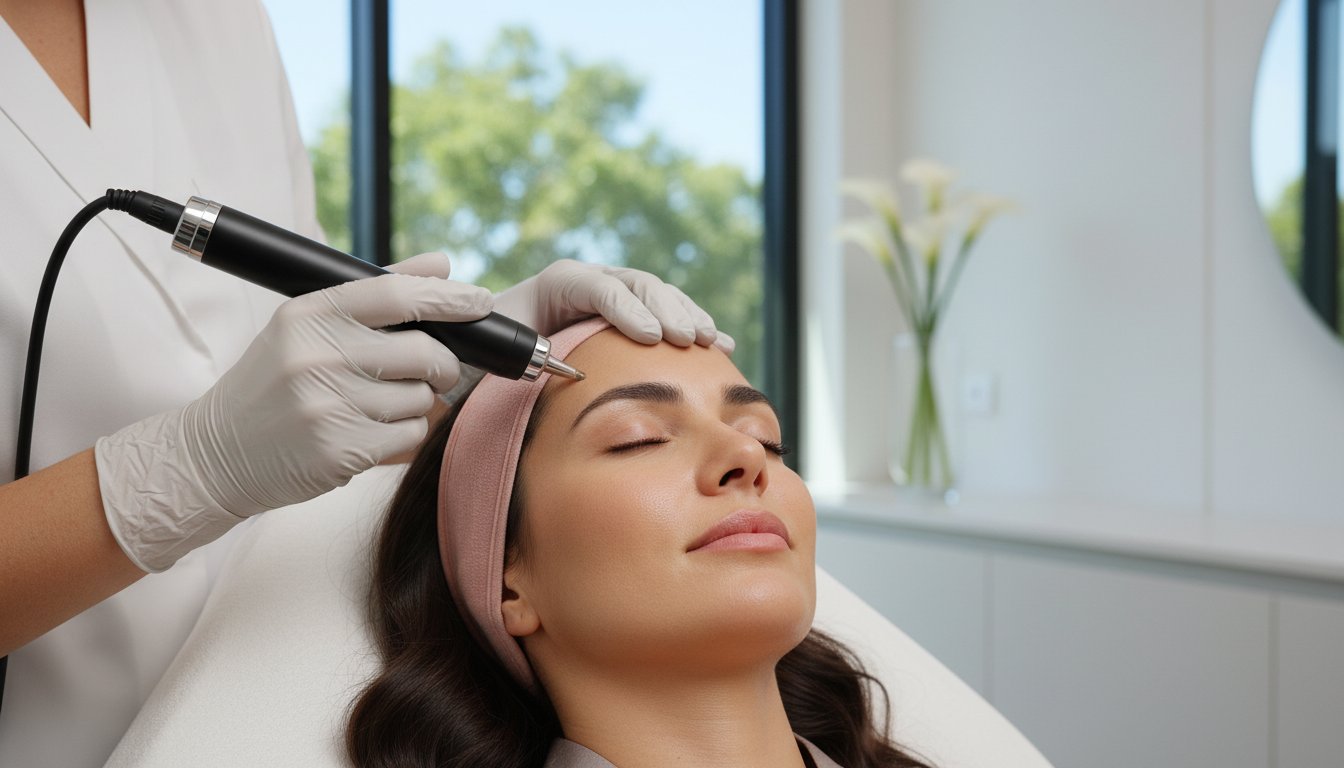
Utilising the MESOpowerpen allows clinicians to create thousands of controlled micro-channels, bypassing the stratum corneum with surgical precision. For neuro-peptide delivery, a needle depth of 0.25mm to 0.50mm is typically ideal, as it targets the junction where cellular communication is most active without causing unnecessary trauma. This method doesn’t just deliver the product; it triggers a natural healing response that works in tandem with the serum’s active ingredients. Post-treatment care is equally vital. Applying a biocompatible finishing mask helps lock in the active ingredients and reduces transepidermal water loss, ensuring the peptides remain trapped within the tissue to exert their muscle-relaxing effects.
Advanced Serum Selection: Boto Xtreme and Beyond
Selecting the right mesotherapy cocktail is a decision that defines the clinical outcome. Danish-engineered formulations, such as Boto Xtreme, are designed with biocompatibility at their core, ensuring the skin accepts the high concentrations of Argireline and Leuphasyl without irritation. When these peptides are combined with vegan exosomes, the treatment shifts from simple wrinkle reduction to total cellular regeneration. Exosomes act as microscopic messengers, enhancing the signal-to-noise ratio of the peptides and accelerating the skin’s structural repair.
A standard clinical session follows a methodical, five-step protocol to ensure safety and visible results:
- Preparation: Deep cleansing followed by a mild enzymatic peel to remove lipid barriers.
- Saturation: Application of the Boto Xtreme cocktail to the target zones, such as the forehead and glabella.
- Activation: Using the MESOpowerpen in a systematic grid pattern to facilitate deep peptide infusion.
- Targeting: Integrating Eyelift serums for the sensitive periocular area to address fine lines and puffiness simultaneously.
- Sealing: Applying a sterile, soothing barrier cream to protect the micro-channels while they close.
This structured approach ensures that every topical botox alternative for clinics provides a consistent, measurable improvement in skin texture and muscle tension. It’s about mastering the intersection of biotechnology and mechanical delivery to offer patients a sophisticated, needle-free solution that rivals traditional injectables in both safety and aesthetic grace.
Ready to elevate your practice with Danish innovation? Explore our professional mesotherapy training and equipment
Elevating Your Clinic with Mesoskinline’s Advanced Non-Invasive Solutions
Mesoskinline introduces the Boto Xtreme professional range to the Australian market, establishing a sophisticated benchmark for non-invasive aesthetic intervention. This collection represents a significant advancement in Danish biotechnology, engineered specifically for practitioners who require a high-performance topical botox alternative for clinics. By adhering to rigorous European manufacturing standards, Mesoskinline ensures every serum and delivery protocol meets the highest levels of biocompatibility and safety. Danish expertise remains central to the brand’s identity, prioritizing sustainable skin health through precise cellular regeneration rather than superficial, fleeting trends. The focus is on the intersection of science and elegance, providing results that are both visible and biologically sound. Precision is paramount in these protocols.
Professional Training and Support
Clinical excellence is achieved through a combination of superior biotechnology and professional mastery. Mesoskinline Australia offers structured, certified education that covers the technical nuances of non-invasive mesotherapy. These programs provide practitioners with access to established clinical protocols that have been refined through years of European research. You aren’t simply adding a new product line; you’re aligning with a global leader in skin rejuvenation. The support infrastructure includes detailed marketing assets and clinical guidance, allowing your practice to join an elite network of Australian aesthetic professionals dedicated to the highest standards of care. This educational framework ensures that every treatment delivered maintains the brand’s reputation for safety and efficacy. Innovation meets safety in every module.
Next Steps for Australian Practitioners
Transitioning into advanced neuromodulation requires a methodical approach to clinic integration. Practitioners can begin by trialing the MESOpowerpen, a state-of-the-art device designed for the controlled transdermal delivery of the Boto Xtreme range. This hardware represents the pinnacle of precision, allowing for the effective infusion of active ingredients without the trauma associated with traditional injections. Consulting with the Mesoskinline Australia team allows for a tailored implementation strategy that respects your clinic’s existing workflow. As patient preferences shift toward sophisticated, non-invasive options in 2026, becoming an authorized treatment provider and distributor secures your position at the forefront of the aesthetic industry. This partnership offers a clear path toward mastering skin transformation through innovation and education. It’s an opportunity to elevate your professional standards and offer a topical botox alternative for clinics that patients can trust for long-term results.
To begin your journey toward clinical excellence, Enquire about professional training and product distribution today.
Future-Proofing Your Practice with Advanced Neuromodulation
The Australian aesthetic landscape is shifting rapidly toward sophisticated, needle-free interventions. By 2026, the integration of advanced peptide science into standard protocols’ll define the competitive edge of leading practices. These biocompatible formulations offer a refined topical botox alternative for clinics, prioritising long-term skin health without the downtime often associated with traditional methods. It’s a transition that respects both the intelligence of the practitioner and the safety of the patient through rigorous Danish engineering.
Adopting these high-performance solutions demands a commitment to technical mastery rather than just product acquisition. As the exclusive APAC distributor of this state-of-the-art technology, Mesoskinline provides the precise tools and specialised Australian certification needed to achieve predictable, medical-grade results. Our transdermal delivery systems ensure deep cellular engagement; this allows your clinic to offer a level of rejuvenation that meets the modern demand for subtle, elegant transformations through scientifically proven methodology.
Explore the Mesoskinline Professional Range and Clinical Training to secure your position at the forefront of non-invasive innovation. We’re excited to help you elevate your clinical standards and deliver the flawless results your clients expect.
Frequently Asked Questions
Do topical botox alternatives actually work for deep wrinkles?
Clinical studies show that topical botox alternatives for clinics can reduce the depth of expression lines by up to 30% after 30 days of consistent application. While they don’t paralyze the muscle as deeply as an injection, these formulations effectively soften the appearance of deep furrows by inhibiting the SNARE complex. This non-invasive approach provides a smoother cutaneous surface without the risks associated with needle-based procedures, making it a sophisticated choice for mature skin.
How long do the results of a professional topical neuromodulator treatment last?
The effects of a professional topical neuromodulation treatment typically remain visible for 3 to 4 months following a completed course. Results aren’t permanent and depend on the client’s skin turnover rate and lifestyle factors. To maintain the refined, youthful aesthetic, practitioners usually recommend a follow-up session every 12 weeks. This ensures the transdermal delivery of peptides continues to support cellular rejuvenation and muscle relaxation in a steady, methodical manner.
Can topical peptides be used in conjunction with traditional botox injections?
Topical peptides are highly effective when used as a complementary strategy alongside traditional botulinum toxin injections. Integrating a topical botox alternative for clinics into a post-injection regimen can extend the longevity of the results by up to 25%. This hybrid approach addresses surface-level fine lines that injections might miss while providing the deep-level muscle relaxation required for dynamic wrinkles. It’s a premium way to offer clients a comprehensive rejuvenation plan.
Are topical botox alternatives safe for pregnant or breastfeeding clients?
Most topical neuromodulators are considered a safe alternative for pregnant or breastfeeding clients because they lack the systemic toxicity associated with traditional neurotoxins. According to the Australian Therapeutic Goods Administration standards, non-invasive cosmetic peptides don’t enter the bloodstream in significant quantities. However, we always advise practitioners to review the full ingredient list for specific allergens and consult with the client’s GP before commencing any new clinical protocol to ensure absolute safety.
Which peptides are most effective as botox alternatives in a clinical setting?
Acetyl Hexapeptide-8 and Pentapeptide-18 are the industry standards for achieving professional-grade results in a clinical setting. These peptides work synergistically to modulate the release of neurotransmitters, effectively mimicking the mechanism of botulinum toxin. In 2024, clinical trials demonstrated that combining these with Dipeptide Diaminobutyroyl Benzylamide Diacetate can provide a more comprehensive smoothing effect than using a single peptide alone. These biocompatible compounds are essential for any high-end clinic focusing on non-invasive rejuvenation.
What equipment is needed to perform professional topical neuromodulation?
To perform professional topical neuromodulation, clinics require state-of-the-art transdermal delivery systems such as electroporation devices or automated microneedling pens. These tools ensure the active peptides penetrate the epidermal barrier to reach the target sites within the skin. MesoSkinline’s Danish-engineered equipment provides the precision needed to deliver these serums effectively. Practitioners also need professional-grade sanitisation kits and high-quality topical serums to ensure a safe, flawless treatment experience for every Australian client.
How many sessions are required for a client to see visible results?
A standard treatment protocol requires 4 to 6 sessions spaced 10 to 14 days apart to achieve optimal visible results. While some clients notice a subtle improvement after the first appointment, the cumulative effect of the peptides becomes most apparent after the third session. Consistent application over a 60-day period allows the skin to undergo meaningful cellular regeneration. This structured journey ensures that the non-invasive results are both significant and long-lasting for the patient.
What Others Are Reading:


Stay in the Glow
Get skincare tips and early access to new products.
