
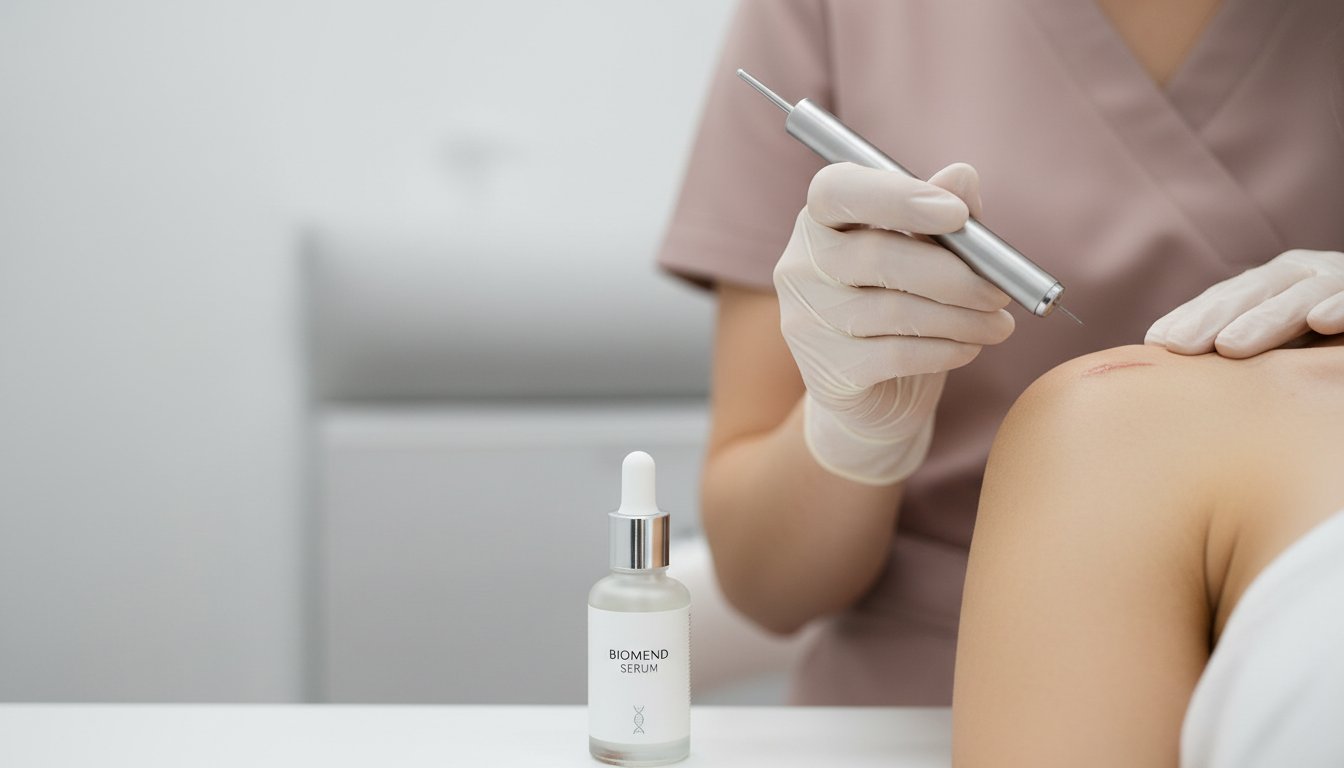
Clinical Microneedling for Surgical Scars: Professional Protocols and Advanced Serum Synergies
Why do we continue to treat complex post-operative fibrotic tissue with the same generic approach used for basic skin rejuvenation? For many Australian practitioners, the challenge isn’t the device itself, but the lack of a specialized microneedling for surgical scars protocol that addresses the unique density of surgical adhesions. You’ve likely noticed that standard treatments often yield unpredictable outcomes, leaving both you and your clients searching for more refined, non-invasive solutions that don’t compromise on safety.
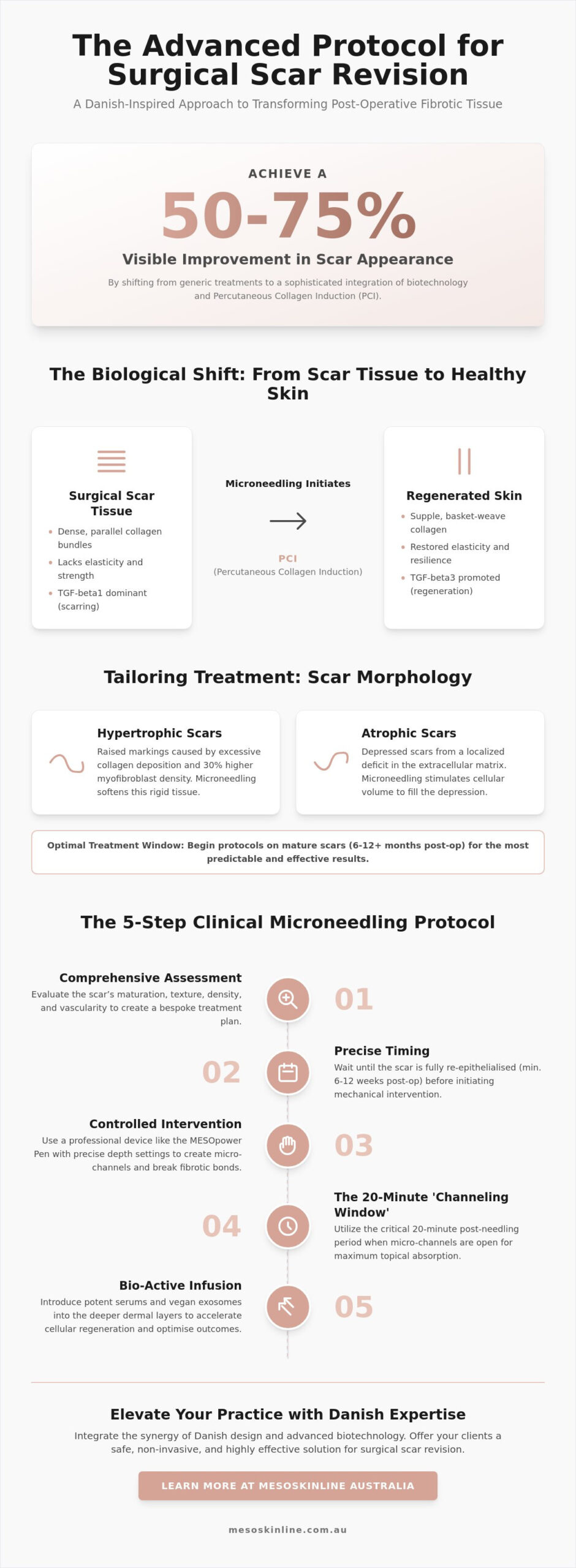
By shifting your focus from simple mechanical trauma to a sophisticated integration of biotechnology, you can transform these challenging cases into clinical success stories. This article provides the expertise needed to master advanced protocols and bio-active serum synergies, including the use of vegan exosomes to accelerate cellular regeneration. You’ll learn how a methodical, Danish-inspired approach can deliver a 50% to 75% improvement in scar appearance. We’ll examine the precise depth settings, frequency, and transdermal delivery methods that establish your practice as a leader in high-end, evidence-based scar revision.
Key Takeaways
- Decipher the biological architecture of surgical scars to effectively manage the transition from initial inflammation to long-term dermal remodeling.
- Implement a sophisticated microneedling for surgical scars protocol that balances clinical precision with bespoke needle depth selection for diverse anatomical regions.
- Optimise post-needling outcomes by utilizing the critical 20-minute “Channeling Window” to introduce biocompatible vegan exosomes into the deeper dermal layers.
- Maintain the highest safety standards within the Australian clinical environment by mastering advanced hygiene protocols and identifying critical contraindications.
- Experience the synergy of Danish design and biotechnology through the MESOpower Pen, a tool engineered for the rigours of professional scar revision.
Understanding Surgical Scar Tissue and the Biological Rationale for Microneedling
Surgical scars represent a complex departure from the skin’s natural architecture. While healthy dermis features a sophisticated basket-weave arrangement of collagen fibers, scar tissue is characterized by dense, parallel bundles of collagen that lack the elasticity and tensile strength of uninjured skin. This structural difference occurs during the transition from the inflammatory phase to the remodeling phase of healing. In a typical surgical recovery, the body initially produces Type III collagen, a thin and disorganized form of tissue. Over 12 months, this should ideally be replaced by Type I collagen. However, in surgical scars, this transition often results in an overproduction of fibrotic tissue or an insufficient structural foundation, leading to visible irregularities.
Implementing a microneedling for surgical scars protocol allows practitioners to intervene in this biological cycle through a “controlled injury” mechanism. By creating thousands of microscopic punctures, we trigger a fresh wound healing cascade without destroying the epidermis. This process shifts the skin’s environment from a state of stagnant fibrosis to one of active regeneration. It’s a method rooted in Danish principles of precision and safety, ensuring that the skin’s integrity is respected while its internal repair mechanisms are harvested for aesthetic refinement.
Hypertrophic vs. Atrophic Surgical Scars
Differentiating between scar morphologies is vital for clinical success. Hypertrophic scars are raised, erythematous markings that remain within the original incision boundaries, often caused by excessive collagen deposition. Conversely, atrophic scars appear as depressions where the dermal bridge has failed to support the surface. Mechanical stimulation is effective for both; it softens the rigid density of hypertrophic tissue and stimulates cellular volume in atrophic areas. Clinical observations suggest that treating mature scars, those older than 12 months, yields the most predictable results as the tissue has fully entered the final remodeling stage.
- Hypertrophic: Characterised by a 30% higher density of myofibroblasts.
- Atrophic: Defined by a localized deficit in the extracellular matrix.
- Timing: Protocols usually begin after the initial 6-month proliferative window.
Percutaneous Collagen Induction (PCI) Mechanisms
The efficacy of this treatment relies on Collagen induction therapy, or PCI. When the needles penetrate the fibrotic bundles, they disrupt the physical “gridlock” of the scar. This mechanical action releases specific growth factors, most notably TGF-beta3. Unlike the TGF-beta1 found in initial scarring, TGF-beta3 is associated with regenerative, scar-free healing. This shift in the cytokine profile encourages the replacement of thick, parallel collagen with the supple, interlaced fibers found in youthful skin. It’s a sophisticated biological reset that moves beyond surface-level camouflage. PCI is the mechanical breaking of fibrosis to allow healthy tissue regrowth.
By following a rigorous microneedling for surgical scars protocol, clinicians can offer a non-invasive alternative to secondary surgeries. This approach aligns with European standards of dermatological excellence, focusing on long-term skin health and biocompatible recovery. The goal isn’t just to hide the scar, but to fundamentally alter its histology for a smoother, more resilient finish.
The Clinical Microneedling Protocol for Surgical Scar Revision
The success of scar revision depends on a meticulous, evidence-based approach that respects the biological timeline of wound healing. Implementing a standardized microneedling for surgical scars protocol ensures that practitioners deliver consistent results while minimizing the risk of post-inflammatory hyperpigmentation. This clinical workflow begins with a comprehensive patient assessment, where the scar’s maturation, vascularity, and texture are evaluated.
Practitioners should wait until the scar is fully re-epithelialised, usually at least 6 to 12 weeks post-surgery, before initiating mechanical intervention. A comprehensive review on microneedling highlights how this controlled trauma triggers the release of growth factors like TGF-beta3, which promotes regenerative rather than fibrotic healing. The objective is to replace disorganized collagen with a structured lattice that mimics healthy tissue.
Phased Treatment Timing
Timing is everything in scar management. For early-stage scars that are still pink or slightly raised, the focus is on modulating the inflammatory response. Chronic, mature scars often require more aggressive mechanical disruption to break down dense collagen bundles. Priming the skin for 14 to 21 days with topical vitamins or antioxidants before the first session enhances the skin’s regenerative capacity. You’ll know a scar is ready for treatment when the initial wound closure is complete and the tissue is no longer tender to the touch.
Needle Depth and Speed Calibration
Precision in depth selection is what separates professional results from amateur attempts. On the face, where the dermis is thinner, depths of 0.5mm to 1.5mm are typically sufficient to reach the papillary dermis and stimulate collagen synthesis. For body scars, particularly on the back or limbs, deeper interventions ranging from 1.5mm to 2.5mm are necessary to penetrate the thicker reticular dermis.
High-speed oscillation is a hallmark of the Danish-engineered technology used in these procedures. Operating at higher speeds reduces epidermal dragging, which significantly lowers patient discomfort and ensures cleaner micro-channels. Use a stamping technique for dense, fibrotic tissue to ensure vertical penetration without tearing. For larger, flatter areas, a gliding motion with a high-quality, biocompatible serum facilitates smoother movement.
Recovery intervals are non-negotiable. A 4 to 6 week gap between sessions allows for the full cycle of collagen maturation and cellular turnover. Rushing this process can lead to over-inflammation and poor aesthetic outcomes. Practitioners looking to master these nuances can explore specialized professional training and equipment
Optimising Outcomes: Integrating Vegan Exosomes and Bio-active Serums
The efficacy of a professional microneedling for surgical scars protocol relies on more than mechanical trauma; it depends on the biological response triggered during the “channeling window.” This critical period, lasting approximately 20 minutes post-needling, represents the time when micro-channels remain patent before the skin’s natural coagulation and inflammatory cascades begin to seal the pathways. Delivering high-molecular-weight actives during this window ensures deep transdermal absorption that topical application alone cannot achieve.
MesoSkinline introduces a sophisticated shift from traditional growth factors to vegan exosomes. These extracellular vesicles act as bio-intelligent messengers, delivering microRNA and proteins that reprogram fibroblasts to produce organized Type I collagen instead of the dense, disorganized Type III collagen characteristic of scar tissue. This cellular reprogramming is supported by the inclusion of Polydeoxyribonucleotide (PDRN). Derived from DNA fragments, PDRN accelerates tissue repair by stimulating A2A adenosine receptors, which helps resolve chronic inflammation in stubborn surgical sites. According to a clinical update on microneedling for scars, the synergy between mechanical needling and specific bio-active agents significantly enhances the remodeling of fibrotic tissue.
The Exosome Advantage in Scar Revision
Vegan exosomes offer a superior safety profile and ethical advantage over human-derived alternatives. These plant-sourced vesicles are highly biocompatible and stable, ensuring that the signaling molecules remain protected until they reach the target cells. While traditional serums provide surface-level hydration, exosome-fortified protocols initiate a paracrine signaling effect. This process instructs neighboring cells to participate in the regenerative phase, leading to a more refined texture and improved elasticity in the scar area. It’s a precise method that aligns with the highest European standards of biotechnological innovation.
Targeted Serums for Secondary Scar Issues
Successful scar revision requires addressing the unique characteristics of the tissue. MesoSkinline’s range allows for bespoke treatment layering within a microneedling for surgical scars protocol:
- Boto Xtreme: Ideal for scars located near high-movement facial areas, such as the periocular or perioral regions. It reduces the mechanical tension that often causes scars to widen or hypertrophy.
- Pigmentation Correction: For patients dealing with post-inflammatory hyperpigmentation (PIH), targeted serums containing stable Vitamin C and brightening peptides help homogenise skin tone.
- Hyaluronic Acid Integration: Dense, fibrotic tissue often lacks essential moisture. Integrating non-crosslinked hyaluronic acid provides the necessary hydration to soften the scar’s architecture, making it more receptive to subsequent treatments.
By combining Danish expertise with these advanced bio-actives, practitioners can offer a non-invasive alternative that rivals more aggressive surgical interventions. This methodical approach ensures that every treatment session contributes to a long-term, flawless aesthetic outcome for the patient.
Clinical Safety, Contraindications, and Post-Procedure Management
Executing a professional microneedling for surgical scars protocol requires a meticulous commitment to clinical safety and patient selection. In the Australian clinical landscape, practitioners must navigate the intersection of biological efficacy and stringent hygiene regulations to ensure optimal remodeling of fibrotic tissue. The process begins with a dual-stage skin preparation using 70% Isopropyl Alcohol followed by a 0.5% Chlorhexidine solution; this combination provides a broad-spectrum antimicrobial barrier that remains effective for several hours post-application. Safety isn’t a variable in high-end aesthetic medicine; it’s the primary pillar upon which cellular regeneration is built.
Before the first needle penetration, a comprehensive assessment of contraindications is mandatory. Clients with a documented history of keloid formation are generally excluded from intensive scar protocols due to the risk of hypertrophic over-correction. Similarly, active localized infections or systemic immunosuppression demand a deferral of treatment until the skin’s natural defense mechanisms are fully restored. Practitioners must also account for the inflammatory response, which typically manifests as controlled erythema lasting between 24 and 48 hours. This transient downtime is a necessary catalyst for the release of growth factors that drive the transformation of the scar matrix.
Infection Control and Sterility
The integrity of the procedure relies on the use of single-use, gamma-irradiated needle cartridges specifically designed for high-torque surgical scar work. Every cartridge must be unsealed in the client’s presence and disposed of immediately in an Australian-standard sharps container, such as those meeting AS 4031-1992 specifications, to eliminate any risk of needle-stick injuries. Australian practitioners uphold the highest standard of care by adhering to universal precautions for blood-borne pathogen safety, ensuring that every clinical interaction occurs within a sterile, controlled environment that mirrors surgical-grade excellence.
The Post-Treatment Recovery Protocol
Immediate post-care focuses on re-establishing the skin’s barrier function through the application of biocompatible soothing masks and lipid-rich protection. Clients must be educated on the absolute necessity of sun avoidance for a minimum of 14 days, utilizing physical SPF 50+ to prevent post-inflammatory hyperpigmentation. To extend the signature Danish glow and accelerate healing, we recommend a structured home-care regimen featuring transdermal serums rich in hyaluronic acid and peptides. These formulations support the professional microneedling for surgical scars protocol by providing the essential building blocks for collagen synthesis between clinic visits.
Elevating Your Practice with the MESOpower Pen and Danish Expertise
The integration of the MESOpower Pen into an Australian clinical setting offers a sophisticated pathway for practitioners seeking to master the microneedling for surgical scars protocol. This state-of-the-art device embodies the hallmarks of Danish design, where precision engineering meets ergonomic functionality to ensure consistent, predictable results. Unlike generic alternatives, the MESOpower Pen provides the reliability required for intensive scar revision; clinicians can focus on the nuances of tissue response rather than equipment limitations.
The commercial logic for adopting high-end, non-invasive scar revision is compelling. As patients increasingly seek alternatives to secondary surgical procedures, clinics that offer advanced mesotherapy protocols position themselves at the forefront of the aesthetic market. This shift toward biocompatible, regenerative treatments reflects a broader global movement toward long-term skin health. By providing a solution that addresses both the physical texture and the cellular health of the scar, practitioners can offer a premium service that justifies its position in an elite clinical menu.
Precision Technology for Scar Revision
The MESOpower Pen features a high-torque motor and adjustable needle depth, enabling practitioners to penetrate dense scar tissue with surgical accuracy. This level of control is essential for a successful microneedling for surgical scars protocol, as it allows for the precise mechanical disruption of fibrotic bands. When paired with European-manufactured serums, the device facilitates superior transdermal delivery of active ingredients, fostering cellular regeneration from within. The synergy between Danish hardware and biocompatible serums ensures that the skin’s natural healing response is optimized without unnecessary trauma.
- Adjustable Depth Settings: Tailored dermal penetration ranging from 0.25mm to 2.5mm to address various scar thicknesses.
- Ergonomic Grip: Designed for comfort and stability during the meticulous work required for intricate scar patterns.
- Powerful Motor: Maintains consistent needle speed even when navigating tough, collagen-dense tissue.
Choosing non-invasive pathways over traditional secondary surgery reduces patient downtime and mitigates the risk of new scar formation. This approach aligns with modern dermatological standards, prioritizing the preservation of skin integrity while achieving visible aesthetic refinement. The presence of European-manufactured serums in the Australian market further elevates these treatments, providing a level of purity and efficacy that discerning patients expect.
Partnering with MesoSkinline Australia
Aligning with MesoSkinline Australia grants practitioners access to more than just premium hardware. It provides a gateway to exclusive distribution and a comprehensive professional support network. Practitioners in Australia and New Zealand benefit from clinical training that emphasizes safety, efficacy, and the latest European methodologies. This partnership ensures that your clinic isn’t just using a tool, but is implementing a scientifically validated system for skin transformation.
Ongoing education and certification opportunities differentiate elite clinics from the standard beauty landscape. By mastering advanced protocols and understanding the biotechnology behind the serums, practitioners can deliver results that are both transformative and safe. This commitment to professional excellence reinforces the brand identity of the Sophisticated Innovator, inviting you to elevate your clinical standards through world-class technology and training.
Elevating Surgical Scar Revision through Clinical Precision
Achieving superior aesthetic outcomes in scar revision requires more than just mechanical stimulation; it demands a deep understanding of the biological pathways involved in dermal remodeling. By implementing a standardized microneedling for surgical scars protocol, practitioners effectively disrupt fibrotic tissue while creating essential transdermal channels for high-performance bio-actives. The integration of specialized vegan exosomes and PDRN serums represents the next evolution in non-invasive mesotherapy. These formulations provide the precise cellular signals required for seamless skin integration and enhanced cellular regeneration.
MesoSkinline brings exclusive Danish design and rigorous European standards to the Australian aesthetic landscape. Currently utilized by leading Australian and NZ aesthetic clinics, our technology prioritizes long-term skin health through precision engineering. Whether you’re refining post-operative marks or complex trauma scars, the synergy of the MESOpower Pen and our bio-active formulations ensures your practice remains at the forefront of clinical innovation. It’s time to align your professional standards with world-class biotechnology that delivers predictable, sophisticated results.
Explore the MESOpower Pen and Professional Scar Revision Serums
Your journey toward mastering advanced skin transformation starts with the right tools and a commitment to clinical excellence.
Frequently Asked Questions
How soon after surgery can microneedling be performed on a scar?
Clinical protocols generally recommend waiting 8 to 12 weeks after a surgical procedure before beginning any intensive skin induction therapy. This timeframe ensures the wound has achieved full epithelialization and the initial inflammatory phase has transitioned into the proliferative stage of healing. Commencing the microneedling for surgical scars protocol too early can disrupt the delicate healing matrix; however, early intervention within the first 6 months often yields a 40 percent better outcome in texture refinement compared to delayed treatments.
Is microneedling effective for old surgical scars that are several years old?
Microneedling remains highly effective for mature surgical scars that are 5, 10, or even 20 years old. While older tissue is less metabolically active, the mechanical action of the needles breaks down dense, calcified collagen bundles that have settled over years. By inducing a fresh controlled injury, we restart the wound healing cascade to replace rigid scar tissue with more pliable, type III collagen that mimics the surrounding healthy skin.
Can microneedling cause keloid scarring in predisposed patients?
Patients with a documented history of keloid formation face a higher risk of hypertrophic responses and should be approached with extreme caution. While microneedling is a non-invasive alternative to traditional revision surgery, the micro-trauma can trigger excessive fibroblast activity in predisposed individuals. Practitioners should perform a patch test on a 1 square centimetre area and monitor the site for 30 days before proceeding with a full treatment plan.
How many sessions are typically required for significant surgical scar improvement?
Most patients require a series of 3 to 6 sessions spaced 4 to 6 weeks apart to achieve a 50 to 70 percent improvement in scar appearance. The exact number depends on the scar’s depth and the patient’s individual regenerative capacity. Results are cumulative; the most visible transformations typically emerge 90 days after the final session as the new collagen matrix fully matures and reorganises.
What is the difference between a standard microneedling pen and the MESOpower Pen for scars?
The MESOpower Pen distinguishes itself through Danish engineering that prioritises needle stability and vertical percussion precision. Unlike standard pens that may cause micro-tearing or “chatter” at high speeds, this device maintains a consistent frequency of up to 150 cycles per second. This technical accuracy allows for a more refined microneedling for surgical scars protocol, ensuring biocompatible serums reach the dermal-epidermal junction without causing unnecessary epidermal trauma.
Should I use numbing cream for surgical scar microneedling protocols?
Topical anaesthesia is recommended for scar protocols where needle depths exceed 1.0mm to ensure patient comfort and procedural precision. In Australia, practitioners must adhere to local regulations regarding the concentration of lidocaine or prilocaine used in clinical settings. Applying a high-quality numbing cream 30 minutes prior to the session allows the specialist to work thoroughly on fibrotic tissue without causing patient distress or involuntary muscle flinching.
What are vegan exosomes and why are they used in scar revision?
Vegan exosomes are plant-derived extracellular vesicles that facilitate intercellular communication to accelerate tissue repair and cellular regeneration. These biocompatible messengers contain signalling proteins that instruct damaged cells to initiate repair sequences. In scar revision, they’re used to reduce inflammation and enhance the synthesis of high-quality extracellular matrix components without the ethical or biological risks associated with human-derived materials.
Can microneedling help with the redness (erythema) of a new surgical scar?
Microneedling effectively addresses post-surgical erythema by regulating the vascular endothelial growth factors responsible for persistent redness. The process helps re-organise the haphazard capillary growth that often occurs during the early stages of scar formation. When combined with targeted mesotherapy serums, the treatment can reduce visible redness by approximately 30 percent after just two sessions, leading to a more uniform skin tone.



Stay in the Glow
Get skincare tips and early access to new products.
