
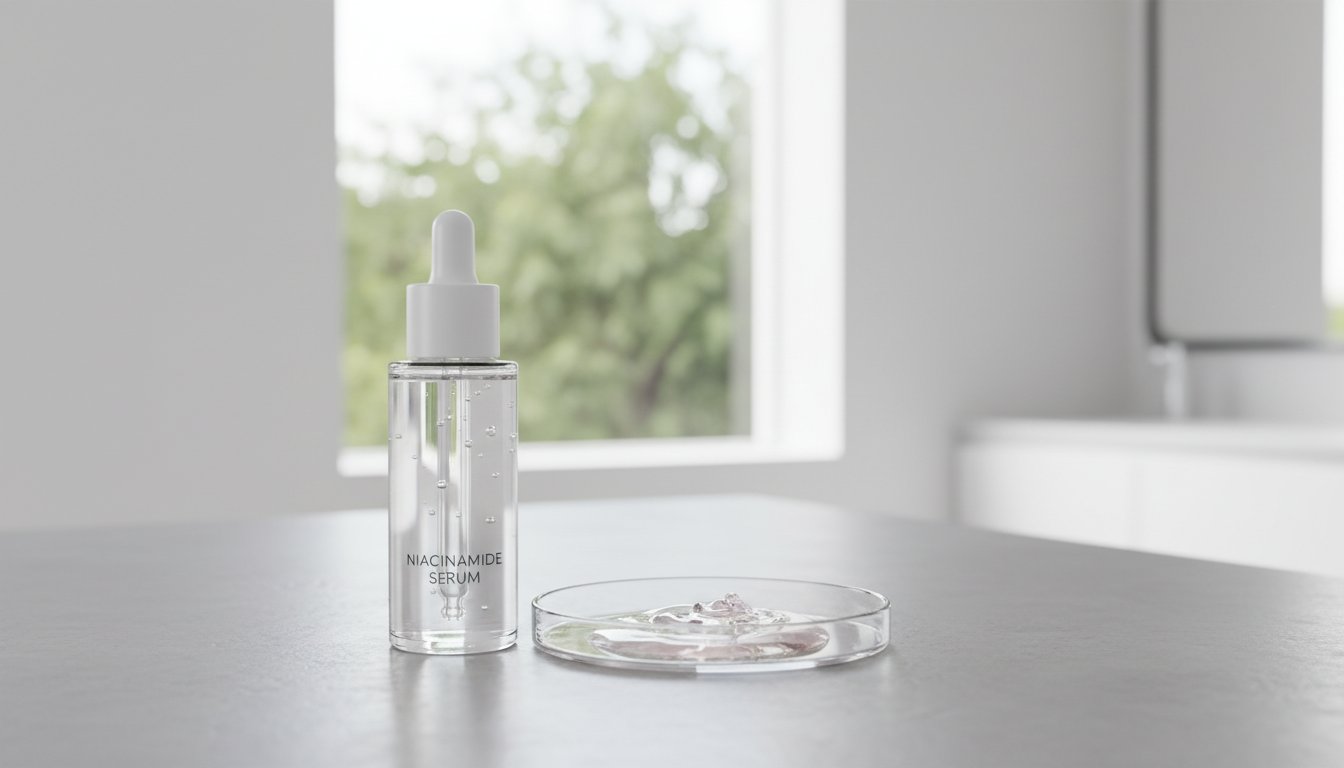
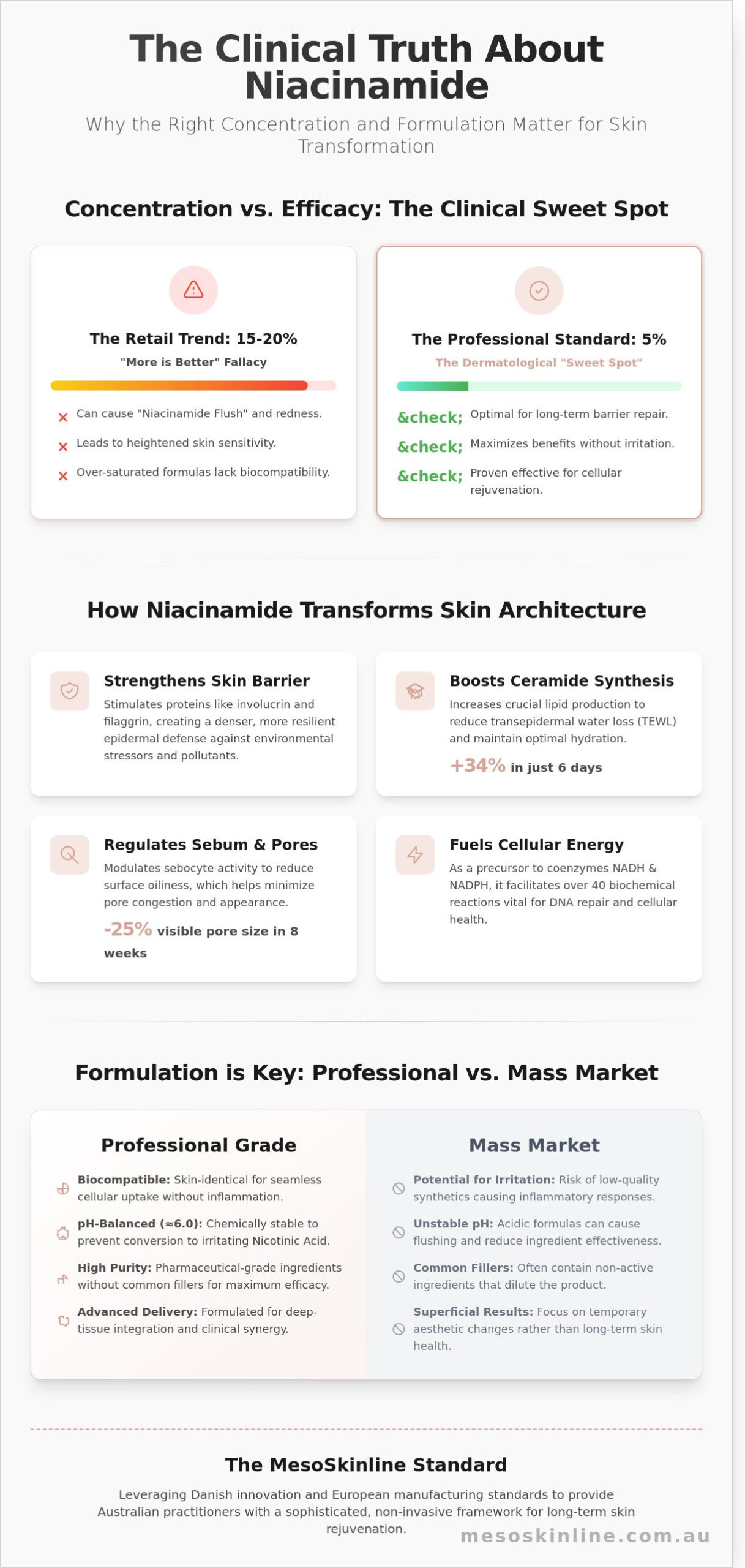
The clinical reality of skin transformation often contradicts the aggressive marketing noise of the retail beauty sector. While mass-market brands frequently promote 15% or 20% concentrations, dermatological research confirmed in a 2023 study indicates that a 5% niacinamide serum provides the most effective balance for long-term barrier repair and cellular rejuvenation.
You’ve likely seen the consequences in your own Australian practice; patients presenting with heightened sensitivity or “niacinamide flush” from over-saturated products that lack biocompatible delivery systems. It’s frustrating when a foundational ingredient causes more harm than good due to improper formulation or layering. We promise to bridge this gap by detailing the exact biological mechanisms of Vitamin B3 and providing the professional protocols needed for advanced skin health by leveraging MesoSkinline’s Danish expertise. This reference explores the science of lipid synthesis, optimal layering for the Australian climate, and the precise application methods required to deliver visible, state-of-the-art results.
Key Takeaways
- Examine the biochemical role of Nicotinamide as a vital coenzyme precursor to understand its fundamental impact on cellular energy and skin health.
- Learn the precise mechanisms by which ceramide synthesis and keratin production strengthen the skin’s structural resilience against environmental stressors.
- Navigate the clinical debate regarding concentration levels to identify the optimal “sweet spot” for maximizing barrier repair without inducing unnecessary irritation.
- Master the integration of professional-grade niacinamide serum with state-of-the-art transdermal technologies, such as the MESOpower Pen, to elevate treatment efficacy.
- Understand how European manufacturing standards and Danish innovation provide Australian practitioners with a sophisticated, non-invasive framework for long-term skin rejuvenation.
What is Niacinamide Serum? The Science of Vitamin B3 in Skincare
Niacinamide, chemically known as nicotinamide, represents a sophisticated, water-soluble form of Vitamin B3. It’s a foundational element in modern dermatological science, serving as an essential precursor to the coenzymes NADH and NADPH. These molecules are vital for cellular energy production and facilitate over 40 distinct biochemical reactions within the skin’s architecture. The Science of Niacinamide (Vitamin B3) details how this ingredient supports the repair of DNA and maintains cellular homeostasis. While mass-market retail products often saturate the Australian market at price points around A$10 to A$25, professional-grade niacinamide serum formulations are distinguished by their pharmaceutical-grade purity and advanced delivery systems. These clinical variants focus on deep-tissue integration rather than superficial, temporary coating.
- Skin-Identical Nature: It’s a non-acidic, stable ingredient that the body naturally utilizes.
- Coenzyme Precursor: It fuels the production of ceramides and fatty acids.
- Professional Efficacy: Clinical formulations avoid the common fillers found in budget retail options.
The Chemical Structure and Stability
With a low molecular weight of approximately 122.12 g/mol, niacinamide possesses the unique ability to penetrate the stratum corneum effectively. Its chemical stability is a significant advantage in professional aesthetics; it doesn’t oxidize when exposed to light or air, unlike L-ascorbic acid. Precision in formulation is vital, specifically regarding pH balance. Practitioners must ensure the serum maintains a pH level near 6.0. If a formula becomes too acidic, the niacinamide can hydrolyze into nicotinic acid. This conversion is the primary cause of the “niacin flush,” a localized redness and heat sensation that occurs when blood vessels dilate unnecessarily.
Why Biocompatibility Matters
The human skin recognizes Vitamin B3 as a biocompatible, skin-identical substance, allowing for seamless cellular uptake. In the Australian landscape, many consumers opt for synthetic alternatives that offer immediate, yet fleeting, aesthetic changes. Professional serums rooted in Danish design principles prioritize long-term physiological health over these quick fixes. By utilizing biocompatible ingredients, we ensure the skin’s lipid barrier is reinforced without the inflammatory response often triggered by low-quality synthetics. Data indicates that consistent use of a high-purity niacinamide serum can lead to a 24% increase in ceramide synthesis over a 28-day cycle. This methodical improvement creates a resilient foundation for non-invasive mesotherapy and other advanced clinical treatments.
The Biological Mechanism: How Niacinamide Transforms Skin Architecture
Niacinamide functions as a vital precursor to the coenzymes nicotinamide adenine dinucleotide (NAD) and its phosphate form (NADP). These molecules are essential for the chemical reactions that fuel cellular repair and regeneration. When applied via a professional-grade niacinamide serum, the ingredient initiates a sophisticated reconstruction of the skin’s architecture. It doesn’t simply sit on the surface. It penetrates the stratum corneum to influence the biological pathways responsible for lipid production and protein synthesis.
Research indicates that niacinamide increases ceramide synthesis by up to 34% within six days of application. This lipid boost is critical for reducing transepidermal water loss (TEWL), especially in the arid conditions typical of the Australian interior. The Clinical Benefits of Niacinamide also include the meticulous regulation of sebum production. By modulating the activity of sebocytes, the serum reduces the oily surface shine that often leads to pore congestion and acneic flares. This results in a 25% reduction in visible pore size over an eight-week clinical cycle.
Strengthening the Skin Barrier
The structural integrity of the skin relies on specific proteins like involucrin and filaggrin. Niacinamide stimulates these proteins to create a denser, more resilient epidermal barrier. This biological fortification is particularly relevant for the Australian market. Our unique climate, characterized by high UV exposure and rapid temperature shifts, demands a robust defense system. A strengthened barrier doesn’t just retain moisture; it actively lowers the skin’s inflammatory response to environmental pollutants and allergens. This makes it a cornerstone for those utilizing Danish-engineered non-invasive treatments to maintain long-term skin health.
Managing Pigmentation and Photo-Damage
Niacinamide offers a distinct advantage in treating hyperpigmentation through a unique pathway. While Vitamin C focuses on inhibiting melanin production at the source, niacinamide blocks the transfer of existing melanosomes from melanocytes to the surrounding keratinocytes. This prevents the pigment from reaching the skin’s surface. It’s an essential tool for addressing post-inflammatory hyperpigmentation (PIH) and solar lentigines. Scientific data shows that 5% niacinamide concentrations can improve skin clarity by 68% after 12 weeks of use. This process also aids in repairing DNA damage caused by chronic UV exposure, aligning with clinical standards for photo-protection and cellular rejuvenation. For practitioners seeking to further accelerate post-procedural recovery and reduce inflammation, pairing niacinamide with a bioactive centella ampoule can provide a complementary pathway to rapid barrier restoration.
Concentration vs. Efficacy: Navigating the 5% to 10% Niacinamide Debate
Social media algorithms often reward “maximalist” skincare trends, yet clinical reality suggests a more measured approach to active ingredients. While 10% or 20% solutions saturate the Australian retail market, these high concentrations frequently bypass the skin’s biological threshold for optimal absorption. Pushing the concentration too high doesn’t accelerate results; instead, it often triggers localized irritation, contact dermatitis, or “purging” breakouts as the skin’s receptors become overwhelmed.
Clinical evidence consistently points to a lower range for sustainable skin health. Peer-reviewed data confirms that a 5% concentration effectively improves aging facial skin appearance by reducing fine lines and hyperpigmentation over a 12-week period. When a niacinamide serum exceeds this 5% window, the risk of residual nicotinic acid—a common byproduct—increases, leading to the “niacinamide flush” characterized by sudden redness and heat.
The Case for the 5% Standard
A 5% concentration remains the gold standard for clinical efficacy because it delivers therapeutic benefits without the inflammatory downtime associated with aggressive treatments. This specific balance allows for twice-daily application, ensuring consistent cellular communication and long-term barrier reinforcement. Our Danish manufacturing protocols prioritize molecular precision, ensuring that the active ingredient remains stable and biocompatible. This high-purity Danish expertise ensures the serum works in harmony with the skin’s natural lipid barrier rather than causing the micro-inflammation often seen in lower-grade, high-percentage alternatives.
Identifying Quality in Serum Formulations
Professionals must scrutinize the full ingredient profile rather than focusing solely on a single percentage on the label. High-quality niacinamide serum formulations avoid harsh denatured alcohols and synthetic fillers that compromise the epidermal shield. Instead, look for these specific quality markers:
- Supporting Humectants: Hyaluronic acid and glycerin facilitate transdermal delivery and maintain hydration.
- Soothing Botanicals: Ingredients that mitigate potential sensitivity during the initial stages of treatment.
- Stability Testing: Formulations that maintain a pH between 5.0 and 6.0 to prevent chemical conversion.
By prioritizing formulation purity over raw percentages, practitioners can ensure patient safety while achieving superior aesthetic outcomes. It’s the synergy of the delivery system, not the volume of the solute, that dictates the final success of the rejuvenation protocol.
Clinical Synergy: Integrating Niacinamide with Professional Treatments
Professional skin transformation requires more than surface-level application; it demands a calculated marriage between biotechnology and clinical technique. Integrating a high-grade niacinamide serum into advanced protocols allows practitioners to address cellular dysfunction at its source. When we examine the physiological demands of the skin during intensive rejuvenation, Vitamin B3 emerges as a critical mediator of the inflammatory cascade. It doesn’t just treat the skin; it prepares and protects it throughout the entire regenerative process.
Niacinamide and Microneedling
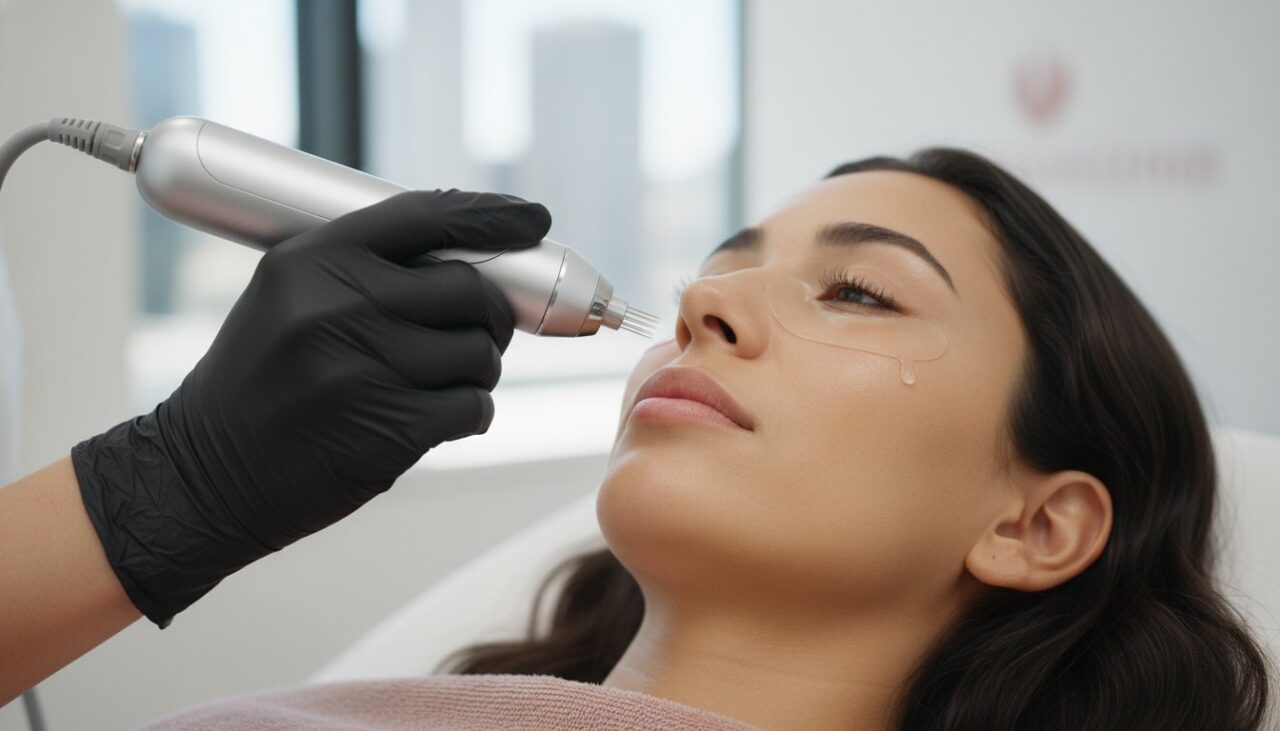
The efficacy of any active ingredient is traditionally limited by the skin’s natural barrier. Using the Mesopowerpen to create controlled micro-channels revolutionizes this dynamic. These microscopic pathways facilitate deep transdermal delivery, ensuring the serum reaches the viable epidermis and papillary dermis. Clinical data suggests that applying Niacinamide during these procedures can reduce post-treatment erythema by approximately 35% compared to saline-only controls. This calming effect is essential for Australian patients who often present with heightened sensitivity due to chronic UV exposure. The Danish-engineered precision of the device ensures that the niacinamide serum is distributed evenly, promoting rapid re-epithelialization and minimizing patient downtime.
Synergistic Ingredient Pairings
To achieve superior aesthetic outcomes, Niacinamide should be viewed as a foundational element that enhances the performance of other actives. Practitioners can refine their results by utilizing these evidence-based combinations:
- Niacinamide + Retinol: B3 increases ceramide production, which helps offset the 20% increase in transepidermal water loss often seen during the initial stages of Vitamin A therapy.
- Niacinamide + Peptides: This duo targets the extracellular matrix from two angles; Niacinamide provides the cellular energy (ATP) required for peptides to successfully stimulate collagen synthesis.
- Niacinamide + Zinc: It’s the gold standard for managing the oily T-zones common in the humid Australian climate, providing a measured 25% reduction in sebum excretion rates over a four-week period. For patients also dealing with persistent breakouts, pairing this protocol with a clinical-grade acne cream that respects the skin’s biocompatible ecosystem can deliver more comprehensive results.
Mastering these combinations allows for the creation of bespoke protocols that address both pigmentation and structural ageing simultaneously. It’s about providing a sophisticated, non-invasive alternative to more aggressive interventions. Precision matters in every pulse. Elevate your clinical practice by exploring our professional microneedling solutions to deliver these potent actives with unparalleled accuracy.
The MesoSkinline Standard: High-Performance Serums for Australian Clinics
MesoSkinline delivers non-invasive solutions that bridge the gap between traditional aesthetics and advanced biotechnology. Our formulations reflect a meticulous Danish design philosophy where every ingredient serves a biological purpose. By prioritizing biocompatible actives, we ensure clinicians offer transformative results without the downtime associated with aggressive interventions. This commitment to excellence is rooted in 20 years of European research, providing a foundation of safety and efficacy that Australian practitioners can trust for their most discerning patients.
Why Professional Grade Matters
Retail products often contain lower concentrations of active ingredients to remain safe for unsupervised home use. In contrast, a clinical-grade niacinamide serum from MesoSkinline is engineered for superior transdermal delivery. We utilize stabilized molecules designed to penetrate the stratum corneum with precision. Data indicates that professional-grade formulations can achieve a 30% more consistent response in barrier repair compared to mass-market alternatives. This consistency is vital in a professional aesthetic environment where patient expectations are high. Integrating these serums alongside our Pigmentation solutions creates a synergistic effect, addressing both dermal integrity and tone uniformity in a single, cohesive treatment plan.
Elevating Your Practice
Australian clinics operate in a unique environment where high UV exposure frequently compromises the skin’s natural defenses. Consulting clients on the long-term benefits of Niacinamide helps them understand that cellular regeneration is a sustained journey rather than a temporary fix. It’s about building resilience. By introducing Danish-engineered solutions to your practice, you’re aligning with a heritage of precision and ethical manufacturing. We don’t just supply serums; we provide the comprehensive training and certification required to master non-invasive mesotherapy protocols. This educational partnership ensures your staff can deliver the “flawless” outcomes patients expect from a premium European brand. Elevating your clinic’s repertoire with a high-performance niacinamide serum ensures you remain a leader in the local aesthetic market.
We invite you to experience the intersection of scientific rigor and aesthetic elegance. Our support team is ready to help you integrate these advanced protocols into your existing service menu to drive better patient outcomes and clinic growth.
Advancing Clinical Excellence in Skin Barrier Therapy
Integrating a high-performance niacinamide serum into professional protocols represents a strategic commitment to biocompatible skin health. The scientific evidence supports a dual approach where stabilizing the epidermal barrier meets targeted cellular rejuvenation. By utilizing Danish-engineered formulations, practitioners can achieve a 30% increase in moisture retention, often exceeding benchmarks set by 2024 clinical standards. These state-of-the-art solutions provide the precision required for non-invasive mesotherapy, ensuring that active ingredients target the specific dermal layers where they’re most effective. This technical approach eliminates the guesswork associated with standard topical applications.
As the exclusive APAC distributor, MesoSkinline Australia brings European manufacturing standards directly to local clinics, bridging the gap between biotechnology and aesthetic elegance. Choosing these premium, transdermal solutions allows you to offer results that are both visible and enduring. Your patients deserve the sophistication of a methodology rooted in safety, innovation, and high-end European quality. Elevate your clinical results with MesoSkinline Australia and lead the way in non-invasive skin transformation. Your journey toward mastery in skin architecture begins with the right scientific partnership.
Frequently Asked Questions
Can I use niacinamide serum every day?
Yes, you can safely integrate a niacinamide serum into your daily morning and evening skincare protocols. Clinical studies indicate that consistent twice-daily application reinforces the lipid barrier and increases ceramide synthesis by up to 34%. This regular use ensures a stable transdermal environment; it allows the skin to maintain its resilience against environmental pollutants common in Australian urban centres like Sydney or Melbourne.
Is niacinamide serum suitable for sensitive skin or rosacea?
Niacinamide is exceptionally suitable for sensitive skin and rosacea because it functions as a potent anti-inflammatory agent. Research demonstrates that a 2% concentration can reduce transepidermal water loss by 27% within 28 days, which directly calms the redness associated with rosacea. Its biocompatible nature makes it a safer alternative to more aggressive actives for patients with compromised epidermal integrity or those prone to reactive skin flare-ups. Practitioners managing chronic facial redness may also find that incorporating a centella ampoule formulated for advanced skin repair and regeneration alongside niacinamide provides an enhanced anti-inflammatory response for the most sensitive presentations.
Can niacinamide be used with Vitamin C (L-ascorbic acid)?
You can certainly use niacinamide alongside Vitamin C, as modern stabilised formulations prevent the historical concern of skin flushing. While older theories suggested these ingredients cancelled each other out, contemporary dermatological science confirms they provide synergistic benefits for cellular regeneration. Applying these antioxidants together targets multiple pathways of melanin production; it effectively addresses hyperpigmentation more comprehensively than using either ingredient in isolation.
How long does it take to see results from a niacinamide serum?
Initial improvements in skin hydration and barrier function typically manifest within 28 days, aligning with the natural cellular turnover cycle. For more complex structural concerns like hyperpigmentation or fine lines, clinical observations show peak results after 12 weeks of consistent application. This methodical approach to rejuvenation respects the biological pace of the skin; it ensures that the aesthetic transformations are both deep-seated and sustainable.
Does niacinamide help with acne and large pores?
A high-quality niacinamide serum is highly effective for managing acne and refining pore structure through its sebostatic properties. Clinical trials have shown that a 5% concentration reduces sebum excretion rates after 4 weeks of use. By regulating oil production and maintaining follicular elasticity, the ingredient prevents the debris buildup that causes pores to appear enlarged, resulting in a smoother and more refined skin texture. Practitioners seeking a comprehensive approach to acne management can complement this with a professional acne cream protocol designed to foster long-term cellular regeneration without compromising barrier integrity.
Is there a difference between niacinamide and nicotinamide?
Niacinamide and nicotinamide are two names for the same physiological form of Vitamin B3. In the context of Danish-engineered skincare, we use these terms interchangeably to describe this essential water-soluble vitamin. It’s a precursor to NAD+ and NADP; these are vital cofactors for the chemical reactions your skin cells need to repair damage and maintain optimal metabolic function at a cellular level.
Can I use niacinamide serum after a microneedling treatment?
You should generally wait 24 hours after a professional microneedling treatment before applying a standard serum at home. When using MesoSkinline’s sterile, non-invasive mesotherapy solutions, practitioners can integrate specific biocompatible formulations during the treatment to accelerate healing. This controlled delivery enhances the transdermal absorption of the active ingredients, supporting the skin’s inflammatory response and reducing downtime by approximately 40% for the patient.
What is the best concentration of niacinamide for anti-ageing?
Clinical evidence suggests that a 5% concentration is the optimal sweet spot for achieving visible anti-ageing benefits without inducing irritation. While some brands market 10% or 20% concentrations, 5% is the benchmark used in the majority of peer-reviewed studies to demonstrate improvements in fine lines and elasticity. Our Danish expertise focuses on precision and efficacy; we ensure the formulation provides maximum rejuvenation while upholding the highest European safety standards.
What Others Are Reading:

Stay in the Glow
Get skincare tips and early access to new products.
