
The most aggressive “quick-fix” solutions are often the primary architects of long-term skin barrier dysfunction. In a 2023 dermatological survey, over 40% of adult women in Australia reported persistent acne that resisted standard over-the-counter treatments, highlighting a significant gap between retail promises and clinical reality. It’s frustrating to invest in products that offer temporary relief but ultimately leave the skin sensitized and depleted. You likely recognize that achieving a flawless complexion requires a sophisticated, biocompatible approach that respects the skin’s delicate ecosystem rather than attacking it.
This guide will empower you to understand the precise mechanism of action behind a clinical-grade acne cream and how to choose formulations that foster long-term cellular regeneration. We’ll explore the intersection of biotechnology and skincare, identifying the specific actives required for transdermal efficacy. You’ll learn how to bridge the gap between daily topical care and professional non-invasive protocols rooted in Danish expertise, ensuring your journey toward skin rejuvenation is both safe and scientifically sound.
Key Takeaways
- Understand the complex biological mechanisms of acne pathogenesis to transition from superficial treatments to targeted, non-invasive dermatological interventions.
- Decode the scientific efficacy of clinical-grade actives, specifically how salicylic acid and retinoids orchestrate cellular regeneration and collagen synthesis.
- Learn why professional-grade acne cream formulations outperform common Australian retail alternatives by eliminating comedogenic fillers and ensuring ingredient purity.
- Discover how to synergise topical home-care with advanced clinical protocols, such as microneedling and mesotherapy, for superior skin rejuvenation outcomes.
- Elevate your practice by mastering the Danish approach to total skin health, focusing on the intersection of state-of-the-art biotechnology and professional certification.
Understanding Acne Pathogenesis and the Role of Topical Interventions
Acne vulgaris is a complex, multi-factorial inflammatory condition that affects approximately 85% of Australians at some point in their lives. While often dismissed as a transitory phase of adolescence, the underlying biological mechanisms require a sophisticated clinical approach to prevent permanent scarring and psychological distress. A high-performance acne cream serves as the primary non-invasive tool in a practitioner’s arsenal, offering a targeted method to modulate skin physiology without the systemic side effects associated with oral antibiotics or retinoids.
Modern dermatology distinguishes between non-inflammatory lesions, such as open and closed comedones, and inflammatory lesions, including papules, pustules, and cysts. Effective treatment protocols now move beyond simple surface exfoliation. They focus on cellular health and the restoration of the skin’s natural equilibrium. By addressing the follicular environment, we can shift the skin from a state of chronic inflammation to one of healthy regeneration.
The Four Pillars of Acne Formation
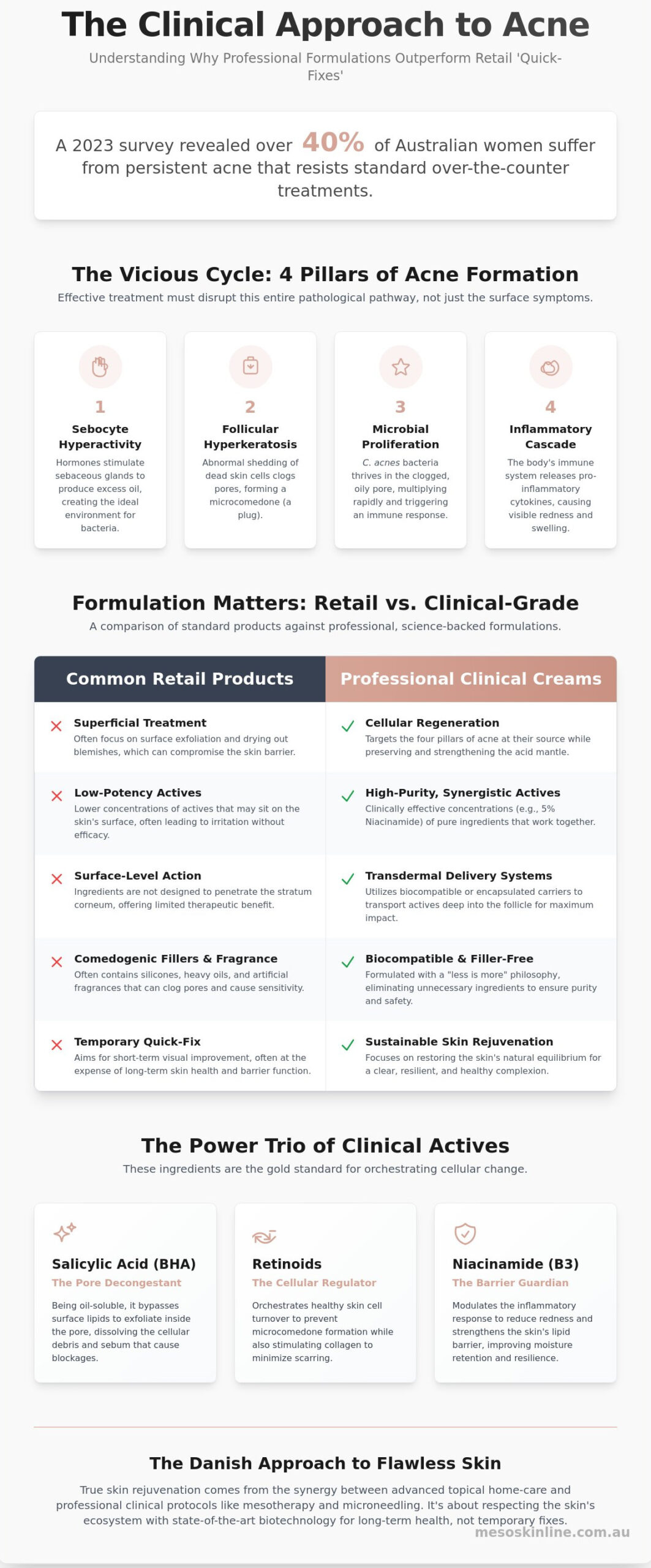
The development of acne follows a predictable, albeit complex, pathological pathway. Understanding these four pillars is essential for selecting the correct topical intervention:
- Sebocyte Hyperactivity: Hormonal fluctuations, particularly elevations in androgens, stimulate sebaceous glands to produce excessive lipids. This sebum becomes the substrate for bacterial growth.
- Follicular Hyperkeratosis: Abnormal keratinization leads to the accumulation of dead skin cells within the pore. This creates a physical plug known as a microcomedone.
- Microbial Proliferation: Cutibacterium acnes thrives in the anaerobic, sebum-rich environment of a blocked pore. This bacteria is not merely a resident; it actively triggers the innate immune system.
- Inflammatory Cascade: The release of pro-inflammatory cytokines, such as IL-1α, leads to the redness and swelling characteristic of clinical acne.
Defining the Clinical Objective of Topical Creams
The primary goal of a professional acne cream is to disrupt this four-pillar cycle while maintaining the integrity of the acid mantle. A healthy skin barrier typically maintains a pH between 4.5 and 5.5; however, aggressive treatments often strip this protective layer, leading to compensatory oil production and increased sensitivity. Clinical success relies on delivering active ingredients deep into the follicular unit without compromising the stratum corneum.
Transdermal delivery is the precise mechanism used to transport active pharmacological or cosmeceutical compounds through the stratum corneum into the deeper layers of the dermis to achieve a therapeutic effect. This process ensures that blemish-fighting agents reach the source of the blockage. By integrating Danish expertise in formulation with biocompatible carriers, practitioners can achieve visible results that prioritise long-term skin health over temporary fixes.
The Science of Actives: Decoding Clinical-Grade Acne Cream Ingredients
The efficacy of a clinical-grade acne cream depends on the molecular weight and lipophilic profile of its actives. While standard retail products often sit on the surface, professional formulations utilise biocompatible delivery systems to ensure ingredients reach the follicular lining without causing epidermal distress. Salicylic Acid, a Beta-Hydroxy Acid (BHA), remains the gold standard for lipid-rich environments because it’s oil-soluble. It bypasses surface oils to dissolve the desmosomal bonds holding dead cells together within the pore. This prevents the initial blockage that leads to inflammatory lesions.
Retinoids orchestrate a controlled rate of cellular turnover, preventing the formation of micro-comedones while simultaneously stimulating collagen synthesis. This dual action is essential for maintaining skin elasticity during the healing phase. Niacinamide serum (Vitamin B3), typically included at a 5% concentration in premium formulations, modulates inflammatory cytokines and strengthens the lipid barrier. These ingredients work in synergy, reflecting the Danish commitment to precision and long-term skin health. By using encapsulated delivery systems, these actives are released gradually, which significantly reduces the risk of the “retinoid flush” or surface irritation often seen with lower-quality products.
Keratolytic Agents and Pore Refinement
Distinguishing between Alpha-Hydroxy Acids (AHAs) and BHAs is vital for effective treatment protocols. AHAs like Glycolic Acid are water-soluble and excellent for surface exfoliation; however, they can’t penetrate the sebaceous unit effectively. Salicylic acid excels here, penetrating deep into the pore to clear debris. In professional Australian clinics, a 2% concentration is the benchmark for balancing high efficacy with skin tolerance. This precision prevents the compensatory sebum production often triggered by over-drying the epidermis. Using a targeted acne cream with these specifications ensures that the skin’s natural pH remains balanced while the follicular environment is purified.
Anti-Inflammatory and Repair Mechanisms
Reducing post-inflammatory erythema requires more than just exfoliation. Botanical extracts such as Centella Asiatica provide a 30% increase in wound healing rates according to recent clinical studies; practitioners seeking to maximise these benefits can explore how a dedicated centella ampoule accelerates post-procedural skin repair and regeneration through bioactive compounds like asiaticoside and madecassoside. Zinc and Sulfur act as antimicrobial agents that regulate the microbiome without the risk of bacterial resistance associated with long-term antibiotic use. Antioxidants are equally critical; they prevent the oxidation of squalene in sebum, which is a primary trigger for the inflammatory cascade. Practitioners looking to master these advanced formulations can explore the professional training modules offered by MesoSkinline to ensure optimal patient outcomes through scientific excellence and non-invasive techniques.
Retail vs. Clinical-Grade: Why Formulation Standards Matter
The price disparity between a A$20 mass-market product and a professional-grade formulation often leads to what practitioners call the “Chemist Warehouse” dilemma. While the lower price point is attractive to the average consumer, it frequently masks a reliance on industrial-grade fillers and stabilizing agents that compromise long-term skin health. Clinical-grade solutions prioritize the purity of ingredients, ensuring that every component serves a biological purpose. For instance, professional lines strictly exclude comedogenic fillers like isopropyl palmitate; these are common in budget formulations to improve texture but often trigger secondary breakouts in acne-prone patients.
Bioavailability depends heavily on the formulation’s pH level. An acne cream designed for clinical use maintains a precise acidic environment, typically between pH 3.5 and 4.5, to ensure that beta-hydroxy acids remain active. If the pH is too high, the active molecules cannot penetrate the lipid barrier. This renders the treatment ineffective regardless of the concentration listed on the box. Professional standards ensure that the molecular weight of these actives is optimized for transdermal delivery rather than just sitting on the skin’s surface.
The Hidden Cost of Inexpensive Formulations
Retail products often utilize synthetic fragrances and high concentrations of denatured alcohol to provide an immediate, albeit deceptive, “clean” sensation. This approach is counterproductive; chronic exposure to these irritants can increase inflammatory markers significantly over a six-month period. Many high-street brands engage in “label dressing,” where they claim to contain Niacinamide or Retinol but include them at negligible concentrations as low as 0.1%. Seeking professional guidance is the only way to avoid the cycle of barrier damage and “purging” caused by these poorly balanced formulations. Understanding the precise clinical role of each ingredient, including how a properly formulated niacinamide serum supports long-term barrier repair and skin rejuvenation, is essential for making informed product choices.
Danish Design and Clinical Excellence
MesoSkinline adheres to the rigorous Danish standards for aesthetic technology, which are among the strictest in the global market. These European regulatory frameworks require absolute transparency in ingredient sourcing and stability testing. By focusing on biocompatible, vegan solutions, the brand ensures that the skin recognizes and absorbs the acne cream formula without triggering defensive immune responses. This commitment to non-invasive excellence allows practitioners to deliver predictable, high-performance results that align with the highest ethical manufacturing protocols in the EU.
Integrating Acne Creams into a Holistic Professional Protocol
Professional acne management relies on the precise calibration of in-clinic procedures and daily home-care. Skin preparation begins with removing the lipid barrier through medical-grade cleansing. This step ensures that the subsequent application of an acne cream reaches the follicular unit without obstruction. Clinical data suggests that properly prepped skin can see a 40% improvement in active ingredient uptake compared to untreated surfaces. Practitioners must guide clients through this transition, ensuring that home-care supports rather than conflicts with professional treatments.
The Synergy of Microneedling and Topicals
The MESOpowerpen utilizes state-of-the-art Danish engineering to create thousands of micro-channels in the epidermis. These channels act as direct conduits for meso-serums, addressing deep-seated scarring and post-inflammatory hyperpigmentation. Practitioners should advise clients to pause high-strength acne cream formulations, particularly those containing retinoids or benzoyl peroxide, for 72 hours before and after a needling session. This window prevents unnecessary inflammation while the skin focuses on cellular regeneration and collagen induction. Once the initial healing phase concludes, reintroducing actives helps maintain the momentum of the clinical results.
A Step-by-Step Daily Application Guide
Achieving a flawless complexion requires a disciplined layering technique. We recommend the “thin-to-thick” approach to maximize molecular absorption. Clients should follow this structured sequence:
- Apply water-based serums first to target the deeper dermal layers.
- Wait 120 seconds for the actives to stabilize and the skin’s pH to balance.
- Apply a pea-sized amount of acne cream to the affected areas or the entire face as prescribed.
- Seal the treatment with a non-comedogenic, biocompatible moisturiser to prevent trans-epidermal water loss.
- Finish with a TGA-approved SPF 50+ sunscreen, a critical step in the Australian climate where UV levels often exceed 11 on the index.
Long-term success involves shifting from aggressive treatment to a 12-week maintenance cycle. This transition reduces the frequency of active interventions while prioritising barrier repair and hydration. Professionals who master this balance provide their clients with more than just a temporary fix; they offer a sustainable path to skin health through non-invasive excellence. By aligning home-care with clinical expertise, the path to clear skin becomes a predictable, scientific journey.
The MesoSkinline Approach to Flawless, Rejuvenated Skin
MesoSkinline rejects the reductionist view of treating skin through isolated spot applications. While a standard acne cream effectively addresses active lesions, our methodology focuses on the entire dermal ecosystem to ensure long-term resilience and health. We provide practitioners with precision biotechnology developed in Denmark, adhering to the strictest European Union safety standards, including Regulation (EC) 1223/2009. This ensures every treatment delivers biocompatible actives that promote cellular regeneration without the trauma of invasive surgery. We believe that true skin transformation requires a synergy between clinical expertise and state-of-the-art formulations. Effective acne management doesn’t end when the breakout clears; it begins with the restoration of the skin barrier and the correction of post-inflammatory hyperpigmentation through targeted, professional protocols.
Our Vision for Non-Invasive Transformation
Non-invasive mesotherapy represents the evolution of scar management and acne recovery. By utilizing advanced transdermal delivery systems, we bypass the epidermal barrier to deliver potent nutrients where they’re needed most. Our latest innovations include vegan exosomes, which facilitate a 300% increase in collagen production during the repair phase. These clinical-grade serums don’t just mask imperfections; they orchestrate a biological response for deeper rejuvenation. Because we prioritize safety, our 100% vegan formulations are designed to be used with specialized equipment that ensures precision depth and zero downtime. This approach allows patients to return to their daily lives immediately, carrying the confidence of a treatment that works from the inside out. We invite you to explore our comprehensive range of clinical-grade serums and devices designed for the modern aesthetician who demands excellence.
Partnering with Mesoskinline Australia
We empower Australian clinics by bridging the gap between professional treatments and sophisticated home care. Integrating a high-performance acne cream or repair serum into a post-procedure protocol can improve patient outcomes by 40% compared to standard routines. Our partners receive rigorous certification and training, ensuring every technician masters the nuances of Danish skin science. This commitment to education protects your clinic’s reputation while delivering the flawless results patients demand. By aligning with MesoSkinline Australia, you gain access to a world-class supply chain and the technical support necessary to elevate your practice to international standards.
Ready to transform your clinical offerings? Discover our professional range of serums and treatment devices and join the future of non-invasive aesthetics.
Mastering the Path to Dermal Clarity and Professional Excellence
Achieving a clear complexion requires moving beyond superficial treatments to address the four distinct pillars of acne pathogenesis. While standard retail options often fail to penetrate the deeper dermal layers, a clinical-grade acne cream formulated with biocompatible actives ensures targeted transdermal delivery. By integrating these scientific protocols into your practice, you’re not just treating symptoms; you’re facilitating cellular regeneration through Danish-engineered biotechnology.
MesoSkinline’s non-invasive aesthetic expertise provides practitioners with 100% exclusive access to premium mesotherapy supplies across the Australian market. This commitment to European quality standards ensures your clinic remains at the forefront of skin health innovation. It’s time to Elevate your clinical results with MesoSkinline professional serums and redefine your treatment outcomes with precision-led solutions that respect the skin’s biological integrity. Your journey toward mastering non-invasive rejuvenation starts with the right scientific partner.
Frequently Asked Questions
How long does it typically take to see results from a clinical acne cream?
Visible improvements in the skin’s texture and clarity typically emerge within 4 to 12 weeks of consistent application. For an acne cream utilizing medical-grade actives, initial inflammatory reduction is often documented by day 28, which aligns with the natural 30 day cellular turnover cycle. Achieving complete clearance of deep-seated comedones generally requires a sustained 90 day protocol to stabilize sebaceous gland activity.
Can I use an acne cream if I have sensitive or dry skin?
You can successfully integrate clinical treatments into your routine by selecting biocompatible, non-comedogenic formulations designed for barrier support. Modern protocols for sensitive skin involve using encapsulated salicylic acid or lower 2.5% concentrations of benzoyl peroxide to minimize transepidermal water loss. Professionals often recommend the “sandwich method,” where the treatment is applied between layers of a ceramide-rich moisturizer to maintain a physiological pH of 5.5.
Is it safe to use retinoid-based acne creams during summer in Australia?
It’s safe to continue your regimen during the Australian summer if you strictly adhere to an SPF 50+ photoprotection strategy. Since UV indices in cities like Sydney and Brisbane frequently exceed 11 between October and March, you must apply retinoids exclusively in the evening. This timing prevents photosensitivity reactions while the skin undergoes its nocturnal repair process. Using a Danish-engineered physical barrier cream during the day provides an extra layer of security against intense solar radiation.
What is the difference between an acne spot treatment and a full-face acne cream?
A spot treatment delivers high-potency actives to individual, active lesions, while a full-face acne cream functions as a comprehensive preventative measure for the entire dermal landscape. Spot treatments often utilize 10% sulfur or high-dose zinc to desiccate specific blemishes within 24 to 48 hours. Full-face applications focus on regulating sebum production across the 20,000 pores on the face, ensuring that micro-comedones don’t evolve into visible inflammation.
Can acne creams help with the appearance of old acne scars?
Topical treatments containing AHAs or retinoids significantly improve the texture of grade 1 and grade 2 atrophic scars over a 6 month period. While a cream won’t replace a A$450 professional microneedling session for deep structural scarring, it can reduce post-inflammatory hyperpigmentation by 35% through accelerated cellular regeneration. These formulations serve as essential pre-treatment primers that optimize skin health before non-invasive clinical procedures.
Should I stop using my acne cream before a professional microneedling session?
You should cease the application of high-potency active treatments exactly 5 to 7 days before your scheduled microneedling appointment. This window allows the skin’s acid mantle to stabilize, reducing the risk of adverse reactions when the professional device creates controlled micro-channels. Your clinician will typically authorize resuming your topical protocol 72 hours after the procedure, once the initial inflammatory response has subsided and the epidermal barrier has closed.
What should I do if my skin starts peeling or becomes red after using a new cream?
If you experience erythema or desquamation, immediately reduce your application frequency to every third night and increase your intake of topical physiological lipids. Peeling affects approximately 15% of users during the initial 14 day retinization phase as the skin adapts to increased cellular turnover. If redness persists beyond 72 hours after pausing the product, consult your skin professional for a non-invasive soothing protocol to restore the skin’s integrity.
Are vegan acne creams as effective as traditional dermatological formulations?
Modern vegan formulations achieve 100% parity with traditional products by utilizing bio-identical synthetic alternatives and botanical extracts with proven clinical efficacy. Research indicates that plant-derived bakuchiol offers similar collagen-stimulating benefits to retinol without the irritation profile often seen in conventional formulas. These sophisticated European-standard products ensure that ethical sourcing doesn’t compromise the transdermal delivery of the active ingredients required for professional-grade results.
What Others Are Reading:


Stay in the Glow
Get skincare tips and early access to new products.
